Discover the Superior Benefits of Mineral Wool Insulation for Your Home
When it comes to enhancing your home’s energy efficiency, comfort, and safety, selecting the right insulation material is paramount. Among the myriad options available, mineral wool insulation, also known as stone wool, stands out as a highly effective and versatile choice. Renowned for its unique properties, mineral wool offers a compelling blend of thermal performance, durability, and additional advantages that surpass many traditional insulation types. This comprehensive guide will delve into the various aspects that make mineral wool an exceptional investment for homeowners and builders alike, covering its R-value, cost, resistance to fire and water, soundproofing capabilities, and installation ease.
Unpacking Mineral Wool Insulation’s R-Value: A Deep Dive into Thermal Performance
The R-value is a critical metric for any insulation material, indicating its resistance to heat flow. A higher R-value signifies better insulating properties, translating directly into enhanced energy efficiency and reduced utility bills for your home. Mineral wool insulation typically offers a superior R-value compared to standard fiberglass batts, making it a powerful contender in the insulation market.
For instance, standard mineral wool batts designed for 2×4 wall cavities boast an impressive R-value of 15. In comparison, typical off-the-shelf fiberglass batts used in similar 2×4 walls usually provide an R-value of 11 or 13. While it is possible to special-order high-density fiberglass batts with an R-value of 15, mineral wool offers this higher performance as a standard option. This means that with mineral wool, you can achieve better thermal resistance within the same wall cavity depth, optimizing your home’s thermal envelope without increasing wall thickness.
The benefits extend to larger structural components as well. For 2×6 wall cavities, mineral wool batts deliver an R-value of 23, significantly outperforming standard fiberglass batts which typically yield an R-value of 19 for the same application. This higher R-value translates to substantial long-term energy savings, as your HVAC system will work less to maintain a comfortable indoor temperature. While other options like blown-in cellulose offer an R-value of about 13 for a 2×4 stud cavity, and spray foam insulation offers even greater thermal performance, mineral wool strikes an excellent balance between cost-effectiveness and high R-value, offering a compelling alternative for various insulation needs.
Cost and Availability of Mineral Wool Insulation
When considering any home improvement project, cost is always a significant factor. On a square-foot basis, mineral wool batts generally carry a slightly higher upfront cost than conventional fiberglass batts. For example, R-15 mineral wool insulation might cost approximately 80¢ per square foot, whereas an equivalent R-value fiberglass option could be around 60¢. However, this initial investment is often offset by mineral wool’s numerous long-term benefits, including superior performance in fire, water, and sound resistance, along with its potential for greater energy savings over time.
Availability can also be a consideration. While fiberglass insulation is widely stocked in most lumberyards and home centers, mineral wool batts may sometimes require a special order, depending on your local supplier. Leading brands in thermal wall insulation include Johns Manville TempControl, Roxul ComfortBatt (now Rockwool Comfortbatt), and Thermafiber UltraBatt. It’s advisable to check with your local building material suppliers or specialized insulation distributors for current stock and pricing. Planning ahead for your project can ensure you have the materials you need when you need them, preventing any delays due to special orders.
Exceptional Fire Resistance: A Key Safety Advantage
One of the most compelling advantages of mineral wool insulation is its outstanding fire resistance. Unlike many other insulation materials, mineral wool is inherently non-combustible and can withstand extreme heat conditions without melting or contributing to flame spread. This characteristic provides a critical layer of safety for your home and its occupants.
In the unfortunate event of a fire, mineral wool batts retain their structural integrity and shape, acting as a crucial barrier against the rapid spread of flames. Its high melting point helps to compartmentalize fires, potentially buying valuable time for occupants to evacuate and for emergency services to arrive. This inherent fire-retardant quality is a significant upgrade over insulation types that can char, melt, or even accelerate a fire’s progress. For builders and contractors, mineral wool offers even more advanced applications: when combined with specialized fire-rated sheathing, mineral wool batts can be integrated into building assemblies to create a one-hour-fire-rated system. This impressive rating can be achieved without requiring extra labor, simplifying compliance with stringent building codes and enhancing overall structural fire safety.
Unrivaled Water Resistance for Lasting Performance
Another remarkable property that sets mineral wool apart is its inherent water resistance. Unlike many fibrous insulation materials that absorb moisture, mineral wool batts are hydrophobic, meaning they repel water and do not absorb it. This unique characteristic ensures that the insulation remains intact and continues to perform effectively, even if exposed to moisture.
In situations where a wall or roof might experience a leak, mineral wool batts will dry out completely without losing their insulating value or structural integrity. This resilience is a stark contrast to fiberglass or cellulose insulation, which tend to droop, clump, or compress when wet. Once compromised by water, these materials often lose their R-value and can become breeding grounds for mold and mildew, necessitating costly and time-consuming replacement. With mineral wool, the risk of such damage is significantly reduced, offering peace of mind and long-term durability. Only foam insulation can truly rival mineral wool in terms of water resistance, but mineral wool offers a breathable solution that still repels bulk water.
Comfort and Health: Addressing the “Itch Factor” and Beyond
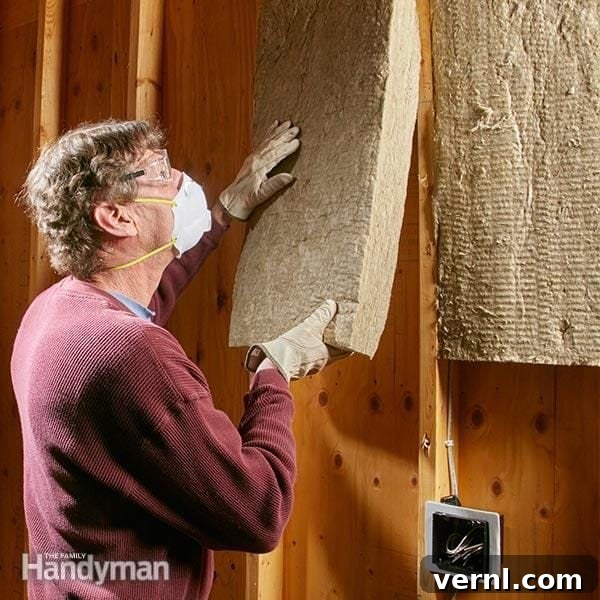
Like fiberglass, working with mineral wool insulation can cause temporary skin irritation, often referred to as the “itch factor.” Direct contact with the fibers may lead to itching or a mild rash. Installers’ experiences vary, with some finding it slightly more irritating than fiberglass, while others perceive it as less so. Regardless of the exact sensation, it is paramount to prioritize safety during installation. Always wear appropriate personal protective equipment (PPE), including a dust mask or respirator to prevent inhalation of fibers, safety goggles to protect your eyes, durable gloves, and a long-sleeved shirt to minimize skin exposure. Adhering to these precautions will ensure a safer and more comfortable installation process.
Beyond the installation phase, mineral wool contributes to a healthier indoor environment. Its dense structure helps reduce air infiltration, which can minimize the entry of outdoor pollutants and allergens. Furthermore, mineral wool is typically made from natural minerals, is inorganic, and does not provide a food source for mold or pests, contributing to better indoor air quality and long-term structural integrity.
Advanced Sound Blocking Capabilities
For those seeking to create a quieter and more peaceful living space, mineral wool insulation offers outstanding acoustic performance. Its inherent density and unique fiber structure make it significantly more effective at absorbing sound waves compared to lighter insulation materials. This makes it an ideal choice for soundproofing interior walls, floors, and ceilings.
Batts Stay Put, Even on Ceilings
One of the practical benefits of mineral wool’s density and rigidity is its ability to maintain its form and position once installed. Anyone who has attempted to install traditional fiberglass batts in overhead applications, such as ceilings, knows the frustration of them sagging or falling out without additional support. Mineral wool batts, however, are specifically designed to be friction-fit. You can simply push them into place between joists or studs, and their robust structure ensures they stay put without the need for clips, wires, or other fasteners, significantly simplifying the installation process for ceilings and sloped roofs.
By installing mineral wool batts between rooms, in floor joist spaces between different levels, or even around noisy mechanical equipment, you can dramatically reduce sound transmission throughout your home. This is particularly beneficial for creating quiet bedrooms, productive home offices, or dedicated home theater rooms, enhancing the overall comfort and tranquility of your living environment.
Streamlined and Precise Installation Process
The installation of insulation is often perceived as a challenging and messy task, but mineral wool batts are designed to make the process more efficient and achieve superior results. Their unique properties simplify handling and allow for a level of precision that is often difficult to achieve with other insulation types.
You Can Mark Mineral Stone Wool Insulation Batts with Ease
The density of mineral wool batts is a distinct advantage, even down to the marking process. Unlike less rigid materials, you don’t need a straightedge and pencil to create an accurate cutting line. You can simply drag the hook of your tape measure across the surface of the batt to score a clear, visible line. This small but significant detail speeds up the measurement and marking process, allowing for more consistent and precise cuts without extra tools.
Cuts Like Bread for a Perfect Fit
Cutting insulation accurately is crucial for maximizing thermal performance, as gaps and voids can significantly reduce effectiveness. Mineral wool batts can be cut with remarkable ease and precision using a serrated knife or a specialized serrated insulation saw. The material slices cleanly along your marked line, much like cutting a loaf of bread. This allows installers to create tight, custom fits around irregular shapes, corners, and angled spaces, ensuring that every cavity is fully insulated. The ability to slice thin slivers further enhances this precision, enabling you to fill even the narrowest gaps for optimal thermal efficiency and air sealing.
Mineral Wool Batts Are Rigid and Easy to Handle
One of the most appreciated characteristics of mineral wool batts during installation is their inherent rigidity. Unlike flexible fiberglass batts that tend to flop, sag, and require “fluffing up” to achieve their stated R-value, mineral wool batts hold their shape firmly. This rigidity makes them significantly easier to handle, position, and install without them bending or falling apart. They maintain their uniform thickness and density, ensuring consistent thermal performance across the insulated area and reducing the common installation errors associated with less stable materials.
You Can Carve Mineral Wool for Obstruction-Free Insulation
Achieving a continuous thermal envelope requires precise fitting around obstacles such as electrical outlets, plumbing pipes, and other penetrations. Mineral wool’s density makes it incredibly carvable, allowing for custom cutouts that perfectly conform to these obstructions. You can measure and mark the shape of an outlet or pipe directly onto the batt and then use your serrated knife to carve out the precise opening. This level of customization ensures a snug fit around every impediment, eliminating air gaps that can compromise insulation performance and contribute to drafts.
Ultimately, achieving a top-notch insulation job is significantly easier and more effective with mineral wool compared to fiberglass. Its greater rigidity, ease of precise cutting, and carvable nature allow for exact trimming around outlets and other obstructions, ensuring a continuous and highly efficient thermal barrier. Fiberglass batts, by contrast, are more challenging to install accurately; they are floppy, difficult to cut precisely without tearing, and prone to overstuffing or leaving gaps, all of which can diminish their intended insulating value. For a durable, high-performing, and easier-to-install insulation solution, mineral wool stands out as an excellent choice.