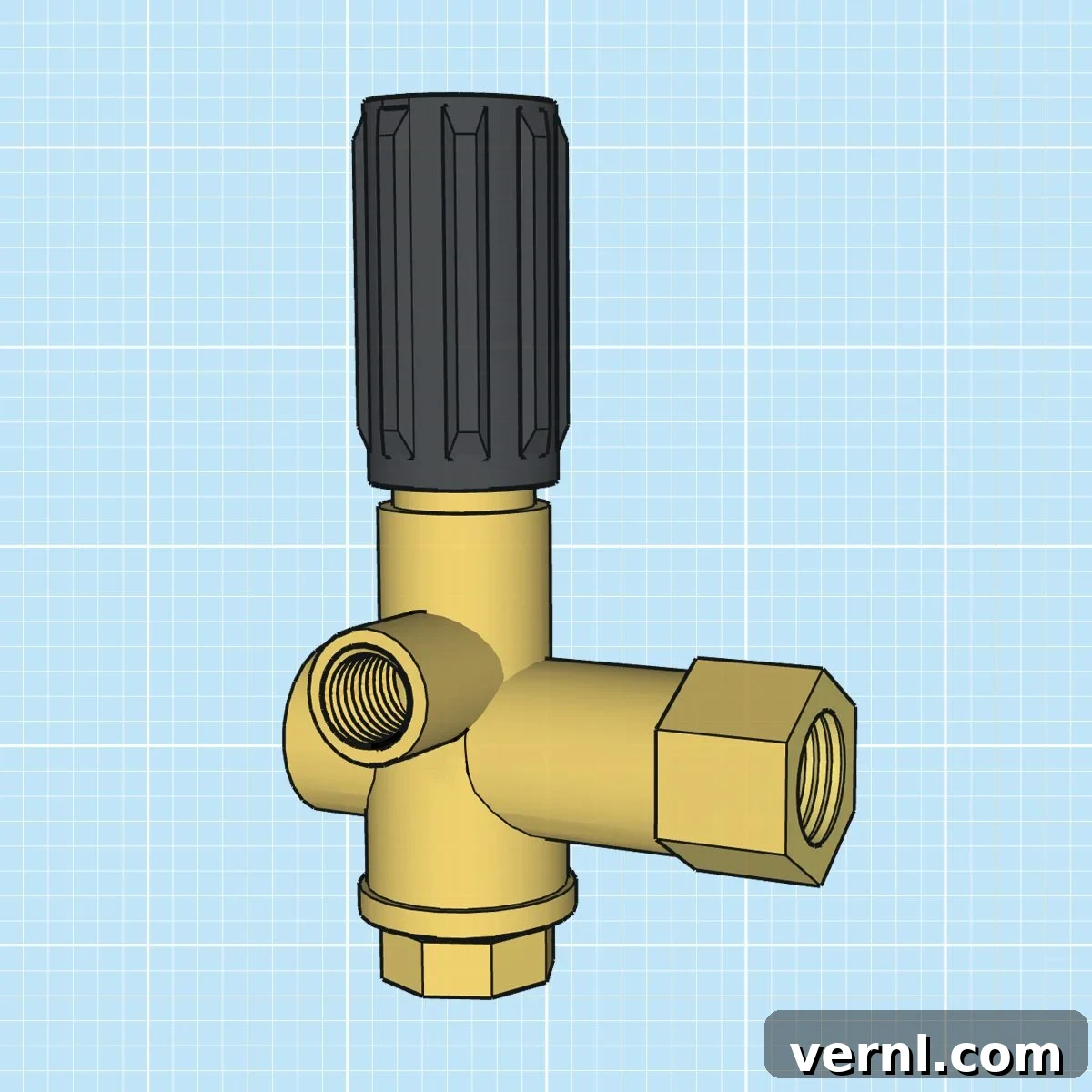
The Unsung Hero: Understanding the Pressure Washer Unloader Valve
A high-quality pressure washer is an indispensable tool for maintaining a clean home and property. Its remarkable efficiency in tackling tough grime is owed, in no small part, to a vital yet often overlooked component: the unloader valve. This small device plays a monumental role in both the performance and longevity of your machine.
Even if you’re an occasional user, gaining a clear understanding of what a pressure washer unloader valve is and how it functions is incredibly beneficial. While unloader valve failures are not an everyday occurrence, they do happen, and knowing their significance can save you from costly repairs or even premature machine breakdown. This comprehensive guide will illuminate why these valves are so critical to your pressure washing experience.
What Exactly Is a Pressure Washer Unloader Valve?
At its core, a pressure washer unloader valve is a sophisticated safety and control mechanism that regulates water pressure and flow rates within the system. Every pressure washer comes equipped with a factory-installed unloader valve, and for good reason. Its primary function is to prevent internal pressure from escalating to dangerous levels while the machine is running but not actively spraying water.
Without a properly functioning unloader valve, a pressure washer pump could easily generate immense water pressure – enough to cause catastrophic damage to internal components, hoses, or even the user, often within a minute or less. It acts as a critical relief system, ensuring that your machine operates within safe parameters. Think of it as the ultimate pressure guardian for your powerful cleaning tool.
The majority of unloader valves are seamlessly integrated into the pump assembly, a design choice by manufacturers to save space and maintain a compact, user-friendly profile for consumer models. However, the market also offers high-quality aftermarket externally mounted unloader valves. These external units present distinct advantages over their built-in counterparts, particularly in terms of accessibility and heat management, which we will explore in detail later.
The Mechanics: How a Pressure Washer Unloader Valve Operates
Regardless of whether your pressure washer features a built-in or an externally mounted unloader valve, the fundamental operational principle remains consistent. As your pressure washer runs, the pump continuously draws water and builds pressure. This pressure rapidly increases until it reaches a pre-determined maximum level, a threshold set by the unloader valve’s internal calibration.
The instant the internal pressure reaches this critical point, the unloader valve springs into action, switching the pump into what’s known as “bypass mode.” In this mode, the highly pressurized water is skillfully redirected. Instead of being forced through the high-pressure hose and out the spray nozzle, it is channeled back through the pump’s pressure head, or often to the inlet side of the pump, in a continuous, fast-moving cycle. This intelligent redirection prevents an uncontrolled buildup of pressurized water within the hose and nozzle, thereby averting potential damage to the equipment and significantly mitigating serious safety hazards.
While this bypass system is remarkably effective, it’s not entirely without its own challenges. The massive friction and high velocity of the water as it cycles rapidly through the pump in bypass mode generate a considerable amount of heat. If your machine is left running in bypass mode for too long without spraying, this excessive heat can quickly accumulate and severely damage the pump’s seals and other vital internal components. This is precisely why most pressure washer manufacturers strongly recommend that users pull the spray gun trigger and release some water at least once every 30 seconds or so. This brief spray breaks the bypass cycle, allows cooler water to flow through the pump, and dissipates accumulated heat, thus protecting your valuable investment.
A Closer Look: Built-in vs. Externally Mounted Unloader Valves
The design and placement of the unloader valve can vary significantly, impacting accessibility and certain performance aspects.
Built-in Unloader Valves
Built-in unloader valves are the industry standard for the vast majority of consumer-grade pressure washers. They are typically housed within the pump casing itself, making them an integral, often hidden, part of the pump assembly. While this design contributes to the machine’s compact footprint and aesthetic appeal, it presents certain challenges. The valve mechanism cannot be easily accessed or readily changed by the average user. If a built-in unloader valve malfunctions, it often necessitates a more complex repair, potentially requiring pump disassembly or even full pump replacement, which can be both time-consuming and expensive.
Externally Mounted Unloader Valves
In contrast, externally mounted unloader valves are self-contained devices that are physically attached to the outside of the pump casing. This design offers several compelling advantages, particularly for more heavy-duty or commercial pressure washing applications. Their external placement makes them considerably easier to locate, inspect, maintain, and replace if the need arises. Technicians can quickly diagnose issues and swap out a faulty valve without extensive pump disassembly.
Furthermore, some external unloader valves are designed with dedicated bypass hoses as part of their mechanism. These hoses provide a greater distance for the pressurized water to travel when the pump enters bypass mode. This extended pathway allows for better heat dissipation, reducing the thermal stress on the pump itself. Consequently, externally mounted systems with longer bypass lines are often less susceptible to heat-related damage, contributing to a longer lifespan for the pump and enhanced reliability during prolonged operation.
Fine-Tuning Your Power: How to Adjust a Pressure Washer Unloader Valve
While most pressure washer unloader valves come factory-set to an optimal point, some models allow for adjustment, giving you greater control over your machine’s performance. Adjusting your unloader valve properly can unlock the greatest possible pressure from your washer, significantly enhancing its cleaning power and efficiency. However, it’s crucial to understand the process and its limitations to prevent accidental damage.
The adjustment mechanism typically involves rotating a large plastic handle or knob that protrudes from the valve assembly. Before you begin, it’s paramount to understand the overarching goal: to achieve the highest effective spray pressure for cleaning while ensuring the pump’s safety when the trigger is released.
To accurately adjust your unloader valve, you’ll need a specialized tool: a pressure gauge attachment. This device should be installed between your spray wand and the high-pressure hose of your machine, allowing you to monitor real-time pressure readings. Here’s a step-by-step guide:
- Understand Your Washer’s Rating: First, note down your pressure washer’s maximum Pounds Per Square Inch (PSI) rating. This is your absolute upper limit.
- Install the Gauge: Securely attach the pressure gauge between the high-pressure hose and the spray gun.
- Initial Spray Test: Fire up your pressure washer and begin spraying water. Observe the pressure gauge carefully, taking note of the pressure reading while actively spraying. This is your “spray pressure.”
- Observe Spike Pressure: Release the trigger and watch the pressure gauge closely. You will notice a temporary spike to a significantly higher pressure than what was displayed while spraying. This is the “spike pressure” or “bypass pressure.”
- Adjust and Re-test: Rotate the unloader valve handle in small increments, typically quarter-turns. After each adjustment, repeat the spray test (steps 3 and 4).
- Target Optimal Ranges:
- Spray Pressure: Aim for a spray pressure that is 50 to 100 PSI below your washer’s maximum rated PSI. This provides robust cleaning power without overworking the system.
- Spike Pressure: The spike pressure (when the trigger is released) should ideally be 300 to 400 PSI higher than your target spray pressure. This ensures the valve is effectively diverting pressure during bypass.
- Crucial Warning: Never, under any circumstances, exceed your pressure washer’s maximum rated pressure. Doing so can cause severe, irreversible damage to your pump, hoses, and other components, potentially voiding your warranty and creating a significant safety hazard. Always prioritize safety and system integrity over incrementally higher pressure.
When Trouble Strikes: Identifying a Failing Pressure Washer Unloader Valve
A malfunctioning pressure washer unloader valve can manifest itself in several ways, often leading to frustrating performance issues or even complete operational failure. Recognizing these signs early can prevent further damage to your machine.
The most prevalent symptom of a failing unloader valve is your machine producing little to no water pressure, or experiencing inconsistent pressure output. This happens because the internal ball check valve – a crucial component that regulates water flow and pressure buildup within the unloader mechanism – becomes compromised. If this ball check valve cannot move freely due to corrosion, mineral deposits, or stiffness in its mechanism, water will bypass the pressurization process, flowing through a relief port instead of being channeled into the high-pressure stream.
In some cases, this issue might be resolved with a relatively straightforward cleaning or lubrication of the internal components. However, often a failing unloader valve simply means it’s time for a replacement. Unless you possess a high level of comfort and experience in disassembling and reassembling the intricate small parts of your pressure washer pump, attempting a DIY repair of the unloader valve can be challenging and risky. For many, taking the machine to a professional technician is the most sensible and time-saving option, ensuring the repair is done correctly and safely.
Other less common, but equally critical, indicators of an unloader valve problem include:
- Steam Emitting from the Thermal Relief Valve: This is a clear sign of excessive heat buildup within the pump, often a consequence of the unloader valve not effectively redirecting water in bypass mode, causing the pump to overheat.
- Machine Running Poorly or Stalling: An unloader valve that isn’t cycling correctly can put immense stress on the engine or motor, causing it to labor, run erratically, or even stall out completely due to inconsistent load.
- Pump Cycling Rapidly: If your pressure washer pump frequently cycles on and off by itself even when the spray gun trigger is not engaged, it can indicate that the unloader valve is struggling to maintain consistent bypass pressure, leading to constant pressure fluctuations.
Extending Lifespan: Maintenance Tips for Your Unloader Valve and Pressure Washer
Proactive maintenance is key to ensuring the longevity and reliable performance of your pressure washer and, by extension, its unloader valve. Simple steps can significantly reduce the risk of common failures:
- Regular Flushing: After each use, especially if you’ve used detergents, flush the system with clean water for a few minutes. This helps remove soap residue and mineral deposits that can accumulate in the unloader valve and pump.
- Use Pump Protector/Stabilizer: Before storing your pressure washer for an extended period (especially during colder months), run a pump protector or stabilizer solution through the system. These solutions lubricate internal components, prevent corrosion, and protect against freezing, all of which are vital for the unloader valve’s delicate parts.
- Proper Storage: Store your pressure washer in a dry, temperate environment. Extreme temperatures can affect seals and internal mechanisms.
- Check for Leaks: Periodically inspect all hoses, connections, and the unloader valve itself for any signs of leaks. Small leaks can indicate deteriorating seals or loose fittings that, if left unaddressed, can lead to bigger problems.
- Avoid Prolonged Bypass Mode: As discussed, running the pressure washer for extended periods in bypass mode (without pulling the trigger) can cause excessive heat buildup. Always aim to pull the trigger every 30 seconds or so to circulate cooler water and protect your pump and unloader valve.
- Clean Water Supply: Always use a clean, filtered water source. Sediment and debris can easily clog or damage the sensitive internal workings of the unloader valve.
Conclusion: Master Your Pressure Washer, Protect Your Investment
The pressure washer unloader valve, though often overlooked, is an indispensable component responsible for the safe and efficient operation of your cleaning equipment. By understanding its fundamental role in regulating pressure, enabling bypass mode, and mitigating heat buildup, you empower yourself to use your pressure washer more effectively and extend its working life.
Whether you have a built-in or an externally mounted valve, knowing how to properly adjust it for optimal performance and recognizing the early signs of a malfunction are invaluable skills. Adhering to simple maintenance practices will not only safeguard your unloader valve but also protect your entire pressure washer investment, ensuring it remains a powerful and reliable tool for years to come. Master the unloader valve, and you master your pressure washer.