
Encountering a multi-legged creature scurrying across your floor or lurking in your garden can send a shiver down your spine. For many, the sight of a centipede immediately conjures thoughts of danger and discomfort. These ancient arthropods are indeed a common presence, especially for those who spend time outdoors, frequently found hidden in damp, dark places like soil, leaf litter, under stones, dead wood, and inside logs. But how much should you truly worry about an up-close and personal encounter? What actions should you take if they find their way into your home? And perhaps the most pressing question: are centipedes poisonous, or more accurately, venomous?
Understanding Centipedes: Nature’s Multi-Legged Predators
Before diving into their defensive capabilities, it’s essential to understand what centipedes are. Centipedes belong to the class Chilopoda, a diverse group of predatory arthropods characterized by their elongated, segmented bodies. Each segment typically bears one pair of legs, distinguishing them from their often-confused cousins, millipedes, which have two pairs of legs per segment. Ranging in size from less than an inch to over a foot long, centipedes are found in almost every terrestrial habitat worldwide, from tropical rainforests to arid deserts.
These creatures are primarily nocturnal hunters, preying on insects, spiders, and other small invertebrates. Their swift movements and secretive nature make them effective predators in their ecosystems. While their appearance can be off-putting, especially their numerous legs and antennae, they play a crucial role in controlling pest populations in nature. Centipedes are vital components of their ecosystems, helping to maintain balance by consuming various invertebrates, including agricultural pests.
Are Centipedes Venomous? Clarifying the Common Misconception
The term “poisonous” is often mistakenly used to describe centipedes. A more accurate descriptor is “venomous.” The distinction is important: poisonous creatures are harmful if ingested or touched, while venomous creatures inject toxins into their prey or defense. Centipedes are indeed venomous, equipped with specialized appendages designed for subduing their prey.
At the front of a centipede’s head, behind its mandibles, are a pair of modified front legs called maxillipeds, or forcipules. These hardened, pincer-like appendages curve around the head and are equipped with sharp, hollow fangs. At the base of these fangs, a gland produces venom. When a centipede captures prey or feels threatened, it uses its powerful maxillipeds to pierce the victim’s tissue and inject venom through tiny ducts. The muscles surrounding the venom gland contract, effectively “shooting” the poison through tiny ducts into the target.
This venom is a complex cocktail of various components, including enzymes, histamines, and other biochemicals. These components work together to immobilize prey and aid in digestion. While potent enough to paralyze or kill the small insects and arachnids they typically hunt, the venom’s strength varies significantly between centipede species. For the vast majority of centipede species, especially the smaller ones commonly found in homes, their venom is not considered life-threatening to humans, though it can cause discomfort.
What Does a Centipede Bite Look Like and What Are the Symptoms?
Despite the frightening imagery of a centipede injecting venom, the reality of a human centipede bite is typically far less dramatic. For most people, a centipede bite is more painful than dangerous, often likened to a bee or wasp sting. The appearance of a bite usually involves localized symptoms at the site of injection, mirroring a common allergic reaction to an insect sting.
Common Symptoms of a Centipede Bite:
- Pain: Immediately following the bite, you’ll likely experience a sharp, stinging pain, which can range from mild to intense depending on the centipede species and individual sensitivity. This pain can persist for several hours.
- Swelling: The area around the bite will typically swell, similar to how it would react to other insect stings. This swelling is usually localized and not extensive.
- Redness: The skin may become red and inflamed, indicating a local inflammatory response to the venom.
- Itching: As the bite begins to heal, it might become itchy, a common sensation with insect bites.
- Numbness or Tingling: In some cases, localized numbness or tingling around the bite area may occur, which usually subsides quickly without lasting effects.
These symptoms generally subside within a few hours to a couple of days. The smaller the centipede, the less likely the bite will hurt severely. However, kids and adults with a history of insect allergies should be wary and closely observed after a bite, as their reactions may be more pronounced.
When to Seek Medical Attention for a Centipede Bite:
While most centipede bites are minor, certain situations warrant medical attention:
- Allergic Reactions: Individuals with a history of severe insect allergies (e.g., to bee stings) should be closely monitored. Anaphylactic reactions, though rare, are possible and require immediate emergency care. Symptoms can include widespread rash, difficulty breathing, dizziness, rapid heart rate, or swelling of the face and throat.
- Children and Vulnerable Individuals: Young children, the elderly, or those with compromised immune systems may experience more pronounced reactions, making a medical consultation advisable.
- Severe Localized Reactions: If swelling or pain is excessive, spreads rapidly, or if blistering or ulceration occurs at the bite site, consult a healthcare professional.
- Signs of Infection: If the bite area becomes increasingly painful, red, warm to the touch, or if pus develops, it could indicate a secondary bacterial infection requiring antibiotics.
- Systemic Symptoms: Although rare, if you experience symptoms like headache, nausea, vomiting, fever, chills, or muscle cramps distant from the bite site, seek medical advice promptly.
First Aid for Centipede Bites:
If you or someone you know gets bitten by a centipede, follow these steps:
- Clean the Area: Wash the bite site thoroughly with soap and water to prevent infection.
- Apply a Cold Compress: Use an ice pack wrapped in a cloth or a cold, damp cloth to reduce swelling and pain. Apply for 10-15 minutes at a time.
- Elevate: If possible, elevate the affected limb to help minimize swelling and improve circulation.
- Pain Relief: Over-the-counter pain relievers like ibuprofen or acetaminophen can help manage discomfort.
- Antihistamines: Oral antihistamines can reduce itching and minor swelling, especially if you have a history of mild allergic reactions.
Common Centipede Species and Their Characteristics
With thousands of centipede species worldwide, their characteristics and the potential impact of their bites vary. Understanding some of the more common types can help demystify these creatures. Terminixexplains, “There are more species of this arthropod than there are legs on the leggiest of centipedes.”
The House Centipede (Scutigera coleoptrata)
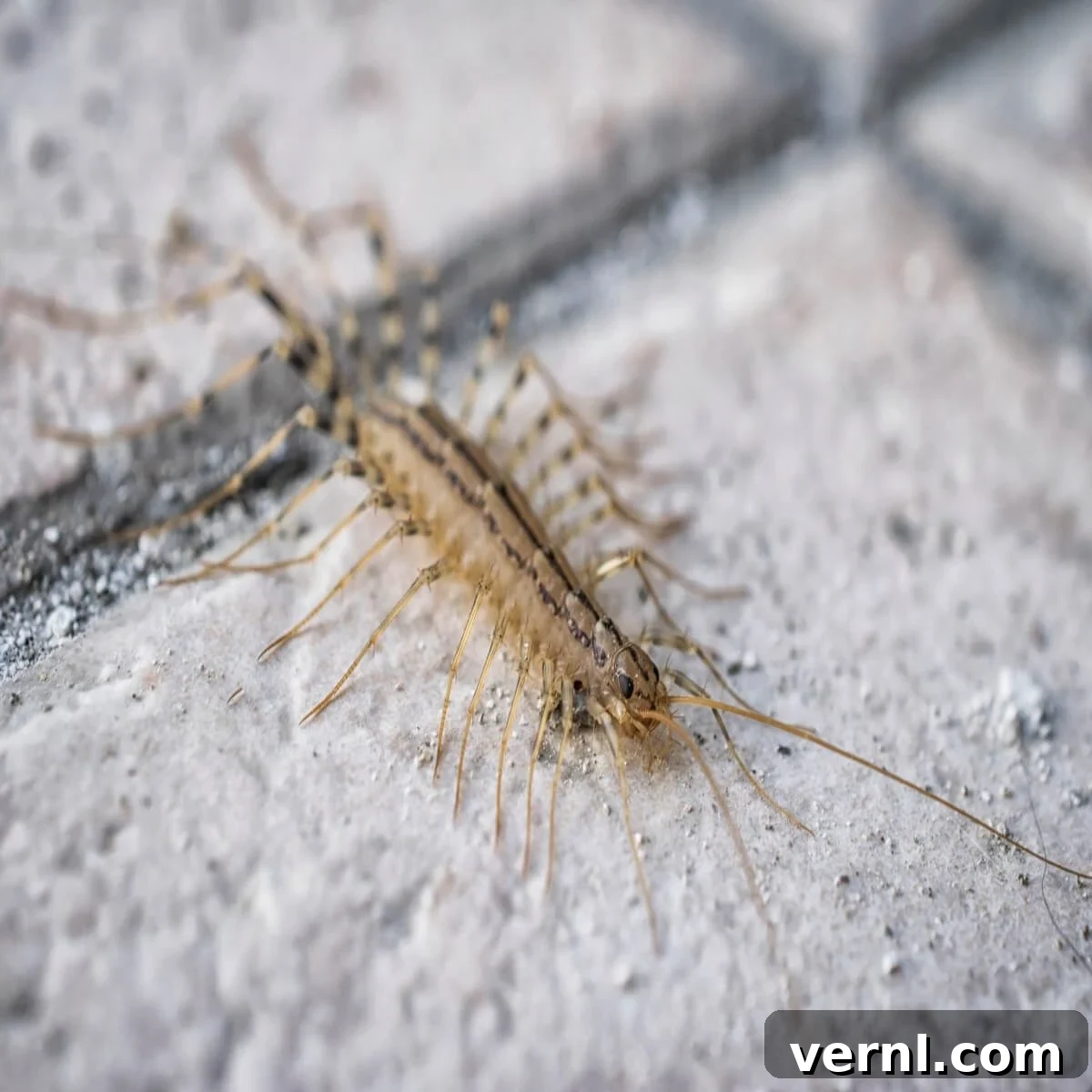
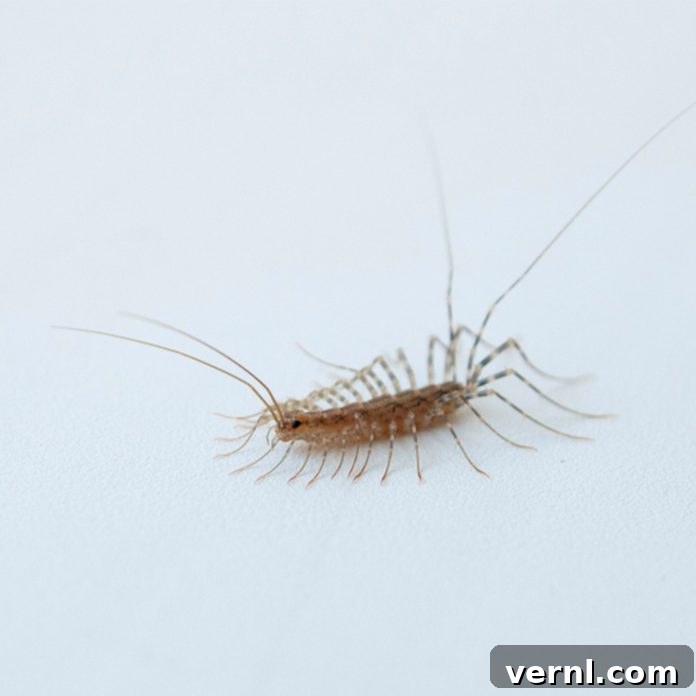
Often the most encountered centipede indoors, the house centipede is instantly recognizable by its extremely long legs (up to 15 pairs) and antennae, giving it a somewhat alarming appearance. You may be relieved to know that house centipedes are not harmful. Despite its intimidating look, the house centipede is largely harmless to humans. In fact, many pest control experts consider it a beneficial insect within the home. They’re not exactly easy on the eyes, though, and are most easily recognized by their long legs.
- Appearance: Grayish-yellow body with three dark stripes running lengthwise, up to 1.5 inches long, but appears much larger due to its numerous, lengthy legs.
- Behavior: Nocturnal and incredibly fast, house centipedes are voracious predators. They can help out around the house, as they like to eat spiders, insects, and other common pests like silverfish, cockroaches, and termites.
- Bite: While they can bite, their maxillipeds are generally too weak to penetrate human skin easily. If a bite does occur, it’s typically mild, causing localized redness and discomfort akin to a mosquito bite, and rarely requires medical attention.
- Why they enter homes: They seek moisture and a steady supply of their insect prey, often found in damp basements, bathrooms, and crawl spaces.
Giant Centipedes (e.g., Amazonian Giant Centipede, Texas Redheaded Centipede)
On the other end of the spectrum are the giant centipedes, belonging primarily to the genus Scolopendra. These formidable creatures can reach impressive sizes and possess more potent venom than their smaller relatives.
- Amazonian Giant Centipede (Scolopendra gigantea): One of the largest centipede species on Earth, capable of growing over 12 inches (30 cm) long. Found in tropical and subtropical regions of South America and the Caribbean, they prey on a wide range of animals, including insects, tarantulas, lizards, frogs, birds, and even bats. Their bites can be extremely painful and cause significant localized swelling, fever, and general malaise, though fatalities are exceedingly rare to humans.
- Texas Redheaded Centipede (Scolopendra heros): This species is some of the largest on the planet. Distinctive for its bright red head, black body, and bright yellow legs, this species is a common inhabitant of the southwestern United States and northern Mexico. Its unique coloring, consisting of a red head, bright yellow legs and black body, serves as a warning to potential predators to stay away. Growing up to 8 inches (20 cm) long, its bite is known for causing intense localized pain and swelling. While not fatal to healthy adults, the pain can be severe and last for several hours to days, potentially accompanied by nausea and headache.
These larger species are generally encountered outdoors in their natural habitats and are less likely to invade human dwellings unless their environment is disturbed.
Centipedes in Your Home: Prevention and Management
Finding a centipede indoors can be unsettling, but understanding why they enter and how to manage them can provide peace of mind. Centipedes typically come inside seeking two main things: moisture and food (other insects). Managing these factors is key to preventing infestations.
Prevention Strategies for Centipedes:
The best defense against centipedes is to make your home less appealing to them and their prey. This involves a multi-pronged approach focusing on sealing entry points, reducing moisture, and eliminating food sources.
- Reduce Moisture: Centipedes thrive in damp environments. Eliminating excess moisture is crucial.
- Use dehumidifiers in basements, crawl spaces, and attics to lower humidity levels.
- Fix leaky pipes, faucets, and drains immediately, both indoors and outdoors.
- Ensure proper ventilation in bathrooms and kitchens by using exhaust fans.
- Eliminate standing water sources around the foundation of your home, such as clogged gutters or poor drainage.
- Seal Entry Points: Centipedes can squeeze through surprisingly small openings, so securing your home’s perimeter is essential.
- Seal cracks and gaps in foundations, walls, and around utility penetrations.
- Install sweeps on exterior doors and repair or install screens on windows and vents to prevent entry.
- Caulk around window frames and door frames to block small openings.
- Eliminate Food Sources: By controlling other pests, you cut off the centipede’s primary food supply.
- Regularly clean and vacuum to remove crumbs, insect debris, and spider webs that might attract other insects.
- Store food in airtight containers and promptly clean up spills.
- Consider professional pest control services if you have a significant infestation of other insects like spiders, silverfish, or cockroaches, as these serve as centipede sustenance.
- Declutter and Tidy: Remove potential hiding spots both inside and outside your home to reduce shelter for centipedes and their prey.
- Indoors: Keep basements, attics, and storage areas tidy and free of clutter like cardboard boxes, newspapers, and old clothes directly on the floor. Use plastic bins with tight lids.
- Outdoors: Clear leaf litter, woodpiles, compost heaps, mulch, and other debris away from your home’s foundation. Trim vegetation, shrubs, and trees that touch the house to create a dry, inhospitable zone.
Removal and Management of Centipedes:
If you encounter a centipede indoors, there are several ways to handle it, ranging from humane removal to pest control interventions:
- Non-Lethal Removal: For house centipedes, which are beneficial predators, you can simply sweep them into a dustpan or use a glass and a piece of paper to capture them, then release them outdoors, away from your home.
- Vacuuming: A vacuum cleaner with a hose attachment can quickly and safely remove centipedes, especially if you prefer not to touch them. Dispose of the vacuum bag immediately after.
- Sticky Traps: Place glue traps in areas where centipedes are frequently seen, such as damp corners of basements or near entry points. These traps can also help you monitor the extent of the centipede presence.
- Insecticides: While available, insecticides are generally not recommended for centipedes as a primary solution. They are often more effective at treating the underlying pest issue (the centipede’s food source). If used, follow product instructions carefully and consider professional application to ensure safety and effectiveness.
- Professional Pest Control: If you’re dealing with a persistent centipede problem, if you’re encountering larger, more intimidating species, or if you simply prefer not to handle the issue yourself, a professional pest control service can identify the root cause and implement targeted solutions for long-term management.
Centipedes vs. Millipedes: A Common Identification Challenge
It’s very common for people to confuse centipedes with millipedes, given their multi-legged appearance. However, they are distinct classes of arthropods with key differences in anatomy, behavior, and diet that are important for identification and understanding their potential impact.
- Legs Per Segment: This is the most defining characteristic. Centipedes have one pair of legs per body segment, giving them a flatter appearance and often making them appear faster. Millipedes have two pairs of legs per body segment, making their bodies appear more rounded or cylindrical.
- Diet: Centipedes are predators, actively hunting other insects and small invertebrates. Millipedes are primarily detritivores, meaning they feed on decaying organic matter, such as dead leaves and rotting wood, playing a crucial role in decomposition.
- Body Shape and Movement: Centipedes tend to have a flatter, more agile body, moving quickly and erratically. Millipedes have a more rounded, cylindrical body and move much slower, with a distinctive wave-like motion of their many legs.
- Antennae: Centipedes typically have long, slender antennae that they use to sense their environment and locate prey. Millipede antennae are usually shorter and more stubby.
- Defense Mechanisms: When threatened, centipedes use their venomous maxillipeds to bite as a primary defense. Millipedes, being non-venomous, typically curl up into a tight spiral to protect their softer undersides or release foul-smelling fluids as a deterrent. These fluids can irritate skin but are generally harmless.
Understanding these distinct differences can help you correctly identify the creature you’ve encountered and react appropriately, whether you see it as a beneficial house guest or a pest to manage.
Conclusion: Living Alongside These Ancient Predators
Centipedes, with their many legs and swift movements, can certainly be unsettling to encounter. However, the overwhelming majority of species, particularly those you might find in or around your home, pose little to no serious threat to humans. While they are venomous and can inflict a painful bite akin to a bee sting, severe reactions are rare and primarily confined to individuals with specific allergies or when dealing with larger, more exotic species.
In many instances, centipedes, especially the common house centipede, can even be considered beneficial, acting as natural pest control agents by preying on other undesirable insects like spiders, silverfish, and cockroaches. By understanding their habits, recognizing the differences between species, and implementing simple prevention strategies like moisture control, sealing entry points, and reducing clutter, you can effectively manage their presence and coexist peacefully with these ancient and fascinating arthropods. So, the next time you spot a centipede, remember it’s likely more scared of you than you need to be of it, and often, it’s just trying to help keep your home pest-free.