
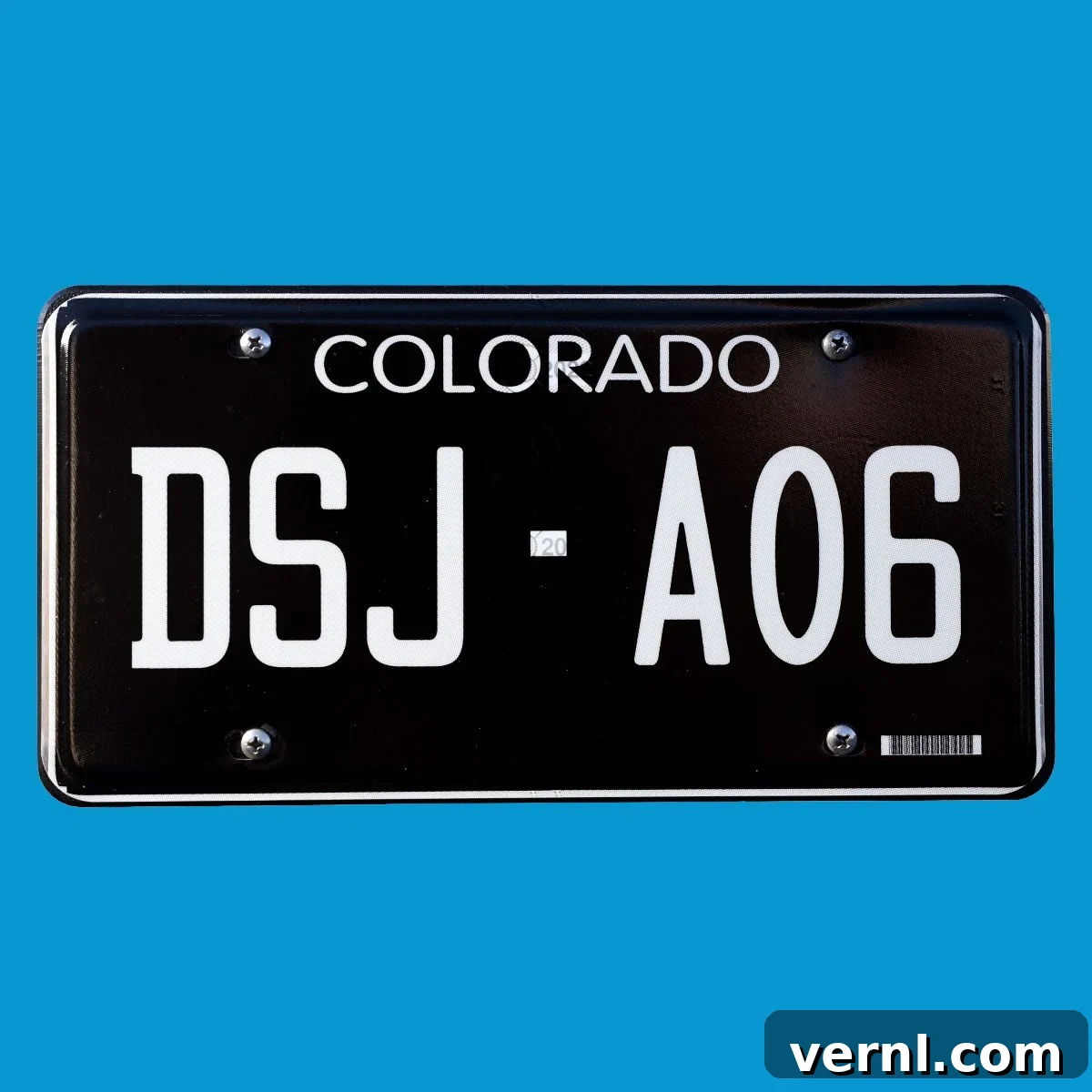
Blackout License Plates: What They Are, Where They’re Legal, and How to Get One
Have you noticed more vehicles sporting black license plates with white lettering lately? These “blackout plates” are becoming increasingly common, whether you’re stuck in traffic, picking up kids from school, or simply strolling down a residential street. Their understated yet distinctive appearance sets them apart from standard license plates, appealing to drivers seeking a subtle way to personalize their vehicles.
But blackout plates offer more than just a stylish aesthetic. They’re connected to how states provide diverse license plate options and specialty designs. This article dives into the details of blackout plates: what defines them, where they’re legally permitted, their associated costs, and the steps involved in obtaining one.
Understanding Blackout Plates
Blackout plates are essentially specialty license plates characterized by a black background and light-colored lettering, typically white or silver. Their design philosophy emphasizes simplicity and a clean look, avoiding the slogans, graphics, or imagery often found on traditional plates.
Despite their darker hue, blackout plates are engineered to meet all state requirements for visibility and reflectivity. This ensures they remain easily readable by law enforcement officers and traffic cameras, maintaining road safety standards. The primary draw lies in their visual appeal. Many drivers appreciate how blackout license plates can complement virtually any vehicle color, adding a touch of personalization without being overly ostentatious. In most jurisdictions, obtaining blackout plates follows the same procedure as acquiring other specialty or personalized plates, regardless of whether the alphanumeric sequence is custom-chosen or randomly generated.
Legality of Blackout Plates: State-by-State Variations
It’s crucial to understand that blackout plates are only legal in states that officially issue them through their Department of Motor Vehicles (DMV) or a comparable agency. Drivers cannot legally create their own black plates or purchase unofficial versions online, even if they appear authentic. Using an unauthorized plate can lead to fines and other legal repercussions.
The number of states offering blackout license plates as an optional design is growing, typically as part of existing specialty plate programs. States such as Colorado, Iowa, Minnesota, Mississippi, Utah, and others now provide this option. However, the specifics of how these plates are handled can vary significantly. Some states treat them like any other specialty plate, while others link them to specific state programs or charitable causes. Furthermore, eligibility may be restricted based on vehicle type. Passenger cars are usually the first to be included, with other vehicle categories potentially added later or excluded altogether.
Given that each state maintains complete control over its license plate designs, availability can change. A blackout plate option might be offered one year and then be temporarily suspended or permanently discontinued the next. Therefore, the most reliable way to determine current availability and regulations is to consult the official website of your state’s motor vehicle agency. These websites typically provide comprehensive information on specialty plate options, application procedures, and any associated rules or restrictions.
The Cost Factor: How Much Do Blackout Plates Cost?
Blackout plates generally come with a higher price tag than standard-issue license plates, but their cost is generally in line with other specialty designs. Most states implement an initial fee for issuing the plate, coupled with a recurring annual renewal fee that is added to the standard vehicle registration costs. For instance, Wisconsin plans to charge an upfront fee of $15 for its blackout plates when they become available in 2026, followed by a $25 annual renewal fee.
In some states, a portion of the extra fees collected from specialty plates is allocated to supporting transportation infrastructure, environmental initiatives, or other state-sponsored programs. Other states simply consider blackout plates as a premium aesthetic option without any specific charitable or programmatic tie-in. You may also incur additional charges if you choose to personalize your plate with a custom alphanumeric sequence instead of accepting a randomly assigned one.
While blackout license plates are not free, they represent a significantly more affordable customization option compared to more extensive cosmetic vehicle modifications such as custom paint jobs or vehicle wraps. For many drivers, the plate offers a subtle yet impactful upgrade that enhances the vehicle’s overall appearance without breaking the bank.
The Application Process: How to Obtain Blackout Plates
Blackout plates must be obtained directly from the state’s official channels. There is no legal method to purchase them from third-party vendors or to create your own for on-road use. Most drivers initiate the process through their state’s DMV website, although some locations may still require in-person applications.
The process typically begins with a brief eligibility check to ensure that the applicant and their vehicle meet the necessary criteria. Standard passenger vehicles usually qualify, provided that the plate option is currently available. From there, applicants select the blackout plate design, choose between a standard or personalized alphanumeric sequence, and pay the required fees. Some states allow applicants to preview available number combinations, while others assign them automatically.
For new vehicle registrations, blackout plates are often available immediately upon completing the registration process. If the vehicle is already registered with standard plates, the request is typically treated as a specialty plate upgrade or replacement. Processing times can vary. Some plates are delivered relatively quickly, while others may take longer, particularly when demand is high. It’s advisable to check with your state’s DMV for estimated processing times.
It is important to note that blackout plates are subject to the same regulations as any other license plate. They must be kept fully visible and legible at all times. Obstructing the plate with covers, altering the characters, or using frames that block any portion of the plate can lead to penalties. These rules are actively enforced by state authorities.
Blackout license plates, while simple in their design, reflect a broader trend towards increased personalization options within state-regulated license plate programs. They offer drivers a way to express their style while adhering to legal requirements.
Sources
- North Dakota Department of Transportation, Motor Vehicle Division. Blackout Plate.
- Indiana Bureau of Motor Vehicles. Blackout License Plate Fact Sheet.
- Milwaukee Journal Sentinel. Wisconsin unveils blackout, retro yellow license plates