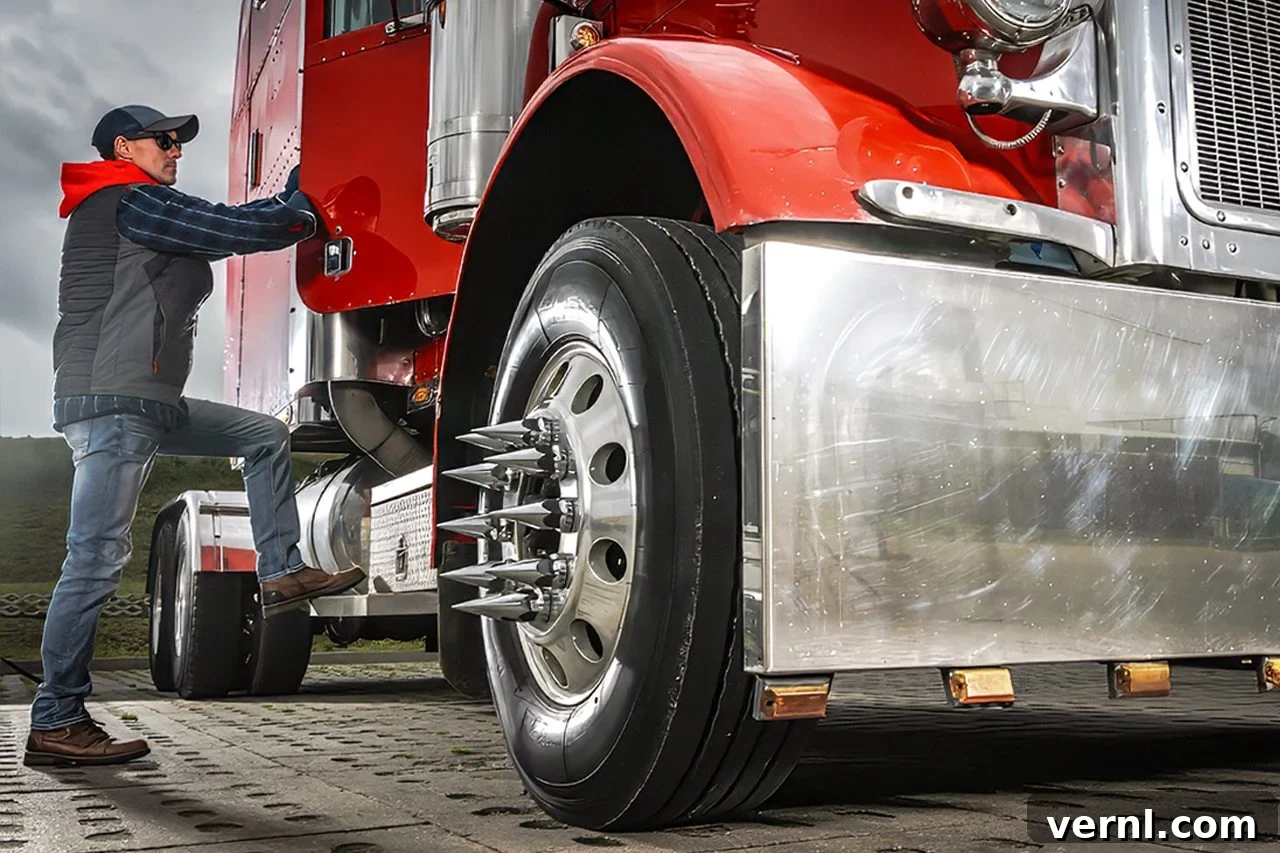
Driving alongside a semi-truck can feel unnerving. These large vehicles occupy almost the entire lane, limit visibility, and sometimes sport long, pointed wheel spikes that catch the eye and raise questions. They look nothing like the lug nuts on a passenger car, so what are they, and why do some trucks have them?
This article explains what those wheel spikes are, what sits underneath them, what purpose they serve, and whether they affect safety or legality on the road.
Why Do Semi-Trucks Have Spikes on Their Wheels?
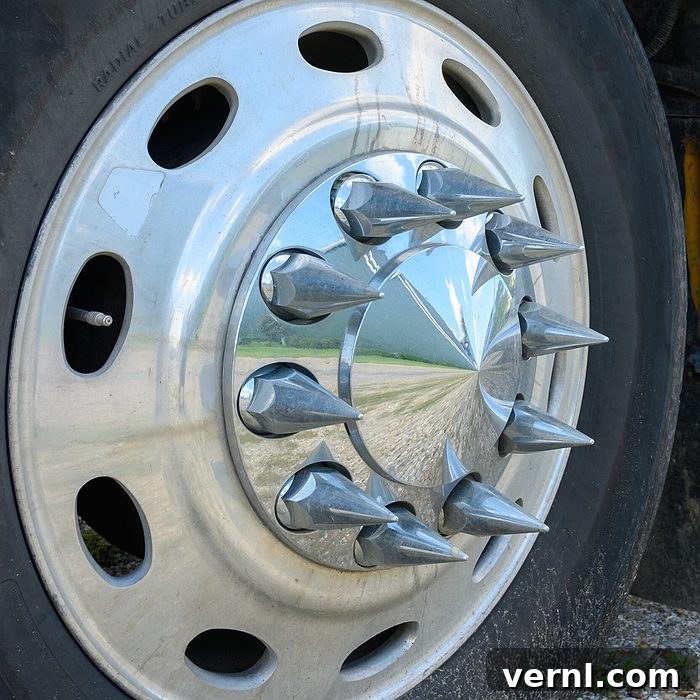
The long “spikes” commonly seen on semi-truck wheels are decorative lug nut covers that slip over the existing lug nuts. They are cosmetic accessories rather than structural components and do not attach to the axle, braking system, or hub in a way that affects wheel retention. Their role is primarily visual: they change the appearance of the wheel with an aggressive, attention-grabbing profile.
Manufacturers produce these covers in many shapes and finishes beyond pointed spikes. Flat caps, bullet-style covers, rocket-shaped designs, and spear-like styles are all available. Materials vary as well; many are molded plastic with a chrome-like finish to mimic polished metal, while higher-end options use actual metal. Besides their visual function, lug nut covers offer some secondary practical benefits: they create a barrier between the lug nut hardware and the elements, helping reduce exposure to dirt and moisture that can accelerate corrosion. However, the pointed or elongated shape itself does not add meaningful protection compared to conventional covers.
Installation methods differ by product. Some slip directly over the lug nut and are retained by friction or internal clips, while others may have threaded attachments or use a retainer ring. Always follow the manufacturer’s instructions when installing or removing covers so they remain secure without interfering with regular maintenance.
Do Wheel Spikes Affect Safety?
Because lug nut covers are decorative and do not replace proper wheel fasteners or inspections, they do not provide mechanical safety benefits. The Federal Motor Carrier Safety Administration requires that wheel nuts and bolts on commercial vehicles remain properly torqued and secure; decorative covers are not a substitute for regular maintenance or inspection procedures. Removing covers during routine brake and wheel checks ensures technicians can inspect fasteners and bearings properly.
For other road users, the presence of spiked lug nut covers does not usually require special driving behavior beyond standard caution around large trucks. Drivers should continue to observe established safety practices: avoid lingering in a truck’s blind spots, give wide berth when passing, and maintain a safe following distance. The spikes are not designed as defensive or offensive devices, and they should not be treated as hazards that demand unusual maneuvers.
Are Wheel Spikes Legal?
The legality of wheel spikes varies by jurisdiction. Federal regulations for commercial vehicles focus on overall wheel condition and the requirement that fasteners be secure, while state and local rules can restrict accessories that project from wheels if they create a risk to pedestrians, cyclists, or other road users. Some states explicitly limit wheel protrusions that extend beyond the vehicle body or present a safety hazard.
Because rules differ across states and municipalities, truck owners and drivers should review local vehicle-equipment laws before installing prominent wheel accessories. When in doubt, consult the relevant state vehicle code or a local enforcement agency to confirm whether a particular style of wheel cover is permitted where the vehicle will operate. Adhering to local regulations helps avoid fines, equipment removal orders, or other enforcement actions.
Practical Considerations and Alternatives
If appearance is the goal, there are many ways to achieve a customized look without dramatic spikes. Smooth chrome lug covers, painted wheel trims, or polished aluminum caps can give an upscale aesthetic with less potential for regulatory scrutiny. For operators who value durability, metal covers offer a longer lifespan than many plastic options, but they can be heavier and sometimes more expensive.
Maintenance-wise, regularly remove covers during tire rotations and inspections to ensure lug nuts and studs are in good condition and properly torqued. Replace cracked or loose covers to prevent pieces from detaching on the road. If you transport freight across multiple states, consider choosing modest styles that are less likely to conflict with local regulations.
Conclusion
Wheel spikes on semi-trucks are primarily decorative lug nut covers that change a truck’s appearance. They are not structural components and do not replace necessary maintenance or safety checks. While they can offer some protection from dirt and moisture, their main purpose is aesthetic. Legal restrictions vary by location, so truck owners should verify local equipment rules before installing pronounced wheel accessories, and all drivers should continue to practice standard safety precautions when sharing the road with large trucks.
Sources
- Washington State Legislature, RCW 46.37.369
- Electronic Code of Federal Regulations, Part 571—Federal Motor Vehicle Safety Standards
- Federal Motor Carrier Safety Administration, Tips for Passenger Vehicle Drivers