Unlocking the Green Potential: A Comprehensive Guide to Using Banana Peels for Thriving Plants
Bananas are often hailed as a near-perfect snack: conveniently packaged, nutritionally dense, and incredibly versatile. Yet, despite their many virtues, bananas contribute significantly to household and agricultural waste. A staggering one-third of a banana’s total weight resides in its peel – a part often discarded without a second thought. This raises an important question for environmentally conscious consumers and avid gardeners alike: what if we could harness this abundant “waste product” for something truly beneficial, transforming a problem into a sustainable solution?
Beyond the Fruit: The Versatility of Banana Peels
The concept of repurposing banana peels is far from novel, and their potential extends well beyond the compost bin. Across various sectors, innovative uses are emerging for this overlooked resource:
- Animal Feed: Research has shown that banana peels can be processed and utilized as a nutritious supplement in animal feed, contributing to a circular economy in agriculture.
- Culinary Delights: For the adventurous chef or those exploring plant-based diets, banana peels offer unique culinary possibilities. When properly cleaned (a crucial step given that banana production can be pesticide-heavy), they can be blended into smoothies for added fiber and nutrients, or even creatively transformed by industrious vegans into flavorful dishes like “banana-peel carnitas.”
- Natural Remedies and More: Beyond food, banana peels are being explored for applications in water purification, bio-plastic production, and even as a potential source of medicinal compounds.
However, if the idea of eating banana peels doesn’t quite appeal to your palate, what about their potential in the garden? This brings us to a popular trend that has swept through gardening communities on social media platforms like “garden Twitter”: banana peel water. This isn’t for human consumption, but rather a proposed homemade elixir for nourishing plants.
The Banana Peel Water Trend: A Gardener’s Experiment
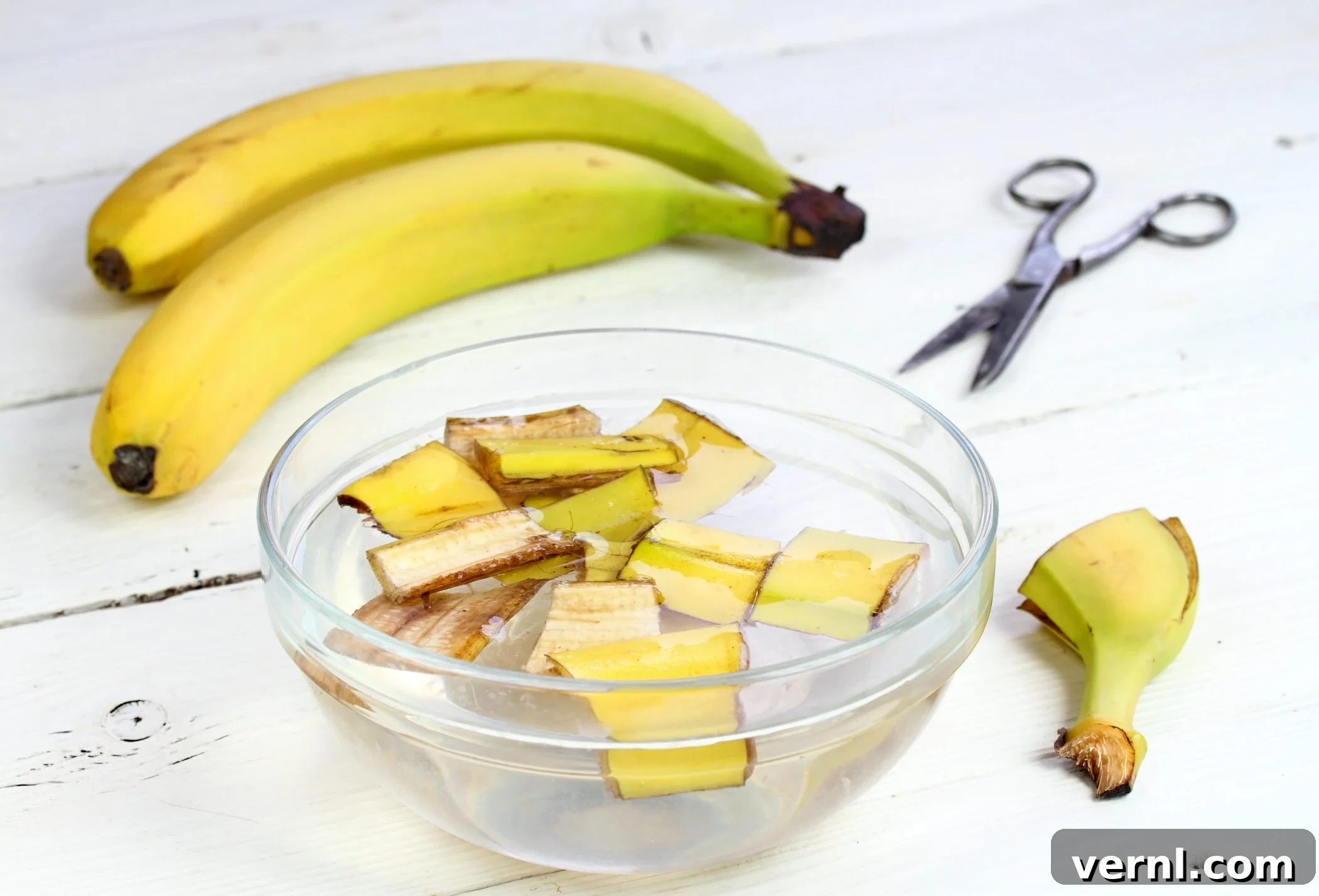
The premise behind banana peel water is remarkably straightforward, contributing to its widespread appeal among amateur gardeners seeking simple, natural solutions. The process typically involves placing banana peels into a jar of water and allowing them to steep for a day or two. After this brief infusion period, the nutrient-infused water is then used to hydrate houseplants or outdoor garden beds, purportedly providing them with a beneficial boost.
Many gardeners are drawn to this method by the intuitive idea that if bananas are rich in nutrients, their peels must be too. Extracting these nutrients with water seems like a logical, eco-friendly way to feed plants without resorting to synthetic fertilizers. Driven by curiosity and a desire to understand the science (or lack thereof) behind this popular garden hack, I decided to put it to the test myself. My personal experiment involved applying banana peel water to two of my own houseplants to observe any noticeable effects, all while seeking expert insight from a seasoned master gardener.
Unpeeling the Science: Are Banana Peels Truly Good for Plants?
The short answer is yes, banana peels are undeniably a source of plant-beneficial nutrients. However, the efficacy of delivering these nutrients through simple banana peel water is highly questionable when viewed through a scientific lens.
Understanding Organic Material and Plant Nutrition
At their core, banana peels are organic material – a fundamental component of healthy soil ecosystems. Organic material refers to the remains of carbon-based life, encompassing everything from fallen leaves and dead roots to animal waste. Its crucial role in soil health lies in its ability to slowly break down, releasing vital nutrients that plants can absorb through their roots. Key nutrients include nitrogen (N), phosphorus (P), and potassium (K), along with numerous micronutrients. Plants absorb these nutrients not as raw organic matter, but as specific ions that must be dissolved in soil water and readily available in the root zone.
The Complex Process of Decomposition and Nutrient Availability
For organic material to become usable plant food, it must undergo a process called decomposition. This isn’t a passive event but a complex biological transformation orchestrated by a vast community of microorganisms – bacteria, fungi, and other decomposers – working in concert with factors like air, moisture, and temperature. These microbes break down intricate organic compounds into simpler inorganic elements, making them available for plant uptake. Without this intricate breakdown, the nutrients remain locked within the organic structure, inaccessible to plant roots.
Consider the process of creating a compost pile. You meticulously gather kitchen scraps like banana peels, eggshells (discover more ways to use eggshells in your garden), and coffee grounds. You turn the pile regularly, ensuring proper aeration and moisture. Over time, these diverse organic materials transform into a dark, crumbly, nutrient-dense substance known as compost. This transformation doesn’t happen overnight; creating high-quality compost can take several months or even a year, depending on the conditions and materials involved.
Banana Water vs. Composting: A Question of Efficacy
Given the elaborate requirements for natural decomposition – a precise balance of microbial activity, aeration, and moisture – it becomes highly improbable that simply steeping a banana peel in water for a day or two could achieve the same level of nutrient extraction and availability. The vast majority of beneficial nutrients in a banana peel are bound within its cellular structure and require significant biological activity to be released into a form that plants can readily absorb. While some trace amounts of soluble minerals might leach into the water, the concentration is likely to be negligible and inconsistent.
Scientific exploration into extracting nutrients from banana peels has shown some promise, particularly when using controlled processes. For instance, boiling banana peels has demonstrated a potential for extracting potassium, which can be beneficial in specific contexts like aiding individuals with kidney disease. However, these are precisely controlled, high-temperature extraction methods, far removed from a simple cold-water soak on a kitchen counter. Without a standardized and controlled process, quantifying the nutrient concentrations in homemade banana peel water is virtually impossible, making its benefits anecdotal at best.
Furthermore, extensive academic research and horticultural studies have yet to produce conclusive evidence supporting the positive effects of banana peel water on plant growth or overall health. As highlighted by the University of Maryland Extension, there are currently no studies demonstrating significant benefits from this practice. Therefore, while banana peels are undoubtedly a source of valuable nutrients for plants, the method of extracting and delivering those nutrients through a brief water infusion simply doesn’t align with established plant science or the complex biology of decomposition. Your time and effort might be better spent on proven methods.
Harnessing the Power of Banana Peels: Effective Methods for Plant Health
If banana peel water isn’t the most effective way to utilize this organic resource, what methods truly work? The key lies in facilitating the natural decomposition process, ensuring nutrients are released in a form plants can absorb.
The Gold Standard: Composting Banana Peels
Without a doubt, the most effective and scientifically sound way to use banana peels for your plants is by adding them to your compost pile or countertop compost bin. Composting transforms organic waste into a rich, nutrient-dense soil amendment that offers myriad benefits for both houseplants and outdoor gardens.
To maximize efficiency, it’s highly recommended to cut up the banana peels into smaller pieces before adding them to your compost. This simple step significantly increases the surface area available for microorganisms to work on, accelerating the decomposition process and leading to faster nutrient release. As landscape expert Melissa Rolston, Chief Strategy Officer at Paramount Landscaping Inc., advises, “If you’re burying peels directly in the soil, chop them into small pieces so they decompose faster and don’t attract pests. Nature has incredible ways of recycling nutrients — banana peels are one of them, as long as you use them mindfully.”
Once your compost is mature, it becomes an invaluable resource:
- For Houseplants: Indoor plants, which often spend their entire lives in the same pot, quickly deplete the nutrients in their potting soil. If your houseplant has resided in the same container for an extended period, it might be time to re-pot it into fresh soil. Alternatively, if the plant is content in its current home or is too large to easily re-pot, top-dressing with a layer of nutrient-rich compost can revitalize it. You may need to gently scrape away a small amount of the topsoil to prevent overfilling the pot. Compost also improves soil structure, drainage, and aeration for healthy root development for even the most resilient houseplants.
- For Garden Soil: Compost is a powerhouse for outdoor gardens, enhancing soil fertility, structure, and water retention. Before adding significant amounts of compost or any other amendment to your garden, it’s always a good practice to test your soil. This helps you understand its current nutrient profile and pH balance, ensuring you don’t inadvertently add too many nutrients, which can be detrimental to both soil and plant health.
Why Direct Burial of Banana Peels Isn’t Recommended
Another common internet trend involves simply burying whole banana peels directly into garden soil or houseplant pots. While this might seem like a straightforward solution, it is generally an inefficient and potentially problematic method for several reasons:
- Slow Nutrient Release: Similar to banana peel water, whole peels buried directly in the soil will decompose, but very slowly. The nutrients remain largely inaccessible to plant roots for an extended period, meaning your plants won’t receive an immediate or consistent benefit.
- Pest Attraction: Rotting fruit and peels can attract unwanted pests, including fruit flies, gnats, rodents, and other garden nuisances, particularly if not buried deeply enough or if decomposition is slow.
- Unstable Soil Conditions: Undecomposed organic matter can create unstable conditions in the soil. As they break down, peels can temporarily “tie up” nitrogen from the surrounding soil, making it unavailable for your plants. This is often referred to as nitrogen immobilization.
- Anaerobic Decomposition: If buried too deeply or in compacted soil, peels can decompose anaerobically (without oxygen), leading to foul odors and the production of substances that can be harmful to plant roots.
For these reasons, composting remains the superior method, as it creates an optimal environment for aerobic decomposition, producing a stable, nutrient-rich product that plants can readily utilize without the associated drawbacks of direct burial.
The Verdict: My Personal Banana Water Experiment Results
After several weeks of consistently watering my ponytail palm and dracaena with banana peel water, the results were, frankly, inconclusive. Neither plant showed any discernible negative effects, which is a positive outcome. They both appear to be doing fine, maintaining their usual vigor and appearance. However, I can’t definitively say they look any different or have experienced a significant growth spurt directly attributable to the banana water. It seems they received a few weeks’ worth of very lightly banana-flavored water, and that was essentially the extent of it.
On the bright side, I did not experience any issues with increased gnats, fruit flies, or other unwelcome insect visitors, nor did I accidentally harm my plants. These are certainly good things! However, given the lack of observable benefits and the scientific understanding of nutrient availability, I’ve concluded that my efforts are better directed towards more proven methods. From now on, I will stick to throwing my banana peels into the compost bin, where their valuable nutrients can be properly broken down and made accessible to my thriving garden and houseplants.
Meet the Expert: Melissa Rolston
Our expert contributor, Melissa Rolston, is the esteemed Chief Strategy Officer at Paramount Landscaping Inc., an award-winning landscape company based in Canada. With a deep understanding of horticultural practices and sustainable land management, Melissa and her team specialize in enhancing outdoor spaces through comprehensive services including lawn care, professional tree trimming, and innovative garden installations. Her expertise is crucial in helping clients achieve vibrant, lush greenery while promoting environmentally responsible gardening techniques.
The Final Peel: Cultivating Sustainable Gardening Practices
While the allure of a simple, homemade plant elixir like banana peel water is understandable, true sustainable gardening hinges on practices supported by science and long-term effectiveness. Banana peels are indeed a valuable resource, rich in potassium and other essential nutrients that can significantly benefit your plants. However, the key to unlocking these benefits lies not in quick fixes, but in facilitating their natural decomposition.
Embracing composting as the primary method for utilizing banana peels transforms what would otherwise be kitchen waste into a powerful soil amendment. By converting peels into rich compost, you’re not only providing your plants with a steady supply of readily available nutrients but also enhancing soil structure, improving water retention, and fostering a healthy microbial ecosystem. This approach reduces waste, minimizes the need for synthetic fertilizers, and contributes to a more robust, resilient garden.
So, the next time you finish a banana, think twice before tossing that peel. Instead, see it as an opportunity to enrich your garden and contribute to a more sustainable, vibrant green space. Your plants, and the planet, will thank you for choosing the most effective and mindful way to recycle nature’s bounty.