Mastering Your Backup Camera: Understanding Parking Guidelines for Enhanced Safety
Modern vehicles are increasingly equipped with advanced technological features designed to enhance both convenience and safety. Among these innovations, the built-in backup camera stands out as one of the most practical and indispensable tools for drivers today. Providing a clear, real-time view from the rear bumper, these cameras transform the often-daunting task of reversing into a far simpler and safer maneuver. Their profound impact on road safety led the National Highway Traffic Safety Administration (NHTSA) to mandate their inclusion in all new vehicles sold in the United States starting in 2018. This regulatory change underscores the critical role backup cameras play in preventing accidents and protecting vulnerable road users.
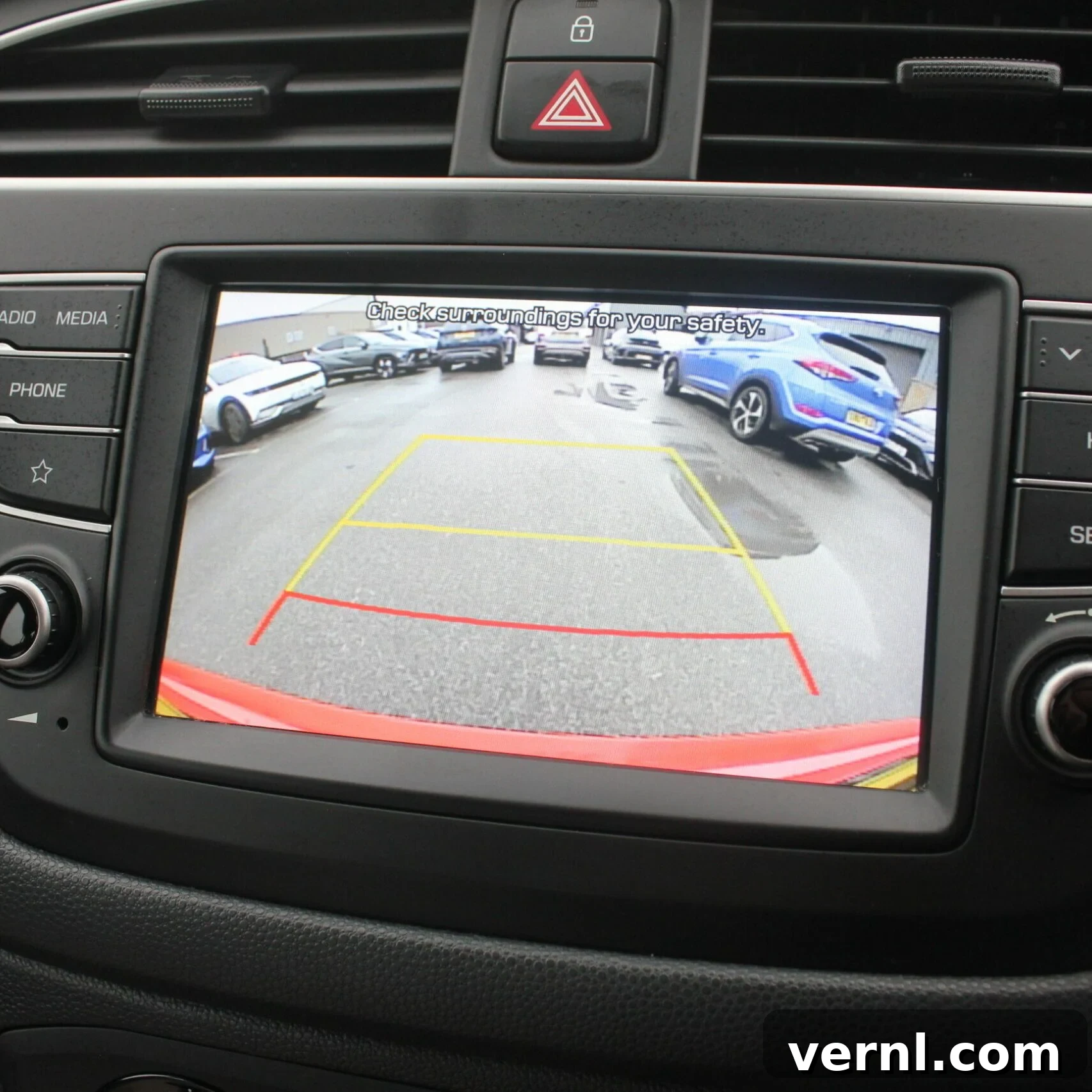
When you shift your car into reverse, the backup camera display instantly activates, presenting a clear image of the area behind your vehicle, typically overlaid with a distinct, often multi-colored grid. While most drivers quickly appreciate the visual assistance, many may not fully understand the precise meaning and utility of these lines. These graphical overlays are much more than simple visual aids; they are sophisticated guides designed to provide crucial information for precise and safe maneuvering. This comprehensive guide will delve into the purpose behind these essential guidelines on your backup camera, explaining what each set of lines indicates and how you can leverage them to navigate challenging parking scenarios and drive with greater confidence.
Deciphering Your Backup Camera Guidelines: Static vs. Dynamic
At a glance, the display of your backup camera might seem like a simple grid, but upon closer inspection, you’ll notice two distinct types of lines working in tandem to provide a complete picture of your vehicle’s trajectory and immediate surroundings. Typically, backup cameras feature two primary sets of guidelines, each serving a unique yet complementary function:
- Static Guidelines: These lines remain fixed on the screen, offering a consistent and unchanging reference point that projects straight backward from your vehicle’s bumper. They are your anchor, providing fundamental information about your car’s width and the proximity of objects directly behind you.
- Dynamic (Moving) Guidelines: These sophisticated lines respond directly to your steering wheel input. As you turn the wheel, the dynamic lines arc and shift on the screen, illustrating the exact path your vehicle’s rear wheels will follow. This predictive capability is invaluable for complex maneuvers, allowing you to visualize your turning radius in real-time.
Understanding the interplay between these two sets of lines is key to unlocking the full potential of your backup camera system and achieving unparalleled precision in reverse driving situations, from parallel parking to backing out of tight driveways.
Understanding the Static Guidelines on Your Backup Camera
The static guidelines on your backup camera serve as fundamental visual anchors, providing consistent information about your vehicle’s immediate rearward space. These lines, which do not change position regardless of your steering input, are crucial for assessing basic spatial relationships and preventing collisions.
Vehicle Width and Immediate Proximity
One of the most immediate pieces of information conveyed by the static lines is the exact width of your vehicle. The outer edges of these lines typically correspond precisely to the widest part of your car, excluding side mirrors. This feature is incredibly useful when navigating narrow passages, such as backing into a tight garage space, maneuvering through closely parked cars in a crowded lot, or ensuring you clear the sides of a car wash. By aligning these lines with the boundaries of a space, you can confidently determine whether your vehicle will fit without scraping or causing damage.
The Color-Coded Danger Zones
Beyond indicating width, static guidelines are universally recognized for their color-coding, which provides an intuitive and immediate assessment of distance and potential hazards. These guidelines are usually segmented into three distinct zones that extend backward from your vehicle, each assigned a specific color to denote a varying level of proximity and potential danger:
- Green Zone: This is the outermost zone, typically extending farthest from your bumper. It indicates a safe distance where you have ample room to maneuver. Objects within this zone are still relatively far away, allowing for significant adjustments.
- Yellow Zone: As you back up and objects enter the yellow zone, it signals that you are approaching them and should proceed with caution. This is a transitional area, indicating that while there is still some space, your margin for error is decreasing. It’s a good point to begin making smaller, more precise adjustments to your steering.
- Red Zone: The innermost zone, closest to your vehicle’s bumper, signifies immediate proximity and high danger. If an object appears in the red zone, it means you are very close to it – perhaps only a foot or less away. Continuing to back up at this point poses a significant risk of collision. This zone often corresponds to the area where opening your trunk might become difficult due to an obstruction.
This color-coded system acts as a quick visual warning system, allowing drivers to assess risk at a glance and make timely decisions to prevent impacts with other vehicles, walls, poles, or even vulnerable pedestrians and animals that might enter your blind spot.
Typical Length and Customization
While the exact length of the static guidelines can vary from one vehicle manufacturer to another, they commonly extend approximately six feet (or about 1.8 meters) from the camera’s perspective. This distance provides a practical range for most common backing scenarios. However, it is always recommended to consult your vehicle’s owner’s manual. The manual will provide precise information regarding the dimensions, calibration, and specific features of your particular backup camera system, ensuring you have the most accurate understanding of its capabilities and limitations.
Leveraging Dynamic Guidelines for Precision Maneuvering
While static lines provide crucial fixed reference points, the dynamic, or moving, guidelines on your backup camera are where true parking precision comes into play. These intelligent lines are an incredibly informative and interactive tool, particularly indispensable when attempting complex maneuvers like parallel parking, backing into a tight spot, or navigating curved driveways.
Predicting Your Vehicle’s Trajectory
The magic of dynamic guidelines lies in their predictive capability. As you rotate your steering wheel, these lines on your camera display will instantly shift and arc, mirroring the exact path your vehicle’s rear wheels will follow. This real-time visual representation allows you to see your car’s future trajectory before you even begin to move. Imagine backing into an empty space along a busy sidewalk; as you spin your steering wheel to initiate the turn, the dynamic lines will show you precisely where your tires will go, enabling you to guide your vehicle into the spot with remarkable accuracy and minimal effort.
Mastering Parallel Parking and Curb Alignment
For many drivers, parallel parking is a source of anxiety. Dynamic guidelines significantly demystify this challenging maneuver. By watching how the lines curve in response to your steering input, you can meticulously plan your approach, ensuring you don’t hit the vehicle in front or behind, and crucially, allowing you to position your car perfectly parallel and close to the curb. These lines make it dramatically easier to make fine-tuned adjustments to your wheel alignment, letting you achieve that desirable, perfectly aligned park without excessive back-and-forth corrections or fear of curb rash.
Technology Behind the Dynamic Lines
The functionality of dynamic guidelines relies on sophisticated sensor technology integrated with your vehicle’s steering system. Sensors monitor the angle of your steering wheel in real-time, feeding this data to the car’s computer. This information is then processed and overlaid onto the live camera feed, creating the predictive path you see on your display. This seamless integration provides an intuitive and highly effective aid that transforms challenging backing situations into confident maneuvers.
Beyond the Camera: The Importance of Comprehensive Situational Awareness
While backup cameras, with their static and dynamic guidelines, offer an unparalleled advantage in safety and convenience, it is absolutely crucial to remember that they are aids, not substitutes, for vigilant driving practices. Over-reliance on any single technology can lead to complacency and an increased risk of accidents. To truly master safe reversing, a holistic approach that combines technological assistance with traditional driving skills is essential.
Integrating Multiple Perspectives
The backup camera provides an excellent direct view of what’s immediately behind your vehicle. However, it cannot always show everything. Blind spots can still exist to the sides, and objects may move into the camera’s view unexpectedly. Therefore, always combine the information gleaned from your camera with what you observe through your:
- Side Mirrors: These provide crucial views of the areas directly to the left and right of your vehicle, helping you identify approaching vehicles, pedestrians, or obstacles that might be outside the camera’s narrow field of view.
- Rearview Mirror: While the backup camera takes precedence for direct rearward visibility when reversing, the rearview mirror can still offer a broader context, especially in open spaces, and can be useful for quickly checking what’s farther behind.
- Head Checks: Physically turning your head to look over your shoulders remains a non-negotiable safety practice. This allows you to directly scan your blind spots and confirm that the path is clear, especially before initiating a turn while backing up.
Leveraging Additional Parking Aids
Many modern vehicles come equipped with supplementary parking assistance features that complement the backup camera, further enhancing safety:
- Parking Sensors: These often provide audible beeps that increase in frequency as you get closer to an obstruction, offering an additional layer of warning, particularly for objects below the camera’s line of sight or those approaching from the sides.
- Rear Cross-Traffic Alert: This system warns you of vehicles approaching from the left or right when you are backing out of a parking space, an invaluable feature in busy parking lots.
- 360-Degree Surround View Cameras: Higher-end vehicles may feature multiple cameras that stitch together a bird’s-eye view of your vehicle and its immediate surroundings, eliminating virtually all blind spots during low-speed maneuvers.
By actively using all available tools – your eyes, mirrors, and technological aids – you cultivate a comprehensive awareness of your surroundings. This multi-faceted approach ensures that you can deftly navigate any back-in situation, minimizing the risk of collision and maximizing safety for everyone.
Maintaining Your Backup Camera for Optimal Performance
Like any component of your vehicle, the backup camera requires occasional attention to ensure it functions optimally. A clear lens is paramount for a clear view, and proper care can prevent common issues that might impair its effectiveness.
- Keep the Lens Clean: The camera lens, typically located on your car’s tailgate or bumper, is exposed to road grime, dust, rain, and snow. A dirty lens can obscure the view, making the guidelines less clear or rendering the camera useless. Regularly clean the lens with a soft, damp cloth and a mild cleaner (like glass cleaner) to remove any buildup. Avoid abrasive materials that could scratch the lens.
- Check for Damage: Given its exposed location, the camera can be susceptible to minor impacts or debris. Periodically inspect the camera for cracks, scratches, or other physical damage. If damaged, it may need professional repair or replacement to restore full functionality.
- Troubleshooting Common Issues:
- Fogging: Temperature changes can sometimes cause the lens to fog up internally. Many modern cameras are sealed to prevent this, but if it occurs, it may indicate a seal failure.
- Distorted Image: A distorted or flickering image might be due to loose wiring or a software glitch. Sometimes, simply restarting your car can resolve minor electronic issues.
- No Image: If the screen remains black, check your vehicle’s infotainment system settings to ensure the camera is enabled. If the problem persists, it could be a wiring issue, a faulty camera unit, or a display problem, all of which typically require professional diagnostics.
Proactive maintenance ensures that your backup camera remains a reliable and effective safety tool, providing clear guidance whenever you need to reverse.
Conclusion: Driving Confidently with Your Backup Camera
The integration of backup cameras into modern vehicles marks a significant leap forward in automotive safety and driver convenience. No longer a luxury, these systems, mandated by the NHTSA, are indispensable tools that provide drivers with an invaluable rearward perspective, dramatically reducing the risks associated with reversing maneuvers. Understanding the nuanced information conveyed by both the static and dynamic guidelines is key to unlocking the full potential of this technology.
From the foundational safety provided by the color-coded static lines – indicating your vehicle’s width and proximity to obstacles – to the precise, predictive path offered by the dynamic lines that respond to your steering wheel, these visual aids empower you to park with greater accuracy and navigate tight spaces with increased confidence. However, it is paramount to remember that the backup camera is one component of a larger safety ecosystem. Always complement its insights with traditional driving vigilance, utilizing your mirrors, performing head checks, and paying attention to any other parking sensors or alerts your vehicle may offer.
By taking the time to familiarize yourself with your specific vehicle’s backup camera system, practicing in various scenarios, and consistently combining technological assistance with comprehensive situational awareness, you will transform the act of reversing from a potential hazard into a routine, stress-free maneuver. Embrace this powerful technology, understand its language, and enjoy the enhanced safety and peace of mind it brings to every journey.