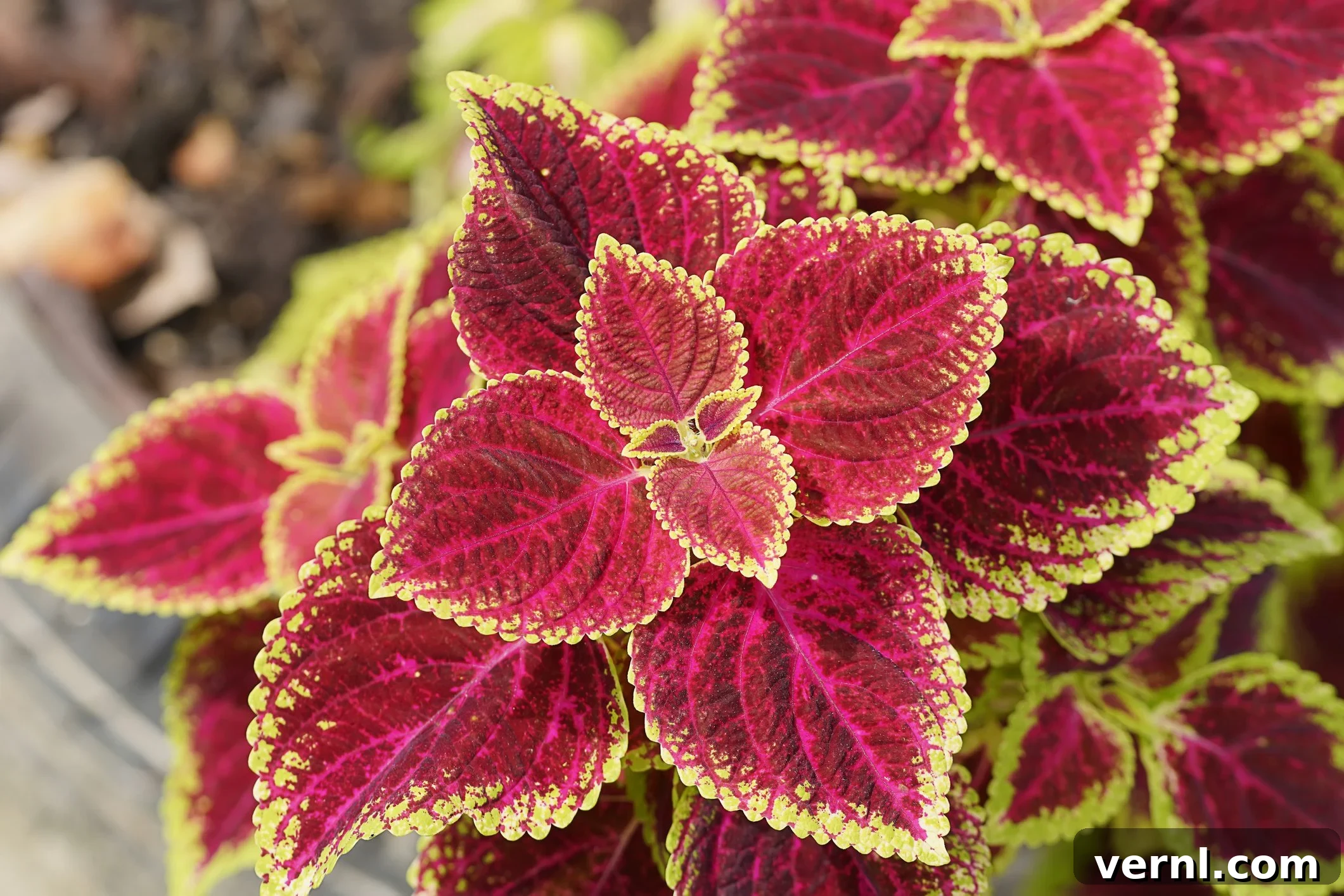
Stepping into a conservatory brimming with exotic tropical plants, one might be surprised to spot the familiar, vibrant leaves of Coleus nestled among them. Yet, this observation shouldn’t truly astonish us, for Coleus, in its essence, is indeed a tropical marvel that many of us cultivate as a vibrant annual in our gardens. Its journey from the humid, sun-drenched landscapes of Indonesia and Sri Lanka to becoming a beloved garden staple is a testament to its adaptability and the dedication of plant breeders.
While its origins trace back to these lush, tropical locales, the wild forms of Coleus bear little resemblance to the spectacular varieties we enjoy today. Over centuries, and particularly in recent decades, horticulturalists have painstakingly developed hundreds, if not thousands, of distinct cultivars, transforming a modest wild plant into a breathtaking display of color and texture. This incredible diversity is what makes Coleus a truly captivating addition to any plant enthusiast’s collection.
Unveiling the Coleus: A Symphony of Foliage
Coleus, botanically known primarily as Solenostemon scutellarioides (though often still referred to by its former genus, Plectranthus), belongs to the mint family (Lamiaceae). Unlike many ornamental plants prized for their flowers, the undisputed star of the Coleus plant is its astonishing foliage. Its leaves burst forth in an unparalleled spectrum of colors, ranging from the deepest, velvety purples to electrifying lime greens, with countless shades of maroon, fiery red, soft pink, sunny yellow, and even bronze woven into intricate patterns. The leaves themselves can be variegated, boldly splotched, subtly edged, or display a solid hue, often with dramatic contrasting veins.
Beyond color, Coleus leaves come in a surprising array of shapes and textures. Some feature classic ovate leaves, while others boast deeply lobed, fringed, or scalloped margins. There are varieties with delicate, small leaves and others with large, dramatic foliage, creating endless possibilities for garden design. This plant’s versatility, combined with its relatively easy care, makes it a perennial favorite for adding instant, long-lasting visual interest to outdoor spaces and indoor settings alike.
Is Coleus a Perennial or an Annual? Understanding Its Climate Needs
For the vast majority of gardeners living outside frost-free tropical and subtropical zones, Coleus is typically grown as an annual plant. Its inherent tropical nature dictates a profound intolerance for cold temperatures. Even consistent temperatures falling below 50 degrees Fahrenheit (10 degrees Celsius) can cause significant stress, leading to stunted growth, discoloration, and overall decline. A harsh frost will, without exception, kill the plant outright. This climatic limitation is why most gardeners treat Coleus as a seasonal delight, enjoying its vibrant display throughout the warmer months before replacing it the following year.
However, understanding its tropical roots also opens up possibilities for treating Coleus as a perennial. In USDA hardiness zones 10 and warmer, where frost is a rare or non-existent occurrence, Coleus can indeed thrive as a true perennial, growing larger and more robustly year after year. For those in colder climates, the dream of a perennial Coleus can be realized by bringing the plants indoors before the first frost, or more commonly, by taking cuttings to overwinter. This approach allows gardeners to preserve their favorite varieties and enjoy them again in the spring, effectively extending the plant’s life beyond a single growing season.
The Role of Blooms: To Pinch or Not to Pinch?
Yes, Coleus plants do produce flowers, typically emerging from slender spikes that rise above the vibrant foliage. These blooms are often small, delicate, and may appear in shades of blue or white. While aesthetically pleasing in their own right, the flowers of Coleus are generally considered secondary to the plant’s spectacular leaves. In fact, most seasoned gardeners will routinely pinch off any developing flower stalks. This practice isn’t merely for aesthetic preference; it serves a crucial horticultural purpose.
By removing the flowers, gardeners redirect the plant’s energy away from seed production and back into foliage growth. This results in a bushier, more compact plant with denser, more intensely colored leaves – precisely the traits for which Coleus is cultivated. Leaving flowers on can lead to a leggy plant with diminished leaf vigor as the plant invests its resources into reproduction. Recognizing this gardening preference, plant breeders are increasingly developing new Coleus varieties that are either “late-blooming” (producing flowers only very late in the season, if at all) or “non-blooming,” allowing gardeners to enjoy uninterrupted foliage displays without the need for constant pinching.
Multiplying Your Magic: The Art of Coleus Propagation
One of the most rewarding aspects of growing Coleus is its incredible ease of propagation. Unlike many perennials that are divided by splitting their root ball, Coleus does not produce suckers or new stems from its roots in the same manner. Instead, the most effective and popular method for creating more Coleus plants is through stem cuttings. This simple technique allows gardeners to expand their collection, share with friends, or preserve favorite varieties through the winter months. The ability of Coleus to root quickly and reliably makes it an ideal candidate for both novice and experienced propagators.
How Do You Root Coleus Cuttings in Soil?
Rooting Coleus in a soil medium is a straightforward process that yields robust new plants. Following these steps will ensure a high success rate:
- Select and Cut: Choose a healthy, non-flowering stem from your parent plant. Using sharp, clean pruning shears or scissors, make a clean cut a four- to six-inch section of the stem. Ensure your cut is made just above a pair of leaves or a leaf node. Making the cut here encourages the parent plant to branch out, resulting in a bushier growth habit.
- Prepare the Cutting: Carefully strip off the lower leaves from the cutting, aiming to leave about two to four leaves at the top. This prevents the submerged leaves from rotting, which can lead to fungal issues. To further prevent rot and encourage root development, trim the very end of the cutting to just below the lowest leaf node where you removed leaves. Always use sharp, clean pruners to make precise cuts and minimize stress to the plant.
- Planting in Potting Mix: Fill a small container or cell pack with a high-quality, well-draining potting soil or a specialized seed-starting mix. Using a stick, pencil, or your finger, create a small hole in the soil for each cutting. While not strictly necessary for Coleus, dipping the cut end into a rooting powder can sometimes accelerate root formation, particularly for less vigorous cuttings. Gently insert the prepared cutting into the hole, ensuring at least one node is buried beneath the soil surface. You can root several cuttings in one container, but space them at least an inch apart to allow for airflow and individual root development. Crucially, ensure the container has drainage holes to prevent waterlogging, which is detrimental to rooting.
- Watering and Environment: Lightly water the newly planted cuttings until the soil is evenly moist. To maintain consistent humidity, which is vital for root development, place the entire container inside a clear plastic bag or cover it with a clear dome. Position the setup in a location that receives bright, indirect sunlight – direct sun can be too intense and scorch the delicate cuttings. Periodically check the soil moisture levels and water as needed, ensuring the soil remains consistently damp but not soggy.
Within a few weeks, you should observe signs of new growth, indicating that the Coleus cuttings have successfully formed roots. Once established, you can carefully transplant each rooted cutting into its own individual pot. To encourage further branching and a fuller plant, pinch off the tip of the main stem once it begins actively growing in its new home.
Can Coleus Be Rooted in Water?
Absolutely! Rooting Coleus in water is an incredibly popular method, offering the satisfying visual experience of watching roots develop. It’s often considered even simpler than soil propagation and is an excellent way to get started with plant propagation.
- Prepare the Cuttings: Prepare your Coleus cuttings in the exact same manner as you would for soil propagation: cut a four- to six-inch stem section, remove the lower leaves, and trim the end just below a node.
- Water Placement: Place the prepared cuttings into a clear glass or jar filled with clean water. Ensure that no leaves are submerged in the water, as this can lead to rot. Only the bare stem should be in the water.
- Optimal Location: Position the glass in a location that receives bright, indirect sunlight. A sunny windowsill is often perfect, but avoid intense, direct afternoon sun which can overheat the water and stress the cuttings.
- Maintain Water Levels: As water naturally evaporates, remember to add fresh water to keep the stem bases submerged. You don’t necessarily need to change the water frequently, but topping it up is important. If the water becomes cloudy or shows signs of algae, it’s a good idea to refresh it completely.
In about one to two weeks, you’ll begin to see small, white roots emerging from the nodes of the stem. Once these roots are approximately an inch long, the cuttings are ready for their next step. Carefully pot up each rooted cutting into a container filled with fresh, clean potting soil. After transplanting, keep the new plant consistently well-watered for the first few weeks, allowing the roots to acclimate and grow into the soil medium. This transition period is crucial for the plant’s long-term health.
Growing Coleus as an Indoor Plant: A Year-Round Delight
Given its tropical origins, Coleus is remarkably well-suited to life as an indoor plant, offering a splash of vibrant color even during the gloomiest months. With proper care, an indoor Coleus can thrive for several years, becoming a cherished houseplant and a focal point in any room.
The most effective strategy for bringing outdoor-grown annual Coleus indoors for the winter is to take fresh cuttings rather than attempting to dig up and repot a mature outdoor plant. Outdoor plants can harbor pests and may struggle to adapt to the lower light and humidity of an indoor environment. Starting with fresh, pest-free cuttings ensures a healthier, more adaptable houseplant. Once your indoor Coleus is established, you can reverse the cycle in the spring: take cuttings from your thriving indoor plant to start new specimens for your outdoor garden beds or containers, effectively creating a continuous supply of these beautiful plants.
Indoor Care Tips for Thriving Coleus:
- Light: Indoor Coleus requires bright, indirect light. A south or east-facing window is often ideal. Too little light will cause leggy growth and dull colors, while too much direct, intense sun can scorch the leaves.
- Watering: Keep the soil consistently moist but never soggy. Allow the top inch of soil to dry out slightly between waterings. Overwatering is a common killer of indoor Coleus, leading to root rot.
- Humidity: As a tropical plant, Coleus appreciates higher humidity. If your home is particularly dry, consider misting the leaves occasionally or placing the pot on a pebble tray filled with water.
- Temperature: Maintain typical room temperatures between 65-75°F (18-24°C). Avoid cold drafts or sudden temperature fluctuations.
- Fertilizing: During the active growing season (spring and summer), feed your indoor Coleus with a balanced liquid fertilizer diluted to half strength every 2-4 weeks. Reduce or cease fertilization during the fall and winter months when growth naturally slows.
- Pinching: Continue to pinch back your indoor Coleus regularly to encourage bushiness and prevent it from becoming leggy. Remove any flower stalks that appear.
- Pest Watch: Keep an eye out for common houseplant pests like spider mites, aphids, and mealybugs, especially during the drier winter months. Treat promptly with insecticidal soap if detected.
With its dazzling array of colors and patterns, ease of cultivation, and remarkable versatility, Coleus remains a captivating choice for gardeners and houseplant enthusiasts alike. Whether grown as a fleeting annual spectacle outdoors or nurtured as a long-lived indoor companion, this tropical beauty promises to infuse your spaces with unparalleled charm and vibrancy.