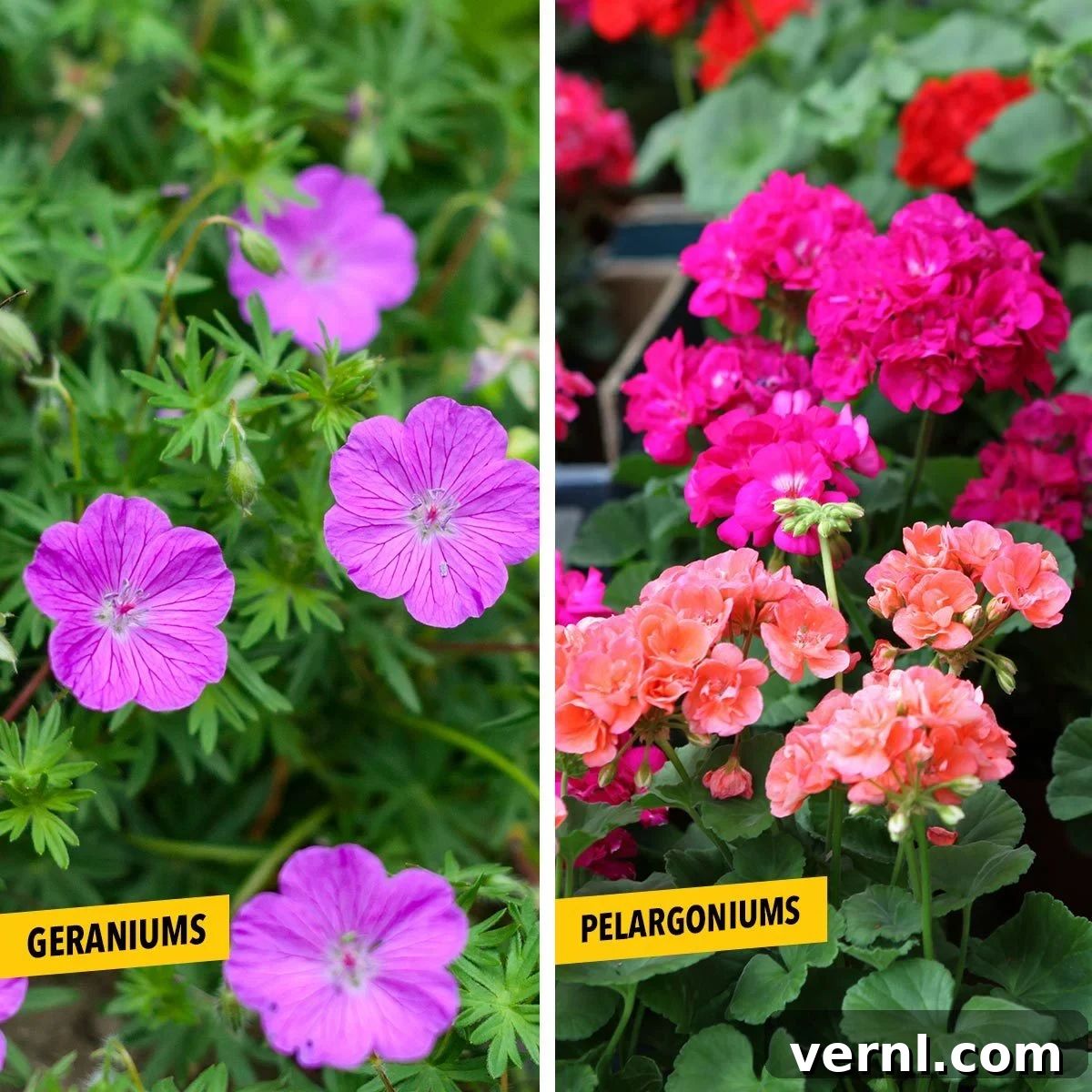
Geraniums vs. Pelargoniums: Understanding the Difference in Your Garden
Step into almost any garden center, and you’ll find vibrant flowering plants labeled simply as “geraniums.” Many home gardeners, myself included, proudly display these colorful blooms in pots on patios or tucked into garden beds. In my own front garden, thriving in U.S. Department of Agriculture hardiness zone 6b, I cherish Geranium ‘Rozanne’, a magnificent perennial geranium that graces my landscape with its light purplish-blue flowers almost all summer long. It gracefully weaves its blooms among other plants, contributing to a charming, loose cottage garden feel. Meanwhile, on my back patio, various pots are filled with different types of these same “geraniums,” boasting a spectrum of colorful foliage and striking red and pink flowers.
However, despite the common label, the “geraniums” I grow in pots are botanically quite different from the perennial variety flourishing in my garden beds. This common misnomer often leads to confusion for gardeners trying to understand their plants’ needs. The truth is, while both are beautiful and beloved garden staples, the plants commonly grown as annuals in containers are actually Pelargoniums.
Let’s delve into the fascinating distinction between these two related but distinct plant groups.
Are Pelargoniums and Geraniums the Same Plant? Unraveling the Botanical Identity
The short answer is: no, they are not the same plant, though they are close relatives. Both Pelargoniums and Geraniums belong to the same plant family, Geraniaceae, which encompasses several genera. Think of it like a family tree: they share common ancestors, but they are different branches with unique characteristics. The primary distinction that separates them in a gardener’s practical sense lies in their growth habit and hardiness:
- True Geraniums (Hardy Geraniums): These are perennial plants, meaning they return year after year. They are typically cold-hardy and can withstand freezing temperatures, flourishing in temperate climates.
- Pelargoniums (Annual Geraniums): On the other hand, pelargoniums are generally treated as annuals in most temperate zones, lasting for only one growing season before succumbing to frost. In their native warmer climates, they can be perennials.
The confusion largely stems from historical classifications and the widespread use of “geranium” as a common name for both. Understanding this distinction is the first step to successfully cultivating these delightful plants.
What Are Pelargoniums? The Beloved “Annual Geraniums”
Pelargoniums are perhaps the most recognizable plants associated with the name “geranium” in popular gardening. These vibrant plants are celebrated for their continuous blooms and attractive foliage, making them incredibly popular annuals for containers, window boxes, and summer bedding. They are often classified as half-hardy annuals, meaning they can tolerate cooler temperatures but are highly susceptible to frost.
Originally hailing from warm climates, primarily South Africa and Australia, pelargoniums thrive in sunny conditions and well-drained soil. Their flower colors span a broad spectrum, from pristine whites to every conceivable shade of pink, coral, and vivid red. While their primary appeal is often their showy flowers, many varieties also boast interesting leaf patterns and even delightful fragrances, adding another layer of charm to their appeal.
Popular Types of Pelargoniums for Your Garden
Despite their botanical classification, most pelargoniums are still commonly sold and labeled simply as “geraniums.” Knowing the specific types can help you choose the best variety for your gardening needs.
- Zonal Geraniums (Pelargonium x hortorum): These are by far the most common type, instantly recognizable by their upright growth and distinct, often horseshoe-shaped, “zone” pattern on their leaves. Their flowers typically form in large, rounded clusters (umbels). While classic red varieties like Calliope Dark Red remain exceptionally popular, zonal geraniums also come in beautiful pinks, corals, whites, and even bi-colors. They are incredibly versatile, perfect for pots, garden beds, and borders, providing season-long color.
- Scented Geraniums (Pelargonium species): These pelargoniums are primarily grown for their aromatic foliage rather than their flowers. When crushed, their leaves release a wide array of fragrances, mimicking citrus (often sold as Citronella), rose, peppermint, lemon, apple, clove, chocolate, or cinnamon. The essential oils in their leaves can even be used in potpourri mixes, culinary applications (like flavoring sugars or jellies), or as natural insect repellents. Their flowers are usually smaller and less showy compared to zonal types.
- Ivy Geraniums (Pelargonium peltatum): Characterized by their trailing stems and glossy, ivy-shaped leaves, these pelargoniums are perfect for creating cascading displays. Their growth habit makes them ideal for hanging baskets, window boxes, and containers where their blooms can spill over the edges. They come in single and double flower forms, with colors ranging from white to various shades of pink, red, and purple.
- Seed Geraniums: These pelargoniums are typically grown from seed, making them a more economical option for large-scale planting. They tend to be smaller plants than vegetatively propagated zonal geraniums and generally do not display the distinct markings on their leaves. They are an excellent choice if you’re looking to fill extensive areas in the ground or numerous containers without breaking the bank, offering reliable color and performance.
- Regal or Martha Washington Geraniums (Pelargonium x domesticum): These elegant pelargoniums are distinguished by their large, often frilly, and intensely colored blooms, which feature prominent blotches or veins. They prefer cooler temperatures to bloom profusely and are frequently sold as potted flowering gift plants, especially in spring. Their breathtaking flowers offer a more sophisticated look compared to other pelagornium types.
What Are True Geraniums? The Resilient Hardy Perennials
True geraniums, often referred to as “hardy geraniums” or “cranesbill geraniums” due to their distinctive crane-like seed pods, are the perennial stars of the Geranium genus. These reliable plants are valued for their robustness, long flowering periods, and ability to thrive in various garden conditions. They are typically hardy in U.S. Department of Agriculture hardiness zones 4 through 8, returning year after year to enrich the garden with their charm.
Hardy geraniums come in an astonishing array of sizes, forms, and flower colors, offering versatility for nearly any garden setting. Their foliage, which can be deeply cut, lobed, or rounded, often provides seasonal interest, with many varieties developing attractive autumnal hues. Unlike their pelargonium cousins, their flowers are typically five-petaled and more open, creating a natural, ethereal effect.
Popular Varieties of True Geraniums
There are countless captivating varieties of true geraniums available, each offering unique attributes. Here are a few popular choices that demonstrate their diversity:
- Geranium ‘Rozanne’: This award-winning variety (often named Perennial Plant of the Year) is celebrated for its exceptional vigor and incredibly long bloom period. It grows up to 18 inches tall and spreads beautifully, producing masses of stunning light bluish-purple flowers continuously from late spring through the first hard frost in autumn. ‘Rozanne’ is a fantastic choice for ground cover, mixed borders, or cascading over retaining walls, offering unparalleled season-long color and texture.
- Geranium ‘Biokovo’: A fantastic ground cover type, ‘Biokovo’ forms a dense mat of aromatic, deeply lobed foliage that reaches about 10 inches in height. In spring, it’s adorned with delicate light pink to white flowers, often with darker veins, creating a soft, airy display. Its foliage takes on beautiful reddish tints in the fall, extending its season of interest. It’s excellent for rock gardens, path edges, or filling in gaps in a perennial border.
- Geranium ‘Johnson’s Blue’: Renowned for its truly captivating, clear blue flowers, ‘Johnson’s Blue’ is a classic favorite. It typically flowers from mid-spring to early summer, producing abundant cup-shaped blooms held above finely dissected foliage. This variety forms a neat mound, growing to about 18-24 inches tall and wide, making it a striking addition to perennial beds or cottage gardens.
- Geranium macrorrhizum (Bigroot Geranium): This species is incredibly tough and adaptable, known for its fragrant, somewhat sticky foliage and cheerful magenta, pink, or white flowers. It thrives in dry shade and forms an excellent weed-suppressing groundcover, even in challenging conditions. Its aromatic leaves are also deer-resistant.
How To Grow True Geraniums (Hardy Perennials)
Once established, true geraniums are remarkably reliable and low-maintenance perennial flowers, making them a favorite among both novice and experienced gardeners. Their resilience and beauty provide lasting value to the landscape.
- Location and Soil: Choose a location with full sun to partial shade. While many varieties tolerate full sun, some lighter-colored or more delicate types may appreciate afternoon shade, especially in hotter climates. Ensure the soil is well-drained. Heavy clay soils should be amended with organic matter like compost to improve drainage and aeration. The front of a flower border or along a pathway is an excellent location, especially for shorter, spreading varieties.
- Preparation: Before planting, clear the area of any weeds and loosen the soil to a depth of at least 12 inches. Incorporate compost to enrich the soil and improve its structure.
- Planting: True geraniums can be planted any time from spring through early fall. Dig a hole twice as wide as the root ball and just as deep. Carefully remove the plant from its container, gently tease out any circling roots, and place it in the hole so the top of the root ball is level with the soil surface. Backfill with soil, gently firming it around the base of the plant.
- Watering: Provide extra water during the first year after planting to help the geraniums establish a robust root system. Aim for the equivalent of one inch of rain per week, either from rainfall or supplemental irrigation. Once established, most hardy geraniums are quite drought-tolerant and will only need watering during extended dry periods.
- Pruning and Maintenance: Prune back old, tattered foliage in late winter or early spring before new growth emerges. This helps to maintain a tidy appearance and encourages fresh, vibrant foliage. Some varieties may benefit from a light shearing after their first flush of blooms to encourage reblooming, though many are continuous bloomers.
- Pest and Disease Resistance: True geraniums are rarely bothered by common garden insects or plant diseases. They are also usually deer-resistant, making them an excellent choice for gardens where deer are a nuisance.
How To Grow Pelargoniums (Annual Beauties)
Pelargoniums are incredibly easy to grow, especially as potted plants, making them ideal for bringing continuous color to patios, balconies, and sunny garden spots throughout the summer months. With a few simple care practices, they will reward you with an abundance of blooms.
- Container Selection: Choose containers with adequate drainage holes to prevent waterlogging, which pelargoniums dislike. Larger containers are preferable if you plan to grow several pelargoniums together, allowing for better root development and moisture retention. For single plants, smaller pots work well but may require more frequent watering.
- Potting Mix: Fill your chosen container with a high-quality, general-purpose potting mix. Look for mixes that are light, well-draining, and contain some slow-release fertilizer or organic matter. Avoid heavy garden soil, which can compact and inhibit root growth in containers.
- Planting: Plant your pelargoniums at the same depth they were in their nursery containers. Gently firm the potting mix around the root ball and water thoroughly immediately after planting.
- Watering: Pelargoniums prefer consistent moisture but do not like to sit in soggy soil. Water well until water drains from the bottom of the pot, then allow the top inch or two of soil to dry out before watering again. Smaller pots will dry out more quickly and may need to be watered once or even twice a day during really hot spells or windy conditions. Signs of underwatering include wilting leaves; overwatering can lead to yellowing leaves and root rot.
- Fertilizing: To encourage continuous blooming throughout the summer, fertilize your pelargoniums regularly. Use a balanced, general-purpose liquid fertilizer every 2-4 weeks, or incorporate a slow-release granular fertilizer into the potting mix at the beginning of the season. Always follow the product’s instructions.
- Deadheading: Removing spent blooms (deadheading) is crucial for encouraging pelargoniums to produce more flowers. Pinch or snap off the faded flower stalks at their base to divert the plant’s energy into producing new buds rather than setting seeds. This practice significantly extends their blooming period.
- Overwintering: While treated as annuals, pelargoniums can be overwintered in frost-free environments. You can bring potted plants indoors to grow as houseplants, dig up bare-root plants and store them dormant, or take cuttings in late summer to propagate new plants for the following spring.
- Pests and Diseases: Pelargoniums are generally robust and not severely troubled by pests or diseases. However, keep an eye out for common indoor plant pests like mealybugs or whiteflies if you bring them indoors. Outdoors, they are surprisingly resistant; even hungry Japanese beetles tend to avoid them!
Embrace the Beauty of Both Geraniums and Pelargoniums
Whether you’re cultivating the enduring charm of a true perennial geranium in your garden beds or enjoying the vibrant, continuous display of annual pelargoniums in your containers, both plant groups offer immense beauty and satisfaction. By understanding their subtle yet significant differences, you can provide each with the specific care it needs to thrive, ensuring a garden that’s rich in color, texture, and botanical interest throughout the seasons. So go ahead, plant with confidence, and let these versatile “geraniums” enhance your outdoor living spaces!