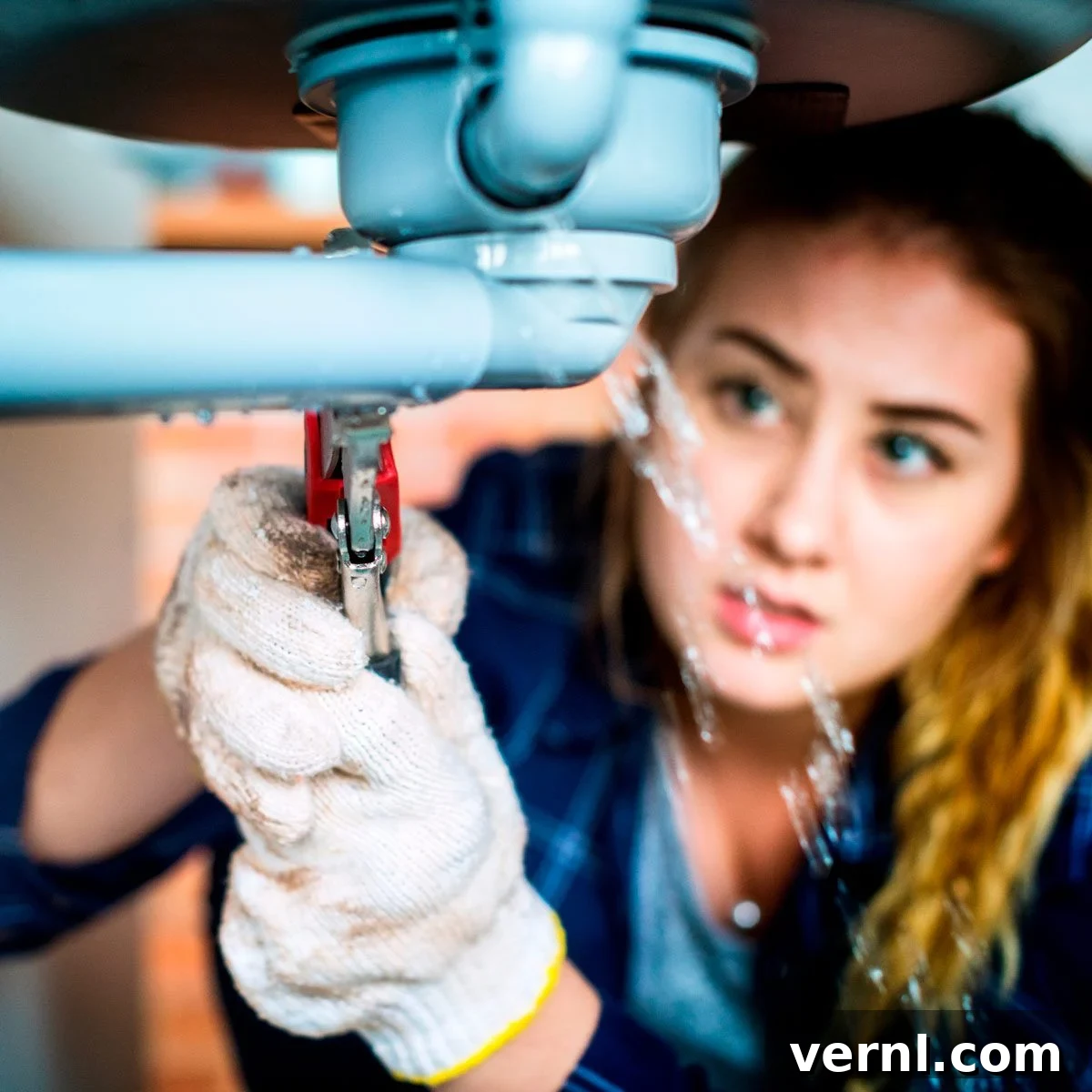
Undertaking DIY home repairs and installations can be a rewarding and cost-effective endeavor, saving both time and money. However, plumbing is one area where cutting corners or lacking proper knowledge can lead to significant problems. Without meticulous planning and adherence to established guidelines, you risk putting your home in direct violation of plumbing code. Such violations can severely impair the effectiveness of your plumbing system, rendering it inefficient or, in worst-case scenarios, entirely non-functional.
The repercussions of violating plumbing codes extend far beyond immediate operational issues. These hidden problems can create substantial difficulties down the line, particularly if you decide to sell your house or embark on major renovations. Prospective buyers or inspectors can uncover code violations, leading to costly mandatory repairs, delays in sales, or even a decrease in your property’s market value. Ensuring your plumbing is up to code is not just about compliance; it’s about safeguarding your investment, ensuring your family’s safety, and maintaining the long-term integrity of your home.
To shed light on this critical aspect of home maintenance, we consulted with Eldon Rameaux, a Minnesota-based inspector and journeyman plumber. With his extensive expertise, he helped us compile a comprehensive list of the most prevalent plumbing code violations homeowners often inadvertently make. Understanding these common pitfalls is the first step toward avoiding them and ensuring your plumbing system is safe, efficient, and compliant.
Improper or Illegal Materials
One of the most frequent plumbing code violations stems from the use of improper or illegal materials. While certain materials might appear functional or offer a seemingly quick fix, they may not meet the stringent standards required by plumbing codes due to various reasons, including durability, chemical compatibility, or pressure resistance. For instance, corrugated piping, often found in flexible drain lines, and certain rubber fittings, while convenient, are typically not up to code for permanent installations. These materials can degrade quickly, restrict flow, or fail under normal operating pressures, leading to leaks, clogs, and costly damage over time.
Before undertaking any plumbing project, whether it involves installing new piping, fittings, or other components, it is absolutely essential to conduct thorough research. Familiarize yourself with local plumbing codes to identify approved plumbing materials. Choosing materials that are specifically rated for your application and compliant with code ensures the longevity, safety, and efficiency of your plumbing system. Ignoring this crucial step can result in recurring issues, expensive repairs, and mandatory system overhauls if a violation is detected during an inspection.
Incorrectly Installed Kitchen or Bathroom Sink Traps
The proper installation and selection of kitchen or bathroom sink traps are fundamental to a healthy plumbing system and can easily become a code violation if done improperly. The primary function of a trap is to create a water seal that prevents noxious sewer gases from entering your living space. Without a functioning trap, these gases, which can contain harmful bacteria and unpleasant odors, would freely vent into your home, posing health risks and reducing air quality.
A common mistake is the use of S-traps. These traps, characterized by their “S” shape, were once common but are now largely considered obsolete and are almost universally in violation of modern plumbing codes. The design of an S-trap makes it highly susceptible to siphonage, a phenomenon where the water seal is pulled out of the trap, leaving an open pathway for sewer gases. Modern plumbing codes mandate the use of P-traps, which are designed to prevent siphonage when properly vented. Ensuring your sink traps are correctly installed and of the approved P-trap variety is vital for maintaining sanitation and indoor air quality.
Improperly Sized Drainage Piping
For any drain in your home, the piping must be of a specific, code-compliant size. This is not an arbitrary rule but a critical engineering requirement to ensure efficient waste removal and prevent clogs. Most commonly, plumbing code violations related to drainage piping size occur when the pipe is too small for its intended function or for the fixture it serves. A pipe that is undersized will struggle to handle the volume of water and waste, leading to slow drainage and frequent blockages. This can result in standing water, potential overflows, and even damage to your home.
Conversely, while less common, it is also possible to use piping that is too large. Oversized pipes can lead to insufficient “scouring” action, meaning the water flow isn’t strong enough to carry away solid waste effectively, allowing solids to settle and accumulate, eventually causing clogs. Plumbing codes specify pipe diameters based on “fixture units,” which account for the volume and type of waste generated by different fixtures (sinks, toilets, showers). Whenever you undertake a plumbing repair or replacement involving drainage piping, always consult local codes and fixture unit charts to ensure the size is within the prescribed limits, guaranteeing optimal performance and preventing future issues.
Pressure Relief Valves on Water Heaters Improperly Installed or Plugged
A temperature and pressure relief valve, universally known as a “T&P valve,” is a non-negotiable safety feature on every water heater. Its fundamental purpose is to prevent catastrophic explosions. If the temperature or pressure inside a water heater exceeds safe limits – which can happen due to thermostat failure or blockages – the T&P valve automatically opens to release hot water and steam, thereby alleviating the excessive pressure. Without a functional T&P valve, an over-pressurized water heater can turn into a deadly projectile, capable of immense destructive force.
The most alarming and dangerous code violation related to T&P valves occurs when they are improperly installed or, even worse, deliberately plugged. Homeowners sometimes “fix” a dripping T&P valve – often a sign of high pressure or the valve simply doing its job – by plugging it, either with a cap, sealant, or by restricting its discharge pipe. This act is not merely a code violation; it is an extremely hazardous practice that can lead to a deadly explosion. The discharge pipe from a T&P valve must always be open, correctly sized, sloped for drainage, and terminate in a safe, visible location, typically with an air gap, to prevent back-siphonage into the potable water supply. Never plug a T&P valve; if it’s dripping, investigate the cause and replace the valve if necessary.
Not Allowing Sufficient Space Around a Toilet
The placement and surrounding clearance of a toilet are critical not only for comfort and usability but also for meeting plumbing and accessibility codes. There must be sufficient space around any toilet to ensure it can be used comfortably and to allow for proper cleaning and maintenance. Specific clearance minimums vary significantly by local jurisdiction, dictating the distance from the toilet’s centerline to side walls or other fixtures, as well as the clear space required in front of the bowl.
Before undertaking projects such as moving or installing a toilet, it is imperative to research and understand your local code requirements. These codes aim to prevent cramped, unsafe, or non-functional bathroom layouts. This requirement also extends to other bathroom fixtures and furniture, such as cabinets and sinks. When relocating or installing these elements, remember to use the correct screws and fasteners for secure and compliant installation. Failing to provide adequate clearance can result in a code violation, potentially requiring expensive demolition and reinstallation during a home inspection or renovation.
Insufficient or Inaccessible Cleanouts
Cleanouts are essential access points built into a plumbing system that allow homeowners and plumbers to easily access and clear blockages within drain lines. A properly designed plumbing system must include a sufficient number of easily accessible cleanouts at strategic locations. These locations typically include the base of each soil or waste stack, at major changes in direction of the drain piping, and often near the property line where the main sewer lateral connects to the municipal system.
A common code violation is having an insufficient number of cleanouts or placing them in inaccessible locations, such as behind permanent walls, under fixed cabinetry, or beneath flooring without an access panel. When making significant alterations or additions to your drainage system, it is crucial to plan for cleanouts in the proper, easily accessible locations. Neglecting this can turn a simple clog into a major, destructive, and costly repair, as walls or floors may need to be opened to gain access to the blocked pipe. Accessible cleanouts save time, money, and structural damage in the event of a clog.
Using a Sewer Cleanout as a Drain
The main sewer cleanout on your home or building’s main sewer line is specifically designed for one purpose: to provide direct access to the main sewer line for clearing significant clogs. It is strictly prohibited and a serious plumbing code violation to use this cleanout as a regular drain for any fixture or appliance. Connecting a laundry standpipe, a sink, or any other fixture directly to the sewer cleanout bypasses the necessary traps and venting systems that are integral to preventing sewer gases from entering your home and maintaining sanitary conditions.
In general, the sewer cleanout should remain securely sealed with its cap, only to be opened when absolutely necessary to clear a clog in the main sewer line. Using it as an auxiliary drain creates a direct pathway for sewer gases, pests, and potential backflow into your home, posing significant health risks and compromising the integrity of your entire plumbing system. Adhering to this simple rule is essential for maintaining a healthy and code-compliant home environment.
Nonfunctional Water Shut Offs
The functionality of water shut-off valves throughout your home is paramount for safety, maintenance, and water damage prevention. If a water shut-off valve, whether it’s the main incoming supply valve or a local fixture valve (e.g., under a sink or behind a toilet), is damaged, broken, or seized and thus nonfunctional, it constitutes a plumbing code violation. The inability to quickly isolate the water supply to a fixture or the entire home in an emergency is a major risk factor.
Imagine attempting a DIY fix or installation, and a pipe unexpectedly bursts, or a connection leaks. Without a working shut-off valve, you could face extensive water damage, costly repairs, and significant inconvenience. Functional shut-off valves are crucial for performing repairs, replacing fixtures, or responding to leaks to prevent water damage. Regularly inspect your shut-off valves, gently exercise them (turn them slightly and then back), and replace any that are seized, leaking, or no longer operate correctly. This small preventive measure can save you from a plumbing disaster.
Incorrect Venting
Proper venting is arguably one of the most misunderstood yet critical components of a functional and safe plumbing system. Plumbing systems must include properly vented traps to maintain a crucial barrier between living spaces and the sewage system. Vents allow air into the drainage pipes, equalizing pressure and preventing a vacuum from forming. Without proper venting, traps can be siphoned dry, allowing noxious sewer gases to enter the home, or back-pressure can force those gases (and even wastewater) into living areas.
Venting can be incorrect in numerous ways, all of which are code violations. Examples include “flat venting,” where a vent pipe runs horizontally without adequate slope, allowing it to become waterlogged; “horizontal venting below a flood rim,” where the vent connection is lower than the fixture’s flood level, which can lead to contamination; or, most critically, “no venting at all.” Other issues include vents that are too long, too small in diameter, or improperly terminated. Understanding the principles of how vents prevent siphonage and back-pressure is essential for ensuring your home’s plumbing operates efficiently and safely, preventing hazardous sewer gas intrusion and persistent drainage problems.
Drainage Pipe Sloping
The proper slope of any drainage pipe is a precise engineering requirement, vital for ensuring water and waste flow efficiently while preventing clogs. A drainage pipe needs to slope a certain amount to allow gravity to carry solids along with the water. The exact minimum slope varies by local code and pipe diameter but is typically around 1/8 inch or 1/4 inch per foot. For instance, a common standard is 1/4 inch per foot, which is generally considered ideal for effective drainage and self-scouring action.
If a pipe has insufficient slope, water will move too slowly, allowing solid waste to settle and accumulate, leading to frequent clogged drains. However, it’s equally important to avoid over-sloping a pipe. While it might seem intuitive that more slope means faster drainage, excessive slope (generally above 1/2 inch per foot) can cause the water to outrun the solids. This leaves the solid waste behind, where it can dry out and eventually form blockages. Achieving the correct balance in pipe sloping is crucial for the long-term health and functionality of your plumbing system, preventing both slow drains and stubborn clogs.
How to Find Your Plumbing Code
Understanding and adhering to plumbing codes is not just about compliance; it’s about ensuring the safety, efficiency, and longevity of your home’s most vital systems. Plumbing codes are established sets of regulations that govern the design, installation, and maintenance of plumbing systems to protect public health and safety. These codes can vary significantly from one jurisdiction to another, so it’s essential to consult the specific regulations that apply to your location.
You can typically obtain plumbing code information directly from your local city or municipal building department. They often have hard copies available for review, or increasingly, digital versions accessible online. Many states also adopt statewide plumbing codes, which local jurisdictions then enforce, sometimes with local amendments. Nationally, major plumbing codes include the Uniform Plumbing Code (UPC), published by IAPMO (International Association of Plumbing and Mechanical Officials), and the International Plumbing Code (IPC), published by the International Code Council (ICC). These codes are regularly updated, typically every three years, to incorporate new technologies and best practices. Always refer to the most current edition adopted by your local authority. By familiarizing yourself with these codes, you empower yourself to make informed decisions for your DIY projects and know when it’s time to call a licensed professional. Up next, here’s what you need to know to find and repair hidden plumbing leaks, another critical aspect of home plumbing maintenance.