
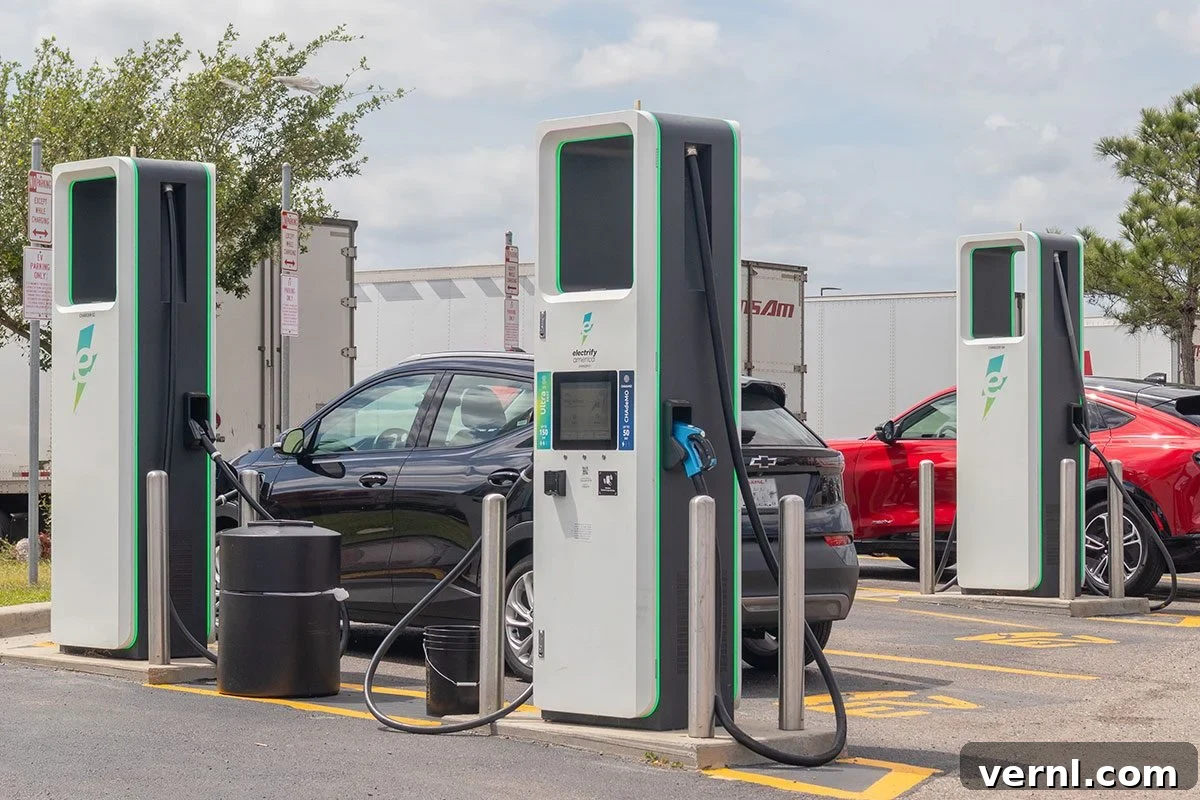
Electric vehicles (EVs) have rightfully earned their reputation as a cornerstone of sustainable transportation. Their primary advantage – the elimination of tailpipe emissions – directly addresses critical environmental concerns like climate change and urban air pollution, making them an attractive choice for individuals and governments committed to reducing carbon footprints and improving public health. The widespread adoption of EVs is seen as a crucial step towards a greener future, offering a cleaner alternative to gasoline-powered cars and contributing significantly to global efforts to combat climate change.
However, as with any rapidly evolving technology, a deeper look often reveals unforeseen complexities. While EVs themselves are heralded for their zero direct emissions, new research suggests that the infrastructure supporting them might present an unexpected environmental challenge. A groundbreaking study conducted by researchers at UCLA recently brought to light a significant, yet previously overlooked, way in which electric vehicle charging, specifically rapid charging, could be negatively impacting local environments and silently compromising air quality in surrounding areas.
According to the comprehensive findings of the UCLA study, the issue isn’t with the electric vehicles themselves, but rather with their powerful charging stations. The researchers uncovered compelling evidence demonstrating that air quality in the immediate vicinity of Direct Current Fast Charging (DCFC) stations was markedly worse than in other comparable locations. Their detailed analysis revealed “high levels of fine particulate matter” in areas surrounding these critical EV charging hubs. This revelation adds a nuanced layer to the environmental discourse around electric vehicles, prompting a re-evaluation of the entire EV ecosystem.
Michael Jerrett, a distinguished professor at UCLA Fielding’s Department of Environmental Health Sciences and a lead author of the study, underscored the gravity of these findings. “For anyone, exposure to fine particles can contribute to health issues, and for those with existing conditions or heightened sensitivity, the risks are even greater,” he explained. Jerrett elaborated on the insidious nature of these microscopic pollutants: “Because these particles are so small, they can travel deep into your lungs and even enter your bloodstream—potentially leading to serious problems like heart or lung disease.” This highlights the urgent need to address this emerging concern, particularly as the number of DCFC stations continues to grow globally to support the accelerating shift to electric mobility.
The Mechanics Behind the Haze: Why EV Fast Charging Stations Affect Air Quality
The concept of air pollution emanating from a supposedly “clean” technology might seem counterintuitive. However, the UCLA study meticulously unraveled several contributing factors explaining why EV fast charging stations can degrade the air quality around them. While some of these factors involve intricate scientific processes related to the conversion of high-voltage electricity from the grid into usable power for vehicle batteries, the most prominent and easily understandable culprit is surprisingly simple: cooling fans.
Direct Current Fast Charging stations operate by delivering substantial amounts of power rapidly, significantly reducing charging times compared to conventional Level 2 chargers. This rapid power transfer generates considerable heat within the charging unit’s sophisticated electronic components. To prevent overheating, which could lead to inefficiency, damage, or even safety hazards, EV charging stations are equipped with robust cooling systems that heavily rely on powerful fans. These fans are designed to draw in ambient air to dissipate heat and expel warm air, ensuring the charger maintains optimal operating temperatures.
When these high-velocity fans spin into action, they inevitably stir up and expel a wide array of airborne particles. These particles aren’t just benign dust from the immediate environment. The study suggests that a significant portion of the harmful particulates can be generated directly by the EV charger itself through internal processes or wear of components. This expulsion of fine particulate matter, commonly referred to as PM2.5 (particulate matter less than 2.5 micrometers in diameter), is a critical concern due to its known adverse effects on human health.
PM2.5 particles are particularly dangerous because their minute size allows them to bypass the body’s natural defenses and penetrate deep into the respiratory system, reaching the smallest airways and even crossing into the bloodstream. Long-term exposure to elevated levels of PM2.5 has been linked to a spectrum of severe health issues, including asthma, bronchitis, heart attacks, strokes, and various respiratory illnesses. Vulnerable populations, such as children, the elderly, and individuals with pre-existing cardiovascular or pulmonary conditions, are at an even higher risk, making the localized impact of charging stations a public health issue that requires immediate attention.
Furthermore, the physical placement of many DCFC stations exacerbates the problem. Often located in densely populated urban areas, commercial parking lots, or along busy highway corridors, these stations are frequently situated in close proximity to pedestrian walkways, residential zones, and other areas with high human activity. This proximity means that any particulate matter generated and dispersed by the chargers is more likely to be inhaled by a larger number of people, increasing the overall public health burden.
Paving the Way Forward: Addressing the Challenge of Charger-Related Air Pollution
The good news emanating from this important research is that some prominent electric vehicle charging manufacturers and network operators are already aware of these potential environmental side effects and are actively working towards implementing corrective measures. This proactive approach by industry leaders is crucial for maintaining public trust in EV technology and ensuring its long-term sustainability.
A spokesperson for ChargePoint Holdings Inc., which operates one of the largest EV charging networks in the United States, confirmed their commitment to mitigating this issue. “On all of our current DC fast chargers, ChargePoint enforces a minimum height for the air intake and exhaust to limit the ingress of dust, debris and water,” the spokesperson told the LA Times. This design consideration aims to elevate the points where air is drawn in and expelled, reducing the amount of ground-level particulates that can be disturbed and circulated by the fans.
Looking ahead, ChargePoint has even more ambitious plans to enhance the environmental performance of their charging infrastructure. They intend to integrate advanced filtration systems into their future chargers. These filters are designed to “further reduce the risk of dust or water entering the system, or particulates being expelled,” thereby significantly curtailing the release of harmful PM2.5 into the ambient air. This commitment to innovation demonstrates a responsible approach to technological development, ensuring that the benefits of EVs are not offset by unintended consequences of their supporting infrastructure.
Beyond the efforts of individual companies like ChargePoint, a multi-faceted approach will likely be necessary to comprehensively address charger-related air pollution. This could involve several key strategies:
Technological Innovations in Charger Design
- Advanced Filtration Systems: Widespread adoption of high-efficiency particulate air (HEPA) filters or similar technologies in all new fast charging units, designed to capture PM2.5 and other airborne pollutants.
- Improved Cooling Technologies: Exploring alternatives to fan-based air cooling, such as liquid cooling systems, which can be sealed and more efficient in heat dissipation without disturbing ambient air.
- Sealed Units and Materials: Developing more robust, sealed charging unit designs that minimize the escape of internally generated particles and prevent external dust from entering the system.
- Smart Fan Control: Implementing intelligent fan control systems that adjust fan speed based on actual cooling needs, reducing unnecessary air movement and particle dispersion during low-demand periods.
Strategic Siting and Urban Planning
- Optimal Location Selection: Placing DCFC stations in areas with good air circulation, away from highly trafficked pedestrian zones, outdoor dining areas, and residential buildings where human exposure would be maximized.
- Green Infrastructure Integration: Incorporating natural barriers like trees and hedges around charging stations to help filter air and reduce particulate matter dispersion.
- Ventilation Strategies: Designing charging station layouts that facilitate natural ventilation or incorporate forced ventilation systems to disperse any emitted particles quickly and safely.
Regulatory Framework and Industry Standards
- Emission Standards for Chargers: Governments and regulatory bodies could establish specific air quality or particulate matter emission standards for EV charging equipment, similar to those for other industrial equipment.
- Certification and Compliance: Implementing certification processes for charging equipment that verify their adherence to these new environmental standards, encouraging manufacturers to innovate.
- Incentives for Green Design: Offering incentives or subsidies for manufacturers and operators who adopt cleaner, more environmentally friendly charging station designs and technologies.
The discovery of particulate matter emissions from EV fast chargers underscores the importance of a holistic approach to environmental sustainability. While the transition to electric vehicles remains a vital strategy for combating climate change and reducing overall air pollution, it is equally important to scrutinize every component of this new ecosystem. By proactively identifying and addressing these emerging challenges, the EV industry can ensure that the promise of truly clean and sustainable transportation is fully realized, leading to healthier communities and a healthier planet for everyone. Continuous research, collaborative industry efforts, and responsive policymaking will be essential in navigating these complexities and perfecting the green revolution on wheels.
Sources
- UCLA Newsroom, “UCLA team finds high levels of particulates in air near electric vehicle fast charging stations” (2025)
- LA Times, “EV fast chargers have a surprising health downside” (2025)
- Science Direct, “Fine particulate matter emissions from electric vehicle fast charging stations” (2025)
Related Articles for Further Reading
- Do You Know What That Little Button on Your Seat Belt Is For?
- What Those Lines on Your Backup Camera Really Tell You
- Here’s What The Small Panel On Your Car’s Front Bumper Is For