
Native vs. Non-Native Ladybugs: A Gardener’s Guide to Identification and Management
The sight of a ladybug, with its vibrant red shell and distinctive black spots, is a cherished symbol of summer and a welcome visitor in any garden. These charming insects are often hailed as natural allies for gardeners, diligently consuming common plant pests. However, what many people don’t realize is that not all ladybugs are the same, and some species are far more beneficial than others, while some can even be problematic. In the United States alone, there are hundreds of species of lady beetles, commonly known as ladybugs. While some are native to North America and play a vital role in our ecosystems, others have been introduced from different parts of the world, often with unforeseen consequences.
Tragically, several species of native ladybugs, such as the 9-spotted ladybug, have become increasingly rare, facing population declines across the continent. Simultaneously, non-native species like the Asian lady beetle have thrived, becoming invasive and frequently displacing their native counterparts. Understanding the distinctions between these species is crucial for maintaining a healthy garden and supporting local biodiversity. This comprehensive guide, informed by plant knowledge specialist Sharon Yiesla from the Plant Clinic at The Morton Arboretum, delves into the world of native and non-native ladybug species, offering essential insights for every gardener and nature enthusiast.
What’s the Crucial Difference Between Native Ladybugs and Asian Lady Beetles?
While both native ladybugs and Asian lady beetles belong to the same family of insects, Coccinellidae, they exhibit significant differences in behavior, diet, and impact on our environment and homes. Recognizing these distinctions is the first step toward effective garden management and native species conservation.
Native Ladybugs: The Gardener’s True Friend
Native ladybugs are truly specialized predators, primarily focusing their appetites on soft-bodied pests. Their diet predominantly consists of aphids, tiny sap-sucking insects that can devastate vegetable, flower, and ornamental plants. Beyond aphids, they might also consume other small, vulnerable insects and insect eggs laid on plant leaves. This selective diet makes them incredibly valuable for targeted pest control without harming other beneficial insects or the ecosystem at large.
Crucially, native ladybugs are generally non-aggressive. They do not bite humans, nor do they seek refuge inside warm structures during colder months. Instead, they overwinter outdoors, typically finding shelter in natural leaf litter, under bark, or within dense vegetation. Their life cycle is harmonized with the natural rhythms of their environment, making them an integral and harmless component of garden biodiversity.
Asian Lady Beetles: The Aggressive Imposter
Asian lady beetles, also known by several other names such as Japanese lady beetles, harlequin ladybirds, or Halloween bugs, also consume aphids and other common garden pests. However, their diet is far broader and more indiscriminate. They are known to prey on a wider array of insects, including the larvae and eggs of other beneficial insects, and alarmingly, even native ladybugs themselves. This predatory behavior on other beneficials can disrupt the delicate balance of a garden’s ecosystem.
Beyond their dietary habits, Asian lady beetles exhibit several other undesirable traits. Unlike their native counterparts, they have a strong tendency to invade homes and buildings during the autumn months, seeking warm shelter for winter hibernation. They often gather in large, unsightly groups on brightly-colored surfaces, windows, and south-facing walls. Furthermore, Asian lady beetles are known to bite, delivering a mild but noticeable nip that can be startling. When threatened or disturbed, they secrete a foul-smelling, yellowish liquid called reflex blood, which can stain surfaces and can cause allergic reactions or trigger asthma symptoms in some sensitive individuals. This combination of invasive behavior, indiscriminate predation, and defensive secretions makes them a significant nuisance and a threat to native ladybug populations.
How Did the Asian Lady Beetle Get Here and Spread So Widely?
The presence of Asian lady beetles in North America is a direct result of human intervention. The United States Department of Agriculture (USDA) deliberately imported this insect multiple times throughout the 20th century, beginning as early as 1916 and continuing through the 1980s. The initial intention was noble: to introduce a natural pest control agent that could help manage aphid populations on agricultural crops, particularly pecans and other fruit trees, thereby reducing the reliance on chemical pesticides.
For decades, establishment efforts largely failed or resulted in localized, isolated populations. However, a significant population was observed to have naturally established itself near New Orleans in the late 1980s. From this point, the Asian lady beetle rapidly spread across the continental United States and into parts of Canada and Mexico. Its remarkable adaptability, broad diet, high reproductive rate, and lack of natural predators in its new environment allowed it to quickly outcompete native species and colonize new habitats. Today, it is a common sight in most regions of the United States, a testament to its invasive success and a cautionary tale about the unpredictable outcomes of introducing non-native species for biological control.
Mastering Identification: How to Tell Them Apart
Distinguishing between native ladybugs and Asian lady beetles is key to effective garden management and conservation efforts. While there are many native species, and Asian lady beetles can vary greatly in appearance, there are a few consistent characteristics that can help you differentiate them.
Identifying Native Ladybugs
As Sharon Yiesla points out, “There are several species of native ladybugs, not just the familiar red one.” Many native ladybugs have specific and consistent spot patterns, or a distinct lack thereof. One of the most common native species, the convergent lady beetle (Hippodamia convergens), is a prime example. It typically features 13 or fewer black spots on its bright reddish-orange or red forewings (elytra). A key identifying mark for this species is the presence of two white lines that meet or converge just behind its head, a feature that gives the insect its descriptive name. Other native species might include the Two-spotted ladybug (Adalia bipunctata) or the Seven-spotted ladybug (Coccinella septempunctata), though the latter is also an introduced species that has become widespread but is generally considered less problematic than the Asian lady beetle. Native ladybugs often have smoother, more uniformly colored bodies and lack the prominent “M” or “W” mark found on the Asian lady beetle.
Identifying Asian Lady Beetles
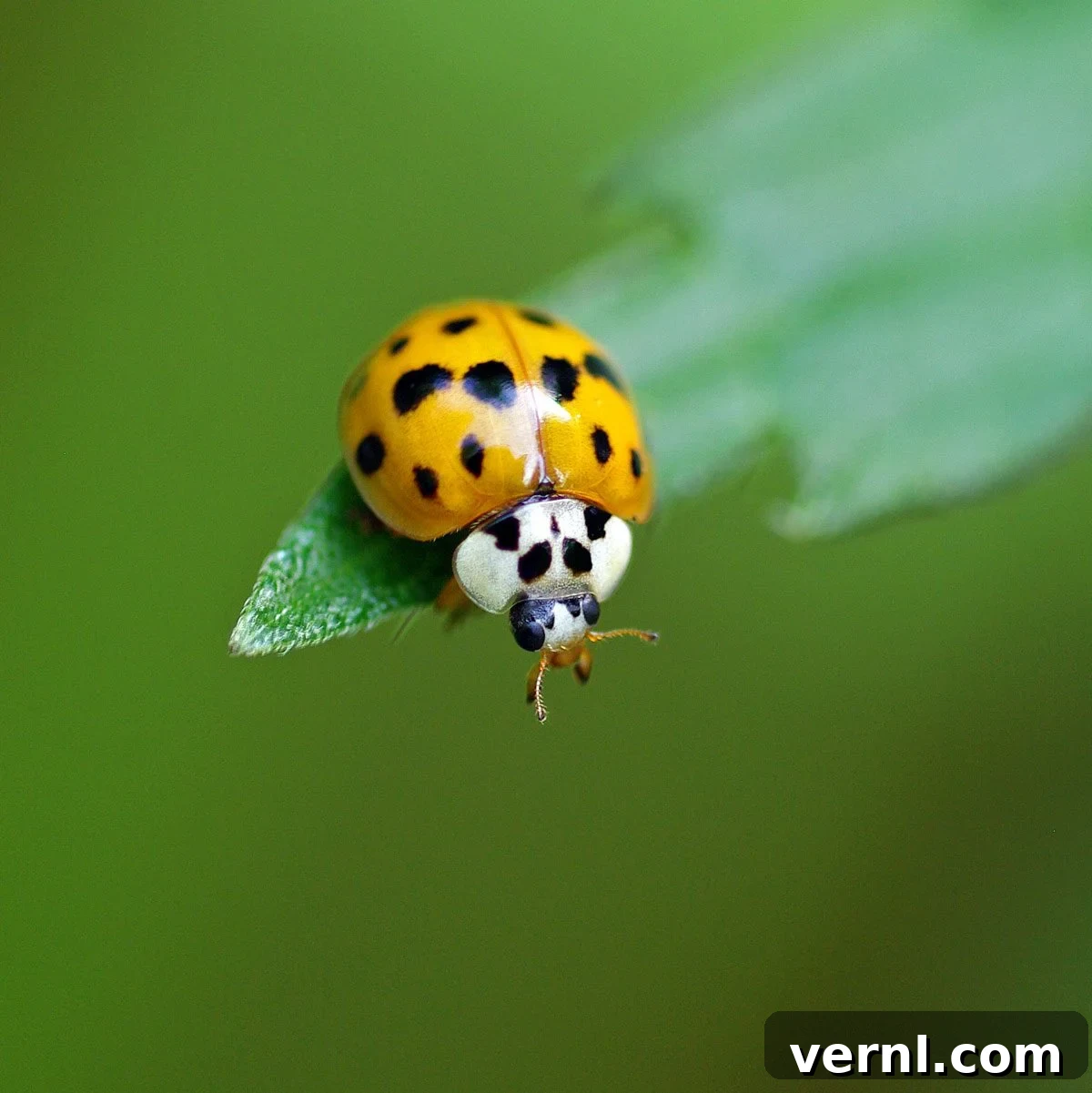
The Asian lady beetle (Harmonia axyridis) is characterized by its remarkable variability. Its color can range widely from light yellow to orange-red. The number of black spots it possesses is equally inconsistent; “It can have no black spots or as many as 19,” Yiesla explains. This makes spot count alone an unreliable identification method. The most definitive identifying feature of the Asian lady beetle is found on the area directly behind its head, known as the pronotum. This area is typically tan or off-white and features a distinct black mark that strongly resembles an “M” or a “W” shape. Yiesla offers a helpful mnemonic: “Remember ‘M’ for multicolored” – referring to the varied appearance of the Asian lady beetle, and also serving as a visual cue for the mark itself. Asian lady beetles also tend to be slightly larger and more dome-shaped than many native species, and their elytra can sometimes appear slightly bumpy or hairy.
Which One Is Better for My Garden and Local Ecosystem?
For gardeners, the choice is clear: native ladybugs are unequivocally the superior beneficial insect. Both insects are indeed predators of aphids, which feed on plant juices and cause significant damage to vegetable, flower, and tree fruit crops. However, their broader impacts diverge significantly.
The Unrivaled Benefits of Native Ladybugs
Native ladybugs are highly selective in their diet. They primarily consume soft-bodied plant pests like aphids, scale insects, mealybugs, and insect eggs laid on leaves. This specific predation makes them excellent biological control agents without causing collateral damage to other beneficial insects, such as lacewings, predatory mites, or other native ladybug species. They integrate seamlessly into the garden ecosystem, providing effective pest control while maintaining a healthy balance. It is typically this type of native ladybug that is collected and sold by reputable suppliers as a natural pest control solution for organic gardeners.
The Detrimental Impact of Asian Lady Beetles
While Asian lady beetles also have a strong preference for aphids, their dietary habits are far less discerning. As mentioned, they will readily consume the larvae and eggs of other ladybug species, lacewings, and other beneficial insects, effectively outcompeting and preying upon the very allies you want in your garden. This aggressive competition and predation can severely impact native populations and reduce overall biodiversity. Beyond their impact on other insects, Asian lady beetles are also a nuisance in fruit cultivation. They are attracted to ripening fall fruits like grapes, apples, and raspberries, where they congregate in large numbers. If accidentally harvested and processed with the fruit, their presence can taint the taste of wine or juice, imparting an unpleasant, bitter flavor due to their defensive secretions. This makes them a pest not only in the garden but also in agricultural settings.
Practical Strategies: How Can I Attract Native Ladybugs and Manage Asian Lady Beetles?
Creating a thriving garden ecosystem that favors native ladybugs while deterring Asian lady beetles requires a multi-faceted approach. It involves making your garden an inviting sanctuary for beneficial insects and taking proactive steps to manage the invasive species.
Cultivating a Native Ladybug Haven
“A good way to get beneficial insects like ladybugs into your garden is to make the garden a safe place,” advises Sharon Yiesla. Ladybugs, like many other beneficial insects, don’t solely rely on pests for sustenance; they also consume pollen and nectar. Therefore, diversifying your garden with specific plants can significantly increase native ladybug populations:
- Provide Diverse Flowering Plants: Aim to have at least one plant or another in bloom throughout the entire growing season. Ladybugs are particularly attracted to plants with flat-topped clusters of tiny flowers, which make nectar and pollen easily accessible. Excellent choices include members of the carrot family (Apiaceae) like dill, fennel, cilantro, and parsley, as well as plants in the Aster family (Asteraceae) such as cosmos, marigolds, and asters. Yarrow and sweet alyssum are also great options.
- Offer Overwintering Shelter: Unlike Asian lady beetles, native ladybugs prefer to overwinter in natural, undisturbed areas. Resist the urge to meticulously clean up all fallen leaves and perennial plant stalks in the fall. Leaving some leaf litter and plant debris in protected areas of your garden provides crucial shelter for native ladybugs and other beneficial insects during the colder months.
- Avoid Broad-Spectrum Pesticides: The indiscriminate use of chemical pesticides, even organic ones, can harm beneficial insects more than pests. When pests are present, opt for targeted, less toxic solutions or physical removal methods. A healthy garden ecosystem with a robust population of native ladybugs can often manage pest outbreaks naturally.
- Provide a Water Source: A shallow dish of water with some pebbles or marbles can provide a safe drinking spot for beneficial insects without the risk of drowning.
Managing and Removing Asian Lady Beetles
While attracting native ladybugs, it’s equally important to actively manage Asian lady beetle populations, especially if they are invading your home or becoming problematic in your garden.
- Indoor Removal: If Asian lady beetles infest your home, avoidance is key. Do not crush them, as this will release their foul-smelling, staining reflex blood. Instead, use a vacuum cleaner with a HEPA filter to collect them. A shop vac is particularly effective for larger infestations. Immediately after vacuuming, empty the contents into a sealed trash bag and dispose of it outdoors to prevent their escape back into your home. Alternatively, you can sweep them gently into a dustpan and release them far from your house, or dispose of them as described.
- Outdoor Removal: If you are certain you have identified Asian lady beetles outdoors, especially when they are congregating, you can pick them off plants or surfaces. Wear gloves if you prefer, and dispose of them appropriately. The crucial step here is positive identification to ensure you are not inadvertently removing native ladybugs!
- Prevention is Key for Indoor Infestations: The best defense against Asian lady beetles entering your home is prevention. Focus on sealing any gaps, cracks, or openings in your home’s exterior before fall. This includes:
- Sealing cracks in foundations and around utility pipes.
- Repairing damaged window screens and door sweeps.
- Caulking around window frames and door jambs.
- Sealing openings where wires or pipes enter the house.
- Ensuring vents (attic, dryer, foundation) have fine mesh screens.
Some anecdotal evidence suggests that darker paint colors can be less attractive to Asian lady beetles, as they tend to gravitate towards light-colored, south-facing walls that absorb more heat.
- Rethink Buying Ladybugs: While tempting, purchasing ladybugs can be problematic. Commercial ladybug shipments often contain a mix of species, potentially including Asian lady beetles. Moreover, purchased ladybugs are often collected from wild populations (sometimes overwintering clusters), which can stress them, and they frequently fly away quickly if a sufficient food source isn’t immediately available, offering little long-term benefit to your garden. Focus on creating a habitat that naturally attracts and sustains local native populations instead.
Join the Citizen Science Movement!
Every observation counts in the effort to understand and protect native ladybugs. If you spot a ladybug in your garden, try to snap a clear picture of it, especially noting any distinctive markings behind the head or on the wing covers. The Lost Ladybug Project, a collaborative partnership between Cornell University and 4-H, actively encourages gardeners and citizen scientists to log visits of any rare species of ladybugs. Your submissions contribute valuable data to scientists tracking ladybug populations and understanding the threats they face, helping to inform conservation strategies for these beloved insects.
Frequently Asked Questions About Ladybugs and Asian Lady Beetles
How can I prevent Asian lady beetles from getting inside my home?
The most effective strategy is to meticulously seal your home’s exterior before the cooler weather arrives in fall. Focus on sealing any gaps or cracks, especially around windows, doors, utility entry points (pipes, wires), and foundation cracks. Use high-quality caulk, weatherstripping, and ensure all screens are intact. Regularly inspect your home’s exterior for new openings. Additionally, some studies suggest that Asian lady beetles are less attracted to darker paint colors, as they tend to prefer bright, warm, south-facing surfaces for overwintering.
What’s the best way to remove Asian lady beetles once they are inside my home?
The safest and cleanest method for indoor removal is using a vacuum cleaner, ideally one with a HEPA filter, or a shop vac. Gently vacuum up the beetles without crushing them to avoid their foul-smelling, staining secretions. Immediately after collection, empty the vacuum contents into a sealed trash bag and dispose of it outdoors to prevent their escape. Avoid spraying them with pesticides indoors, as this can be harmful to pets and humans and often less effective than physical removal.
Are Asian lady beetle bites dangerous?
While an Asian lady beetle bite can be mildly irritating and surprising, it is generally not considered dangerous to most people. The bite itself is a defensive mechanism and feels like a small pinch. However, for individuals with severe allergies or asthma, exposure to their secretions (reflex blood) or dried body parts can trigger allergic reactions or respiratory symptoms. It’s always best to avoid direct contact, especially if you have known sensitivities.
How long do ladybugs (native and Asian lady beetles) typically live?
The lifespan of a ladybug can vary significantly depending on the species, environmental conditions, and availability of food. Generally, adult ladybugs (both native species and Asian lady beetles) can live for several months to up to a year. They typically overwinter as adults, emerging in spring to mate and lay eggs, and then dying off after a few reproductive cycles.
Can Asian lady beetles damage my houseplants?
Asian lady beetles are not known to directly damage houseplants by feeding on them. Their primary food source is aphids and other soft-bodied insects. However, their presence indoors can be a nuisance, and their defensive secretions can stain furniture or walls if they are disturbed or crushed. The main concern with Asian lady beetles and houseplants is their tendency to invade homes and their potential to prey on other beneficial insects you might introduce to your indoor plants.
About the Expert
Sharon Yiesla is a Plant Knowledge Specialist with the Plant Clinic at The Morton Arboretum. Her expertise provides invaluable insights into plant health, pest management, and the ecological roles of garden insects.