
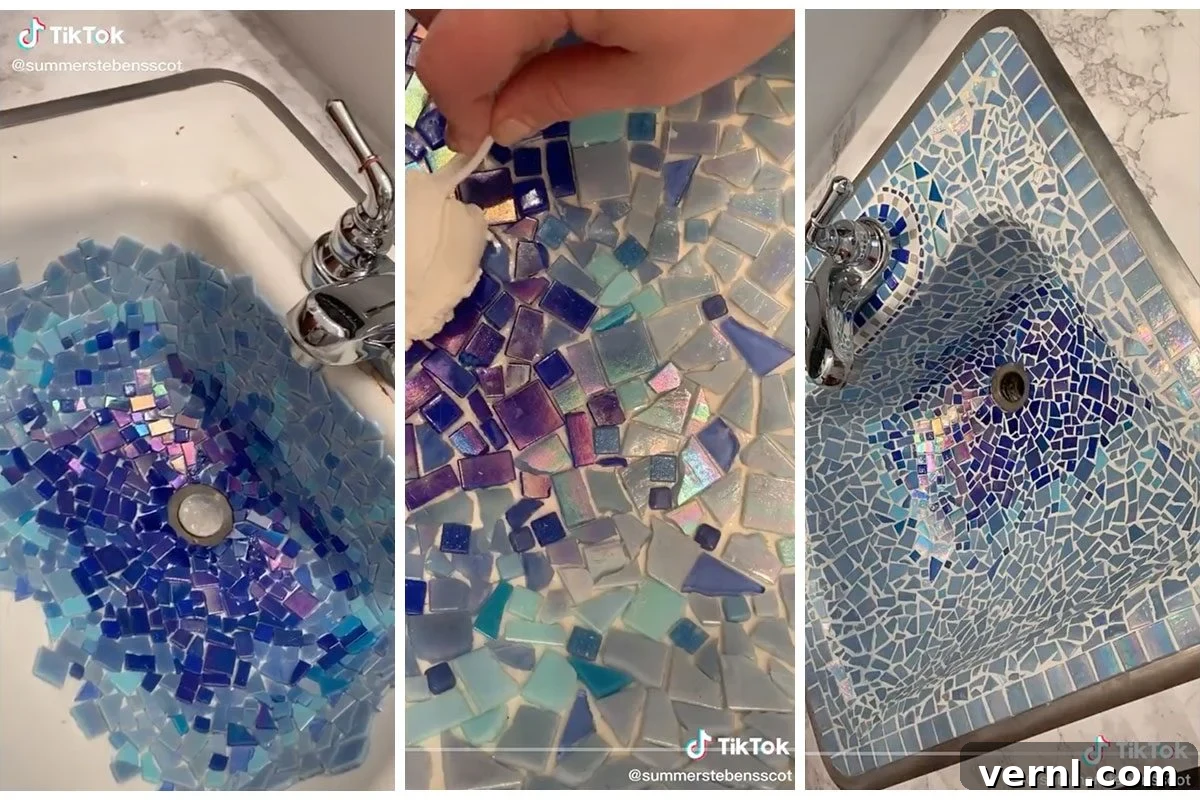
In the ever-evolving world of home decor, especially when it comes to bathroom decor trends, just when you think you’ve seen it all, social media platforms like TikTok deliver a fresh wave of innovation. While the conventional wisdom points towards tiling showers and floors for both aesthetics and practicality, a surprising new movement has emerged: tiling sinks. This unexpected trend challenges traditional notions of bathroom design, bringing a bespoke, artistic touch to an otherwise utilitarian fixture.
Mosaics, an ancient art form composed of small, irregularly shaped pieces of glass, ceramic, or stone, have graced our spaces for centuries. From grand mosaic floors in Roman villas to intricate wall art, their enduring appeal lies in their ability to transform surfaces into vibrant, textured masterpieces. Traditionally, mosaics have found their place in areas where durability and artistic expression converge. However, a recent surge in DIY creativity on TikTok has pushed the boundaries, inspiring homeowners and enthusiasts to apply this timeless technique to more unconventional surfaces. One particularly innovative TikTok creator captivated audiences by crafting a stunning mosaic pattern directly onto their bathroom sink. While such a project certainly isn’t for everyone, the resulting visual impact is undeniably breathtaking, prompting a closer look at this unique approach to bathroom customization.
The Artistic Allure of Mosaics in Modern Bathrooms
Mosaic art is more than just tiling; it’s a form of visual storytelling that adds unparalleled character and depth to any space. The beauty of a mosaic lies in the interplay of countless tiny pieces, known as tesserae, which collectively form a cohesive and often intricate design. In a bathroom setting, mosaics offer a chance to infuse personal style, create focal points, and introduce rich textures that standard tiling simply cannot replicate. From vibrant, multicolored patterns that evoke a sense of playfulness to subtle, monochromatic arrangements that exude elegance, the versatility of mosaic design is boundless. Different types of mosaic tiles, such as shimmering glass, earthy ceramic, or luxurious natural stone, each bring their own unique properties and aesthetic qualities to a project. The choice of tesserae, combined with a thoughtful color palette and pattern, allows for complete customization, making a mosaic truly one-of-a-kind. When applied to a less common area like a sink, a mosaic instantly elevates the fixture from a mere necessity to a captivating work of art, redefining the concept of bathroom luxury and individuality.
How to Create a Stunning Mosaic Sink
Inspired by the viral trend, many are curious about the practical steps involved in crafting a mosaic sink. While the process may appear daunting, it’s a rewarding DIY endeavor that allows for immense creative expression. The viral TikTok video by creator Summer Stebens Scott provides a glimpse into this captivating transformation. Let’s delve deeper into the process, covering essential steps from preparation to sealing, ensuring a successful and beautiful outcome.
@summerrrscottt When people ask “What did you do during quarantine?”#coronavirus #covid19 #mosaic #mosaicart #fyp #foryou #foryoupage #comeontiktok #doyourthing #diy ♬ Seve – Tez Cadey
Preparation is Key
Before any tiles are laid, thorough preparation of the sink surface is paramount. This involves a meticulous cleaning process to remove any soap scum, grime, or residue. The sink must be completely dry before proceeding. For ceramic or porcelain sinks, a light sanding with fine-grit sandpaper can help create a rougher surface, allowing for better adhesion of the mosaic tiles. Any cracks or imperfections in the original sink should be repaired to ensure a smooth, stable base for your artwork. Skipping this crucial step can compromise the longevity and adhesion of your mosaic.
Selecting Your Tiles and Crafting the Design
TikTok creator Summer Stebens Scott (@summerrrscottt) famously undertook this project during quarantine, showcasing her process with a mesmerizing mix of iridescent purple, blue, and green tiles. Her design featured darker shades concentrated in the center, gradually fanning out to lighter tones towards the edges, creating a visually dynamic effect. When selecting your tiles, consider the color palette that complements your bathroom decor. Small glass tiles are popular for mosaics due to their vibrant colors and light-reflecting properties, but ceramic or even repurposed materials can also be used. Before committing with adhesive, it’s highly recommended to dry-lay your tiles on the sink or on a piece of paper cut to the sink’s shape. This allows you to experiment with patterns, color transitions, and the overall flow of your design, ensuring you achieve the desired artistic vision. Summer also added a charming, smaller design around the faucet, demonstrating how even tiny details can enhance the overall aesthetic.
Applying Adhesive and Laying Tiles
Once your design is finalized, the next step is applying the adhesive. For a sink, which is a wet area, it’s crucial to use a waterproof thin-set mortar or mastic specifically designed for tiling in moist environments. Apply the adhesive in small sections using a trowel, ensuring an even layer without excessive thickness. Carefully place your pre-planned tiles onto the adhesive, pressing firmly to ensure good contact. Maintaining consistent spacing between tiles is vital for a polished look and to allow sufficient space for grout. Work methodically, piece by piece, adhering to your chosen pattern. Precision and patience are your best friends during this stage, especially when dealing with the delicate, small tesserae.
The Grouting Process
After all the tiles have been laid and the adhesive has completely cured (check manufacturer’s instructions, typically 24-48 hours), it’s time for grouting. Grout fills the gaps between the tiles, providing structural integrity, preventing water penetration, and enhancing the overall appearance. Summer’s video shows her spreading tile grout across the entire mosaic surface, ensuring all the spaces are thoroughly filled. Use a rubber float to press the grout into the joints, working diagonally across the tiles to prevent pulling the grout out of the gaps. There are different types of grout, including sanded (for wider gaps) and unsanded (for narrower gaps), as well as epoxy grout which offers superior stain and chemical resistance – a good option for a sink. Once the grout has been applied, allow it to set for a short period (usually 15-30 minutes), then carefully wipe away any excess from the tile surfaces using a damp sponge. Multiple passes might be needed, rinsing the sponge frequently, to achieve a clean finish without smearing.
The Crucial Step: Sealing
With the grout cleaned and fully cured (which can take up to 72 hours), the final and perhaps most critical step for a mosaic sink is applying a tile and grout sealer. Given that a sink is constantly exposed to water, soap, and other liquids, proper sealing is non-negotiable. Summer’s video shows her applying tile sealer with a brush to protect the intricate design. A high-quality penetrating sealer will fill the microscopic pores in the grout and tiles, making them water-resistant and much easier to clean. Without adequate sealing, water can seep into the grout, leading to mildew, staining, and even structural damage over time. Apply the sealer according to the manufacturer’s instructions, typically with a brush or sprayer, ensuring complete coverage. Multiple coats may be necessary, and regular reapplication (every 1-3 years, depending on product and usage) is recommended to maintain optimal protection. These steps are vital to ensure your beautiful mosaic sink remains functional and pristine for years to come.
Can a Mosaic Sink Truly Work? Navigating Practicality vs. Aesthetics
While a mosaic sink undoubtedly offers a unique and visually appealing aesthetic, transforming an ordinary fixture into a focal point, it’s essential to consider the practical implications before embarking on such a project. The charming allure seen in a quick TikTok video often doesn’t reveal the full spectrum of challenges that can arise from installing and living with a mosaic sink.
The Cleaning Conundrum
Perhaps the most significant downside, as highlighted by numerous commenters on viral videos, is the difficulty of cleaning. Unlike smooth, seamless sink surfaces that can be wiped down in seconds, a mosaic sink presents an uneven, textured landscape filled with grout lines. These tiny gaps, even when properly grouted and sealed, can become traps for soap scum, toothpaste, makeup residue, and general grime. Reaching into every crevice to ensure thorough cleaning can be a tedious and time-consuming task. As a high-traffic area constantly exposed to water and debris, a sink demands easy maintenance. The intricate surface of a mosaic could potentially harbor bacteria and mold if not meticulously cleaned and dried, posing hygiene concerns that a standard sink does not.
Installation Intricacies and Durability Concerns
What looks effortless in a time-lapsed video often requires significant skill and patience in reality. Handling small, delicate tiles and achieving an even, polished surface can be challenging for even experienced DIYers. Any imperfections in tile placement or grout application can become glaringly obvious, detracting from the intended aesthetic. Beyond installation, the long-term durability of a mosaic sink is a major consideration. Tiles, especially glass or thinner ceramic varieties, are prone to scratches, chips, and even breakage. Dropping a heavy item like a perfume bottle or a ceramic mug into a mosaic sink could easily damage individual tiles or crack the grout, compromising the entire pattern. While a well-sealed surface offers protection against water, the constant wear and tear of daily sink use might accelerate deterioration, leading to costly repairs or even the need for a complete replacement.
Cost and Resale Value
The expense associated with creating a mosaic sink extends beyond just the tiles. Quality adhesives, grouts, and sealers suitable for wet environments can add up. If professional installation is required, labor costs can be substantial. Given the specialized nature and potential maintenance issues, the overall investment might be considerably higher than a standard sink. Furthermore, while a mosaic sink is a bold personal statement, it might not appeal to everyone. Its highly customized aesthetic could be a disadvantage when it comes to resale value, as it may not suit the tastes of prospective buyers who prefer more neutral or conventional bathroom fixtures.
Exploring Practical & Stylish Bathroom Tile Alternatives
If the unique, but challenging, allure of a mosaic sink doesn’t quite fit your vision or lifestyle, there are countless other bathroom tile trends that offer both stunning aesthetics and practical functionality. Mosaics themselves remain a fantastic option for other areas of the bathroom, providing artistic flair without the intense maintenance demands of a sink.
Traditional Mosaic Applications
For those who love the artistic appeal of mosaics, consider incorporating them into more conventional, yet equally impactful, areas. Mosaic tiles are excellent for shower walls, creating a spa-like feel or a vibrant accent. They also shine as eye-catching backsplashes behind a vanity, protecting walls while adding a touch of personality. Mosaic borders or accent strips can be integrated into larger tile layouts on floors or walls, breaking up monotony and adding visual interest. These applications allow you to enjoy the beauty of mosaic art with far less concern about daily wear and tear or cleaning complexities than a sink.
Popular & Practical Bathroom Tile Trends
Beyond mosaics, the world of bathroom tiling offers a diverse array of styles and materials that beautifully blend form and function:
- Large-Format Tiles: These expansive tiles create a seamless look with fewer grout lines, making them incredibly easy to clean and giving the illusion of a larger space. They are popular for both floors and walls.
- Wood-Look Porcelain Tiles: Offering the warmth and charm of wood without the maintenance issues associated with real wood in wet environments, these tiles are durable, water-resistant, and come in a vast range of finishes.
- Subway Tiles: A timeless classic, subway tiles are versatile, affordable, and can be laid in various patterns (horizontal, vertical, herringbone) to create different visual effects, perfect for showers and backsplashes.
- Natural Stone Tiles: Marble, travertine, and slate bring an undeniable touch of luxury and organic beauty. While they require sealing and careful maintenance, their unique veining and textures are unmatched.
- Textured and Dimensional Tiles: Adding tactile interest, these tiles feature raised patterns or varied surfaces, creating shadows and depth that can elevate a plain wall into an architectural feature.
- Geometric Patterned Tiles: For floors or accent walls, bold geometric patterns introduce a contemporary and dynamic element, making a strong design statement.
- Zellige Tiles: Hailing from Morocco, these handmade, imperfect clay tiles offer a rustic yet sophisticated charm with subtle variations in color and texture that create a unique, artisanal look.
The Final Verdict: A Bold Statement, Thoughtfully Considered
The mosaic sink trend, championed by creative minds on platforms like TikTok, stands as a testament to the endless possibilities of DIY home customization. It’s a visually striking way to inject profound personality and artistry into a bathroom, transforming an everyday fixture into an extraordinary piece of decor. However, as with any innovative design choice, it comes with a set of considerations. While the aesthetic appeal is undeniable, the practical challenges regarding cleaning, durability, and long-term maintenance are significant. Creating a mosaic sink is undoubtedly a commitment—one that demands careful thought about your lifestyle, maintenance preferences, and the overall functionality of your bathroom space. If you’re drawn to its unique charm and are prepared for the upkeep, it can be a truly rewarding project. But for those seeking equally stylish yet more pragmatic solutions, the wealth of other bathroom tile trends ensures that there’s a perfect blend of beauty and practicality waiting to transform any bathroom into a sanctuary of personal style.