
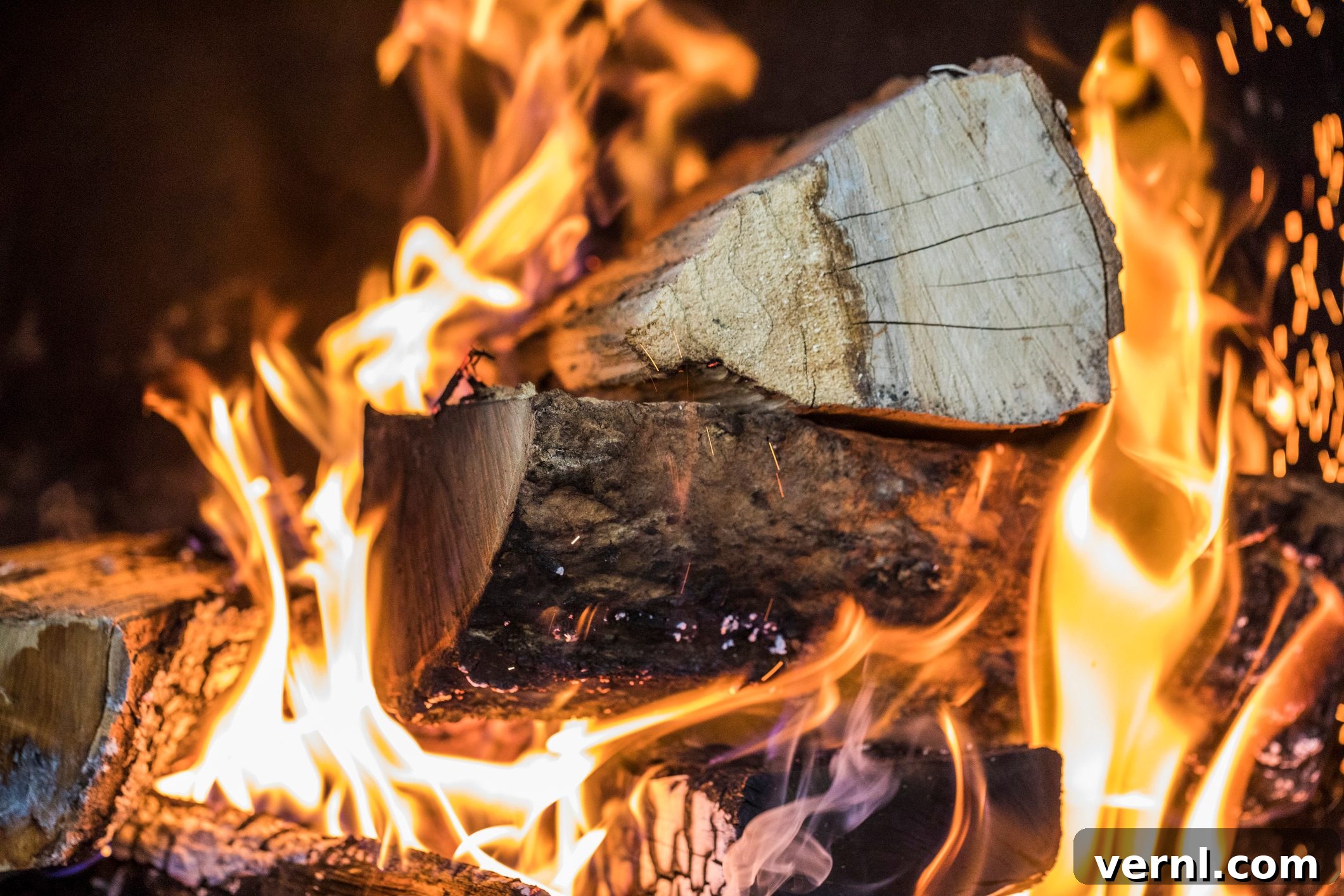
When the chill of winter sets in, many homeowners find comfort and warmth gathered around a crackling campfire, a cozy backyard fire pit, or the inviting glow of a living room fireplace. Yet, the true secret to an efficient, clean, and satisfying burn lies not just in the fire source, but in the quality and preparation of your firewood. Unseasoned, or “green,” wood can lead to frustration, excessive smoke, and poor heat output. Understanding how to properly dry and prepare your firewood is paramount for a superior burning experience.
The common advice suggests drying, or “seasoning,” firewood for a period ranging from six to 18 months before it’s ready for use. However, as Mike Kuhns, a Utah State University professor and extension forester, points out, such a broad timeframe can often be too vague to be truly practical. Fortunately, by considering several key factors and employing smart practices, you can significantly narrow this window and ensure your firewood is perfectly seasoned for optimal performance.
Factors To Consider When Drying Firewood
Whether you’re planning your next firewood purchase or delving into your existing woodpile, several critical factors influence how quickly and effectively your wood will season. Paying attention to these details can transform your firewood burning experience, leading to hotter fires, less smoke, and more efficient heating.
Water Content: The Core of Seasoning
The primary goal of seasoning firewood is to reduce its moisture content. When wood is freshly cut, it’s often referred to as “green wood” and can contain a significant amount of water, sometimes as much as 50% or more by weight. Burning wood with high moisture content is inefficient and problematic for several reasons. The water within the wood must first boil off as steam, consuming a substantial portion of the heat energy that would otherwise be used to warm your home. This process not only reduces the heat output but also produces more smoke, creosote buildup in chimneys, and an overall less satisfying fire.
When sourcing firewood, you generally have a choice between seasoned vs. kiln-dried wood. Buying pre-dried or kiln-dried firewood is often preferable, as Kuhns advises, “as long as you don’t have to pay a lot more for it.” Kiln-dried wood has been artificially dried in a controlled environment, typically reaching a very low moisture content (often below 20%) much faster than natural seasoning. If you opt for green wood to save money, it’s crucial to understand that it needs ample time to dry. Do not plan to burn it right away. Instead, prepare a dedicated area where the wood can quickly and properly season, allowing air circulation to carry away moisture.
To get a head start on the drying process, consider cutting and burning dead trees, assuming they haven’t begun to decay significantly. “Burning wood from trees that were dead for a while when you cut it is OK,” Kuhns notes. “Generally, the dead wood will start burning more easily because it has already begun to dry naturally. However, if it has been dead for a long time, it will start to decay, which means less density and less heat output.” The ideal scenario is wood that has died recently and still maintains its structural integrity but has had some time to shed initial moisture.
Average Humidity and Temperature: Environmental Catalysts
The environment plays a crucial role in how quickly firewood dries. If you’re buying green firewood with the aim of saving money, doing so as early as possible in the year is highly recommended. Firewood seasons most rapidly from spring through the hot, dry days of summer. During these months, higher temperatures facilitate faster evaporation of moisture, and lower humidity levels in the air mean the wood can release its internal water content more effectively. Warm, sunny, and breezy conditions are ideal for accelerating the seasoning process.
If acquiring wood in the spring isn’t feasible, or if you live in a region with consistently high humidity, you can super-charge the drying process with alternative methods. Building a homemade firewood kiln, for instance, can drastically reduce drying times. In a well-designed solar kiln or a heated chamber, wood that would normally take many months to season can be dried in a matter of days or weeks. For most backyard users, however, strategic stacking and exposure to natural elements are the most practical approaches. Positioning your woodpile in a sunny, breezy spot away from dense shade will significantly improve drying rates, even in less-than-ideal climates.
Wood Species: Density and Heat Potential
Contrary to a common misconception, the density of a wood species doesn’t necessarily dictate its initial water content. However, denser wood typically takes longer to season because its tightly packed cellular structure holds moisture more tenaciously and releases it more slowly. Despite the longer wait, the effort is often well worth it. Denser wood produces about double the amount of heat per cord compared to lighter, less dense wood species, making it a more efficient and economical choice for heating.
Understanding the heat content of different wood species can help you make informed decisions when buying or harvesting. “Quaking aspen, for example, is a light wood that is 2,160 pounds per cord dry, with a heat content of 18.2 million Btus (British thermal units) per cord,” Kuhns explains. “On the other hand, white oak is a very dense wood species, weighing 4,200 pounds per dry cord and offering a heat content of 29.1 million Btus per dry cord. This is almost twice the heat content of aspen.” Other dense hardwoods like hard maple, hickory, and black locust also offer excellent heat output and a longer burn time, making them highly desirable for primary heating. Softer woods like pine and fir, while faster to season and easier to ignite, burn much more quickly and produce less heat per volume, making them better suited for kindling or occasional fires rather than sustained heating.
Proper Stacking: Maximizing Airflow
How you store your firewood has a profound impact on its seasoning time and quality. Kuhns highly recommends buying split wood or taking the time to split it yourself. “The sooner you do it and the smaller the pieces, the better, though it is usually enough to split a round into two to four pieces,” he advises. Splitting the wood exposes more surface area to the air, which is crucial for moisture evaporation. Wood pieces with bark on one side tend to catch fire more easily than those with bark on all sides, as the exposed wood grain allows for better ignition and airflow. Learning how to split firewood safely and efficiently is an essential skill for any firewood user, as it not only aids in drying but also makes handling and burning much easier.
Once split, the wood should be stacked loosely and off the ground. Stacking loosely creates crucial air channels throughout the pile, allowing wind and convection to carry away moisture. Placing the wood on pallets, old timbers, or a dedicated firewood rack prevents it from absorbing ground moisture, which can significantly hinder drying and promote rot. Covering the top of the pile during rain and throughout the winter months is also vital to protect the wood from absorbing new moisture. However, avoid covering the sides of the stack entirely, as this will impede necessary airflow. A well-constructed, properly stacked woodpile should allow for maximum exposure to sun and wind while offering protection from precipitation.
How To Test Firewood for Dryness
Once you’ve put in the effort to season your firewood, how can you be sure it’s truly ready to burn? Fortunately, there are several simple yet effective ways to test its dryness, ensuring you’re getting the most out of your efforts.
The Visual Test: A Quick Assessment
A seasoned piece of firewood will look noticeably different from a freshly cut one. Start by looking for cracks, or “checks,” in the end grain of the wood, which are visible at the front of your woodpile. As wood dries, the ends split and gradually open wider and wider, forming deep fissures. Green wood typically has a bright, fresh appearance, often exhibiting the natural color of the tree’s inner wood. In contrast, aged wood will lose its vibrant color, appearing duller and often gray or weathered on the exterior. The bark might also be looser and easier to peel off on seasoned wood.
The Audio Test: Listening for Dryness
The sound a piece of wood makes can be a reliable indicator of its moisture content. Pick up two pieces of wood and tap them together, or drop a piece onto a hard surface. Dried wood will produce a distinct, hollow, ringing sound, almost like a drum. This resonance indicates that the internal structure is dry and open. Green wood, on the other hand, will land with a dull thud, lacking any significant reverberation, because the water inside dampens the sound waves.
The Weight Test: Feeling the Difference
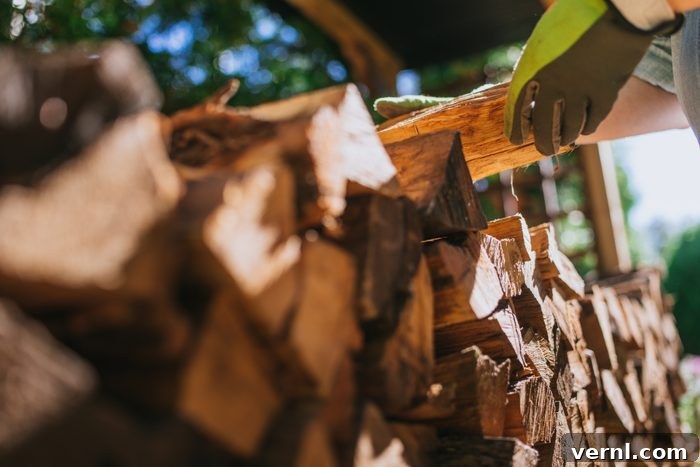
Water is heavy, so as it evaporates from wood, the wood becomes significantly lighter. A seasoned piece of firewood can weigh as much as half of what it did when it was green. Simply picking up a piece of wood can give you a good indication of its dryness. If it feels surprisingly light for its size, it’s likely well-seasoned. If it feels dense and heavy, it probably still contains a lot of moisture. For those who want more precise comparisons, charts are available that provide the typical weight of various seasoned firewood species compared to their greener counterparts, allowing you to gauge the moisture loss more accurately.
The Electronic Test: Precision at Your Fingertips
For the utmost accuracy and certainty, especially if you’re serious about burning efficiency, a simple moisture meter is an invaluable tool. These handheld devices use probes to measure the electrical resistance within the wood, which correlates directly to its moisture content. Seasoned wood, ideal for burning, should have a moisture content of less than 20 percent. Many experts recommend aiming for 15-20% for optimal performance. A moisture meter provides an objective, numerical reading, eliminating any guesswork and ensuring your firewood is perfectly primed for a clean, hot burn.
So, How Long Should You Dry Firewood?
Given the many variables involved—wood species, initial moisture content, local climate, and stacking methods—it’s impossible to offer a single, definitive answer to how long firewood should dry. However, by adhering to best practices, you can achieve burnable wood within a practical timeframe. If you meticulously follow all the correct seasoning procedures—cutting wood into smaller, manageable pieces, stacking it loosely off the ground in a sunny and windy location, covering it to protect against rain and snow, and drying it in a warm climate with minimal humidity—you’ll likely have fine, burnable wood in as little as six to nine months. This assumes you started with green wood in early spring.
But what’s the rush? Our best advice is to season your wood for as long as possible. As long as your wood is seasoning properly and you don’t have an immediate need to burn it, there’s no harm in letting it dry for two, three, or even four years. The only caveat is that after about four years, the wood may begin to decay, leading to a loss of density and heat content. By waiting longer, the moisture level in the wood will continue to drop, making it even more efficient to burn. Longer seasoning results in wood that ignites more easily, burns hotter and cleaner, produces less smoke, and reduces creosote buildup in your chimney, ultimately leading to a safer, more enjoyable, and more economical fire every time.