
Understanding Ring Shank Nails: The Ultimate Guide to Superior Fastening
In the world of construction and DIY projects, choosing the right fastener is paramount to ensuring durability, stability, and safety. Among the myriad of nail types available, the ring shank nail stands out as a true workhorse, renowned for its exceptional gripping power. Unlike its smooth-shank counterparts, these specially designed nails offer significantly enhanced pull-out resistance, making them indispensable for applications where movement, expansion, and contraction are common challenges. This comprehensive guide will delve into what makes ring shank nails so effective, their diverse applications, and why they are often the preferred choice for demanding fastening tasks.
What Exactly is a Ring Shank Nail?
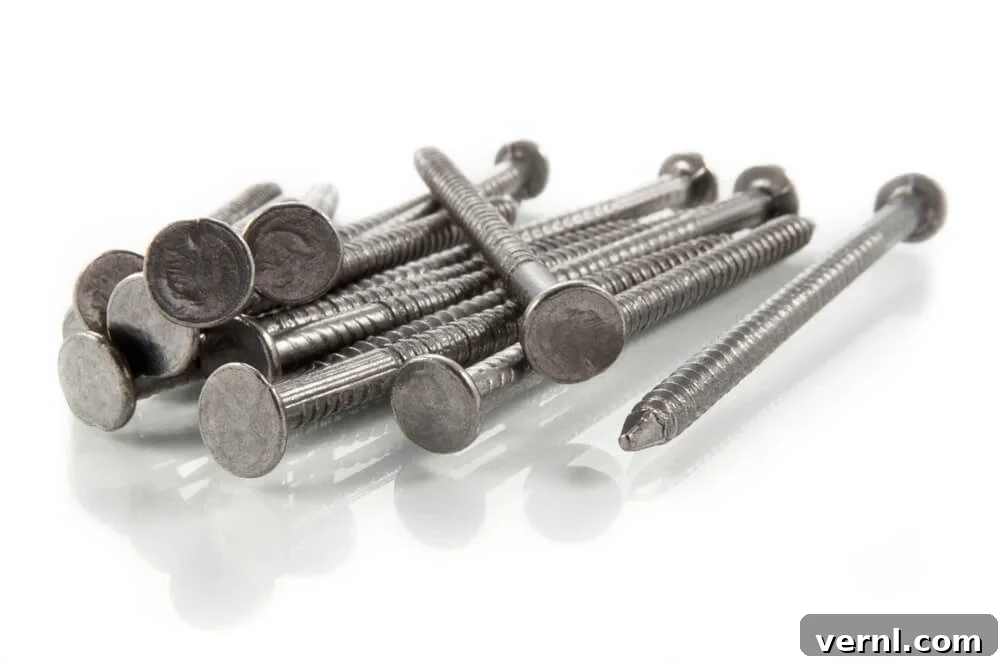
A ring shank nail, also frequently referred to as an annular ring nail or a grooved shank nail, is characterized by a series of annular (ring-shaped) ridges or spirals etched along its shank. These distinctive patterns are not merely decorative; they are engineered to provide a mechanical lock once the nail is driven into a material, typically wood. Imagine tiny barbs or wedges that dig into the wood fibers, creating a firm grip that dramatically increases the nail’s resistance to withdrawal. This unique design can boost the holding power of a nail by 40 percent or even more compared to a smooth shank nail of the same size, making it a crucial component for long-lasting structural integrity.
The Science Behind Superior Holding Power
The secret to the ring shank nail’s impressive tenacity lies in the interaction between its textured shank and the material it penetrates. When a smooth shank nail is driven, it displaces wood fibers, which then tend to spring back and lightly grip the nail. However, with a ring shank nail, each ridge acts as a mini-anchor. As the nail enters the wood, these rings push and compress the wood fibers, causing them to deform and then lock into the grooves. This creates a powerful frictional and mechanical interlock that resists any force attempting to pull the nail out. Over time, as wood naturally shrinks and expands due to moisture and temperature fluctuations, the ring shank’s design maintains this grip, preventing the loosening and “nail pops” that can plague projects secured with standard nails.
Where Ring Shank Nails Excel: Key Applications
The superior holding power of ring shank nails makes them ideal for a wide array of applications, particularly those exposed to dynamic conditions or requiring exceptional long-term stability.
1. Drywall Installation: Preventing Unsightly Nail Pops
Perhaps one of the most commonly recognized uses for ring shank nails is in securing drywall. Any movement or “pop” of a drywall nail can result in an unsightly blemish on the wall surface, often appearing as a small bump or crater where the nail head pushes through the joint compound and paint. Ring shank drywall nails ensure that the drywall sheets remain tightly fastened to the studs, significantly reducing the likelihood of nail pops as the house settles or experiences temperature and humidity changes. This contributes to a smoother, more aesthetically pleasing finish that lasts.
2. Decking and Outdoor Structures: Battling the Elements
Decking, fences, and other outdoor structures are constantly exposed to harsh weather conditions, including rain, sun, and extreme temperature swings. Lumber used in these applications, especially pressure-treated wood, is prone to significant swelling and shrinking. Ring shank decking nails are specifically designed to resist the forces exerted by this wood movement, keeping deck boards, railings, and structural components securely fastened. Their enhanced grip prevents boards from lifting, warping, or becoming loose, thereby improving the safety and longevity of the entire structure.
3. Siding and Exterior Cladding: Enduring Weather Extremes
Similar to decking, exterior siding materials, whether wood, fiber cement, or engineered wood, are subject to continuous expansion and contraction cycles. Ring shank siding nails are crucial for maintaining the integrity of the building’s envelope. They ensure that siding panels remain firmly attached, preventing gaps, rattling, and detachment, which can lead to moisture intrusion and costly damage over time. The secure fastening provided by ring shanks helps the exterior cladding withstand wind loads and general wear and tear, preserving both the appearance and protective function of the building.
4. Metal Roofing and Specialty Roofing Applications
For metal roofing, barn roofing, and certain types of specialty shingles, ring shank nails are often the fastener of choice. The extreme wind uplift forces and thermal movement experienced by roofing materials demand a nail with exceptional withdrawal resistance. Ring shank roofing nails provide the necessary grip to keep panels and shingles securely in place, even in hurricane-prone areas or regions with significant temperature fluctuations, thereby protecting the building from leaks and structural damage.
5. Framing and Subflooring: Reinforcing Structural Integrity
While often used in more specialized roles, ring shank nails also find application in heavy-duty framing and subfloor installation. Their superior holding power helps create a stiffer, more stable floor system, reducing floor squeaks caused by the movement of subfloor panels against joists. In structural framing, especially where robust connections are critical, ring shanks provide an added layer of assurance against separation and structural shifting.
Types and Variations of Ring Shank Nails
Just like smooth shank nails, ring shank nails come in a variety of materials, finishes, and sizes, each tailored for specific applications and environments.
Material and Coatings: Longevity and Protection
- Bright Finish: These are uncoated steel nails, suitable for interior applications where moisture is not a concern. They are the most economical option.
- Electro-Galvanized (EG): A thin layer of zinc provides moderate corrosion resistance, making them suitable for some outdoor applications or areas with intermittent moisture exposure.
- Hot-Dipped Galvanized (HDG): A thicker, more robust zinc coating offers superior corrosion resistance, ideal for exterior applications like decking, fencing, and siding where nails are exposed to weather. HDG nails meet most building codes for outdoor use with pressure-treated lumber.
- Stainless Steel: The ultimate in corrosion resistance, stainless steel ring shank nails are essential for coastal environments, marine applications, or with highly corrosive woods like cedar and redwood, which can react with galvanized coatings. They are more expensive but offer unmatched longevity.
Head and Point Styles: Functionality and Finish
Ring shank nails also feature various head and point designs to suit different needs:
- Head Types: Common options include flat heads (for general construction), large heads (for increased bearing surface, like roofing), and checkered heads (to prevent hammer slippage). Some may also have a countersunk head designed to be driven flush or slightly below the surface for a clean finish.
- Point Types: The most common is a diamond point, designed for easy penetration into wood. Chisel points are sometimes used to minimize wood splitting in harder materials.
Size and Gauge: Matching the Task
Ring shank nails are available in a wide range of lengths and gauges (thicknesses). The appropriate size depends on the thickness of the materials being joined and the required structural strength. Longer, thicker nails are used for heavy-duty applications like framing, while shorter, finer gauge nails might be preferred for trim or siding.
Advantages of Using Ring Shank Nails
The benefits of incorporating ring shank nails into your construction projects are numerous and significant:
- Unmatched Pull-Out Resistance: This is their primary advantage, ensuring fasteners stay put even under stress.
- Enhanced Structural Integrity: By resisting loosening, they contribute to the overall strength and longevity of assemblies.
- Durability in Dynamic Environments: They excel in applications where materials are prone to movement due to temperature, moisture, or vibration.
- Reduced Need for Secondary Fasteners: In some cases, their superior holding power may reduce the reliance on additional adhesives or fewer fasteners overall.
- Long-Term Reliability: Projects fastened with ring shank nails tend to maintain their integrity and appearance over extended periods, minimizing maintenance and repairs.
The Downside: When Removal is Necessary
While their tenacity is a major advantage, it also presents their most significant drawback: ring shank nails can be notoriously difficult to remove. The same ridges that provide exceptional grip make extraction a considerable challenge. Often, the head of the nail will snap off before the shank can be fully pulled from the wood, leaving a portion of the nail embedded. Furthermore, if you do manage to extract one, they frequently leave a rather nasty, ragged hole in the material due to the ripping action of the rings as they exit the wood fibers. This difficulty in removal means that careful planning and precision during installation are crucial, as corrections can be arduous and potentially damaging to the material.
Installation Best Practices for Ring Shank Nails
To maximize the benefits of ring shank nails and minimize potential issues, consider these installation tips:
Choosing the Right Tool
For manual installation, a sturdy hammer is sufficient. However, for larger projects or increased efficiency, pneumatic nail guns specifically designed for ring shank nails (often called coil siding nailers or framing nailers depending on the nail type) are highly recommended. Ensure the nail gun is adjusted to the correct depth setting to avoid over-driving or under-driving the nails.
Pre-Drilling Considerations
While ring shank nails are designed to penetrate wood without pre-drilling, it can be beneficial in certain situations. When working with very hard woods, dense engineered lumber, or close to the edge of a board, pre-drilling a pilot hole slightly smaller than the nail’s shank can help prevent wood splitting, especially if precise placement is critical.
Achieving the Perfect Drive
Drive the nail straight and flush with the surface of the material, or slightly countersink it if the application calls for it (e.g., drywall where mud will cover the head). Avoid bending the nail or marring the material around it. Consistent driving depth ensures uniform holding power and a professional finish.
Ring Shank vs. Smooth Shank: A Clear Distinction
The fundamental difference between ring shank and smooth shank nails lies in their gripping mechanism. Smooth shank nails rely solely on friction and the slight compression of wood fibers for their hold. This makes them easy to drive and relatively easy to remove, making them suitable for temporary fastening or non-structural applications where movement is not a concern. Ring shank nails, conversely, offer a powerful mechanical lock, making them ideal for permanent, high-stress applications where pull-out resistance is paramount. The choice between the two boils down to the specific requirements of the project: prioritize ease of removal and cost for simple tasks, or opt for superior, long-term holding power for critical structural and outdoor applications.
Choosing the Ideal Ring Shank Nail for Your Project
Selecting the correct ring shank nail involves considering several factors:
- Application: What material are you fastening, and what is its purpose? (e.g., drywall, decking, siding).
- Exposure: Will the nail be exposed to moisture or corrosive elements? (Dictates coating/material: bright, EG, HDG, stainless steel).
- Material Thickness: The length of the nail should be appropriate for the combined thickness of the materials.
- Wood Type: Hardwoods may require stronger nails or pre-drilling.
- Desired Finish: Consider head type and whether the nail will be visible or concealed.
Conclusion: A Secure Investment in Construction
Ring shank nails are a testament to how intelligent design can dramatically enhance the performance of a seemingly simple fastener. Their unique ridged shank provides a level of pull-out resistance that smooth shank nails simply cannot match, making them an indispensable component in a wide range of construction applications. From preventing unsightly drywall pops to securing outdoor decks against the elements, these nails offer superior long-term stability and durability. While their removal can be challenging, the peace of mind that comes from knowing your project is fastened with such tenacity makes ring shank nails a wise and secure investment for any builder or homeowner prioritizing strength and longevity.