
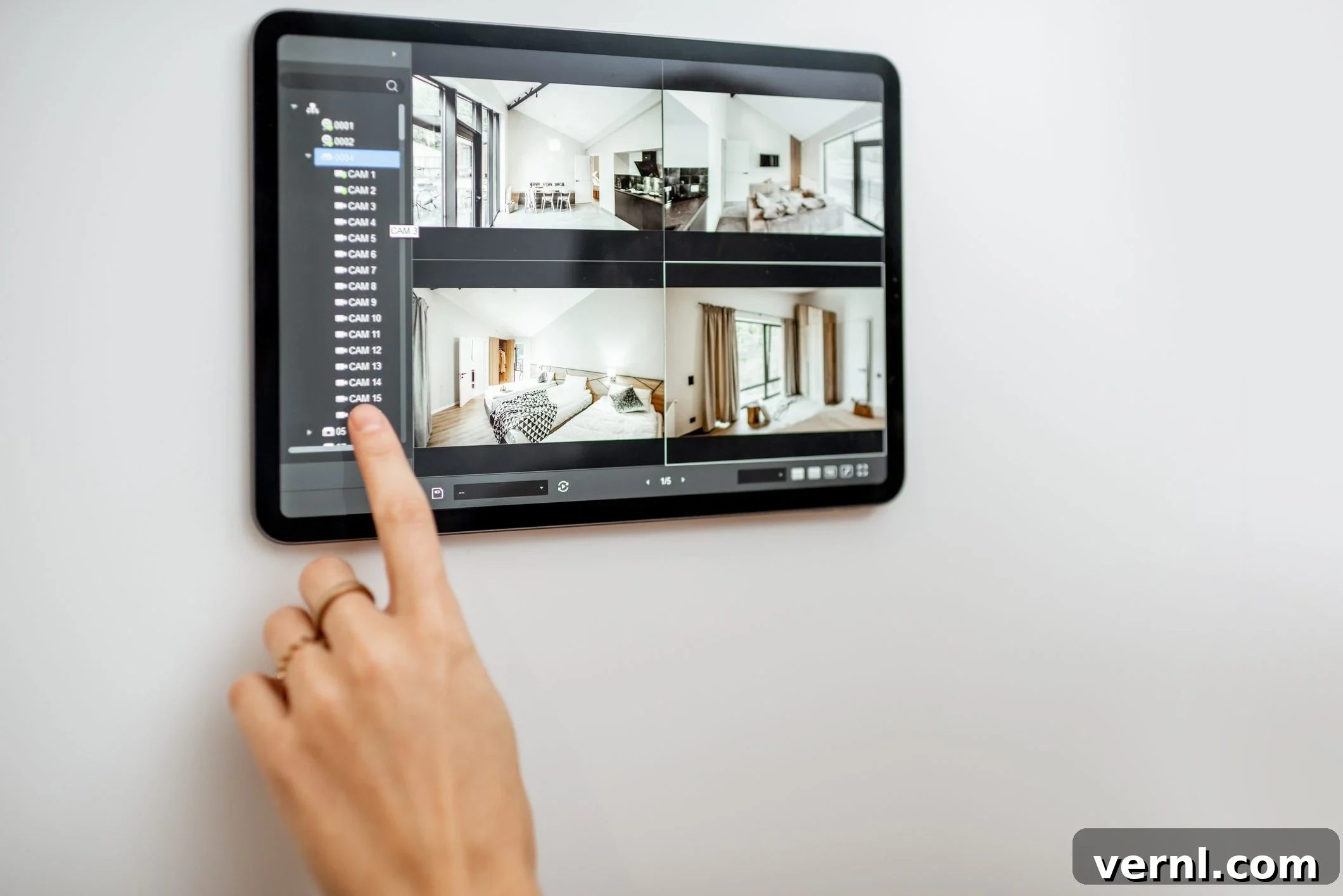
It was a day that changed my perspective on home safety forever. My home was broken into, and I was present during the ordeal. The fear and vulnerability I felt were profound, leaving an indelible mark on my understanding of security. As a seasoned expert in security and safety, this personal experience spurred me into an even deeper exploration of home protection strategies.
Since that harrowing day, I’ve delved into virtually every conceivable form of residential security, researching and personally testing hundreds of security devices and techniques. This journey has equipped me with invaluable insights, and I’m here to share what I’ve learned, offering practical, actionable advice to help you fortify your home and achieve genuine peace of mind.
Fortify Your Doors: The First Line of Defense
The overwhelming majority of burglaries, including the one I experienced, occur through a compromised door. While simply locking your doors is a fundamental step, it’s often insufficient. Standard residential doors can typically be breached with just two strong kicks. Investing a little time and less than $50 can dramatically enhance your door’s resistance to forced entry.
The first crucial upgrade is to replace your existing deadbolt with a Grade 1 deadbolt. These deadbolts are the strongest available for residential use, featuring longer bolts, robust metal construction, and enhanced resistance to picking and drilling. They are designed to withstand significantly more force than Grade 2 or Grade 3 deadbolts, making them a formidable deterrent.
Next, turn your attention to the strike plate – the metal piece attached to the door frame where the deadbolt latches. Most standard strike plates are secured with short screws that offer minimal resistance. Upgrade to a four-screw (or more) strike box. This box-shaped reinforcement dramatically strengthens the door jamb, distributing impact force over a larger area. Simultaneously, replace the standard lip strike plate with a new lip door strike plate secured with three-inch-long screws. These longer screws penetrate deep into the structural framing of your home, effectively anchoring the door frame and making it nearly impossible to kick in. If these terms seem unfamiliar, don’t fret – we’ve got a comprehensive visual guide. Explore our detailed instructions on upgrading the safety of your doors for step-by-step assistance.
Embrace Convenience and Security with Smart Locks
One common vulnerability in many homes isn’t a lack of security devices, but human error. In my own household, my husband’s occasional forgetfulness when it came to locking doors was a persistent concern. The perfect solution presented itself in the form of smart locks. These innovative devices automatically engage the lock mechanism when the door closes, eliminating the worry of leaving your home exposed.
Beyond the convenience of auto-locking, modern smart locks offer a plethora of security enhancements. Many allow for remote access control, enabling you to lock or unlock your door from anywhere via a smartphone app. You can also grant temporary access codes to guests or service providers, and receive notifications whenever the lock is engaged or disengaged. This audit trail provides an extra layer of security and oversight. If you find yourself in a similar situation with a family member who frequently forgets to lock up, or if you simply desire enhanced control and monitoring, consider our expert recommendations for the best smart locks on the market. They offer not just peace of mind, but also a seamless integration into your smart home ecosystem.
Optimize Window Privacy and Security
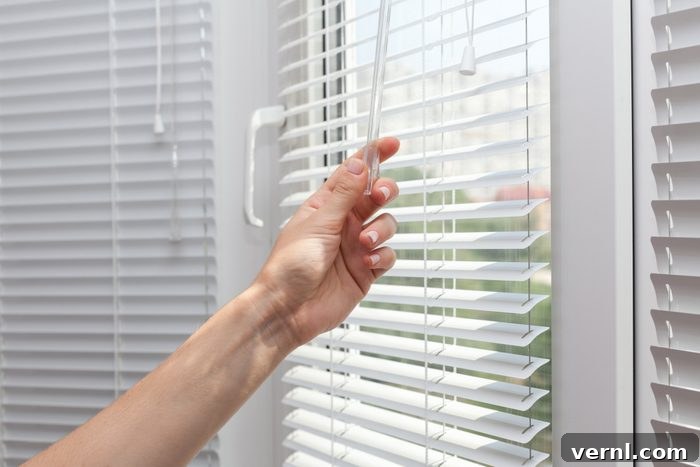
Windows, while providing natural light and views, can also be vulnerable entry points and tell-all indicators for potential intruders. Keeping your curtains, blinds, or shades closed serves two critical security purposes. Firstly, it creates uncertainty for potential thieves regarding your presence, making it harder for them to determine if your home is unoccupied. Secondly, and equally important, it prevents them from “window shopping” – peering inside to identify valuable items like electronics, jewelry, or artwork that might make your home a tempting target.
I understand the desire for natural light and the enjoyment of looking out at your surroundings. It’s a personal preference I share. A brilliant compromise for this dilemma is the installation of one-way privacy film on your windows. This ingenious film allows abundant natural light to stream into your home and permits you to see clearly outside. However, from the exterior, passersby only perceive a darkened window or a reflective, mirror-like surface, effectively obscuring their view into your home. It’s crucial to note that most of these privacy films are primarily effective during daylight hours. Therefore, for complete nighttime privacy and security, it remains essential to draw your blinds or curtains.
The installation process for privacy film is remarkably straightforward, typically requiring minimal tools and effort. You simply cut the film to precisely fit the dimensions of your window pane and apply it like a large sticker. Some varieties come with a pre-applied adhesive backing, while others utilize static cling technology, making them removable and reusable. For a flawless finish, use a credit card or squeegee to smooth out the film, eliminating any air bubbles and ensuring a secure, clean application.
Invest in a Comprehensive Home Security System
There are numerous compelling reasons to equip your home with a robust security system. Extensive studies consistently demonstrate that home security systems serve as highly successful deterrents to criminals. The mere presence of visible security components, such as yard signs and window decals, often convinces would-be intruders to seek easier targets.
Beyond deterrence, a professionally monitored system offers invaluable protection by automatically alerting emergency services in situations where you are unable to reach your phone or are away from home. Systems equipped with cameras provide critical video evidence should an unfortunate event like a home invasion occur, aiding law enforcement in their investigation and potential prosecution. Moreover, a significant benefit often overlooked is the potential for financial savings: many home insurance providers offer substantial policy discounts if you install a certified home security system, making it a sound investment from both a security and economic perspective.
The cost of a home security system can vary widely depending on its complexity and features. A basic, DIY-friendly system like the popular Ring Alarm five-piece set might cost around $200. However, for more elaborate, professionally installed systems featuring extensive camera networks, environmental sensors, and advanced automation, you could expect to pay $800 or significantly more, such as the comprehensive Reolink Security Camera System. When selecting a system, consider your home’s layout, your budget, and the level of monitoring and integration you desire.
Strategic Placement of Security Cameras
Even if a full-fledged, multi-component security system isn’t in your immediate plans, simply deploying security cameras can significantly elevate your home’s protection. The visual presence of a camera itself often acts as a powerful deterrent, signaling to potential thieves or intruders that your property is monitored and not an easy target. These cameras range in price from approximately $30 for basic models to $300 or more for advanced units with premium features, making them an accessible security upgrade for most budgets.
My own home benefits from a network of several cameras strategically positioned around the perimeter and at key entry points. Understanding optimal placement is crucial for maximum effectiveness. Here are my tips on determining the right number of cameras for your property and where best to position them for comprehensive coverage. Fortunately, the majority of contemporary security cameras are wireless, simplifying the installation process considerably. Most can be easily installed within about 20 minutes by any homeowner with a basic drill, eliminating the need for complex wiring or professional assistance.
The Essential Video Doorbell Camera
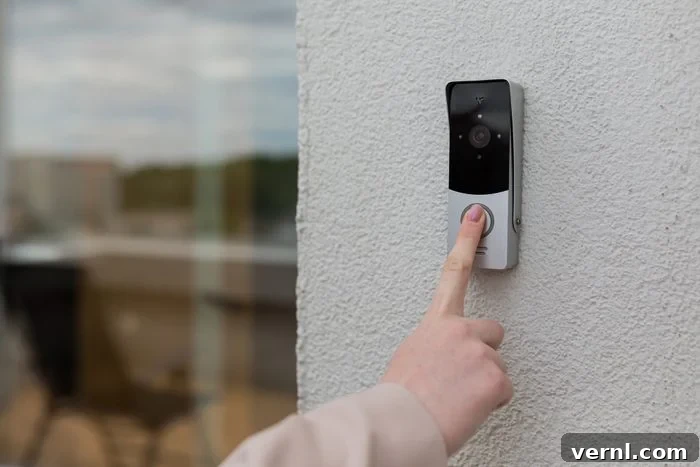
For those not ready to commit to a complete camera system, my unequivocal advice for the single most impactful security upgrade is to install a video doorbell camera at your front door. This device offers a concentrated layer of security and convenience right where your home is most frequently approached.
A video doorbell ensures that whether you’re at home, at work, or on vacation, you maintain constant awareness of who approaches and leaves your front door through real-time notifications and live video feeds on your smartphone app. Crucially, this technology eliminates the need to open your door to strangers. Its integrated two-way talk feature allows you to communicate directly with visitors, delivery personnel, or even suspicious individuals without ever unlatching the door, enhancing your safety and control.
Many advanced video doorbells now come equipped with sophisticated package detection capabilities. This feature provides immediate alerts when a package is delivered, enabling you to retrieve it promptly and thwart opportunistic “porch pirates” who target unattended deliveries. To help you choose the best option for your needs, we’ve compiled our top picks for video doorbell cameras, considering features, reliability, and ease of use.
Installing a video doorbell is typically a straightforward process, often involving little more than securing a few screws and connecting the device to its companion mobile application. Most brands provide intuitive in-app guides that walk you through each step, making installation achievable for most homeowners in approximately 15 minutes.
Illuminate and Deter with Motion Sensor Lights
Similar to the protective benefits offered by doorbell cameras, strategically placed motion sensor lights contribute to your home’s security in multiple valuable ways. Firstly, they provide practical convenience, automatically illuminating pathways and entrances as you arrive home after dark, ensuring safe navigation. Secondly, and critically from a security standpoint, they are designed to automatically activate when someone approaches your property, particularly after hours. This sudden burst of light can startle and disorient anyone with illicit intentions, effectively scaring them away before they can attempt to gain entry.
I have installed motion lights at every exterior door of my home, as well as above my garage door, covering key access points. If the prospect of hardwiring lights into your home’s electrical system seems daunting, rest assured that many excellent alternatives exist. A vast array of modern motion lights are either battery-powered or solar-powered, offering incredible flexibility in placement and simplifying installation to a degree comparable to setting up a video doorbell. These self-contained units often require just a few screws for mounting, making them an accessible and effective security upgrade for any homeowner.
Safeguard Your Deliveries with a Package Locker
In the age of rampant online shopping, package theft has become an unfortunate and pervasive problem. Statistics reveal that around 25 million Americans fall victim to stolen packages each year, leading to financial loss and immense frustration. To effectively combat “porch piracy” and ensure your valuable deliveries remain secure, investing in a package locker is a highly effective solution. This device is precisely what its name implies: a secure, often weather-resistant container designed to safely hold your packages until you retrieve them.
When a delivery person arrives, they simply place your package inside the locker, which then securely locks. Your delivery remains protected from opportunistic thieves and adverse weather conditions until you unlock it using a key, code, or smart access system. These lockers typically range in price from $150 to $500, depending on size, material, and features. When selecting one, prioritize a model that is spacious enough to accommodate larger packages, such as the popular Keter Delivery Box. Be mindful that some lockers may require minor assembly upon arrival.
For an added layer of security, consider bolting your package locker directly to your porch or exterior surface. This prevents exceptionally determined thieves from simply walking away with the entire unit. The process is not overly complicated: if your porch is constructed of wood, a standard drill and wood bit will suffice. For concrete or brick surfaces, you’ll need a specialized masonry drill bit, but the fundamental task remains within the capabilities of most DIY enthusiasts.
Cultivate Privacy and Discretion
Burglars are often meticulous in their reconnaissance, actively seeking out subtle clues that reveal which houses present the easiest targets and promise the most lucrative rewards. Therefore, exercising caution and discretion about the information you intentionally or unintentionally share about your home and lifestyle is paramount.
First and foremost, be judicious with your social media presence. Avoid posting descriptions or photographs of high-value possessions, such as your newly acquired big-screen television, expensive jewelry collection, or luxury items. Such posts can inadvertently broadcast a message that your home contains tempting valuables. Furthermore, resist the urge to post about your vacation plans or current travels until you have safely returned home. Announcing your absence publicly is an open invitation for potential thieves, indicating that your property will be vacant and vulnerable for an extended period.
Your household trash also warrants careful consideration. Criminals frequently “trash dive” or simply observe recycling bins for signs of recent major purchases, such as empty boxes from large televisions, new computer setups, or high-end appliances. These boxes explicitly advertise the presence of valuable items inside your home. To mitigate this risk, always break down these boxes into smaller, unrecognizable pieces. Stuff them deep within your recycling bin or, even better, inside opaque trash bags before placing them at the curb for collection.
Maintain Vigilance: Security is an Ongoing Commitment
Implementing the security measures outlined above is a significant step towards a safer home, but true protection is not a one-time setup; it requires sustained vigilance and consistent habits. Once you’ve fortified your doors, installed smart locks, deployed cameras, and secured your deliveries, the commitment to safety must continue daily.
Make it a routine to ensure your security cameras are fully charged or have fresh batteries. Always arm your security system whenever you leave your home, even for a short errand, and certainly every night before you go to bed. Double-check that all doors and windows are securely locked. Continue to exercise prudence and discretion on social media, understanding the potential risks of oversharing. You grasp the underlying principle: consistent, active engagement with your home’s security is key.
My own painful experience taught me this lesson in the hardest way. During the break-in at my home, the battery in my doorbell camera was, regrettably, dead. Had it been charged and operational, I would have received an immediate alert the moment someone approached my door, potentially preventing the incident or at least providing critical early warning. I am resolute in my commitment: I will never make that mistake again. Let my experience serve as a powerful reminder that continuous diligence is the cornerstone of effective home security.