
Protect Your Deck: Expert Tips for Safe and Effective Snow Removal
Winter weather can transform your outdoor spaces into picturesque landscapes, but the accumulation of snow and ice on your deck can pose significant challenges. Improper snow removal techniques and the use of unsuitable ice melts can lead to aesthetic damage such as scratches, cracks, and discoloration. Moreover, they can compromise the structural integrity and lifespan of wood and composite decks. Protecting your deck during winter requires a proactive approach and the right knowledge.
According to Dave Kile, a renowned deck expert and owner of Trex Protect, the real problem isn’t the snow itself, but how people attempt to remove it. Delaying snow removal allows it to compact into ice, necessitating aggressive scraping, which can inflict damage. Understanding the potential pitfalls is crucial for preserving your deck’s condition.
This comprehensive guide provides expert-backed tips to remove snow from decks and other surfaces without causing damage. We will delve into the best practices for shoveling, selecting the appropriate ice melt, and taking preventative measures to ensure your deck survives the winter unscathed.
Why Removing Snow From Your Deck is Essential
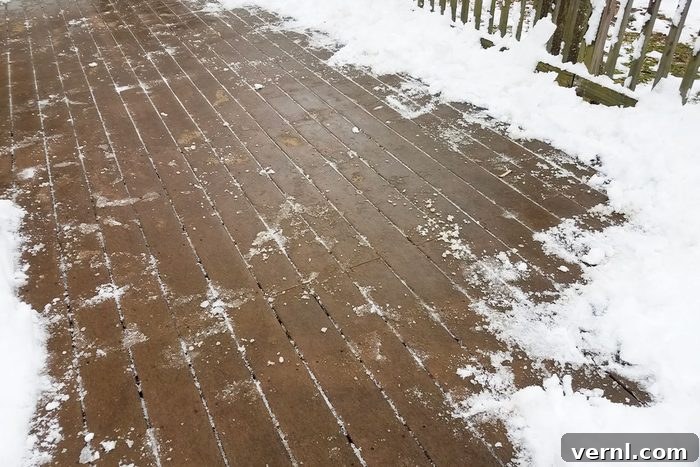
The most apparent reason to clear snow from your deck is to prevent slips and falls, ensuring the safety of your family and visitors. However, snow removal is equally important for preserving the deck’s longevity and structural health.
Kile explains that snow is not the primary culprit behind deck damage. The real threat lies in the freeze-thaw cycles that occur after snowfall. As moisture penetrates the deck’s surface, it expands and contracts with temperature fluctuations. This process can loosen hardware and widen existing cracks over time, leading to gradual deterioration.
Furthermore, moisture seeping into cracks can damage paint, leading to warping or rotting of the boards. Heavy snowfall adds significant weight, potentially compromising the deck’s structural integrity. Therefore, consistent and careful snow removal is crucial for maintaining your deck’s safety and durability.
Essential Tips for Removing Snow From Your Deck Without Damage
1. Shovel Parallel to the Deck Boards
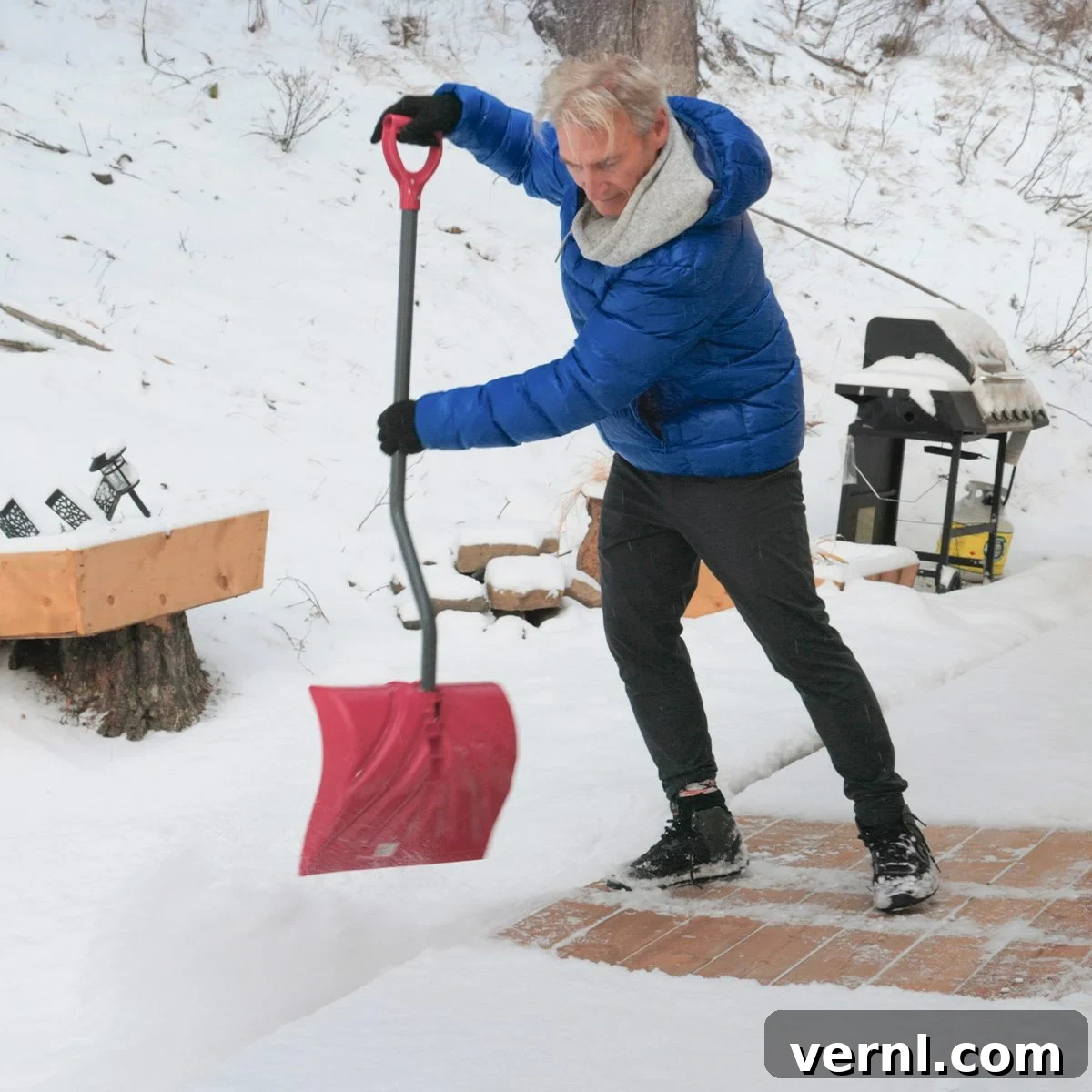
One of the most common mistakes homeowners make is not shoveling parallel to the deck boards. According to Kile, pushing perpendicular to the boards catches their edges, torques fasteners, and leaves scratches that are often not visible until spring. Always shovel in the same direction as the boards to minimize the risk of damage.
2. Avoid Using Metal Shovels
Metal shovels can damage various surfaces, including wood, composite, PVC, flagstone, and concrete. Opt for a plastic push shovel with a rubber edge instead. The rubber edge helps the shovel glide smoothly over the surface, reducing the likelihood of scratches. Minimize scraping and avoid hitting the surface too hard to prevent damage.
Anthony LaBarbera, president at Rhino Shield Texas, emphasizes that plastic shovels and soft push brooms are your best tools for snow removal. Metal edges can scrape paint even when handled carefully, and once water infiltrates these scratches, the damage can rapidly worsen.
3. Shovel All of the Snow
When dealing with wooden and composite decks, don’t just shovel a pathway or half of your deck. Leaving snow on a portion of the deck will still cause damage. Joe Marchionni, owner at Amity Home Maintenance Solutions, shared an example of a customer who pushed all the snow to one side of their deck. While their intention was to clear a path to the backyard for their dog, they inadvertently doubled the weight load on one half of the deck, potentially causing structural strain.
4. Choose the Right Ice Melt for Wood Decks
For wood decking, Kile recommends using only ice melts that contain calcium chloride or eco-friendly, wood-safe alternatives. Avoid rock salt, magnesium chloride, dyed products, and sand, as these can discolor or scratch the wood.
When applying calcium chloride, use it sparingly. Allow it to naturally loosen the ice bond until you can sweep the slush away. Once weather permits, rinse your deck to remove any residual chemicals.
5. Select Calcium Magnesium Acetate for Hard Surfaces
For ice melt on stone, flagstone, and concrete surfaces, Kile suggests using calcium magnesium acetate (CMA). Magnesium chloride is a suitable second choice. Avoid rock salt, which can stain and cause surface spalling. A pro tip: pre-treat the surface before a storm to prevent ice from bonding, according to Kile.
6. Avoid Ice Melt on Painted Porches
Avoid using ice melt products on painted porches altogether. LaBarbera explains that the chemicals can draw moisture into the coating, gradually eroding the paint. Many homeowners don’t realize the damage until months later, as winter scratches and chemical damage often manifest in spring when paint begins to bubble, peel, or wear out prematurely.
7. Prepare Your Deck for Winter
In the fall, inspect your deck and fix any exposed nails and screws so they are flush or recessed into the wood or composite material. This will prevent them from snagging your shovel during snow removal. Marchionni advises that this task should be done regardless of snow removal concerns to eliminate trip hazards.
8. Repair Damage Promptly
For painted surfaces, if you accidentally create a scratch, dry the area and touch it up as soon as the weather allows. LaBarbera emphasizes that sealing the scratch early prevents moisture from spreading beneath the surrounding paint, mitigating further damage.
Frequently Asked Questions
Can I Use Ice Melt on My Porch?
In some cases, yes, provided you choose the right type of ice melt. Kile states that calcium chloride is the safest option for decks and porches. It acts quickly to break the ice bond without harming the surface.
However, on wood and composite decking, avoid rock salt, magnesium chloride, gritty blends, dyes, and urea-based “pet-safe” formulas. Kile warns that these can stain, corrode fasteners, or scratch surfaces.
Expert Contributors
- Dave Kile: A seasoned deck expert and owner of Trex Protect.
- Anthony LaBarbera: The president of Rhino Shield Texas.
- Joe Marchionni: The owner of Amity Home Maintenance Solutions in Connecticut.
Additional Resources for Storm Preparedness
- Emergency Survival Kit Checklist for Severe Weather
- How To Keep Your Family and Your Home Safe During High Winds
- How To Prepare an Emergency Evacuation Plan