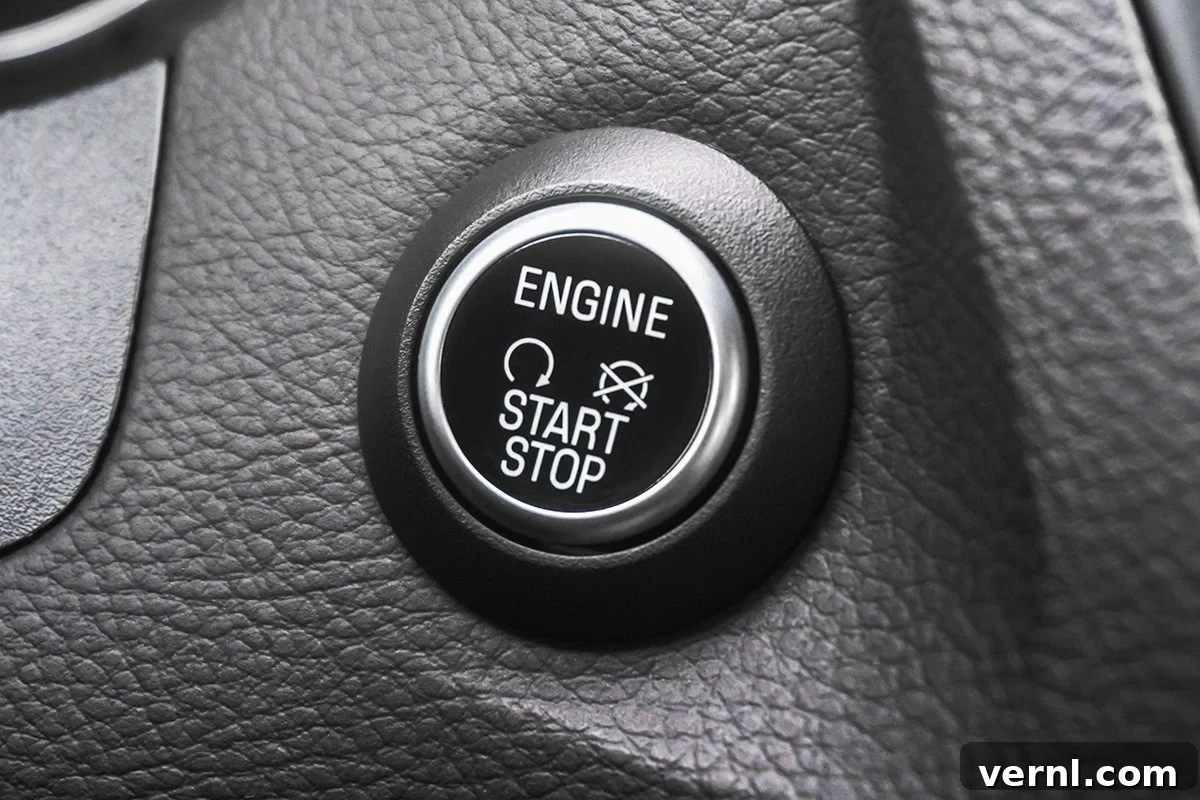
Auto Start-Stop: The Truth Behind This Fuel-Saving Feature
If you’ve driven a newer car recently, you’ve likely encountered the auto start-stop feature. This technology automatically shuts off your vehicle’s engine when you come to a complete stop, such as at a traffic light or in a traffic jam. The engine then restarts when you release the brake pedal or accelerate. Car manufacturers promote this as a way to save fuel and reduce emissions, making it a common feature in modern vehicles.
Many new cars have auto start-stop as the default setting, meaning it’s “on” when you start the car. You usually need to manually disable it if you prefer not to use it. This design makes it easy to take advantage of the fuel-saving and environmental benefits. However, a significant question arises: Does the constant starting and stopping affect the car’s components, particularly the starter motor?
This article dives into the function, exploring whether auto start-stop technology genuinely benefits your car in the long run. We’ll examine its effect on your vehicle’s lifespan, and the potential for long-term costs that may be related to it.
How Auto Start-Stop Works
The core principle behind auto start-stop is to conserve fuel by preventing the engine from idling unnecessarily. When your car comes to a complete stop, the system cuts off the engine. The car uses energy from the battery to power the other electrical systems, like the radio, air conditioning, and lights. As soon as you release the brake pedal or step on the accelerator, the engine quickly restarts, ready to move again. This process happens seamlessly, often without the driver even noticing.
This system is particularly effective in stop-and-go traffic and city driving, where vehicles spend a considerable amount of time idling. By turning off the engine during these periods, the system prevents the combustion of fuel. This results in the direct impact of saving fuel. The indirect benefits are also quite significant: by using less fuel, vehicles also release fewer emissions into the atmosphere.
Does Auto Start-Stop Affect the Lifespan of Your Starter Motor?
One of the primary concerns with auto start-stop is its potential impact on the starter motor. The starter motor, responsible for initially cranking the engine to start, undergoes significantly more use with this technology. Considering the engine starts and stops frequently, it’s natural to wonder if this increased workload will lead to premature wear and tear.
To address this concern, we consulted with automotive experts, including Kye Grisham, Vice President of Procurement and Automotive Technology for Christian Brothers Automotive Corporation, and Thomas Diamond, an automotive technology specialist. According to Grisham, the design of modern starter motors accounts for this increased use. “These starters are built differently from traditional starters and can handle the increased quantity of starts,” he states. Modern starter motors in vehicles with auto start-stop are specifically engineered to withstand the frequent starting cycles. They are designed to operate more slowly and are built with more durable components to reduce wear. So, you can relax knowing that the auto start-stop function won’t necessarily make you replace your starter motor any sooner.
Diamond echoes this sentiment, emphasizing the advancements in modern starter motor technology. “Newer starters are quite ‘beefed up’ compared to ones in cars without this feature,” he explains. He notes that every aspect of these starter components is prepared to handle the frequent usage. In essence, these updated starters are the “heavy-duty” versions of the conventional ones, constructed to endure the demands of auto start-stop systems.
Is It Better to Disable the Auto Start-Stop Feature?
Given that modern starter motors are designed to withstand the additional use, the decision to leave auto start-stop enabled often boils down to personal preference. If you find the frequent starting and stopping sensation bothersome, especially during city driving, you can usually disable the feature with a single button press. The car will then operate like a conventional vehicle, starting the engine only once at the beginning of your journey.
Grisham suggests that whether you disable the feature or not, it primarily depends on what matters most to you. “Considering these starters are designed to handle this,” he says, “turning the setting on or off comes down to personal preference.” However, if your goal is to save fuel and emissions, he recommends keeping the feature active. Auto start-stop is an effortless way to make your fuel last longer, particularly in situations where you are frequently caught in traffic or at traffic lights. This is especially advantageous for city commuters and individuals who do a lot of driving in congested areas.
Fuel Efficiency and Environmental Benefits
The primary benefit of auto start-stop is its contribution to fuel efficiency. By automatically turning off the engine during idling, the system prevents the waste of fuel that would otherwise be consumed. In situations like waiting at traffic lights or being stuck in traffic, this can lead to notable fuel savings over time.
Moreover, auto start-stop offers significant environmental benefits. By reducing fuel consumption, the system also reduces the amount of harmful emissions released into the atmosphere. This includes greenhouse gases and other pollutants that contribute to air quality issues and climate change. Using this technology helps to reduce your carbon footprint and contribute to a cleaner environment.
The Verdict
Auto start-stop technology offers significant advantages in fuel efficiency and emissions reduction. Modern vehicles are engineered so that the technology doesn’t negatively impact the lifespan of the starter motor. Whether you choose to use the feature or not often comes down to personal preference, but it can be beneficial to keep it enabled. If you are concerned about saving fuel and protecting the environment, auto start-stop offers an effective and convenient way to do both.
About the Experts
Kye Grisham is the Vice President of Procurement and Automotive Technology for Christian Brothers Automotive Corporation.
Thomas Diamond is an automotive technology specialist with Father Jude High School.