
Summer, while a season of vibrant outdoor living, can be remarkably taxing on your lawn. The relentless combination of scorching temperatures, prolonged dry spells, and even dense shade can leave your once-lush turf looking stressed, thin, and far from its prime. Beyond these environmental culprits, the emergence of lawn diseases and the disruptive activity of various insect pests can further compromise your lawn’s health. Factor in the constant wear and tear from energetic children and beloved pets, and you might find your yard suffering from worn-down areas, exposing unsightly bare soil beneath. This isn’t just an aesthetic concern; it’s a sign of a weakened lawn that’s more vulnerable to weed invasion and further damage.
While maintaining a consistent yard maintenance schedule is fundamental for any thriving landscape, your lawn, much like the exterior walls of your home or your essential kitchen appliances, occasionally demands a specialized form of care and revitalization. This is precisely where the strategic practice of fall overseeding becomes invaluable. After enduring the myriad stresses and heavy traffic of the summer months, thoughtfully overseeding your lawn at the opportune moment can yield significant rewards. This proactive step helps your turf to recover robustly, enabling it to bounce back with renewed vigor and achieve a truly lush, vibrant appearance by the time spring awakens.
The natural progression of seasons, coupled with the inevitable impact of prevailing weather conditions and regular foot traffic, will gradually diminish your lawn’s density and vitality over time. As the summer season draws to a close, it’s quite common for your grass to appear fatigued, sparse, and noticeably less vibrant than it once was. To effectively restore your turf’s inherent health and visual vibrancy, understanding both the precise timing and the correct methodology for overseeding is absolutely crucial. This targeted boost provides the essential foundation for cultivating a resilient, thriving lawn that can better withstand future environmental pressures and maintain its beauty year-round.
What Exactly Is Lawn Overseeding and Why Is It Important?
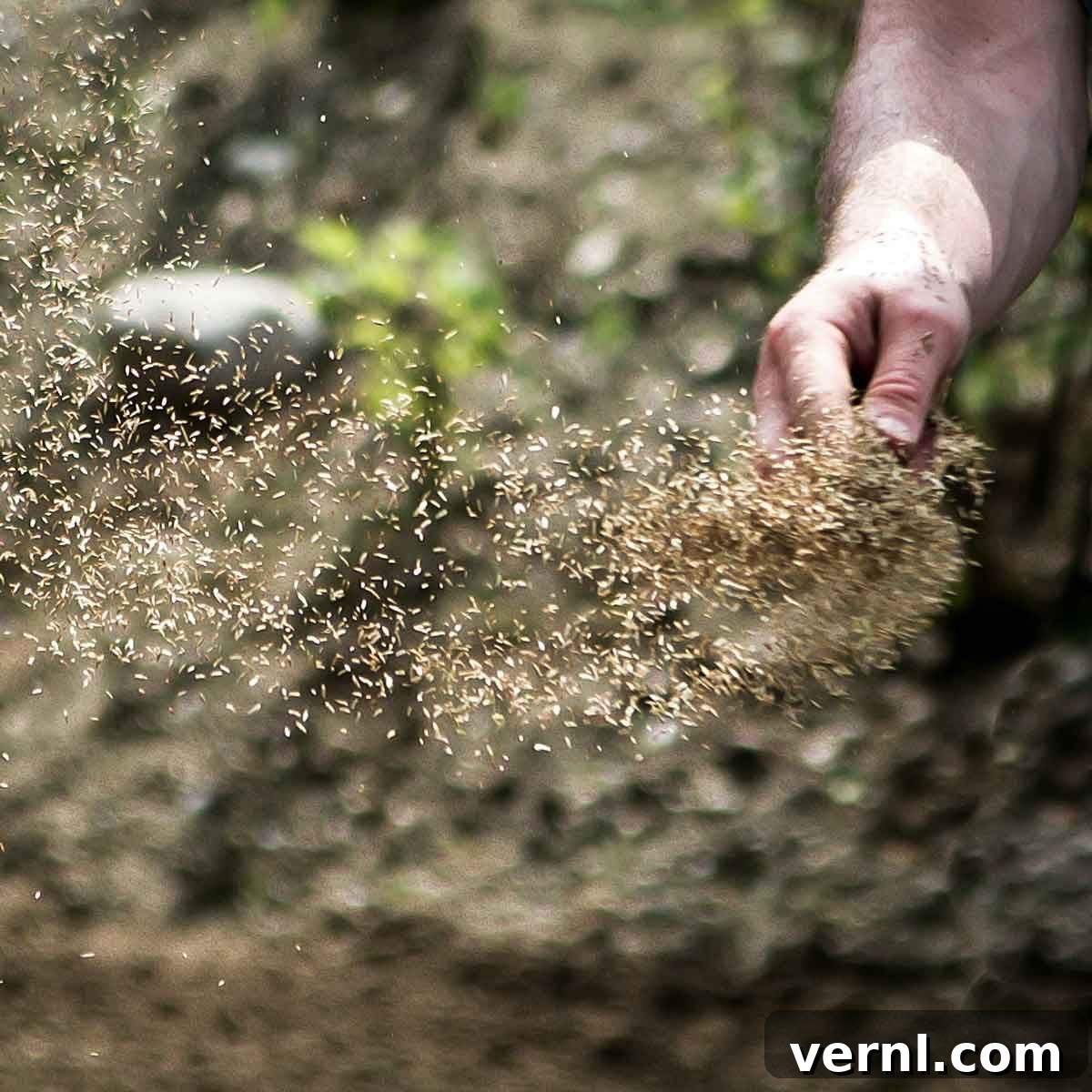
At its core, overseeding refers to the practice of planting new grass seed directly into an existing lawn, without the need for a complete renovation or tearing up the current turf. It’s often used synonymously with reseeding an established lawn. This technique is a cornerstone of proactive lawn care, designed to refresh and rejuvenate your grass. Lawns, like any living organism, benefit from periodic renewal to maintain their optimal density, vibrant color, and overall resilience against environmental challenges.
Overseeding serves several critical purposes. Firstly, it’s an excellent and often cost-effective method to repair areas that have suffered damage from summer heat, drought, or excessive foot traffic. It helps to fill in thin spots and can significantly thicken your lawn before the colder, dormant months of winter arrive. This enhanced density not only makes your lawn look better but also makes it more robust.
Beyond simple repair, overseeding offers profound benefits for older, established lawns. Over many years, grass varieties can become less vigorous, more susceptible to common lawn diseases, and may not possess the desirable aesthetic qualities found in newer strains. Introducing fresh, advanced genetics into your lawn through overseeding can dramatically improve both its appearance and its performance. Modern grass seed varieties are specifically engineered and bred for superior characteristics. These often include a richer, darker green color, significantly enhanced resistance to common lawn diseases and pests, improved tolerance to drought conditions, and an overall higher turf quality. This infusion of improved seed genetics essentially provides a much-needed “facelift” for your lawn, ensuring it remains healthy, visually appealing, and better equipped to withstand the various pressures of its environment.
When Is the Absolute Best Time to Overseed Your Lawn?
Without question, early fall represents the absolute optimal window for overseeding your lawn. For homeowners situated in most northern regions of the United States, the ideal timeframe typically extends from mid-August through mid-September. This precise period offers a unique confluence of environmental conditions that are perfectly conducive to robust grass growth and highly successful seed germination. During these critical weeks, daytime temperatures remain comfortably warm, providing the necessary energy for newly sprouted seedlings to grow strong. Crucially, cooler nights offer a welcome reprieve from the day’s heat, creating an ideal environment where young grass plants truly thrive. Furthermore, soil temperatures during early fall are consistently just right – sufficiently warm to significantly accelerate seed germination, making the process faster and far more reliable.
However, if you happen to miss this primary “sweet spot,” there’s no need for immediate concern. Depending on your specific geographical location and prevailing local climate patterns, you can often successfully overseed your lawn well into late September and even early October. This extended late summer to early fall window offers several distinct advantages. Significantly, it typically presents minimal competition from aggressive weeds, which become less active as temperatures cool. Additionally, this season is often characterized by gentle, consistent rainfall, providing predictable and adequate moisture to new seeds without the risk of heavy, erosive downpours that could wash away your carefully planted grass seed – a common problem encountered during late spring or summer. Timely overseeding during this period ensures that your new grass has ample opportunity to develop a healthy, resilient root system before the deep freeze of winter sets in, laying a strong foundation for a spectacular and vibrant lawn come spring. Overseeding too late into the fall or winter can result in poor germination and weak seedlings that won’t survive the cold.
Step-by-Step Guide: How to Overseed Your Lawn Effectively for a Lush Yard
Transforming your lawn from tired and thin to thick and thriving is a rewarding project that can be accomplished with a few basic tools, potentially some rentals from a local home improvement store, and a dedicated weekend. Fall isn’t just the ideal time for overseeding; it’s also a prime season for other vital lawn care tasks that complement overseeding perfectly. Practices such as lawn aeration and strategic fertilization are excellent companions, provided they are performed approximately one to two weeks *before* you begin the actual overseeding process. This timing allows the soil to settle, absorb nutrients, and create an optimal seedbed for new grass growth.
1. Prepare Your Lawn Thoroughly
Begin by mowing your lawn at a slightly lower height than usual, aiming for about 1.5 to 2 inches. This shorter cut allows more sunlight to penetrate to the soil surface, which is crucial for stimulating seed germination. Following mowing, meticulously rake up any fallen leaves, grass clippings, or other organic debris. This step is not merely for aesthetics; it’s about ensuring that new grass seeds can make direct contact with the soil. If your lawn has a thick layer of thatch (a spongy layer of dead and living organic matter between the soil and grass blades) exceeding half an inch, consider dethatching. Excessive thatch can act as a significant barrier, preventing seeds from reaching the soil where they can germinate.
2. Aerate and Fertilize (Highly Recommended for Best Results)
After your initial cleanup, strongly consider aerating your lawn. Aeration involves creating small holes in the soil, which effectively alleviates compaction and dramatically improves the penetration of air, water, and essential nutrients. This is incredibly beneficial for new grass seeds, allowing their delicate roots to establish more easily and deeply. You can rent a core aerator for this task, which extracts small plugs of soil. If you choose to fertilize, apply a “starter” fertilizer specifically formulated for new grass one to two weeks before seeding. These fertilizers typically have a higher phosphorus content, which is vital for promoting strong, healthy root development in young seedlings.
3. Select the Right Grass Seed for Your Conditions
Choosing the appropriate grass seed is paramount to the success of your overseeding project. Carefully consider your local climate, the amount of sun exposure your lawn receives, and the type of existing grass you have. For cool-season grasses (such as tall fescue, fine fescue, perennial ryegrass, and Kentucky bluegrass), fall is the ideal time for overseeding. For warm-season grasses (like Bermuda grass, Zoysia grass, and St. Augustine grass), late spring to early summer is often preferred, though early fall can work in transition zones. Always look for high-quality, certified seed mixes that are well-suited to your specific lawn conditions, taking into account factors like shade tolerance, resistance to foot traffic, and inherent disease resistance. Reading the seed labels thoroughly will provide crucial information regarding germination rates, purity, and the percentage of weed content.
4. Spread Your Grass Seed Evenly and Ensure Soil Contact
Once your lawn is meticulously prepared, it’s time to spread the grass seed. For the best results and the most uniform distribution, use a broadcast spreader for larger lawn areas or a drop spreader for more precise application in smaller, targeted spots. Always adhere to the coverage rates recommended on your chosen seed packaging, which typically specify the appropriate amount in pounds per 1,000 square feet. To prevent a patchy appearance and ensure even coverage, consider splitting the recommended amount of seed in half and applying it in two passes, with the second pass perpendicular to the first. After spreading, lightly rake the seed into the top 1/4 inch of soil or use a lawn roller. This crucial step ensures excellent seed-to-soil contact, which is vital for germination, and helps prevent seeds from being washed away by rain or drying out too quickly.
5. Ensure Consistent Initial Watering
Immediate and consistent watering after seeding is the single most critical factor for successful germination. Ensure your sprinklers are in good working order and ready to provide regular moisture. The objective is to keep the top inch of soil continuously moist, but not saturated or waterlogged, as excessive water can wash away seeds or lead to fungal issues. This delicate balance might necessitate watering lightly several times a day, especially during warmer or windy conditions. This constant, gentle moisture is absolutely essential for the tiny seedlings to break through the soil surface and begin their journey to establishment.
Essential Overseeding Tips for Optimal Lawn Results
To maximize your chances of achieving a lush, dense, and healthy lawn through your overseeding efforts, keep these essential tips firmly in mind. They encompass everything from the initial selection of seed to ongoing post-seeding care, ensuring your new grass has the very best possible start:
- Choosing the Right Seed: As previously emphasized, this is absolutely fundamental. Never compromise on seed quality. Always select a variety that perfectly complements your existing turf and is ideally suited to your local climate and specific lawn conditions (e.g., full sun, partial shade, heavy traffic areas).
- Consistent Watering is Paramount: This is arguably the most critical factor immediately after seeding. New seeds and fragile seedlings demand a constant supply of moisture to successfully germinate and establish. Make it a priority to prevent the topsoil from drying out completely at any point during the germination and initial establishment phases.
- Strategic Fertilization: If you decide to apply a starter fertilizer, do so *before* or *at the time of* seeding. Once your new seedlings are visibly established and have been mowed a few times (typically after 6-8 weeks), you can then consider a light application of a balanced lawn fertilizer to support their ongoing growth. Be cautious not to over-fertilize, as this can harm young grass.
- Initial Shorter Mowing: Mow your existing lawn slightly shorter (as discussed earlier) *before* you overseed. This allows maximum light penetration to the new seeds. Once new seedlings have established themselves and reached a height of approximately 3-4 inches, you can safely resume your regular mowing routine, but always set your mower to a higher blade height to promote deeper root growth.
- Integrate into Regular Lawn Maintenance: Overseeding should not be viewed as a one-off quick fix. Instead, integrate it into a broader, consistent lawn care regimen that includes maintaining the proper mowing height, providing regular watering (once the lawn is fully established), and offering occasional feeding to ensure long-term health and vitality.
- Awareness of Weed Control: Crucially, avoid using broadleaf herbicides and pre-emergent crabgrass controls immediately before or after overseeding. These chemicals are designed to kill young plants or prevent seed germination, meaning they can severely harm or even prevent your new grass seeds from sprouting. Always check product labels for specific waiting periods before application.
Why Should Overseeding Be a Priority for Your Lawn? The Multifaceted Benefits Explained
To cultivate and sustain a truly green, healthy, and resilient yard, understanding not only the ideal timing for overseeding but, more importantly, the profound reasons *why* it is so beneficial is absolutely key. Overseeding breathes new life into aging and thinning grass by strategically introducing fresh seeds. These new seeds meticulously work to fill in barren patches, significantly increasing the overall density and thickness of your lawn. This straightforward, yet remarkably effective, lawn care practice delivers a multitude of invaluable advantages:
- Increased Density and Lushness: This is arguably the most immediate and noticeable benefit. A thicker lawn is inherently more beautiful, creating a dense, verdant carpet of green that dramatically enhances your home’s curb appeal and provides a soft, inviting texture.
- Enhanced Weed Suppression: A dense, healthy turf leaves very little room for unwanted weeds to sprout and thrive. By actively filling in any existing gaps and creating a tighter turf, overseeding naturally crowds out common invaders such as crabgrass, dandelions, and various broadleaf weeds, thereby reducing your long-term reliance on chemical herbicides.
- Improved Disease and Pest Resistance: Newer grass varieties, specifically incorporated through regular overseeding, are often bred with significantly enhanced resistance to a wide array of common lawn diseases (like rust or dollar spot) and insect pests (such as grubs). This makes your entire lawn more robust and considerably less susceptible to unsightly and damaging outbreaks.
- Better Drought Tolerance: Many modern grass seeds are expertly engineered to better withstand periods of drought and high temperatures. By introducing these resilient varieties, your lawn will be far better equipped to handle dry conditions, staying greener for longer periods with less supplemental watering, contributing to water conservation.
- Restored Vibrant Color and Aesthetics: Over time, older grass can gradually lose its vibrant, deep green color and uniform appearance. Overseeding introduces fresh, darker green cultivars, revitalizing the overall hue of your lawn and making it look significantly healthier, more uniform, and more alive.
- Enhanced Soil Health: A denser lawn, supported by a stronger, more extensive root system, contributes directly to better overall soil health. Robust roots naturally help to aerate the soil, improve water infiltration and retention, and effectively reduce soil erosion, especially on slopes.
- Reduced Need for Full Renovation: By consistently implementing overseeding as part of your annual lawn care regimen, you can effectively maintain a healthy, beautiful lawn without ever needing the drastic, time-consuming, and often costly measure of completely tearing out and re-establishing your entire turf from scratch. It represents a proactive and cost-efficient maintenance strategy.
By providing your lawn with consistent and appropriate care during and after the overseeding process – including precise watering, judicious fertilization, and smart mowing practices – your grass will not only rebound quickly and resiliently from the stresses of summer but will also be optimally primed for robust, sustained growth throughout the entire year, standing strong and beautiful against future environmental challenges.
Crucial Maintenance After Overseeding for a Thriving Lawn
The period immediately following overseeding is arguably the most critical phase for the successful establishment of your new grass. Grass seed typically takes anywhere from seven to 21 days to germinate, with variations depending on the specific grass type, ambient soil temperature, and consistent moisture levels. Diligent and precise care during this initial germination phase, and for several weeks thereafter, will ultimately determine the overall success and effectiveness of your overseeding efforts.
- Consistent Moisture is Absolutely Key to Germination: Throughout the entire germination window, it is imperative to keep the top inch of your lawn consistently moist. This does not mean completely soaking the lawn; rather, the goal is to maintain a continuously damp (but not waterlogged) environment for the delicate seeds. If you are fortunate enough to have an automated irrigation system, this task becomes significantly easier to manage. Otherwise, you will need to set out a sprinkler or dedicate time to hand-watering smaller, more vulnerable areas. The guiding principle here is frequent, light watering sessions rather than infrequent, deep watering, which carries the risk of washing seeds away or pushing them too deep.
- Nurturing Young Seedlings is Vital: Once you begin to observe the tiny grass seeds beginning to sprout and emerge from the soil surface, do not cease your dedicated watering efforts. These nascent seedlings are incredibly fragile and, crucially, lack a mature, deep root system capable of drawing moisture from deeper soil layers. Consequently, they are highly susceptible to drying out and dying if deprived of consistent water during their critical first eight weeks of existence. Continue with light, frequent watering to ensure the soil surface remains moist as their root systems progressively develop and deepen.
- Strategic Fertilization Post-Overseeding: While applying a “starter” fertilizer *before* or *at the time of* overseeding can be highly beneficial, applying a standard lawn fertilizer *immediately after* the seeds have been spread is generally not necessary and can even be counterproductive. Established lawns typically possess enough residual nutrients in the soil to adequately support the initial growth of new seeds. Furthermore, applying fertilizer to your lawn too soon after overseeding can inadvertently stimulate the existing, mature grass to grow more vigorously. This creates unnecessary competition for vital light, water, and nutrients that the vulnerable new seedlings desperately need to successfully establish themselves. It is best to wait until your new grass has been mowed a few times (typically 6-8 weeks) before considering a light application of a balanced, slow-release fertilizer.
- Mindful Management of Weeds and Herbicides: Fall is indeed an excellent time for controlling broadleaf weeds in your established lawn. However, extreme caution and careful planning are absolutely advised when combining weed killing efforts with overseeding. New grass seedlings are exceptionally sensitive and can be severely damaged or completely killed by herbicides if you apply weed sprays immediately before or after seeding. Most herbicide labels will clearly specify a precise waiting period (often 4-6 weeks after germination) before it is safe to apply their products to newly seeded areas. Always meticulously read and strictly adhere to the herbicide label instructions to safeguard your fragile new grass.
- Judicious Mowing Practices: Resist the urge to mow your lawn too soon after overseeding. It is crucial to wait until your new grass seedlings have grown to at least 3-4 inches tall and the existing grass also clearly requires a trim. When you do perform the first mow, ensure your mower blades are impeccably sharp to prevent tearing and damaging the tender new blades. Additionally, set your mower to a higher cutting height to avoid stressing the young grass and encourage deeper root growth.
- Limit Foot Traffic: For the critical first 2-4 weeks after overseeding, make a conscious effort to minimize all forms of foot traffic, restrict pet activity, and avoid placing heavy equipment on your newly seeded areas. Soil compaction can significantly hinder proper root development, and any physical disturbance can dislodge seeds or irreparably damage delicate, emerging seedlings.
Frequently Asked Questions About Lawn Overseeding
Can I overseed my lawn during the summer months?
Overseeding during the peak summer months is generally not recommended, particularly for cool-season grasses such as Kentucky bluegrass, fescue, and perennial ryegrass, which perform optimally in cooler temperatures. The intense heat, high potential for drought conditions, and increased weed pressure prevalent in summer create a very challenging and often inhospitable environment for new grass seeds to germinate and successfully establish. However, if soil and air temperatures are consistently suitable, and you can commit to an extremely rigorous watering schedule, certain warm-season grasses (like Bermuda grass or Zoysia grass) might tolerate overseeding in early July. Still, this remains a higher-risk strategy compared to the ideal fall overseeding window.
How much grass seed do I typically need for overseeding?
The exact amount of grass seed required for overseeding depends on several factors, including the specific type of grass you are planting and the current condition of your existing lawn. As a general guideline, for cool-season grasses, you will usually need about 2-3 pounds of seed per 1,000 square feet for an existing lawn. For warm-season grasses, the rate can be slightly less, often around 1-2 pounds per 1,000 square feet. It is always best to check the specific recommendations provided on your chosen seed packaging, as these can vary significantly between different varieties and brands based on seed size and germination rates.
Is dethatching a necessary step before overseeding?
Dethatching isn’t always strictly necessary for every lawn, but it can be highly beneficial, especially if your lawn has accumulated a thick layer of thatch (typically more than half an inch deep). Thatch is a dense layer of dead and living organic matter that accumulates between the soil surface and the green blades of grass. Excessive thatch can act as a physical barrier, effectively preventing water, nutrients, and most importantly, grass seeds from reaching the underlying soil. Dethatching removes this barrier, ensuring better seed-to-soil contact and significantly improved germination rates. If your thatch layer is relatively thin, a vigorous raking might be sufficient to prepare the seedbed.
What if I only have patchy areas? Can I spot overseed instead of doing the whole lawn?
Absolutely! If only specific areas of your lawn are thin, bare, or damaged, spot overseeding is an effective and efficient strategy. To do this, prepare the patchy areas by thoroughly raking out any dead grass or debris and lightly loosening the topsoil to create a good seedbed. Spread grass seed at a slightly higher rate in these specific spots, ensuring excellent seed-to-soil contact, and then water them consistently and diligently. While spot overseeding is excellent for addressing minor issues, a full lawn overseed provides uniform improvement and density across your entire lawn.
How long should I wait to apply weed killer after overseeding?
This is a critically important question for successful overseeding. Most weed killers (herbicides) are formulated to kill young plants or prevent seed germination, which means they can severely harm or kill your new grass seedlings. As a general rule, you should wait at least 4-6 weeks after your new grass has visibly emerged and has been mowed a few times before applying any broadleaf weed killer. For pre-emergent herbicides (which work by preventing weed seeds from germinating), you should typically wait at least 60 days, or even until the next distinct growing season, after overseeding. Always read and strictly adhere to the specific instructions and waiting periods explicitly listed on the herbicide product label to protect your fragile new grass.
Can I overseed warm-season grasses in the fall?
While fall is the ideal period for overseeding cool-season grasses, overseeding warm-season grasses (such as Bermuda, Zoysia, and St. Augustine) in the fall is usually done for a different purpose: to “winterize” the lawn by planting a cool-season grass (like annual ryegrass) to provide green color during the warm-season grass’s dormancy. If your primary goal is to thicken your *warm-season* lawn with more of the same warm-season grass, the best time to do so is typically late spring to early summer when soil temperatures are consistently warm and conducive to their germination and growth. Overseeding warm-season grasses with more warm-season varieties in the fall is generally not recommended, as the seeds will not have sufficient time to establish before entering dormancy.
Sources and Further Reading:
- Iowa State University Extension and Outreach: “Overseeding Lawns” – Provides foundational information on the practice and benefits of overseeding.
- Purdue University Extension: “Seeding a Turf Area in the Spring” – Offers relevant insights into the general principles of grass establishment and seed germination.
- U.S. Environmental Protection Agency (USEPA): “Agriculture Nutrient Management and Fertilizer” – Provides general information on the importance of nutrient management and fertilizer application in agricultural contexts, applicable to lawns.
- University of Minnesota Extension: “Renovating Your Lawn” – Offers broader context and detailed steps for improving and renovating existing lawns, including overseeding.
- Alabama Cooperative Extension System: “Lawn Renovation or Repair: Overseeding” – Provides valuable insights, particularly concerning lawn improvement strategies suitable for warmer climates.