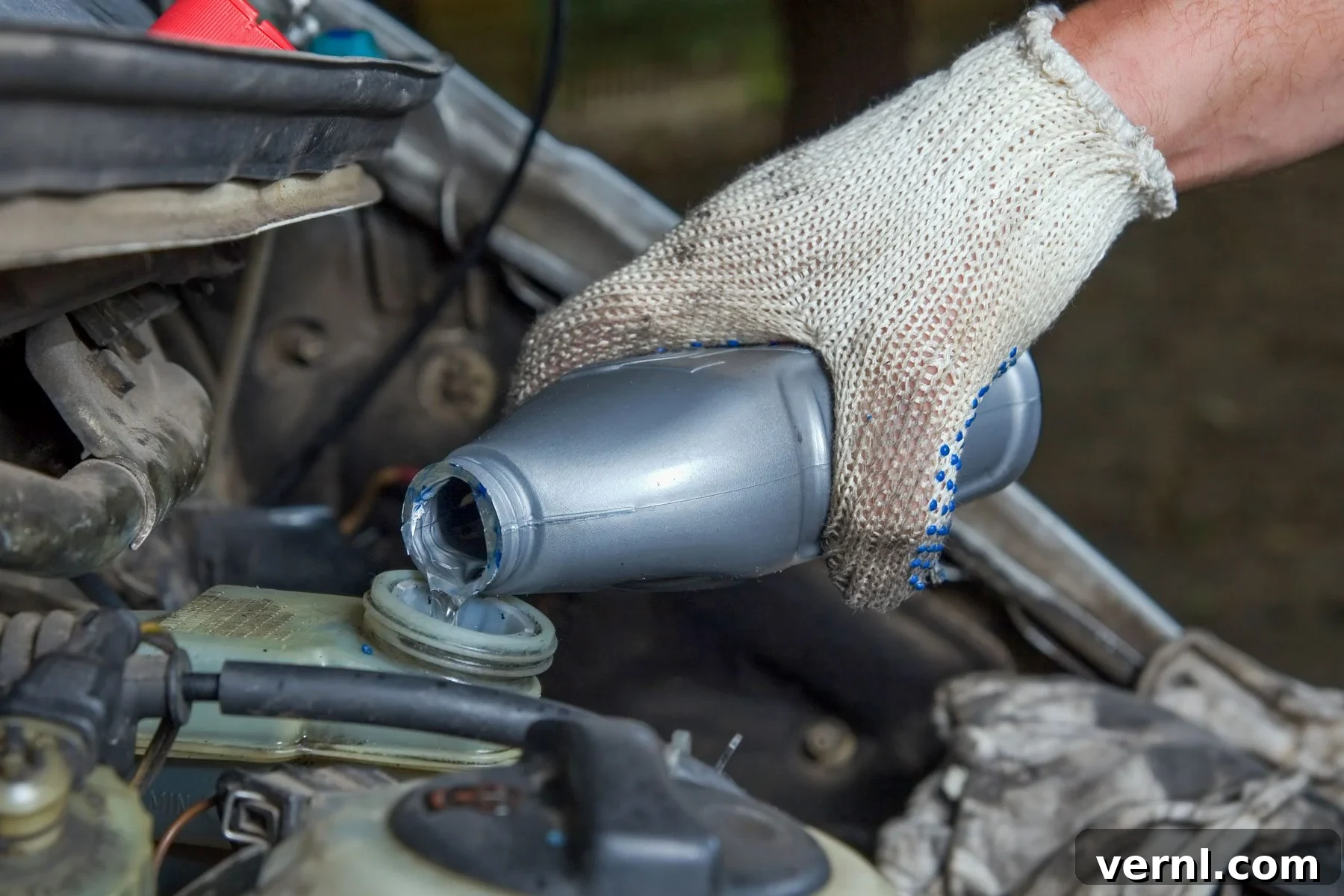
As a seasoned auto technician, I’ve had my share of white-knuckle moments. Twice in my career, while test-driving customer vehicles, the brakes completely failed. Those heart-stopping instances are seared into my memory. Fortunately, these cars were already in the shop because their owners had wisely noticed warning signs like a fading brake pedal or an unusual “funny” sensation when stopping.
Then, the unimaginable happened with my own SUV. Without any prior warning, as I was slowly backing out of my driveway, the brake pedal plunged directly to the floor. My heart leaped into my throat.
Luckily, I was barely moving. My quick reaction to yank on the parking brake allowed me to bring my vehicle to a safe, controlled stop. The culprit? A rusted-out brake line, unfortunately buried deep within the vehicle’s frame. In all three cases, I was incredibly fortunate; there was no damage, and no one was injured. So, why do these critical failures occur? The answer is often simple yet overlooked: brake fluid deteriorates over time. Understanding this vital component is key to preventing catastrophic accidents. To shed light on this crucial topic, we’ve gathered insights from an industry expert, Ron Schornstein, President and CEO of Acustrip, a leading marketer of fluid testing products.
What Is Brake Fluid and Its Indispensable Role in Your Vehicle’s Safety?
Brake fluid is far more than just another automotive lubricant; it’s a specialized, solvent-based hydraulic fluid that forms the backbone of your vehicle’s braking system. Its primary purpose is to efficiently transfer the force you apply to the brake pedal into the mechanical action that slows and stops your car. This seemingly simple process relies on a complex synthetic formulation, designed with specific additives to withstand the immense pressures and extreme temperatures generated during braking.
Imagine a intricate network of brake lines and flexible hoses meticulously engineered to snake through your vehicle. This system acts as a conduit, delivering the pressurized brake fluid to the brake calipers, which house the brake pads. When you press the pedal, the fluid pushes these pads to clamp down forcefully onto the spinning disc rotors. In vehicles with drum brakes, the fluid pushes the brake shoes outward, pressing them against the inner surface of the brake drums. This powerful, controlled friction is what ultimately brings your car to a safe and complete halt. Without healthy brake fluid, this entire chain of command breaks down, compromising your ability to stop.
Understanding Brake Fluid Degradation: Why This Critical Fluid Goes Bad
The reliability of your vehicle’s braking system hinges on the integrity of its brake fluid. Unfortunately, this vital fluid isn’t designed to last forever. Over time, the protective synthetic additives that make brake fluid so effective – including lubricants, corrosion inhibitors, acid neutralizers, and viscosity stabilizers – gradually break down and lose their potency. Once these additives are no longer effective, the overall performance of the brake fluid significantly diminishes, leading to a host of dangerous issues that can compromise your safety. These issues can manifest as:
- Significantly increased stopping distances and difficulty in bringing your car to a safe halt.
- Unexplained brake fluid leaks, often indicating deteriorating seals or corroded lines.
- The unsettling experience of your brakes locking up unexpectedly, particularly in older systems.
- Audible warning signs such as grinding or squeaking noises when you apply the brakes.
- An illuminated anti-lock braking system (ABS) warning light on your dashboard, indicating a potential fault within the ABS, which relies heavily on brake fluid integrity.
The Pervasive Threat of Moisture Absorption
One of the most insidious enemies of brake fluid is moisture. Brake fluid is inherently hygroscopic, meaning it readily absorbs and holds water from the surrounding atmosphere. Even though your braking system is largely sealed, moisture can infiltrate through microscopic pores in rubber hoses, the master cylinder reservoir vent, or simply by condensation forming within the system over time. Once water enters the brake fluid, a cascade of detrimental effects begins.
The presence of moisture significantly lowers the brake fluid’s boiling point. During heavy braking, the tremendous friction generated at the brake pads and rotors produces intense heat. This heat transfers to the brake fluid. If the fluid contains water, the water can boil, creating compressible gas bubbles within the hydraulic system. Unlike liquid brake fluid, gas bubbles can be compressed. When you press the brake pedal, instead of directly transferring force to the calipers, some of that force is wasted compressing these bubbles. This phenomenon leads to what is known as “brake fade” – a sensation where the brake pedal feels spongy or “mushy,” and stopping distances dramatically increase. Furthermore, moisture in brake fluid actively promotes the internal rusting and corrosion of critical metal brake components, such as calipers, wheel cylinders, and brake lines. It also causes rubber components like seals and hoses to swell, deteriorate, and weaken, leading to potential leaks and system failures from the inside out.
The Critical Issue of Incompatibility Between Different Brake Fluid Types
Not all brake fluids are created equal, and understanding their differences is paramount to proper vehicle maintenance. Mixing incompatible types of brake fluids can lead to severe system damage and dangerous braking performance. Always consult your vehicle’s owner’s manual or speak with a qualified auto parts expert to ensure you’re using the correct type of brake fluid for your specific make and model. Here’s a brief overview of the common DOT classifications:
- DOT 2 Brake Fluid: This type is mineral-oil based and is typically found in older or specialty vehicles. It is crucial never to mix DOT 2 fluid with any other DOT-rated fluid, as it has entirely different chemical properties.
- DOT 3 and DOT 4 Brake Fluids: These are both glycol-ether based. While DOT 4 can be safely mixed with DOT 3 brake fluid (as DOT 4 has a higher boiling point and superior performance), you should never add DOT 3 to a system designed for DOT 4. It’s generally best practice to use the specific type recommended by your manufacturer.
- DOT 5 Brake Fluid: This is a silicone-based fluid, distinct from glycol-ether types. It is completely incompatible with any other DOT brake fluid (DOT 3, 4, or 5.1). Mixing DOT 5 with other types will lead to severe system damage, including seal degradation and fluid separation. DOT 5 fluid does not absorb water, which can be seen as an advantage in some contexts, but it can trap moisture in low spots in the system, leading to localized corrosion.
- DOT 5.1 Brake Fluid: Despite its similar numerical designation, DOT 5.1 is glycol-ether based, just like DOT 3 and DOT 4. It is *not* silicone-based like DOT 5. The “5.1” indicates it meets the same performance standards as DOT 4 but boasts a significantly higher boiling point, making it suitable for high-performance applications.
The “DOT” acronym refers to the U.S. Department of Transportation, which establishes stringent standards for brake fluids. These standards cover critical aspects such as:
- Minimum dry and wet boiling points.
- Chemical interactions with various materials used within braking systems (metals, plastics, rubbers).
- Overall chemical and temperature stability over time.
- Requirements for accurate and clear container labeling.
- Specific viscosity levels across a range of temperatures.
Chemical Breakdown: The Slow Erosion of Protective Additives
Beyond moisture absorption, brake fluid is constantly subjected to extreme temperature fluctuations and tremendous hydraulic pressures during its operational life. Over prolonged periods, this harsh environment inevitably causes the chemical additives within the fluid to break down and deplete. As these additives weaken, the brake fluid itself can become corrosive. This caustic change can accelerate the deterioration of critical metal braking system components, leading to internal corrosion and pitting. Simultaneously, plastic and rubber brake parts, such as seals, gaskets, and hoses, become brittle, crack, and lose their integrity, dramatically increasing the risk of fluid leaks and outright system failure. This chemical degradation is a silent killer of your braking system’s longevity and performance.
The Dangers of Contamination in a “Sealed” System
While the braking system is often referred to as a “sealed” hydraulic system, it is not entirely impervious to external elements. Debris, dirt, or other impurities can and do find their way into the brake fluid hydraulic system, particularly through the master cylinder. The master cylinder incorporates a small vent, a crucial design feature intended to prevent brake system vapor lock – a condition where a vacuum or pressure buildup could seriously impede braking performance. This vent allows air to enter the reservoir as the brake fluid level drops when you depress the brake pedal, and then exits when you release the pedal. Unfortunately, the air entering the master cylinder is not sterile; it contains environmental moisture, dust, and fine dirt particles. All of these elements act as contaminants, gradually polluting the brake fluid and accelerating its degradation. Even tiny particles can abrade internal seals and components, leading to premature wear and fluid bypass.
Electrolysis: A Lesser-Known Threat to Brake Line Integrity
Electrolysis is a often-overlooked yet significant reason for brake fluid and brake line failure. This electrochemical process occurs when dissimilar metals come into contact in the presence of an electrolyte (such as rain, salt air, or road salts) and a poor electrical ground. In such conditions, an unintended electric current can pass through the liquid medium instead of properly grounding, causing one of the metals to essentially decompose. Consider the clamps and other hardware that secure your brake lines to the vehicle’s frame or undercarriage. If these securing components are made from metals different from the brake lines themselves and are exposed to corrosive elements like road salt, they can facilitate electrolysis. This process can rapidly corrode and decay the brake lines themselves, leading to dangerous leaks and system failure.
Poor body grounds or inadequate component grounds can manifest in a surprising array of automotive problems, extending far beyond the braking system. Symptoms can include broken metal control cables, corroded heater cores, erratic behavior from lights and other electrical devices, and even engine drivability issues. Because many brake lines and hoses are often out of sight, tucked away within the chassis, it is absolutely essential to have a qualified mechanic inspect them thoroughly every time you bring your vehicle in for service. Proactive inspection is the best defense against this silent, destructive force.
Recognizing the Red Flags: How to Tell if Brake Fluid Has Gone Bad
Identifying bad brake fluid doesn’t always require a mechanic; some checks can be performed by the average car owner. Visually inspecting your brake fluid is the first step. Healthy brake fluid typically has a clear yellowish to light brown color and feels slightly slick and oily to the touch. If the fluid in your reservoir appears dark brown, murky, or has black gritty particles suspended within it, these are strong indicators that it has degraded significantly and requires immediate attention. Another simple check is to inspect the master cylinder fill cap gasket or seal; if it feels mushy or has deteriorated, it’s a sign that the fluid may be compromised and the seal needs replacing.
For a more precise assessment, special diagnostic tools are readily available. You can easily check the brake fluid’s quality and condition using test strips specifically designed for brake fluid, or by employing a convenient brake fluid pen tester. Depending on the sophistication of the tester, it can accurately determine if the fluid contains excessive moisture, other contaminants, and its pH (acidity) levels. As Ron Schornstein emphasizes, “unseen contaminates in any vehicle fluids can quickly cause a premature failure of that part and others as well.” These tools provide critical insights that a visual inspection alone might miss, giving you an early warning before minor issues escalate into major safety hazards.
The Essential Maintenance: When Should Brake Fluid Be Flushed?
Unlike engine oil, which is frequently checked and changed, brake fluid often gets overlooked. However, its regular maintenance is just as critical for your safety. Most automotive experts and manufacturers recommend a complete brake fluid flush and replacement every two years or every 30,000 miles, whichever comes first. This interval is a general guideline; specific recommendations for your vehicle can be found in your owner’s manual.
Why is this interval so important? Because, as we’ve discussed, brake fluid constantly degrades due to moisture absorption and additive depletion, even if you don’t drive your car often. A flush involves draining all the old, contaminated fluid from the entire braking system and replacing it with fresh, new fluid. This process effectively removes accumulated moisture, corrosion, and degraded additives, restoring the system’s optimal performance and safety. When performing a flush, it’s also a good practice to replace the master cylinder gasket or seal if it shows any signs of deterioration, as this is a common point for moisture entry.
Beyond the recommended flush interval, it’s advisable to check your brake fluid level monthly and to test the fluid’s condition every six months or 6,000 miles. These simple, do-it-yourself maintenance items are easy to incorporate into your routine and can be lifesavers. They represent a small investment of time and effort that can prevent costly brake repairs down the line, and more importantly, avert potentially catastrophic accidents caused by brake system failure. Prioritizing brake fluid maintenance is prioritizing your safety and the safety of everyone on the road.
About Our Expert
Ron Schornstein is a distinguished figure in the automotive fluid testing industry, serving as the President and CEO of Acustrip, headquartered in Denville, New Jersey. Under his leadership, Acustrip has become a renowned manufacturer and provider of a wide array of fluid testing products and devices, catering to both the rigorous demands of the transportation industry and the practical needs of home usage. His expertise underscores the importance of proactive fluid analysis in maintaining vehicle performance and safety.