Climbing into a tub or standing in a shower are often considered simple, everyday acts. However, for millions of individuals facing mobility challenges, these seemingly effortless routines can become daunting, dangerous, or even impossible. The good news is that advancements in home accessibility have provided a transformative solution: the walk-in bathtub.
Originally introduced in the 1940s, walk-in tubs were designed with a singular, crucial purpose: to enhance bathroom accessibility for those who struggled to navigate the high thresholds of traditional bathtubs. Over the decades, these innovative fixtures have evolved significantly. Today’s walk-in tubs not only prioritize safety and ease of access but also integrate advanced therapeutic features, offering a spa-like experience within the comfort of your own home. Understanding how these specialized tubs function and what essential factors to consider before investing can empower you to make an informed decision for enhanced comfort, safety, and independence.
What Exactly is a Walk-In Tub?
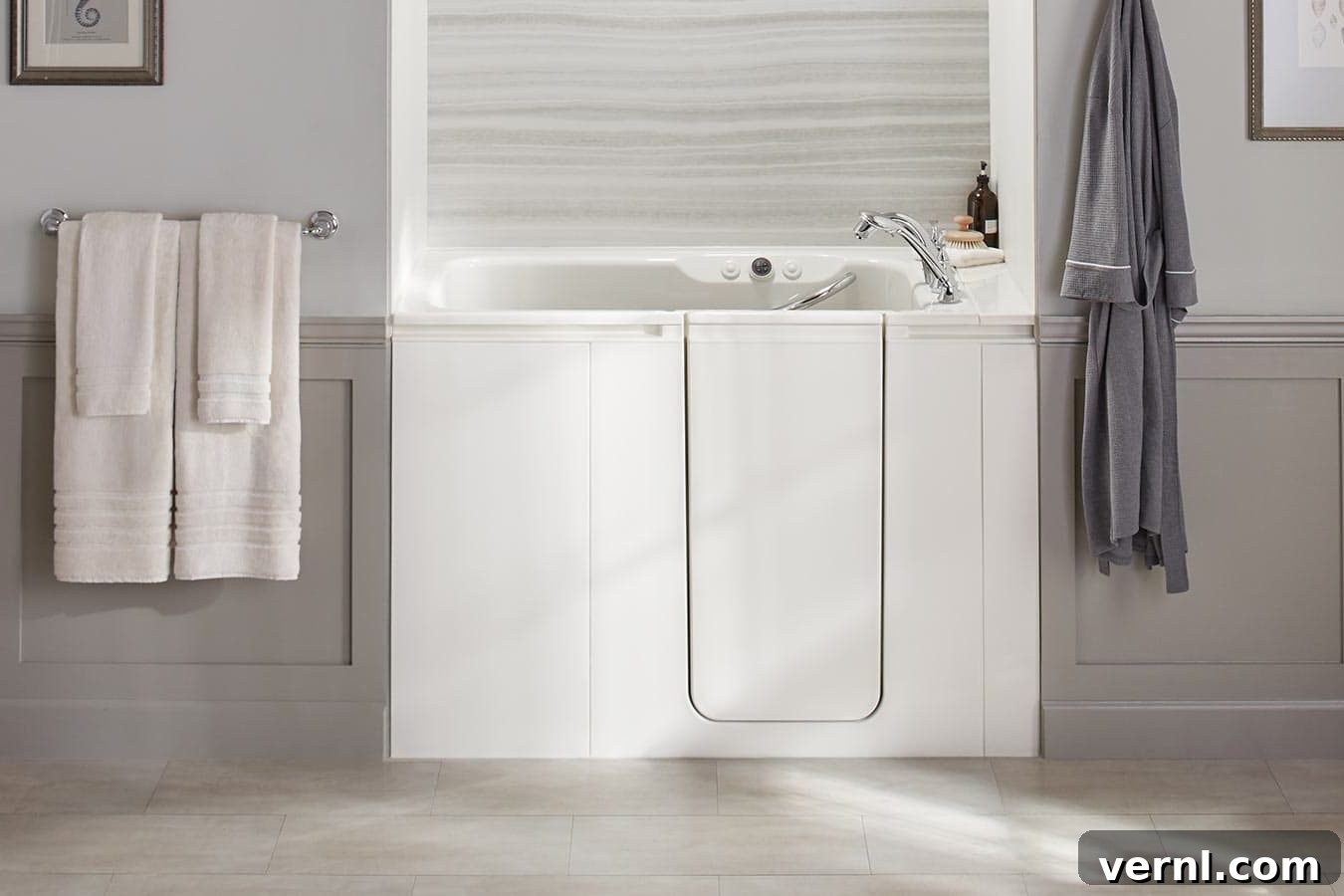
At its core, a walk-in tub is a purpose-built bathing fixture designed to provide a safe and accessible bathing experience. Visually, they stand taller than conventional bathtubs, often resembling a compact, upright enclosure with a key distinguishing feature: a sealable door on one side. This door, which typically swings inward or outward, allows users to simply step over a very low threshold – often just a few inches high – to enter the tub without the need for high leg lifts or precarious maneuvering. This design dramatically reduces the risk of slips, trips, and falls, which are common occurrences in standard bathrooms for individuals with limited mobility.
According to Chuck Khiel, vice president of Fred Home Improvement in Bethesda, Maryland, “Walk-in tubs typically are made of an acrylic shell that covers a robust steel skeleton.” This construction ensures durability, longevity, and structural integrity. Inside, walk-in tubs are thoughtfully designed for comfort and practicality. You’ll typically find a built-in bench seat at one end, allowing bathers to sit comfortably and securely while bathing, rather than having to lower themselves completely to the tub floor. The fill spout is usually positioned at the opposite end, and many models include a convenient handheld shower wand, offering versatility for targeted washing or rinsing.
Beyond these fundamental elements, modern walk-in tubs are equipped with an array of features aimed at maximizing safety, comfort, and therapeutic benefits. These often include anti-slip surfaces integrated into the tub floor and seating area, preventing accidental slips even when wet. Strategically placed, built-in grab bars provide additional support and stability when entering, exiting, or adjusting position. Contoured seating offers ergonomic support for prolonged comfort, while advanced drainage systems, such as turbo flushing, ensure quick and efficient water removal after bathing. For those seeking a truly luxurious and therapeutic experience, many models offer optional hydrotherapy jets and inline water heaters, transforming a simple bath into a soothing and restorative spa session.
Understanding How Walk-In Tubs Operate
The operational sequence of a walk-in tub is a unique departure from traditional bathing habits, effectively reversing the order of events. With a conventional tub, you typically fill the tub first, then step in. With a walk-in tub, the process prioritizes safety and ease of entry:
- Entry: You first open the watertight door and comfortably step into the tub, utilizing the low threshold and any grab bars for support.
- Sealing and Filling: Once inside and seated comfortably, you securely close and latch the door. Only then do you begin to fill the tub with water.
- Bathing: You can then enjoy your bath, whether it’s a simple soak or a hydrotherapy session with jets activated.
- Draining and Exiting: After your bath, the water must be completely drained from the tub before the door can be safely opened. Once the tub is empty, you can unlatch the door and step out securely.
This sequence ensures that there is no risk of water spilling out during entry or exit, or of a bather attempting to step over a high wall while the tub is full. The key to this watertight operation lies in the sophisticated sealing mechanism of the door. Khiel explains, “It’s all about water pressure. It effectively seals the door’s gasket all the way around the opening to keep water in — much like the hatch of a submarine.” This robust gasket, typically made from high-quality rubber or silicone, forms a tight, impermeable barrier when the tub is filled, preventing any leakage. The weight and pressure of the water further enhance this seal, pressing the gasket firmly against the tub frame. Advanced models often feature dual seals or pressure-activated sealing mechanisms for added security and reliability.
Typical Walk-In Tub Sizes and Customization Options
Walk-in tubs come in a range of sizes to accommodate various bathroom layouts and user needs. Standard walk-in tub dimensions typically fall between 40 to 60 inches in length and 32 to 36 inches in width. To put this in perspective, a standard traditional bathtub is usually 60 inches long by 30 inches wide. While traditional tubs are generally longer and narrower, walk-ins often feature a more compact footprint or a wider design to incorporate comfortable seating.
Khiel notes that “Single benches are typical,” emphasizing the design focus on individual bathing comfort. However, for couples or individuals requiring more space, he adds, “But I’ve also seen a two-seater that was maybe 48 inches wide,” illustrating the availability of larger options. These two-seater models are designed for dual occupancy or for individuals who require extra room to maneuver.
If you’re considering replacing a standard alcove bathtub with a walk-in model, manufacturers often offer practical solutions to ensure a seamless fit. Some provide deck extension kits that can bridge any gaps between the ends of the walk-in tub and the existing bathroom walls. This creates a finished, built-in appearance, making the walk-in tub seem as if it was custom-made for the space.
While most manufacturers offer a range of standard sizes with customizable features (such as adding jets or heaters), some brands, like Kohler, are known for their ability to custom-size walk-in tubs. This bespoke approach can be particularly beneficial for unique bathroom layouts or for integrating a walk-in tub into an existing standard tub space without extensive renovation. However, Khiel points out a critical consideration for any installation, especially when dealing with existing structures:
“If the walk-in is going into an existing space, size can be a challenge. Most don’t fit through a standard bathroom door. We’ve had to take out doors and frames and even remove walls to get them into a bathroom.” This highlights a significant logistical hurdle: the sheer size and bulk of some walk-in tubs, even compact ones, can necessitate considerable demolition and structural modification simply to get the unit into its designated location. This factor can substantially impact the overall installation time and cost.
How Much Do Walk-In Tubs Cost?
The investment required for a walk-in tub can vary widely, influenced by numerous factors ranging from the tub’s features and brand to the complexity of its installation. According to Chuck Khiel, “For just the unit, not including installation, anywhere from $3,500 to $8,000.” This baseline cost reflects the price of the tub itself, with basic soaking models typically at the lower end and feature-rich hydrotherapy models with advanced components occupying the higher end of this range. Premium brands, specialized bariatric models, or those with extensive customization options can even exceed this upper limit.
Beyond the unit’s price, labor costs for installation are a significant variable. The extent of renovation required plays a crucial role. In some cases, existing plumbing pipes may need to be relocated or new lines run to accommodate the walk-in tub’s specific requirements, such as fill spouts or drain locations. This plumbing work adds to the overall labor expense.
Furthermore, if your chosen walk-in tub includes therapeutic features like jets and an inline heater, additional electrical work becomes necessary. Khiel emphasizes this point: “And if you have jets and a heater, you need to run dedicated 20-amp electrical service to each.” This involves installing new wiring, a dedicated circuit breaker in your electrical panel, and ensuring proper grounding and safety protocols are met. Such electrical modifications require the expertise of a licensed electrician and contribute substantially to the total installation cost. The geographical location, local labor rates, and the specific contractor you choose will also influence these figures.
The Professional Installation Process for a Walk-In Tub
Installing a walk-in tub is far more complex than simply swapping out a traditional tub. It’s a significant home modification that often falls under the umbrella of a bathroom remodel, requiring a multi-faceted approach and specialized expertise. The process typically begins with extensive preparatory work:
- Demolition and Removal: The existing bathtub, surrounding tile or wall surfaces, and old plumbing fixtures must be carefully removed. This phase can be messy and disruptive, but it’s essential for clearing the space.
- Surface Preparation: Once the old fixtures are out, the subfloor, walls, and surrounding surfaces need to be inspected, repaired, or replaced as necessary. This ensures a stable, level, and waterproof foundation for the new tub.
- Plumbing Modifications: The existing plumbing lines may need to be adjusted or new ones run to align with the walk-in tub’s specific drain, fill spout, and any potential hot/cold water inputs for heaters. This requires precise measurements and adherence to local plumbing codes.
- Electrical Wiring: If the walk-in tub includes advanced features like hydrotherapy jets, air jets, or an inline heater, dedicated electrical circuits must be installed. This involves running new wiring from the main electrical panel to the tub’s location, installing appropriate outlets or junction boxes, and ensuring all connections meet safety standards.
- Tub Placement and Connection: “The tub, then, is basically just scooted into the opening,” says Khiel. This step, while seemingly simple, can be the most challenging part due to the tub’s size and weight, often requiring multiple people or specialized equipment to maneuver it into place without damaging existing structures. Once positioned, the plumbing and electrical systems are meticulously connected and tested for leaks and functionality.
- Finishing Touches: Finally, the surrounding areas are sealed, tiled, or finished to integrate the new tub seamlessly into the bathroom design. This might also involve making other changes to the bathroom layout, such as moving a toilet or a vanity, to better accommodate the walk-in tub’s footprint and ensure comfortable access.
Given the intricacies involved, the question often arises: Is it a DIY project? Khiel’s response is unequivocal: “No, absolutely not.” He stresses that while homeowners might consider undertaking parts of a bathroom renovation themselves, the installation of a walk-in tub specifically demands professional expertise. The process is not only physically demanding (getting the heavy unit into the bathroom can be a major hurdle, sometimes requiring door and frame removal) but also necessitates the precise skills and certifications of licensed professionals. A licensed plumber is crucial for ensuring watertight connections and adherence to plumbing codes, preventing costly leaks and water damage. A licensed electrician is indispensable for handling the dedicated electrical circuits safely and effectively, mitigating fire hazards and ensuring proper operation of powered features. While you might reduce costs by tackling the initial demolition yourself, leaving the critical plumbing, electrical, and tub placement to certified professionals is paramount for safety, longevity, and peace of mind.
Total Cost of Professional Walk-In Tub Installation
When considering the comprehensive cost of having a professional install a walk-in tub, it’s important to factor in all the elements that contribute to the final price. This isn’t just about the tub itself or basic labor; it encompasses the entire scope of the project, from initial demolition to final functional testing. Khiel provides a realistic estimate for the D.C. area: “In the D.C. area, $19,000 to $28,000.”
This comprehensive figure includes:
- The Walk-In Tub Unit: The cost of the tub itself, which as previously discussed, can range from $3,500 to $8,000 or more depending on features and brand.
- Demolition: The labor and disposal costs associated with removing the existing bathtub, tiling, and any other fixtures.
- Structural Modifications: This can include the potentially significant expense of having to remove doors, door frames, or even portions of walls to get the large walk-in tub into the bathroom. Repairing and finishing these areas afterward also contributes to the cost.
- Plumbing Work: The labor for adjusting existing plumbing, running new water supply and drain lines, ensuring proper drainage, and connecting all fixtures.
- Electrical Work: The cost of a licensed electrician to install dedicated electrical circuits for jets, heaters, and control panels, ensuring all work meets strict electrical codes and safety standards.
- Finishing Materials and Labor: Costs associated with new tiling, waterproofing, patching walls, painting, and any other aesthetic finishes required to complete the bathroom space around the new tub.
- Permits and Inspections: Necessary fees for local building permits and inspections, ensuring all work complies with municipal regulations.
These figures can vary based on geographical location, the complexity of the specific installation, the materials chosen, and the rates charged by local contractors. Obtaining multiple quotes from reputable, licensed professionals is always recommended to get an accurate understanding of project costs in your area.
Pros and Cons of Installing a Walk-In Tub
Deciding whether a walk-in tub is the right investment for your home involves weighing its numerous advantages against potential drawbacks. Carefully consider these pros and cons to see how they align with your personal needs, priorities, and lifestyle.
Pros:
- Unparalleled Safety: This is arguably the most significant benefit. Walk-in tubs eliminate the dangerously high step-over associated with traditional tubs, drastically reducing the risk of slips, falls, and injuries. Features like low thresholds, built-in grab bars, and anti-slip surfaces provide a secure environment, offering peace of mind for users and their caregivers. This enhanced safety often translates to greater independence for those with mobility issues.
- Therapeutic Benefits: Many walk-in tubs offer sophisticated hydrotherapy systems. These can include powerful water jets that target specific muscle groups for deep tissue massage, or gentle air jets that create a soothing, effervescent sensation. These features can help alleviate muscle pain, reduce stiffness, improve circulation, and promote relaxation, turning a simple bath into a rejuvenating therapeutic session. Inline heaters ensure the water temperature remains consistently warm, further enhancing the comfort.
- Enabling Aging in Place: For many seniors and individuals with disabilities, maintaining independence and remaining in their familiar home environment is a top priority. A walk-in tub is a crucial modification that can significantly extend a person’s ability to “age in place.” By making personal hygiene routines safer and easier, it reduces the need for assisted living facilities or in-home care solely for bathing assistance, thereby preserving dignity and autonomy while potentially saving substantial long-term costs.
- Increased Comfort and Accessibility: Beyond safety, the contoured seating and deeper soaking capabilities of walk-in tubs offer a more comfortable and relaxing bathing experience compared to traditional tubs where one must lay down or sit on the floor. The accessible design ensures that bathing is no longer a struggle but an enjoyable part of the daily routine.
Cons:
- Space Requirements and Design Impact: While some walk-in tubs are designed to fit compact spaces, many can be taller and wider than standard tubs. This extra bulk can take up a significant amount of bathroom space, potentially making smaller bathrooms feel cramped or requiring the relocation of other fixtures like toilets or vanities. The aesthetic may also differ significantly from a traditional tub, and careful consideration of bathroom design is needed.
- Complex and Disruptive Installation: As highlighted, the installation of a walk-in tub is rarely a simple swap. It often requires a fair amount of demolition, extensive plumbing modifications, and dedicated electrical work, especially for models with therapeutic features. This can lead to a disruptive, time-consuming, and potentially messy renovation process that temporarily renders your bathroom unusable. The logistical challenge of getting the large unit into the bathroom itself can be a significant hurdle.
- Substantial Cost: Walk-in tubs represent a considerable financial investment. From the cost of the unit itself (which can range from several thousands to over ten thousand dollars for premium models) to the extensive professional installation fees (plumbing, electrical, demolition, finishing), the total expenditure can be substantial. This makes them a less accessible option for those on a tight budget, and it’s essential to consider this upfront cost versus the long-term benefits and potential savings on assisted care.
- Filling and Draining Time: While modern walk-in tubs feature faster fill and drain systems, there is still a waiting period. You must be seated inside the tub while it fills and remain seated until it fully drains before you can open the door and exit. For some individuals, waiting for the tub to fill and drain can lead to discomfort, especially if the bathroom is cold, or if they have patience issues.