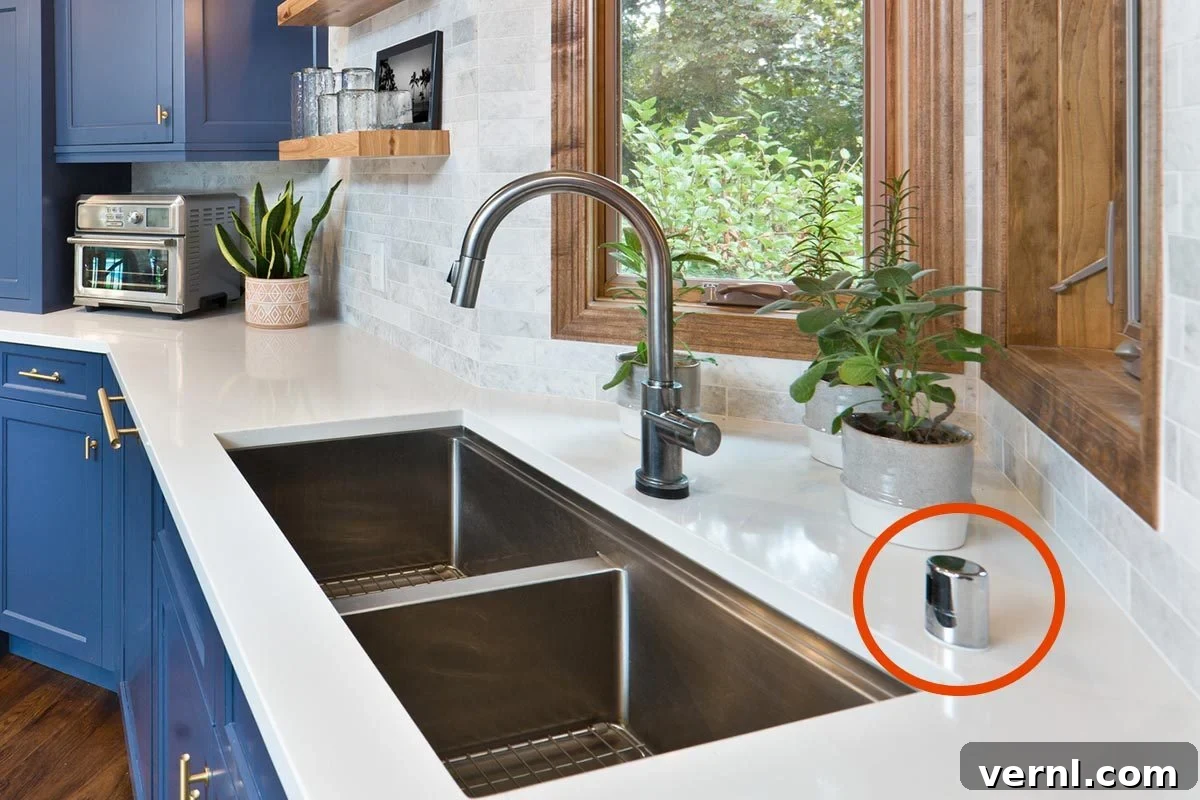
The Unseen Guardian: Understanding Your Dishwasher Air Gap
When you buy a new home or settle into a rental property, the kitchen often presents a few mysteries. Among them might be a small, dome-shaped fixture nestled on your sink deck or countertop, right beside your faucet. You might push it, try to twist it, or wonder if it’s some sort of forgotten soap dispenser. If this sounds familiar, you’ve likely encountered the humble yet critical dishwasher air gap. While it might look like a curious appendage or even a miniature R2D2, its presence is a clear indicator: you have a dishwasher, and this little device plays a monumental role in its hygienic operation.
Far from being a mere decorative element, the air gap is a cornerstone of your kitchen’s plumbing system, specifically designed to protect your dishwasher and, by extension, your health. Its seemingly strange name becomes perfectly logical once you understand its purpose. In this comprehensive guide, we’ll demystify this essential component, explaining what it is, why it’s there, how it works, and whether your home truly needs one.
What Exactly is That Thing Next to My Kitchen Faucet?
That “thing” next to your faucet is known as a dishwasher air gap. It’s not a part of your faucet, nor is it related to water filtration or soap dispensing, despite its often misleading appearance. Instead, this inconspicuous fixture is an integral part of your dishwasher drainage system. Its strategic placement on the sink deck or countertop is not arbitrary; it’s a critical engineering decision designed to serve two primary, interconnected functions within your kitchen’s plumbing infrastructure.
Firstly, the air gap ensures that the water your dishwasher pumps out after its wash and rinse cycles effectively flows down the drain. Without it, issues like airlocks can prevent proper drainage, leaving standing, dirty water in your dishwasher. Secondly, and perhaps more importantly, it acts as a robust safeguard against drain backflow. This means it prevents contaminated water from your sink drain—especially in the event of a clog—from siphoning back into your dishwasher and potentially contaminating your freshly cleaned dishes. A compromised drainage system can lead to serious operational issues for your appliance and, more critically, pose a significant health risk.
Understanding the Role of a Dishwasher Air Gap
The term “air gap” perfectly describes the device’s fundamental principle. It quite literally creates a physical gap filled with air within the dishwasher’s drain line. Alex Atkinson, a seasoned plumber based in California, elucidates this concept: “The air gap creates a physical break between the dishwasher and the drain. That way, if your sink gets clogged and water starts backing up, it can’t siphon back into the dishwasher.” This physical separation is key to its efficacy.
To truly grasp how it works, imagine the path water takes from your dishwasher. The dishwasher drain hose typically travels from the appliance, rises to the air gap on the countertop, and then descends to connect to the main sink drain tailpiece, or directly to the garbage disposal if you have one. When the dishwasher’s drain cycle activates, a powerful pump expels water through this hose. This expelled water, along with the air it pushes, can create pressure within the drain line. If this air has no escape, it can form an “airlock” preventing the water from draining properly, especially if the sink drain itself is partially obstructed by food debris or grease.
This is where the air gap shines. If you examine the fixture closely, perhaps by removing its decorative dome-shaped cover, you’ll observe distinct holes or ports. These openings allow the pressurized air to escape freely, ensuring an uninterrupted flow of water from the dishwasher into the drain. Without this critical function, your dishwasher might struggle to drain completely, leaving murky water at the bottom after a cycle, and potentially hindering its cleaning performance.
Protecting Your Dishes from Contamination
Beyond ensuring smooth drainage, the air gap serves as a vital safeguard against potential contamination. Consider a scenario where your kitchen sink drain becomes severely clogged. Water begins to back up in the sink, potentially filling with food particles, soap scum, and other unsanitary elements. In plumbing systems without an adequate air gap, this dirty water could be siphoned back into the dishwasher through its drain hose due to negative pressure. This backflow would not only introduce hazardous bacteria and debris into your clean appliance but also re-contaminate your supposedly sparkling dishes, rendering them unhygienic and unsafe for use.
The air gap acts as an impermeable barrier against this scenario. Its design dictates that any water attempting to flow backward from a clogged drain will encounter the physical air gap. Instead of entering the dishwasher hose, the contaminated water will simply spill out of the air gap’s openings and onto your countertop. While certainly an alarming sight and a clear indicator of a significant drain clog, this spill serves a crucial purpose: it prevents the backflow from reaching your dishwasher. As Atkinson aptly describes it, “If your sink drain gets clogged and water tries to back up, it will simply flow out of the air gap and onto the countertop (a bad sign for sure), but it will not flow into the dishwasher hose. Kind of like a fail-safe.” This “fail-safe” mechanism is paramount for maintaining kitchen hygiene and ensuring the longevity of your dishwasher.
Do You Need a Dishwasher Air Gap in Your Home?
The requirement for a dishwasher air gap isn’t universal; it largely depends on your geographical location and adherence to specific plumbing codes. As home repair expert Kevin Crawford explains, “Not all states make air gaps mandatory. Some areas allow what’s called a ‘high loop’ instead. That’s when the dishwasher drain hose is mounted up as high as possible under the sink, usually secured to the underside of the countertop, before it loops back down to the drain. It’s better than nothing, but it’s not as good as an air gap.”
A “high loop” aims to achieve a similar anti-siphoning effect by elevating a portion of the drain hose above the flood level of the sink. This creates a modest physical barrier against backflow. However, plumbers widely agree that while a high loop offers some protection, it is generally considered a less robust solution than a dedicated air gap. A high loop might not effectively prevent backflow under extreme pressure conditions or when minor blockages are present, nor does it address the issue of air pressure buildup during the draining cycle as effectively as an air gap.
The distinction often comes down to which plumbing code a particular region follows. According to Alex Atkinson, states that primarily adhere to the Universal Plumbing Code (UPC) typically mandate the installation of a physical air gap for dishwashers. This includes states like California, Washington, Hawaii, and Minnesota, known for their stringent plumbing regulations. Conversely, states that adopt the International Plumbing Code (IPC), such as Florida and New York, are generally more likely to permit the use of a high loop as an acceptable alternative. Despite these general guidelines, local regulations can vary significantly.
“That said,” Atkinson continues, “some local codes absolutely require a proper air gap. So if you’re remodeling or installing a new dishwasher, it’s always smart to check your local plumbing codes or call out a plumber.” This advice is crucial because non-compliance with local plumbing codes can lead to inspection failures, potential fines, and costly rework. Furthermore, opting for an air gap even when a high loop is permitted can offer superior protection and peace of mind, enhancing your kitchen’s overall hygiene and the longevity of your appliance.
Maintenance and Troubleshooting Your Dishwasher Air Gap
Like any component in a busy kitchen, the dishwasher air gap isn’t entirely maintenance-free. Over time, it can accumulate food particles, grease, and mineral deposits that are flushed through the dishwasher’s drain cycle. While designed to prevent backflow, a clogged air gap can hinder proper drainage and even cause water to spill onto your countertop, indicating a problem.
Signs of a clogged or malfunctioning air gap include:
- Water leaking onto the countertop from around the air gap cover during or after a dishwasher cycle.
- Slow or incomplete drainage from your dishwasher.
- Unpleasant odors emanating from the air gap.
Cleaning an air gap is typically a straightforward process that many homeowners can manage. First, turn off the dishwasher and ensure there’s no cycle running. The dome-shaped cover usually twists off or simply lifts up, revealing the internal mechanism and the two hoses connected beneath. Carefully inspect the ports and hoses for any visible blockages. Use a small brush, a pipe cleaner, or even a toothpick to dislodge any food debris or buildup. Flush with a little warm water to ensure clear passage, then reattach the cover. If the issue persists or if you notice water leaking from the base of the air gap assembly (under the countertop), it might indicate a more complex problem, such as a loose hose connection or a faulty internal component, requiring professional attention.
The Benefits of an Air Gap: More Than Just Code Compliance
Beyond meeting plumbing code requirements in certain areas, the dishwasher air gap offers tangible benefits that contribute to a healthier, more efficient kitchen:
- Enhanced Kitchen Hygiene: The primary benefit is preventing the backflow of dirty drain water into your dishwasher, thus ensuring that your dishes are truly clean and safe from potential bacterial contamination.
- Dishwasher Protection: By allowing air to escape and preventing airlocks, the air gap ensures efficient drainage, reducing strain on your dishwasher’s pump and preventing dirty water from sitting in the appliance. This can extend the lifespan of your dishwasher.
- Early Warning System for Clogs: A spill from the air gap onto the countertop is an undeniable sign of a partial or complete clog in your sink drain or garbage disposal. This early warning allows you to address plumbing issues before they escalate into major backups or damage.
- Peace of Mind: Knowing that a simple, yet effective, device is actively safeguarding your dishes and your appliance provides invaluable peace of mind for any homeowner.
Conclusion
The modest dishwasher air gap, often overlooked or mistaken for something else, stands as an indispensable component in many modern kitchens. It’s a silent guardian, working diligently to prevent unsanitary backflow and ensure the efficient operation of your dishwasher. Whether mandated by local plumbing codes or chosen as an extra layer of protection, understanding its function is key to maintaining a hygienic and trouble-free kitchen environment. So, the next time you glance at that small, dome-shaped fixture beside your faucet, remember its vital purpose: a tiny guardian ensuring your dishes are not just clean, but truly sanitary.
About the Experts
- Kevin Crawford has over 20 years of experience in luxury real estate. He is the co-owner of TexFix, a company that provides home repairs and improvements in the areas surrounding San Antonio, TX.
- Alex Atkinson is a plumber and HVAC technician at Super Brothers, a Northern California-based plumbing and HVAC repair service.