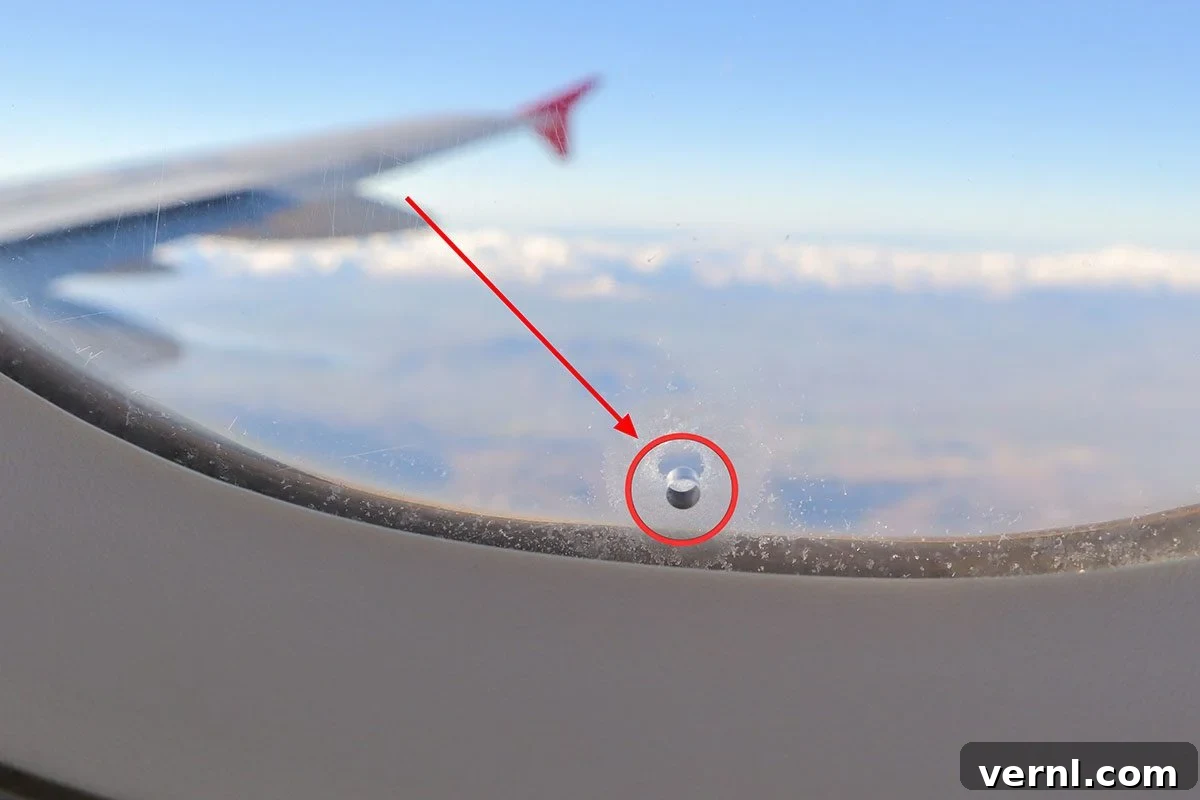
The Tiny Hole in Airplane Windows: An Essential Engineering Marvel for Your Safety
Next time you find yourself gazing out from an airplane window, take a moment to observe the glass more closely. Towards the bottom, you’ll likely spot a small, almost imperceptible hole. Many passengers might overlook it, or perhaps mistake it for a manufacturing defect. However, this tiny aperture, often called a “breather hole” or “bleed hole,” is far from accidental. It’s an intentional and absolutely critical component of the aircraft window’s sophisticated construction, playing a pivotal role in ensuring your safety and comfort throughout the flight.
Understanding the Advanced Design of Airplane Windows
Airplane windows are not just simple panes of glass; they are complex, multi-layered structures engineered to withstand extreme conditions. Unlike the single-pane windows found in homes or cars, aircraft windows are typically composed of robust, transparent materials like stretched acrylic or polycarbonate, chosen for their superior strength, flexibility, and resistance to impacts at high speeds and varying temperatures. Most modern aircraft windows incorporate three distinct layers, each serving a specific, vital function:
- The Outer Pane: This is the primary structural component, the first line of defense against the elements. It directly faces the external environment and is designed to bear the vast majority of the pressure differential between the pressurized cabin and the thin, low-pressure air outside at cruising altitude. It must also withstand impacts from potential foreign objects like birds or hail.
- The Middle Pane (or Inner-Middle Pane): Positioned between the outer and inner layers, this pane acts as a critical fail-safe. It’s the layer that typically contains the tiny breather hole. While the outer pane handles most of the pressure, the middle pane serves as a vital backup, ready to take over the primary pressure-bearing duties should the outer pane somehow fail. This redundancy is a cornerstone of aviation safety.
- The Inner Pane: This innermost layer, often referred to as a “scratch pane” or “cabin pane,” faces the passenger cabin. Its primary role is protective, shielding the structural outer and middle panes from scratches, scuffs, or accidental damage from within the cabin. It also contributes to thermal and acoustic insulation, enhancing passenger comfort by reducing noise and maintaining cabin temperature.
This elaborate, multi-pane construction is a testament to the meticulous engineering required in aviation. It’s not merely about offering a view; it’s about creating a highly durable, redundant system capable of enduring immense stress while maintaining a safe and comfortable environment inside the aircraft.
The Indispensable Role of the Breather Hole in Flight Safety
The small breather or bleed hole, strategically placed in the middle pane, is an unsung hero of aeronautical engineering. Its functions are critical to both the structural integrity of the window and the overall well-being of passengers. Understanding its purpose requires a brief look at the physics of flight at high altitudes.
Managing Pressure Differentials
As an airplane ascends to its cruising altitude, typically between 30,000 and 40,000 feet, the atmospheric pressure outside the aircraft drops dramatically. To ensure passenger comfort and health, the aircraft cabin is artificially pressurized to simulate an altitude of around 6,000 to 8,000 feet. This creates a significant pressure differential: much higher pressure inside the cabin compared to the outside air. The breather hole’s primary function is to manage this intense pressure difference across the window assembly.
The tiny hole allows a controlled, small amount of cabin air to flow into the gap between the middle and outer panes. This ingenious design ensures that the outer pane bears almost the entirety of the pressure load. By allowing the air between these two panes to equalize with the cabin pressure to a degree, it essentially offloads stress from the middle pane, keeping it in a low-stress, ready-to-act backup state. This prevents unnecessary strain on the secondary pane, significantly reducing the risk of cracks or structural fatigue over thousands of flight cycles.
Preventing Window Fogging and Enhancing Visibility
Beyond pressure management, the breather hole serves another crucial purpose: preventing condensation and fogging between the window layers. The air inside the cabin is often warm and humid, exhaled by passengers and crew. When this moist air comes into contact with the cold surfaces of the outer window panes at altitude, it can condense, leading to an opaque, foggy appearance. This phenomenon is similar to how moisture fogs up car windows on a cold day.
The breather hole facilitates a slow, continuous circulation of air between the inner and outer window layers. This subtle airflow helps to balance the moisture content and temperature gradients within the confined space, effectively preventing the buildup of condensation. A clear window isn’t just a matter of passenger preference; it’s also a safety feature. Optimal visibility allows passengers to enjoy the views and, more importantly, enables flight crews to conduct vital visual checks outside the aircraft during various phases of flight, such as taxiing, takeoff, landing, or in emergency situations where an external view is critical.
Smart Engineering and Rigorous Maintenance Protocols
The placement and design of the breather hole are not arbitrary; they are the result of meticulous aerodynamic and structural engineering. The hole is typically located near the bottom of the middle pane. This specific positioning ensures it does not compromise the structural integrity of the window, while still being optimally situated to facilitate moisture release and pressure balancing where it is most effective.
All aircraft components, including window assemblies, are subject to incredibly strict safety standards and rigorous certification processes imposed by aviation authorities like the Federal Aviation Administration (FAA) in the United States and the European Union Aviation Safety Agency (EASA). These standards dictate everything from material selection and manufacturing quality to installation and maintenance procedures, ensuring that every element, no matter how small, contributes to the highest level of safety.
Regular maintenance is paramount in aviation, and the breather hole is no exception. During routine aircraft inspections, maintenance crews meticulously check these tiny holes. They ensure that the holes are free from obstructions – dust, debris, or ice – that could impede their function. A blocked breather hole could lead to uneven pressure distribution within the window assembly, placing undue stress on the secondary pane and potentially accelerating material fatigue over time. While the overall redundancy of aircraft window design means a blocked hole is unlikely to cause immediate catastrophic failure, maintaining its clear state is crucial for the long-term reliability and safety of the window system.
This seemingly insignificant detail exemplifies the ‘fail-safe’ design philosophy pervasive throughout the aviation industry. Every component, every system, is designed with multiple layers of redundancy and protection to ensure that even if one element fails, others are there to maintain safety and functionality. The tiny breather hole is a perfect illustration of how small, often unnoticed, engineering solutions contribute profoundly to the overall safety and reliability of air travel, transforming what might appear to be a simple pane of glass into a highly sophisticated safety device.
Related Articles and Insights
- If You See a Blue Stop Sign, Here’s What It Means
- If You Spot This Yellow Device on Your Windshield, You’ve Been Barnacled
- What Do Shoes on Power Lines Mean?