
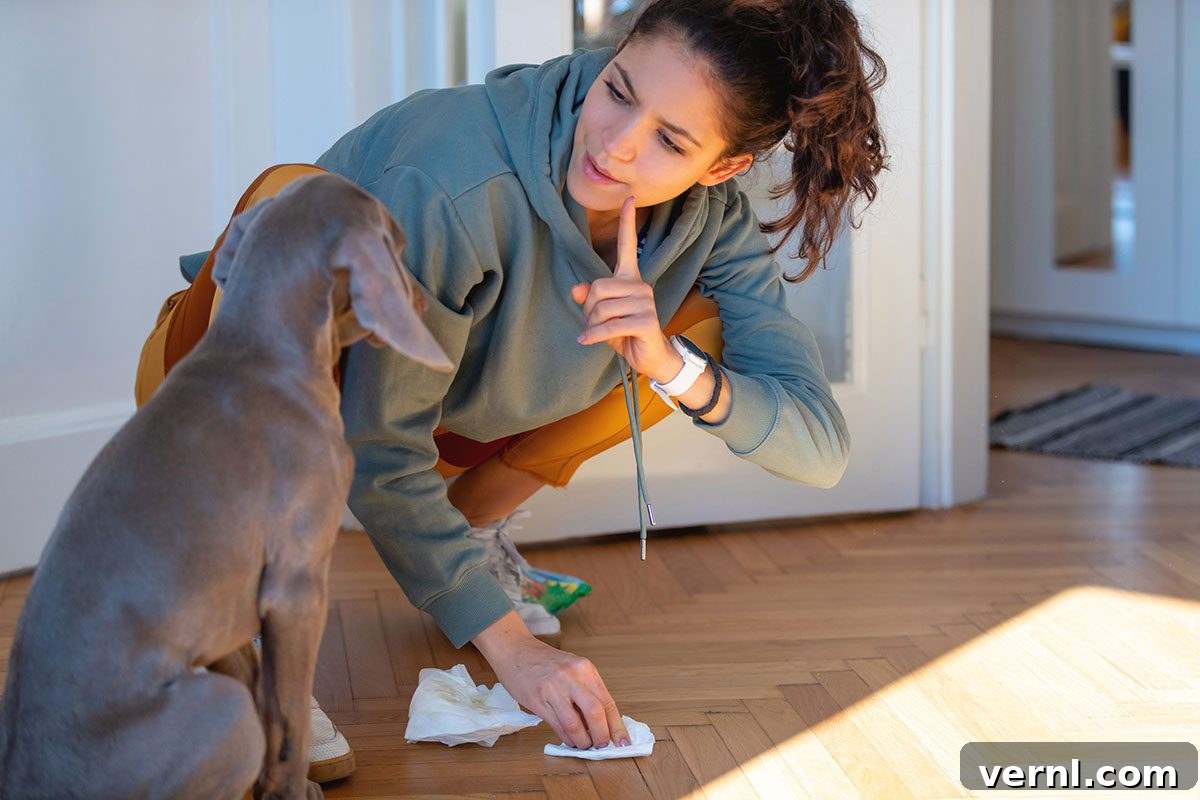
For many households across the nation, the wagging tail and boundless energy of at least one dog bring immeasurable joy. The American Veterinary Medical Association highlights the prevalence of canine companionship, estimating that over 48 million households in the U.S. share their lives with a furry friend. While dogs enrich our lives in countless ways, they also introduce a unique set of challenges, particularly when it comes to unexpected poop accidents. Whether you’re a seasoned dog owner or welcoming a new puppy into your home, mastering the art of swift and effective cleanup is an essential skill to maintain a hygienic and pleasant living environment.
Accidents are an inevitable part of pet ownership, but knowing how to properly address dog poop messes on various surfaces – from plush carpets indoors to hard concrete outdoors – allows you to react promptly and confidently. This comprehensive guide will equip you with the knowledge and techniques needed to tackle pet waste, ensuring your home remains spotless and odor-free.
It’s crucial to remember that dog poop can carry various germs and bacteria, posing potential health risks. Therefore, personal safety and hygiene should always be a priority during the cleanup process. Always wear protective gloves (such as nitrile or latex) to create a barrier between your skin and the waste. Before applying any cleaning product, always test it in an inconspicuous area to ensure it won’t damage or discolor the surface. Strictly follow the manufacturer’s instructions for all cleaning solutions. During cleanup, keep your dog and any children safely away from the affected area and cleaning products. Furthermore, never mix different cleaning agents, especially those containing bleach and ammonia, as this can create dangerous fumes.
After removing the visible mess and cleaning the area, consider taking an extra step to disinfect the surface, especially in high-traffic areas or where repeat accidents might occur. This helps eliminate any remaining bacteria or pathogens. Don’t forget to disinfect any scrubbing brushes or rags used during the process, and thoroughly wash your hands with soap and water afterward. For ongoing cleanliness and convenience, investing in a dedicated dog poop trash can equipped with a tight-sealing lid and carbon filters can significantly help manage odors and keep your outdoor spaces pristine.
The Power of Enzymatic Cleaners: Your Best Defense Against Pet Stains and Odors
When it comes to effectively cleaning dog poop and other pet accidents, particularly on absorbent surfaces, enzymatic cleaners are your most powerful ally. These specialized solutions contain beneficial enzymes that actively break down the organic matter present in pet waste—such as proteins, fats, and cellulose—at a molecular level. This action doesn’t just mask odors; it eliminates their source, preventing lingering smells that can attract your pet back to the same spot.
Dr. Stacy Choczynski Johnson, a veterinarian with Pumpkin Pet Insurance, emphasizes the importance of enzymatic cleaners in disrupting a pet’s tendency to repeatedly urinate or defecate in a specific area. By neutralizing the animal smells that dogs can detect even when humans cannot, these cleaners are vital in breaking the cycle of repeat accidents. A widely recommended and pet-friendly option, like Nature’s Miracle, is versatile enough for use on a multitude of surfaces, making it a staple for any pet-owning household.
Joy Ramos of Bear Brothers Cleaning further explains that enzymatic cleaners are crucial because they dismantle the organic materials in pet excrement, effectively eliminating both visible stains and underlying odors. “This is especially useful in preventing pets from returning to the same spot, since residual scents, even if we cannot detect them, may induce repeat accidents,” she notes. Many enzymatic cleaners are also biodegradable, offering an environmentally conscious choice for your cleaning regimen, as highlighted by Marla Mock, president of Molly Maid. For optimal results, most enzymatic cleaners require a dwell time of 15 to 20 minutes before blotting or wiping away.
How to Get Dog Poop Out of Carpet and Rugs
Carpets and rugs, with their fibrous textures, can be particularly challenging surfaces for pet messes. Swift action and the right cleaning agent are key to preventing permanent stains and odors. Here’s how to effectively clean dog poop from carpet and rugs:
- Remove Solid Waste: Carefully scoop away as much of the solid poop as possible using a paper towel, a plastic bag, or a designated poop scooper. Be gentle to avoid pressing the waste further into the carpet fibers.
- Apply Enzymatic Cleaner: Once the bulk of the waste is removed, generously apply an enzymatic cleaner designed for pet stains directly to the affected area. Saturate the stain thoroughly, ensuring the cleaner reaches the base of the carpet fibers. Follow the manufacturer’s instructions for application and dwell time, typically 15-20 minutes.
- Blot, Don’t Scrub: Using a clean, dry white towel or paper towels, gently blot the spot from the outside in. Avoid scrubbing, as this can push the stain deeper into the fibers and damage the carpet. Continue blotting until no more color transfers to the towel. Repeat the application and blotting process if necessary.
- Rinse and Dry: Lightly dampen a clean cloth with plain water and blot the area to rinse any cleaner residue. Finally, place a stack of dry towels over the spot and weigh them down with a heavy object to absorb remaining moisture. Allow the area to air dry completely.
If you don’t have an enzymatic cleaner immediately on hand, Vera Peterson, president of Molly Maid, a Neighborly brand, suggests using soda water as a temporary solution:
- Apply Undiluted Soda Water: Pour undiluted soda water (club soda) directly onto the fresh stain. The carbonation can help lift the stain from the fibers.
- Blot Repeatedly: Blot the area with a clean, dry white towel. Repeat this process, applying more soda water and blotting, until the moisture is absorbed and the stain visibly lightens.
- Absorb Remaining Moisture: Once the stain is largely gone, place a fresh, dry white towel on the area and weigh it down with a heavy object (like a stack of books or a brick wrapped in foil) to soak up any remaining moisture. Let it sit for several hours or overnight. Remember, this is a temporary fix; an enzymatic cleaner should be used afterward for complete odor and stain removal.
How to Get Dog Poop Out of Tile and Wood Flooring
Cleaning dog poop from hard surface floors like tile and wood is generally less challenging than carpet, but thoroughness is still paramount to prevent odors and discourage repeat accidents. Hard surfaces are less absorbent, making cleanup quicker.
- Prompt Removal: Immediately scoop up all solid bits of poop using a paper towel or scoop. Dispose of the waste properly.
- Initial Wipe-Down: Use a damp cloth or paper towel to wipe away any visible residue. Rinse the cloth frequently or use fresh paper towels.
- Enzymatic Cleaning for Odor: Even if the surface looks clean, residual odors can remain. Apply an enzymatic cleaner specifically formulated for hard surfaces. Scrub the floor gently with a soft brush or mop, ensuring the cleaner gets into grout lines on tile or wood grain. The enzymes will break down any unseen organic matter causing odors.
- Rinse and Dry: Wipe the area with a clean, damp cloth to remove any cleaner residue, then dry thoroughly with a clean towel. Proper drying is particularly important for wood floors to prevent moisture damage. Performing a thorough job is essential to ensure your dog doesn’t keep returning to the same spot due to lingering scents.
How to Get Dog Poop Out of Vinyl Flooring
Vinyl floors are durable and relatively easy to clean, but pet accidents still require prompt and effective treatment to prevent staining and odor absorption. Here’s a reliable method for cleaning dog poop from vinyl:
- Scoop and Initial Clean: First, scoop up all solid waste carefully. Use a damp paper towel to wipe away any obvious smears.
- DIY Cleaning Solution: Natalie Barrett, a cleaning professional and quality supervisor at Nifty Cleaning Services, suggests a potent DIY cleaner:
- In a bucket, mix one cup of white vinegar with two tablespoons of liquid dishwashing detergent and one gallon of hot water. White vinegar is excellent for deodorizing and disinfecting, while dish soap helps cut through grease and grime.
- Scrub and Rinse: Dip a soft-bristled brush or a clean mop into the mixture and scrub the stained area on the vinyl. Apply gentle pressure to work the solution into any textured areas. Rinse the area thoroughly with fresh, clean water.
- Tackle Stubborn Stains: If a stubborn stain persists, create a paste using equal parts baking soda and water. Baking soda is a natural abrasive and deodorizer. Apply this paste directly to the remaining stain.
- Let it Sit: Allow the baking soda paste to sit on the stain for about 15 minutes. During this time, ensure your pup doesn’t get curious and sniff or lick the mixture.
- Clear, Rinse, and Dry: Gently clear away the dried paste. Rinse the area again with clean water and then dry the vinyl floor completely with a clean towel to prevent water spots.
How to Get Dog Poop Out of Upholstery
Upholstered furniture can absorb odors and stains quickly, making pet accidents on sofas, chairs, or cushions particularly frustrating. The approach depends on whether the item has washable covers.
- Washable Covers: If the poop lands on a pillow cover or slipcover that can be removed and laundered, this is the easiest and most effective route. Remove the cover, pre-treat any remaining stain with an enzymatic pet stain remover or a laundry pre-treatment spray, and then wash according to the item’s care label using the hottest water setting safe for the fabric.
- Non-Washable Upholstery: For fixed upholstery like sofas and chairs, prompt action is vital. Peterson of Molly Maid recommends these steps to clean poop off items like sofas:
- Scoop and Blot: Carefully remove all solid waste without pressing it further into the fabric. Then, blot the stained area with a clean, dry cloth to absorb excess moisture.
- Soda Water Treatment: For fresh stains and odors, blot the area with undiluted soda water. The carbonation can help lift the stain. Continue blotting with clean sections of the towel until the stain diminishes.
- Specialized Pet Stain Remover: Alternatively, use a high-quality pet stain and odor remover product specifically formulated for use on upholstery. Always test the product in an inconspicuous area (e.g., the back or underside of the cushion) first to ensure it doesn’t cause discoloration or damage. Follow the product’s instructions carefully.
- Air Dry: Allow the upholstery to air dry completely. If possible, use a fan to speed up drying and prevent musty odors.
How to Get Dog Poop Out of Leather
Leather furniture requires a delicate approach to avoid damaging its unique finish. Natalie Barrett of Nifty Cleaning Services suggests using common kitchen ingredients for effective stain removal:
- Prepare the Paste: In a small bowl, combine one tablespoon of fresh lemon juice with one tablespoon of cream of tartar. Mix until it forms a thick paste. Lemon juice provides a mild acidic cleaning action, while cream of tartar acts as a gentle abrasive and bleaching agent.
- Apply to Stain: Gently apply the paste directly onto the dog poop stain on the leather. Ensure even coverage.
- Dwell Time: Allow the mixture to sit on the stain for approximately 15 minutes.
- Wipe and Blot: After the dwell time, use a clean, damp sponge to carefully wipe away the paste. As you wipe, gently blot the stained area.
- Repeat if Necessary: Rinse the sponge as needed and repeat the process if the stain persists. Continue until the paste is completely cleared and the stain is gone.
- Condition Leather: After cleaning, it’s a good idea to apply a leather conditioner to rehydrate the material and protect its finish, as lemon juice can be slightly drying.
How to Get Dog Poop Out of Fabric (Washable Items)
For fabric items like blankets, towels, pet beds, or clothing that can be machine washed, Jodie Hamilton, a certified cleaning expert with Amazing Services, recommends a simple yet effective pre-treatment method before laundering:
- Initial Removal: First, remove as much solid waste as possible from the fabric.
- Pre-treatment Solution: In a small container, mix 10 parts water with one part standard liquid laundry detergent. This creates a mild yet effective cleaning solution.
- Apply and Blot: Apply this solution directly to the stained area. Using a soft-bristled brush or a clean cloth, gently blot or lightly scrub the stain. This helps to lift the waste particles from the fabric fibers.
- Dwell Time: Allow the solution to sit on the stain for several minutes, giving it time to work.
- Rinse and Absorb: After the dwell time, blot the area with a clean, dry white towel to absorb the loosened stain and excess moisture. Rinse the fabric under cool running water.
- Launder: Finally, launder and dry the item as directed on its care tag. Use an appropriate detergent and consider adding a pet-specific laundry booster for extra odor removal. Inspect the item before drying; if the stain remains, do not dry it, as heat can set the stain permanently. Repeat the pre-treatment if needed.
How to Get Dog Poop Out of Decking
Even with the most diligent dog training, outdoor accidents can occur on surfaces like your deck. Wood or composite decking can absorb odors and become stained if not cleaned promptly. After clearing away the initial waste, here’s how to ensure your decking remains clean and fresh:
- Clear Solid Waste: Carefully remove all solid dog poop using a shovel or paper towels.
- Initial Rinse: Rinse the area with a garden hose to remove any superficial residue.
- Baking Soda Application: Natalie Barrett suggests sprinkling a generous amount of baking soda directly onto the affected area. Baking soda is known for its excellent odor-absorbing properties.
- Allow to Sit: Let the baking soda sit for at least 15-30 minutes, or even longer if the odor is persistent.
- Sweep and Rinse: After it has absorbed odors, sweep away the baking soda with a stiff broom. Follow up with another rinse from the garden hose. For tough stains or deeply embedded odors, a mild deck cleaner compatible with your decking material can be used, following manufacturer instructions. Always test in an inconspicuous spot first.
How to Get Dog Poop Out of Concrete
Concrete is a common outdoor surface for pet accidents. Its porous nature makes it susceptible to absorbing pet waste and odors, which can be challenging to remove if not addressed quickly. The key is prompt action to prevent deeper stains and lingering smells.
- Immediate Cleanup: Start by picking up all solid waste. Then, blot up any moisture immediately with paper towels to prevent the waste from seeping further into the concrete’s pores.
- Method 1: Disinfectant and Enzymatic Cleaner (Recommended by Marla Mock):
- Marla Mock of Molly Maid recommends starting with a disinfectant cleaning solution to wash the area. Scrub thoroughly, then rinse and dry completely.
- Follow up with an enzymatic cleaner that is effective on water-safe surfaces. This is crucial for breaking down the organic matter and eliminating odors at their source.
- For particularly tough stains, apply undiluted soda water directly onto the stain, blot with a dry white towel, and repeat as needed.
- To deter future accidents, regularly clean pet areas on concrete to prevent dogs from repeatedly soiling the same place.
- Method 2: Boiling Water and Baking Soda (Recommended by Natalie Barrett):
- Natalie Barrett suggests soaking the affected area with boiling water. This helps to loosen and lift embedded particles.
- Immediately sprinkle the spot generously with baking soda.
- Scrub the baking soda into the concrete with a stiff brush and let it sit overnight.
- In the morning, pour another cup of hot water over the baking soda and repeat the scrubbing process.
- Finally, wash the area thoroughly with clean hot water and allow it to dry.
- Method 3: Hydrogen Peroxide, Baking Soda, and Dish Soap (Recommended by Joy Ramos):
- Joy Ramos recommends applying a powerful mix of hydrogen peroxide, baking soda, and dish soap. Hydrogen peroxide provides a bleaching and disinfecting action, while baking soda deodorizes and dish soap helps lift grime.
- Let this mixture sit for approximately 30 minutes to allow it to penetrate the concrete.
- Scrub vigorously with a stiff brush, then rinse the area very well with water.
- Ramos warns, “A common misconception is that a faded stain means it’s spotless, but deep odors may still linger.” For the best and most lasting results, always use enzymatic cleaners after initial treatment, and consider sealing the concrete to prevent future staining and make cleanup easier.
Preventing Future Pet Accidents and Maintaining a Clean Home
While effective cleanup methods are essential, preventing future pet accidents is equally important for maintaining a consistently clean and odor-free home. Here are some proactive steps you can take:
- Consistent Training and Routine: Establish a consistent potty training schedule for puppies and adhere to regular outdoor potty breaks for adult dogs. A predictable routine helps dogs understand when and where they should relieve themselves.
- Designated Potty Area: If possible, designate a specific area in your yard for your dog to do their business. This can help contain messes to one spot, making cleanup easier.
- Supervision and Confinement: Supervise puppies and newly adopted dogs closely, especially indoors. When you cannot supervise, use crates or gates to confine them to easily cleanable areas, reducing the likelihood of accidents on carpets or upholstery.
- Address Medical Issues: Frequent or sudden indoor accidents in a previously house-trained dog can sometimes indicate an underlying medical condition (e.g., urinary tract infection, kidney disease, diabetes). Consult your veterinarian promptly if you notice a change in your dog’s potty habits.
- Reduce Stress and Anxiety: Stress, anxiety, or separation anxiety can sometimes lead to inappropriate urination or defecation. Address these behavioral issues with training, enrichment, and potentially with the help of a veterinary behaviorist.
- Thorough Odor Elimination: Always use enzymatic cleaners to completely eliminate pet odors. As discussed, residual scents, imperceptible to humans, can act as an invitation for dogs to mark the same spot again.
FAQ: Common Questions About Cleaning Dog Poop
What should I avoid when cleaning dog poop?
When tackling dog poop messes, steer clear of certain products and practices to ensure both pet safety and surface integrity. Avoid harsh chemicals, particularly ammonia or bleach-based cleaners. These substances are not only potentially harmful to pets if ingested or if their fumes are inhaled, but they can also cause damage or discoloration to various surfaces, especially fabrics and delicate flooring. Joy Ramos highlights another critical reason: “Their smell can also resemble urine, and make your pet more likely to go in the same spot again,” creating a cycle of repeat accidents.
Additionally, it’s best to avoid cleaners with strong fragrances. As Marla Mock points out, these often only mask odors temporarily rather than eliminating their source. Furthermore, overpowering scents can be irritating to pets, whose sense of smell is far more sensitive than ours, potentially causing them discomfort or stress.
How do I know if a cleaner is pet safe?
Ensuring a cleaning product is safe for use around your pets is paramount. Always look for products that are clearly labeled “non-toxic,” “pet-safe,” or “environmentally friendly.” Beyond the front label, thoroughly read the ingredient list and any warning labels. As Joy Ramos advises, “If they are vague or don’t mention pet safety, it’s best to avoid them.” Be wary of generic “all-purpose” cleaners unless they explicitly state pet safety. Many reputable pet-specific cleaning brands prioritize formulations that are effective yet gentle around animals.
Consider products that are biodegradable and free from harsh chemicals like phosphates, phthalates, and synthetic dyes and fragrances. When in doubt, consulting your veterinarian for recommendations on pet-safe cleaning solutions can provide peace of mind. Always store all cleaning products securely out of reach of pets and children.
About Our Cleaning Experts
This comprehensive guide features insights from leading cleaning and pet care professionals:
- Joy Ramos serves as the operations manager at Bear Brothers Cleaning, a trusted residential cleaning company providing services in Huntsville and Birmingham, Alabama.
- Marla Mock is the esteemed president of Molly Maid, a national residential and light commercial cleaning franchise, and a Neighborly Company, where she has been a key leader for over four years.
- Dr. Stacy Choczynski Johnson is a veterinarian on staff with Pumpkin Pet Insurance, providing expert advice on pet health and care.
- Vera Peterson holds the position of president at Molly Maid, a renowned Neighborly brand specializing in professional home cleaning services.
- Natalie Barrett is a highly skilled cleaning professional and quality supervisor at Nifty Cleaning Services, offering expert cleaning solutions.
- Jodie Hamilton is a certified cleaning expert affiliated with Amazing Services, known for delivering high-quality cleaning expertise.