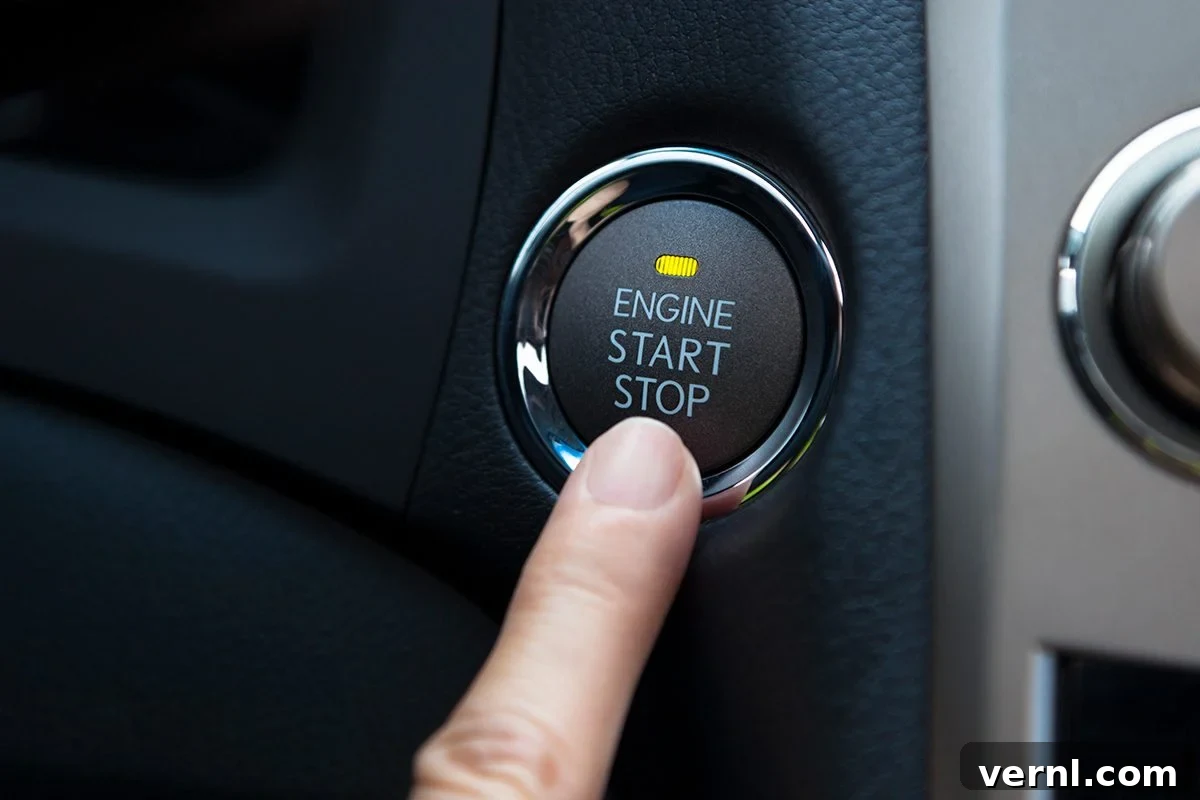
There are few things more frustrating than when your car refuses to start, especially when you’re pressed for time. That momentary panic, followed by the need to try again, is a clear sign that something isn’t right under the hood. While a car starting on the second attempt might seem like a minor inconvenience, it’s often a precursor to a more significant problem that could eventually leave you completely stranded.
Having spent over five decades in the auto repair industry, I’ve heard countless variations of the same complaint: “My car wouldn’t start at first, but then I turned the key off, and it fired right up on the second try.” This common scenario points to a range of potential issues that demand attention. My initial diagnostic question always remains the same: “Does the engine crank over as if it’s trying to start, or does it sound more like a dead battery—just a click, or perhaps no sound at all?”
With invaluable insights from a seasoned General Motors master technician and my extensive firsthand experience, we’ll delve into the most probable causes behind this frustrating phenomenon, and hopefully, empower you to get your vehicle starting reliably on the very first attempt.
Is a Car Starting on the Second Try a Bad Sign?
Absolutely, a car failing to start on the first attempt but succeeding on the second is a definitive indication of a problem that shouldn’t be ignored. Modern internal combustion engines (ICE), especially those engineered with sophisticated computer-controlled fuel injection and electronic ignition systems, are designed to ignite and start almost instantaneously, typically within two or three seconds, even in adverse weather conditions. Consider vehicles equipped with auto start-stop technology, which are engineered to restart in less than half a second. This rapid response is a testament to the precision and efficiency built into contemporary automotive systems.
When your engine requires a second attempt to fire up, it signals an underlying issue within one of the critical systems: mechanical components, fuel delivery, ignition, or electrical. Even if the engine eventually starts quickly on the second try, the fact that it didn’t on the first means there’s a fault that requires diagnosis and repair. Ignoring this symptom can lead to a cascading effect of problems.
Prolonged or repeated cranking places undue stress on several vital components. It can prematurely weaken your battery, significantly shorten the lifespan of your starter motor, and impose additional strain on other interconnected systems. This increased wear and tear can impact various engine components, leading to more expensive repairs down the line. Addressing the issue early can prevent minor glitches from escalating into major breakdowns, ensuring your car remains dependable and extends its overall service life.
Common Reasons Your Car Might Start on the Second Try
Diagnosing why a car starts on the second try rather than the first requires a systematic approach. Before diving into specific components, a series of preliminary questions can help narrow down the possibilities. Consider these key factors:
- Engine Temperature: Was the engine hot (recently driven) or cold (sitting overnight)?
- Time Since Last Drive: Did the car sit overnight or for an extended period?
- Dashboard Warning Lights: Were the Check Engine Light or other warning lights illuminated?
- General Performance: Does the car idle and run smoothly otherwise once it starts?
While some of these issues have straightforward DIY solutions, others are best left to professional mechanics. Understanding the potential causes, however, empowers you to have a more informed discussion with your mechanic if professional service is needed.
The Fuel System: A Primary Suspect
According to General Motors master technician Dave Zemaitaitis, issues within the fuel system are among the most likely culprits for a car needing a second start. He explains that problems such as a weak fuel pump, a leaking fuel line pressure regulator valve, or a faulty fuel pump check valve can prevent the fuel system from maintaining adequate pressure. This allows fuel to drain back into the tank, leaving the engine starved for fuel on the initial cranking attempt.
Testing the Fuel System: The “Two-Second Prime”
Zemaitaitis suggests a simple diagnostic test: “Turn the key to the run position (without starting the engine) and listen carefully for the distinct whirring sound of the fuel pump running.” This is commonly referred to as the “two-second prime.” During this short period, the fuel pump actively pressurizes the fuel lines in preparation for engine start. If you hear the pump engage and your car still requires a second attempt to start, it strongly suggests a problem within the fuel delivery system, such as a leaky check valve that isn’t holding pressure.
For vehicles equipped with a pushbutton start, simply press the start/stop button once without your foot on the brake pedal. This will put the car into the “run” position, allowing the fuel pump to prime.
Other Fuel-Related Issues:
- Clogged or Dirty Fuel Filter: A restricted fuel filter can impede the flow of fuel, reducing the pressure available at the injectors. This can lead to insufficient fuel delivery on the first crank. Replacing the fuel filter is often a straightforward DIY task.
- Excess Carbon Buildup: Carbon deposits on the intake valves can absorb fuel, particularly in colder temperatures, making it harder for the fuel-air mixture to ignite efficiently. This “fuel-wetting” effect can necessitate extra cranking.
- Fuel Quality and Octane Rating: Using low-quality, contaminated, or incorrect octane fuel (e.g., high-octane in an engine designed for 87 octane) can lead to inefficient combustion. Lower quality fuels may also contribute to carbon buildup. Adding a fuel system decarbonizing cleaner to the fuel tank and cleaning other components of the fuel/air intake system can help before considering professional service.
- Faulty Fuel Injectors: While not explicitly mentioned, leaky or clogged fuel injectors can also contribute to hard starts by either flooding the cylinders or not delivering enough fuel precisely.
The Battery and Electrical System: Powering the Start
A failing battery, loose or corroded battery terminals, or even low voltage can prevent your engine from cranking over efficiently on the first attempt. While the battery might have just enough residual power to muster a second attempt, this scenario indicates it’s struggling. A robust battery is essential for delivering the surge of power needed to engage the starter motor and ignite the engine.
DIY Battery Checks:
- Clean Battery Terminals: Corroded terminals create resistance, hindering power flow. Cleaning the battery terminals is a simple maintenance task that can significantly improve conductivity.
- Check Battery Voltage and Charging System: Use a multimeter to check your battery’s voltage. A fully charged battery should read around 12.6 volts or higher. If it’s consistently lower, or if the voltage drops significantly during cranking, your battery may be failing or your charging system (alternator) could be struggling to replenish it effectively. Regular checks of your battery and charging system for proper voltage are crucial.
The Ignition System: The Spark of Life
The ignition system is responsible for creating the spark that ignites the fuel-air mixture. Any weakness or fault here can result in a delayed start. Common culprits include:
- Weak Ignition Coils: Ignition coils transform battery voltage into the thousands of volts needed to create a spark. A weak coil may not generate a strong enough spark on the first attempt but might manage it on the second as residual electrical energy builds or a slight mechanical shift occurs.
- Worn or Dirty Spark Plugs: Spark plugs, over time, can become fouled with carbon deposits or develop excessive gaps, both of which reduce their ability to produce a strong, consistent spark. Replacing spark plugs is a common DIY maintenance item.
- Degraded Spark Plug Wires: In older vehicles, degraded spark plug wires can leak voltage, preventing the full electrical charge from reaching the spark plugs. Replacing spark plug wires is another manageable DIY task.
For vehicles with coil-over-plug ignition systems (which lack traditional spark plug wires), diagnosing and repairing faulty coils is often best left to a mechanic, as it can be more complex and requires specific diagnostic tools.
The Starter Motor: The Engine’s First Push
If you hear a distinct “click” on your first attempt to start the car, followed by a successful start on the second try, the issue often points to the starter motor or its solenoid. The starter motor is an electric motor that cranks the engine, initiating the combustion process. The solenoid acts as an electromagnet, engaging the starter motor’s gear with the engine’s flywheel.
Potential Starter Issues:
- Failing Solenoid: The “click” sound often indicates the solenoid is attempting to engage but isn’t quite making full contact or sending enough power to the starter motor. A second attempt might provide just enough power or jostle the internal contacts to complete the circuit.
- Weak Starter Motor: An aging or failing starter motor may not have the power to spin the engine quickly enough on the first attempt.
- Corroded Ground Cable: A loose or corroded ground cable, which connects the negative (-) battery terminal to the engine block, can restrict the electrical current flow to the starter. Cleaning this cable can sometimes resolve intermittent starting issues.
Unless you are comfortable working underneath your car and have the appropriate tools, major starter repairs are typically best entrusted to a professional mechanic due to the component’s location and the need for proper torque specifications.
Dirty or Malfunctioning Computer Sensors: The Brains Behind the Start
Modern vehicles rely heavily on a network of sensors that feed crucial data to the Engine Control Unit (ECU), the car’s computer “brain.” When any of these sensors provide inaccurate or no information, it can lead to various starting problems, including the need for a second start.
Key Sensors and Their Impact:
- Coolant Temperature Sensor (CTS): A faulty CTS can misreport engine temperature. If it signals a colder engine than it actually is, the ECU might inject too much fuel (flooding the engine). If it signals a warmer engine, it might inject too little fuel, making starting difficult.
- Mass Air Flow (MAF) Sensor: The MAF sensor measures the amount of air entering the engine. An out-of-calibration, failing, or dirty MAF sensor can lead to an incorrect air-fuel mixture, hindering proper combustion.
- Oxygen (O2) Sensors: While primarily involved in optimizing fuel efficiency and emissions, faulty O2 sensors can indirectly affect the air-fuel ratio calculations during startup.
- Crankshaft and Camshaft Position Sensors: These critical sensors monitor the position and rotational speed of the crankshaft and camshaft, providing vital timing information to the ECU for fuel injection and spark delivery. If these sensors are failing, they can prevent the engine from firing up on the first attempt, though a second try might coincidentally align the necessary signals.
Diagnosing Sensor Issues:
Checking for trouble codes with a diagnostic code reader is often the first step in identifying sensor-related problems. Cleaning the MAF sensor or replacing O2 sensors are often feasible DIY fixes. However, diagnosing and replacing crankshaft or camshaft position sensors usually requires specialized knowledge and tools, making them tasks best left to professionals.
Lack of Regular Maintenance: The Cumulative Effect
Sometimes, the need for a second start isn’t due to a single catastrophic failure but rather a culmination of neglected maintenance. Basic upkeep is fundamental to ensuring your car starts reliably every time:
- Dirty Air Filter: A severely restricted air filter starves the engine of air, leading to a rich fuel-air mixture that is difficult to ignite.
- Thick or Incorrect Oil: Especially in colder weather, thick or old engine oil increases drag on internal engine components, preventing the engine from spinning fast enough during cranking for a quick start. Using the correct viscosity oil and changing it regularly is vital.
- Degraded Coolant: Old or contaminated coolant can damage components like the CTS, leading to inaccurate temperature readings and subsequent fuel mixture problems. Regular coolant flushes are essential.
- Dirty Throttle Body or Idle Air Control (IAC) Valve: Carbon buildup in the throttle body or a malfunctioning IAC valve can disrupt the precise air-fuel mixture required for a smooth idle and reliable starting. Cleaning these components can often restore proper function.
Staying on top of these fundamental DIY maintenance items is crucial for overall vehicle health and is often the simplest way to ensure your car consistently starts on the very first try.
Meet the Expert
Dave Zemaitaitis has dedicated 23 years to his craft as a General Motors Master Technician. He currently applies his extensive expertise at O’Neil Buick/GMC in Warminster, PA. His insights were vital for this article, gathered during an interview on December 16, 2024.
Sources
Edmunds, “Do Stop-Start Systems Really Save Fuel?” (Dec. 16, 2024)