Before the era of modern kitchen convenience, disposing of food waste was often a messy and inconvenient chore. Today, garbage disposals have revolutionized kitchen cleanup, offering a quick and efficient way to manage food scraps right at the sink. However, like any powerful appliance, understanding its proper use and built-in safety features is crucial. Many users, myself included, once mistakenly believed these units could effortlessly mulch any food item thrown their way. This common misconception, along with improper usage such as neglecting to run cold water during operation, attempting to grind oversized waste piles, or introducing items not suitable for disposal, can lead to frustrating clogs, jams, or even motor damage. Fortunately, virtually all garbage disposals come equipped with a vital safety mechanism: the reset button, also known as the overload protector. This unassuming button plays a critical role in preventing overheating, safeguarding the motor from damage, and mitigating electrical hazards. This guide delves into the indispensable function of this built-in safety feature, offering comprehensive troubleshooting steps that can save you a service call and help you maintain the longevity of your appliance. We’ve consulted with plumbing experts and manufacturers to provide you with authoritative insights into keeping your garbage disposal running smoothly and safely.
Understanding the Garbage Disposal Reset Button: Your Appliance’s Lifeline
The garbage disposal reset button is more than just a simple switch; it’s a sophisticated safety device engineered to protect your unit from potential harm. As licensed plumber Shaylin King aptly explains, “The garbage disposal reset button is similar to an electrical circuit breaker and is a safety device on the unit.” Its primary function is to immediately cut off power to the disposal if it detects an issue that could lead to damage or danger. This could be due to a motor malfunction, accidental misuse (like a foreign object getting lodged), or an electrical overload. When the button “trips” or pops out, it signals that an internal protection mechanism has been activated, preventing serious consequences such as motor burnout, internal wiring damage, or even fire risks. By interrupting the power supply, the reset button acts as a proactive guardian, ensuring the longevity and safe operation of your garbage disposal.
Locating Your Garbage Disposal Reset Button: A Quick Guide
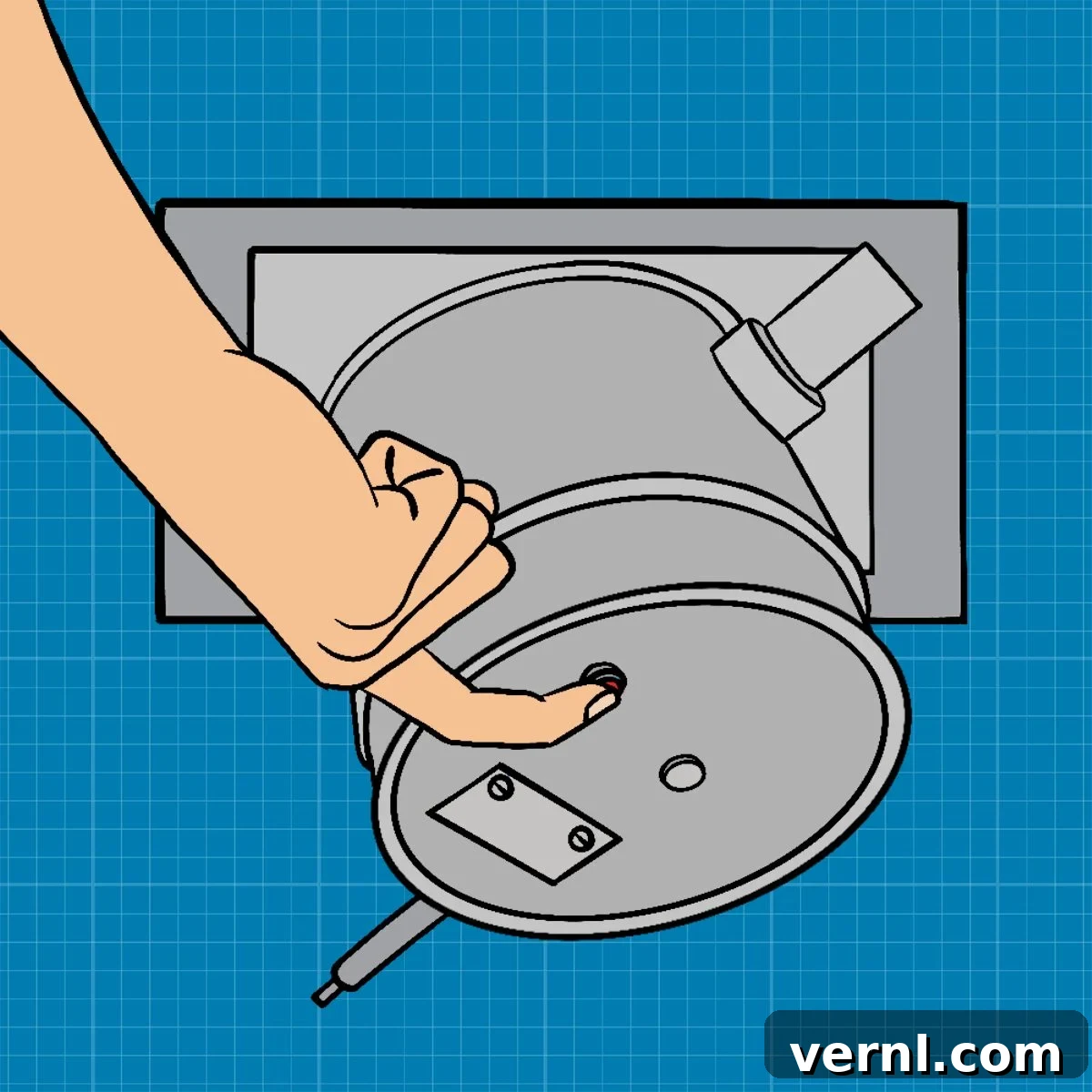
Identifying the reset button on your garbage disposal is usually straightforward, as its placement is quite standardized across most brands and models. Jeremy Gattozzi, Senior Category Manager of Disposals at Moen, clarifies, “Moen garbage disposals have a red reset button on the front of the unit. It’s located towards the very bottom of the garbage disposal, on the opposite side from the power cord.” This description holds true for the majority of units on the market. Typically, you’ll find this small, often red, button recessed or sitting flush against the disposal’s housing, near the bottom of the unit, and facing outwards or towards the front of the cabinet. Its distinct color (commonly red) makes it easy to spot amidst the plumbing. When the disposal encounters an issue and the safety mechanism activates, this button will noticeably pop out, making it visually apparent that a reset is required. If your unit unexpectedly stops working, this is the first place you should look for an indication of a tripped safety feature.
Do All Garbage Disposals Feature a Reset Button?
While there are countless models and designs of garbage disposals available, the overwhelming majority incorporate this crucial safety feature. “Most garbage disposals have reset buttons,” confirms King. This widespread inclusion underscores its importance as a standard protective measure. In the rare event that your garbage disposal unit ceases to function and you are unable to locate a reset button, there are a few avenues to explore. First, meticulously check the entire exterior of the unit, paying close attention to the bottom and sides, as some less common designs might place it in a slightly different spot. Second, and most reliably, consult your appliance’s manufacturer’s manual. This document will provide detailed diagrams and instructions specific to your model, including the exact location of all controls and safety features. If the manual is unavailable, reaching out to the manufacturer’s customer service department directly can provide the guidance you need.
Common Reasons Why Your Garbage Disposal Reset Button Trips
Understanding the root causes behind a tripped reset button is key to effective troubleshooting and preventing future issues. According to King, “The most common reason the reset button on a garbage disposal trips is because the motor jams when items get stuck in the grind chamber.” When the motor encounters resistance it cannot overcome, it strains, draws excessive current, and starts to overheat. To prevent permanent damage, the thermal overload protector (reset button) activates. When this happens, you might hear a humming sound as the motor still tries to turn, indicating it’s receiving power but is physically unable to rotate the grinding plate. Here’s a breakdown of common culprits:
- Jams from Hard or Fibrous Items: Introducing tough food scraps like fruit pits, bones, large quantities of fibrous vegetables (celery stalks, corn husks, artichokes), or even starchy items (potato peels, pasta, rice) without sufficient water can quickly overwhelm the grinding chamber. These items can get lodged between the grinding plate and the chamber wall, preventing rotation.
- Non-Food Items: Accidental drops of silverware (spoons, forks), bottle caps, twist ties, small toys, or even glass fragments can instantly jam the disposal and cause the motor to seize.
- Overheating from Prolonged Use: Running the disposal for an extended period, especially when grinding tough materials, can cause the motor to generate excessive heat. If it reaches a critical temperature, the thermal overload protector will trip.
- Insufficient Water Flow: Garbage disposals rely on a steady stream of cold water to flush waste through the grinding chamber and down the drain, as well as to help cool the motor. Operating the disposal with too little or no water can lead to both clogs and overheating.
- Electrical Overload or Faults: While less common than jams, an electrical issue can also cause the reset button to trip. This could be due to a power surge, an internal short circuit within the disposal unit, or a tripped circuit breaker at your home’s main electrical panel. If the reset button pops without any signs of a jam or humming, it’s worth investigating your electrical panel.
- Clogs Further Down the Drain: If the unit grinds but water backs up or drains slowly, a clog might exist further down your plumbing system, not directly in the disposal. While this doesn’t directly trip the reset button, it can be a symptom of a larger issue.
Comprehensive Troubleshooting: What to Do When the Garbage Disposal Reset Button Trips
When your garbage disposal unexpectedly stops working and the reset button has popped out, don’t panic. Most issues can be resolved with a bit of systematic troubleshooting. Follow these steps carefully to diagnose and fix the problem, prioritizing safety throughout the process:
- Immediately Cut Power: Safety is paramount. The very first action you must take is to turn off the wall switch that controls the garbage disposal. King advises, “immediately changing the unit’s wall switch to ‘OFF’ when the garbage disposal unit suddenly stops working.” This ensures no accidental power is supplied to the unit while you are inspecting it, preventing electrical shock or injury from rotating blades.
- Allow for Cooling: If the unit was struggling or operating for a while before tripping, the motor might have overheated. Wait at least five to ten minutes for the motor to cool down. Attempting to reset an overheated motor immediately could cause the button to trip again or worsen the problem.
- Attempt a Reset: Once the cooling period is complete, firmly and fully press the reset button back into the unit until you hear a click or feel it seat securely. It should stay retracted.
- Test the Unit: Flip the wall switch back to “ON.” Turn on a moderate stream of cold water and then activate the disposal switch. “Test the unit by pushing the reset button,” King says. If the unit still doesn’t spin or hum, immediately flip the wall switch for the unit back to “OFF.”
- Repeat and Observe: Sometimes, a single reset isn’t enough. If the unit didn’t start, turn the wall switch off, wait another minute or two, and try pressing the reset button again. Then, flip the wall switch on and test. If it repeatedly trips immediately, there’s likely a persistent issue.
- Check Your Home’s Circuit Breaker: If the disposal remains unresponsive after multiple reset attempts and you’ve confirmed no visible jam, inspect your main electrical panel. Locate the circuit breaker corresponding to your kitchen or garbage disposal. It might have tripped to the “OFF” position or be partially “tripped” (often resting between “ON” and “OFF”). Flip the switch firmly to “OFF” and then back to “ON” to reset it. Remember, always exercise caution when dealing with your home’s electrical panel.
- Inspect for Jams Safely: With the power definitively “OFF” at the wall switch (and preferably the circuit breaker too, for absolute certainty), carefully look down into the drain opening with a flashlight. Remove any visible items like cutlery, bones, or large food scraps using long-handled tongs or needle-nose pliers. **Crucially, never insert your hand directly into the disposal unit.**
- Manually Clear a Jam with a Hex Key: If you can’t see an obvious jam or if the grinding plate still won’t turn, your disposal likely has a jam that needs manual freeing. Most disposals come with a small hex key (Allen wrench). Look for a small, hexagonal hole at the very center of the bottom of your garbage disposal unit. Insert the hex key into this hole and turn it back and forth in both directions. This action manually rotates the grinding plate, dislodging whatever is causing the jam. You may need to apply some force. If you don’t have the manufacturer’s hex key, you can try inserting the handle of a sturdy wooden spoon into the drain opening and carefully prying against the impellers (the spinning arms) to free the plate.
- Final Test After Jam Clearance: Once you’ve manually freed the grinding plate (you should be able to spin it freely with the hex key or spoon), remove the tool. Press the reset button again to ensure it’s fully engaged. Then, turn the wall switch back “ON,” run cold water, and test the disposal.
- When to Call a Professional: If, after completing all these steps, the reset button continues to pop out, the unit still won’t turn on, or you detect any burning smell or electrical arcing, it’s time to call in the experts. King emphasizes this point: “If the reset button keeps popping out, King recommends calling service professionals at this point. This will require further diagnostics to determine if it is just jammed, [there is another issue], or if the unit is worn out and needs to be replaced.” A recurring trip indicates a deeper electrical issue, a persistent jam that can’t be cleared manually, or a motor that is failing.
How Long Should You Hold the Garbage Disposal Reset Button?
There’s a common misconception that the reset button needs to be held down for several seconds or minutes. However, according to Gattozzi, the process is much simpler. You merely need to push the red reset button on the garbage disposal gently but firmly until it clicks into place and remains fully retracted. It doesn’t require sustained pressure for any length of time. If the unit is functioning correctly and the underlying issue (like a jam or overheating) has been resolved, the button will stay in. If it springs back out immediately or after a short period of operation, it indicates that the protective mechanism is still detecting a problem, and further troubleshooting or professional intervention is needed.
Can You Replace the Reset Button on a Garbage Disposal?
Unfortunately, the garbage disposal reset button itself is not typically a replaceable part. “The reset button cannot be changed if it continually pops,” King explains. If the button consistently refuses to stay retracted, even after you’ve thoroughly checked for and cleared any jams and reset your household circuit breaker, it’s a strong indicator of a more serious internal problem. This constant tripping, even without an apparent cause like a visible jam, could signal an internal electrical short circuit, a severely worn motor, or other significant mechanical failures within the unit. In such cases, attempting to bypass or forcibly hold the button down is extremely dangerous and could lead to electrical fire hazards or severe damage. Instead, as King advises, this scenario usually points towards the need for professional garbage disposal replacement. He notes that “The life expectancy of a unit depends on its quality, but is usually five to 10 years.” Over time, the grind chamber blades dull, and the mechanical and electrical components naturally wear out. A constantly tripping reset button is often the unit’s final cry for help, signaling that it has reached the end of its useful life and requires replacement for safe and efficient operation.
About the Experts
Jeremy Gattozzi is the Senior Category Manager of Disposals at Moen. The company is one of the world’s largest manufacturers of plumbing products, including garbage disposals. This insight was gathered via an email interview conducted on April 22, 2024.
Shaylin King is the Owner of Mr. Rooter of Tri-Cities, Yakima, and Hermiston, a Neighborly company. He is a 25-year journeyman plumber, bringing extensive practical experience to his advice. This information was provided through an email interview on April 25, 2024.