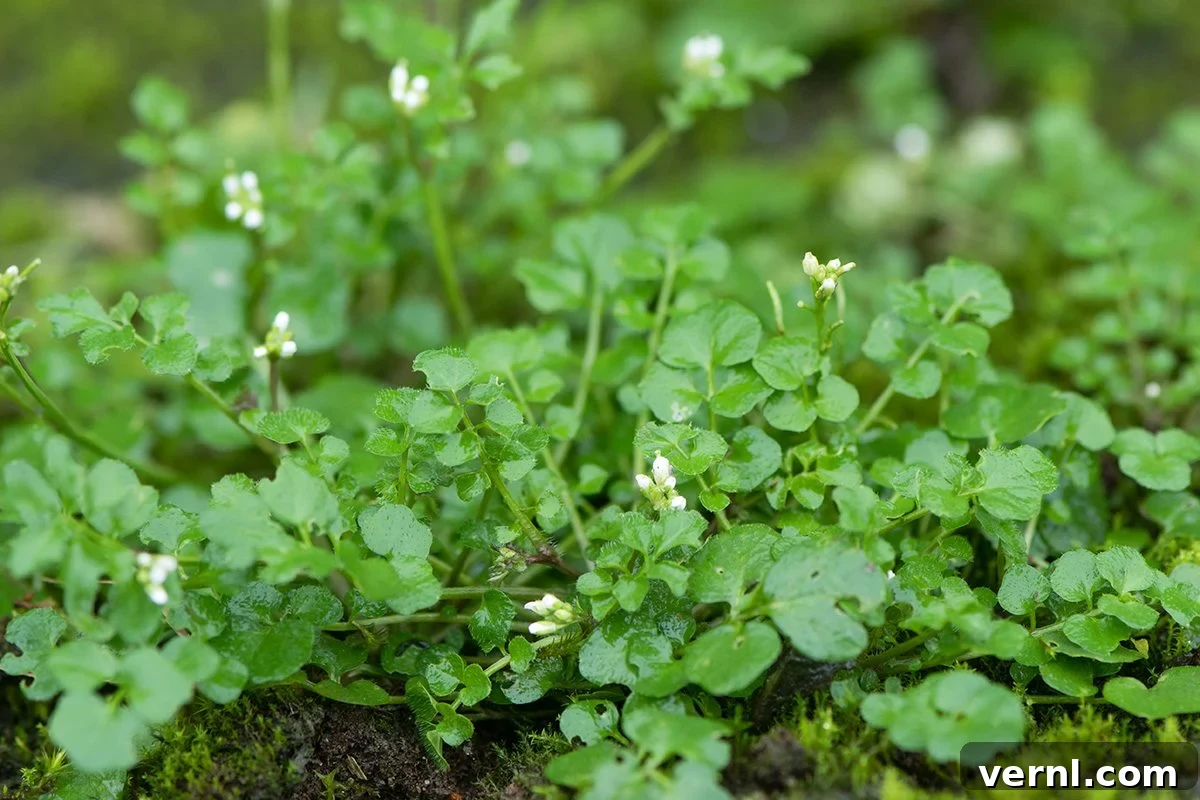
Hairy bittercress (Cardamine hirsuta) is a notorious cool-season annual weed that can quickly turn a pristine lawn into a battlefield if not properly managed. Its rapid growth and prolific seed production make it a formidable adversary for any homeowner striving for a lush, green turf. Fortunately, by implementing a combination of preventative measures and timely control strategies, you can effectively keep this superabundant spreader from overwhelming your landscape. We consulted with leading turfgrass and plant genetics experts to compile this comprehensive guide, offering their invaluable tips for both preventing and controlling hairy bittercress, ensuring your lawn remains vibrant and weed-free.
What Exactly Is Hairy Bittercress?
Hairy bittercress, scientifically known as Cardamine hirsuta, is a member of the mustard family (Brassicaceae). It’s a low-growing, fast-spreading annual weed often recognized by various common names such as Lamb’s cress, flickweed, spring cress, or wood cress. John D. Steiner, a seasoned lawn care professional, highlights that this plant thrives in cool, moist, and often shaded environments, making many residential lawns and garden beds ideal habitats.
Originally native to Europe and Western Asia, hairy bittercress has successfully naturalized across vast regions of North America, becoming a widespread nuisance. It flourishes in USDA plant hardiness zones 4 to 8, adapting well to a variety of climates. While it is primarily considered a winter weed, most prolific from late fall through early spring, its tenacious nature allows it to linger year-round when environmental conditions remain favorable, particularly in areas with consistent moisture and protection from intense summer heat.
Identifying Hairy Bittercress: What Does It Look Like?
Accurate identification is the first step in effective weed control. If you’re questioning whether the small, low-growing plants emerging in your lawn or garden are indeed hairy bittercress, pay close attention to its distinct features. Steiner explains that this plant typically forms a basal rosette, similar to a dandelion, from which its leaves and flower stalks emerge.
Its pinnately compound leaves are a key identifier, dividing into several smaller, rounded or kidney-shaped leaflets. These leaflets, often ranging from half an inch to one inch in size, create a distinctive appearance. As the plant matures, it produces delicate, small, white flowers, each featuring four petals typical of the mustard family. These flowers quickly develop into slender, elongated seed pods, technically known as siliques. Steiner notes, “These seed pods are the plant’s secret weapon, as they burst open explosively when mature, dispersing seeds over surprisingly long distances.” The flower stalks can reach heights of 3 to 9 inches, rising above the low-lying rosette of leaves.
Why Is Hairy Bittercress Such a Stubborn Problem?
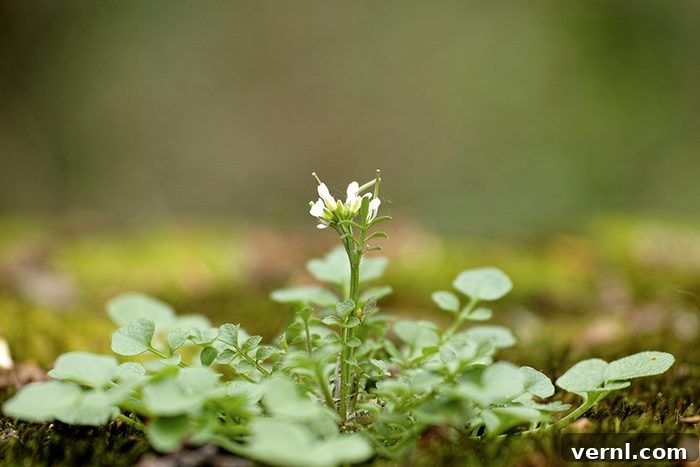
Understanding why hairy bittercress is so difficult to control is crucial for developing effective management strategies. Steiner emphasizes its “rapid lifecycle and high seed production” as primary culprits. “It can complete its entire life cycle in just a few weeks, allowing for multiple generations per year under favorable conditions,” he explains. This means that if left unchecked, a single plant can quickly lead to hundreds, if not thousands, of offspring within a single season. Adding to the challenge, even when conditions are less than ideal, the seeds of hairy bittercress can remain viable in the soil for several years, forming a persistent weed seed bank that makes complete elimination a long-term endeavor.
The plant’s reproductive strategy is truly remarkable and problematic. Each slender silique, or seed pod, can contain as many as 30 tiny seeds. When these pods mature, they are incredibly sensitive to touch or even slight environmental changes, triggering a forceful, explosive dehiscence that can eject seeds up to 16 feet away from the parent plant. This remarkable dispersal mechanism means that treating one patch of lawn doesn’t guarantee future freedom, as seeds can easily be flung from neighboring areas. Furthermore, these seeds have no dormancy requirements, meaning they can germinate almost immediately after dispersal if conditions are right. They rapidly reach maturity and begin reseeding within an astonishing five weeks, perpetuating the cycle of infestation with alarming efficiency.
Beyond its explosive spread, hairy bittercress also employs a stealthy method of propagation. Its small, sticky seeds readily cling to various surfaces—garden tools, containers, the underside of shoes, and even pet fur. This makes it incredibly easy for unsuspecting individuals to inadvertently transport seeds home from a nursery, a park, or even a simple riverside walk, introducing them to their own yard where they can establish new colonies unnoticed.
Proactive Prevention: How To Keep Hairy Bittercress Away
Prevention is often the most effective and least labor-intensive approach when dealing with aggressive weeds like hairy bittercress. By implementing a few simple, strategic measures, you can significantly reduce the likelihood of this weed establishing itself in your lawn or garden borders.
Cultivate a Thick, Resilient Lawn
A healthy, dense lawn is your best natural defense against weeds. Not only does a lush turf enhance your property’s aesthetic appeal, but it also creates an inhospitable environment for weed seeds. A thick canopy of grass effectively blocks out the sunlight that hairy bittercress seeds need to germinate, while strong grass roots compete aggressively for the space, water, and nutrients that young weed seedlings require.
Matthew Koch, a plant genetics expert, recommends using a high-quality 3-in-1 grass seed mix that combines seed, fertilizer, and soil improvers to help thicken existing turf and repair patchy areas. Beyond initial seeding, consistent lawn care practices are vital. Avoid overwatering, which creates the moist conditions hairy bittercress prefers. Instead, aim for deep, infrequent watering to encourage deeper root growth in your grass. Regular aeration of your soil is also beneficial; it helps break up compacted ground, improves drainage, and allows for better nutrient and oxygen penetration to grass roots. As Koch advises, “Since hairy bittercress thrives in damp conditions, addressing excess moisture through proper irrigation and aeration can make your lawn significantly less hospitable to it.”
Strategic Planting: Utilize Dense Ground Covers
For non-lawn areas of your landscape, such as flower beds, borders, or sloped areas, dense ground covers offer an excellent preventative solution. Selecting a low-maintenance, aggressively growing ground cover can effectively choke out unwanted weeds like hairy bittercress by denying them light and space. Varieties like creeping thyme, sedum, or even certain ivies can form a thick mat that prevents weed seed germination. Another highly effective option is to apply a deep layer (at least 2-4 inches) of coarse-textured organic mulch, such as wood chips, shredded bark, or pine needles, or an inorganic alternative like gravel. Mulch not only suppresses weeds but also helps retain soil moisture and moderates soil temperature, benefiting desirable plants.
Vigilance Against Nursery Plant Contamination
One of the easiest ways hairy bittercress can infiltrate your garden is through contaminated nursery plants or reused containers. Always make it a practice to thoroughly wash out any nursery pots or containers you plan to reuse to remove any lingering sticky seeds that might be hitchhiking. More importantly, before planting any new greenhouse-propagated plants into your garden soil, carefully inspect their existing soil for any signs of germinating hairy bittercress seedlings or even mature plants with seed pods. A quick visual check can save you significant trouble down the line.
Minimize Soil Disturbance
Understanding the concept of a “weed seed bank” is key to preventing future infestations. The soil beneath our feet often harbors countless dormant weed seeds, waiting for the right conditions to germinate. John Steiner recommends disturbing the soil only when absolutely necessary, whether through digging or tilling. “Disturbing the soil can bring buried seeds to the surface, exposing them to light and oxygen, which often triggers their germination,” he explains. Practicing no-till gardening or minimizing soil disruption helps keep these dormant seeds buried, reducing their chances of sprouting.
Effective Eradication: How To Get Rid of Hairy Bittercress
Despite your best preventative efforts, hairy bittercress might still establish itself. When that happens, a targeted approach is necessary. Here are proven methods for getting rid of this tenacious weed.
Pre-Emergence Control: Stopping Weeds Before They Start
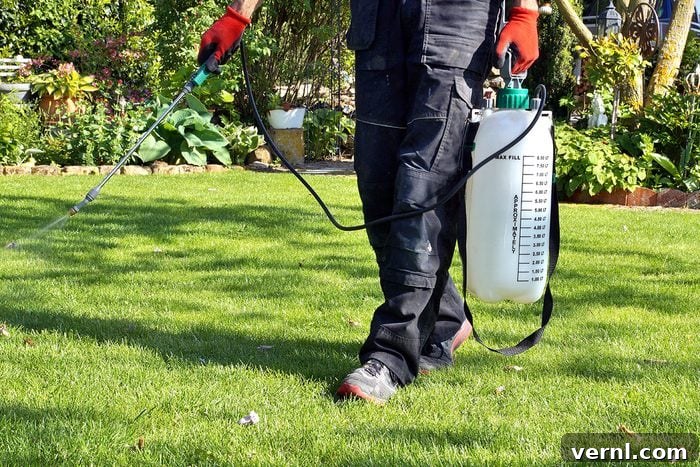
Pre-emergent herbicides are a cornerstone of effective weed management, especially for annual weeds like hairy bittercress. These products work by forming a chemical barrier in the soil that inhibits seed germination by interfering with the development of new root systems. Applying a pre-emergence weed control product in late summer or early fall is crucial for hairy bittercress, targeting the period when its seeds typically begin to germinate as temperatures cool. Professor Grady L. Miller, a Turfgrass Specialist, notes, “Several pre-emergent products, including those with active ingredients like dithiopyr, isoxaben, and oryzalin, have proven activity against hairy bittercress in turfgrass.” It’s imperative to read and follow all application instructions on the product label carefully, as timing, rates, and safety precautions vary. Remember, pre-emergents are preventive; they will not work on hairy bittercress plants that have already emerged and are actively growing.
Post-Emergence Control: Tackling Established Weeds
When hairy bittercress has already established itself in your lawn or garden, post-emergent herbicides are the solution. These products are designed to kill actively growing weeds. You can choose between selective herbicides, which target specific weed types (like broadleaf weeds) without harming desirable grasses, or non-selective options, which kill almost any plant they contact and are best reserved for spot treatment in non-lawn areas or complete bed renovation. Miller advises, “Effective post-emergent control for hairy bittercress can be achieved with several applications of mixtures containing active ingredients such as 2,4-D, carfentrazone, dicamba, MCPP, MCPA, and/or sulfentrazone.” He further adds that “other post-emergent options include atrazine/simazine (where appropriate and labeled for specific turf types), imazaquin, metribuzin, metsulfuron, and triclopyr (either alone or in combination with other broadleaf control products like fluroxypyr or 2,4-D).” The most effective time to apply these products is before the plant produces seeds, to prevent further spread. Always check the product label for specific application instructions, suitable turfgrass types, and any environmental precautions.
Manual Removal: The Hands-On Approach
For smaller infestations or those who prefer chemical-free solutions, manually pulling hairy bittercress is a viable, albeit more time-consuming, method. Its shallow root system makes it relatively easy to extract by hand or with simple weeding tools. This natural approach ensures no risk of damaging surrounding lawn or ornamental plants. John Steiner emphasizes that “hand-pulling is most effective in moist soil, as the roots can be easily extracted without breaking.” He also strongly recommends performing this task before the plants flower and set seeds, as even a few missed plants can quickly reseed an area. Regular patrols of your lawn and garden, especially in late winter and early spring, can help you catch and remove these weeds before they become a major problem.
Regular Mowing: A Simple Yet Effective Tactic
If you find yourself overwhelmed by a widespread infestation and manual removal seems daunting, don’t despair. Regular mowing can be a surprisingly effective part of your control strategy. Matthew Koch explains, “Regular mowing, performed before the plant flowers and definitely before its seed pods develop, prevents them from exploding and spreading seeds.” While mowing won’t kill existing plants, it will decapitate them, preventing them from completing their life cycle and contributing to the soil’s seed bank. Consistent mowing, especially in early spring, can significantly reduce the number of new hairy bittercress plants that emerge in subsequent seasons. Ensure your mower blades are sharp for a clean cut, promoting turf health.
Integrated Pest Management (IPM) for Long-Term Success
For the most effective and sustainable control of hairy bittercress, an Integrated Pest Management (IPM) approach is highly recommended. This involves combining several strategies rather than relying on a single method. By integrating robust cultural practices (like promoting a healthy lawn, proper watering, and aeration), preventative measures (pre-emergents, mulching, vigilance), and targeted interventions (manual pulling, post-emergents), you create a multi-layered defense. This holistic approach minimizes reliance on chemicals, reduces environmental impact, and provides a long-term solution for maintaining a weed-free and thriving landscape.
Frequently Asked Questions (FAQ)
Is Hairy Bittercress Poisonous to Animals?
Fortunately, hairy bittercress is not considered poisonous to animals. You don’t need to worry if your dog, cat, or pet rabbit nibbles on any untreated weeds appearing in your lawn or garden. In fact, the leaves of hairy bittercress are edible for humans and are sometimes gathered for culinary uses. They offer a mild, peppery flavor, making them a popular addition to salads and sandwiches, similar to watercress or arugula. However, always ensure any wild-harvested plants are free from pesticides or pollutants before consumption.
When is the best time to treat hairy bittercress?
The optimal time to treat hairy bittercress largely depends on the chosen method. For preventative pre-emergent control, late summer to early fall is ideal, as this targets the seeds before they germinate in cooler temperatures. For post-emergent control or manual removal, the best time is in late winter to early spring, when the plants are actively growing but critically, before they develop and explode their seed pods. Early intervention prevents thousands of new seeds from being released, breaking the weed’s life cycle. Regular monitoring during these cool seasons is key to timely treatment.
About Our Experts
- Matthew Koch is the distinguished Director of Biotechnology, Genetics, and Seed at Scotts, bringing a wealth of knowledge from his PhD in Plant Genetics and Breeding acquired at Rutgers University.
- John D. Steiner serves as a Regional Manager for NaturaLawn of America. He is a licensed and highly experienced lawn care professional with an impressive career spanning over 38 years in the industry.
- Grady L. Miller, PhD, holds the esteemed position of Professor and Extension Turfgrass Specialist within the Crop and Soil Sciences Department at North Carolina State University. His extensive research activities focus on critical areas such as cultivar evaluation, irrigation practices, turfgrass nutrition, and the meticulous maintenance practices required for athletic fields.