
The allure of an off-grid cabin is undeniable for many seeking solitude and self-reliance away from the hustle and bustle of city life. Yet, this romantic ideal can quickly lose its appeal without a fundamental element: a reliable and sustainable water source. Unlike urban or suburban homes, which benefit from integrated municipal water and sewage systems, providing water for a remote, off-grid cabin demands careful planning and innovative solutions. Understanding the intricacies of off-grid water systems, how they function, and the diverse options available is crucial for anyone embracing this sustainable lifestyle.
Mastering Off-Grid Water Systems for Your Remote Cabin
Understanding Off-Grid Water Sources
An off-grid water system encompasses both a fresh water supply and a waste water disposal mechanism, operating independently of the main electrical grid and municipal utilities. All off-grid setups fundamentally require a dependable source of clean water and an environmentally responsible method for managing dirty water. Typically, off-grid cabins draw their water from one of three primary sources: a drilled well, a nearby natural body of water like a lake or river, or collected rainwater.
Well Water: Tapping into Groundwater
If your off-grid cabin is situated on land with access to groundwater, a drilled well often represents the most robust and consistent water source. With a properly installed well and a fully integrated off-grid power system, your water setup can closely mirror that of a conventional, grid-connected home. This typically involves connecting a supply line from your drilled well to a submersible well pump, which efficiently pushes water into a pressure tank located within your cabin. From this central pressure tank, water can then be distributed throughout your plumbing system to every tap, shower, and toilet as needed. Key considerations for well water include the depth and yield of the well, the type of pump (AC pumps often require an inverter, while DC solar pumps can be highly efficient), and regular water testing to ensure potability. Proper well casing and sealing are essential to prevent contamination.
Lake or River Water: Utilizing Surface Sources
For cabins without suitable groundwater access but conveniently located near a lake or river, drawing water directly from these surface sources is a viable alternative, provided you have an off-grid power system. A robust intake pipe, typically of large diameter, coupled with a powerful jet pump, can effectively deliver water to your cabin using principles similar to a submersible well pump. However, accessing and utilizing natural bodies of water almost always necessitates obtaining permits from local, state, or provincial authorities. It is imperative to consult these regulatory bodies before installing any intake system to ensure compliance with environmental and water usage laws.
A critical aspect of using lake or river water, especially if intended for drinking or cooking, is comprehensive purification. This process usually begins with a primary pre-filter at the intake to remove larger debris like leaves, sediment, and aquatic organisms. Following this, the water needs to pass through a multi-stage filtration system, often including sediment filters and activated carbon filters, to remove smaller particles, odors, and chemical contaminants. Finally, a robust purification method, such as an ultraviolet (UV) light system or chlorine-based treatment, is indispensable for killing harmful microorganisms like bacteria, viruses, and parasites that could pose severe health risks.
Rainwater Harvesting: Capturing Nature’s Bounty
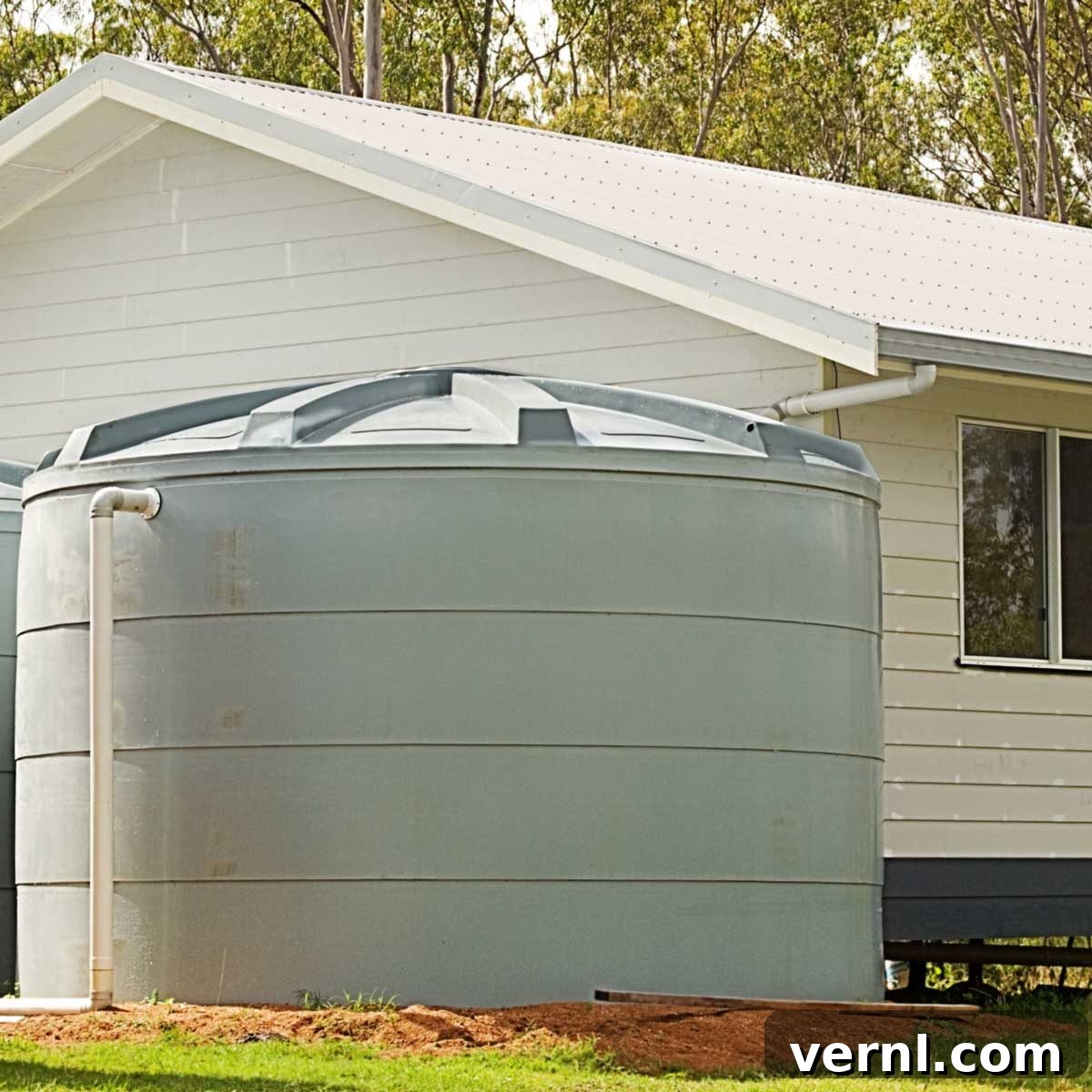
Rainwater collection offers a truly sustainable and independent water source, leveraging precipitation directly from your cabin’s roof. A basic rainwater harvesting system can be as straightforward as directing runoff from your roof gutters into a large water storage tank positioned at a higher elevation, allowing gravity to feed outdoor spigots. More sophisticated systems can incorporate pumps to pressurize an indoor plumbing network, mimicking a conventional household water supply. These advanced setups typically include first-flush diverters to remove initial roof contaminants, leaf screens, and fine filters before water enters the storage tanks.
Regardless of the system’s complexity, winterization is a critical consideration for rainwater harvesting in colder climates. Unless your supply lines are equipped with reliable heating cables or are buried below the frost line, pipes will inevitably freeze and potentially burst when temperatures consistently drop below 32 degrees Fahrenheit (0 degrees Celsius). For cabins used strictly as seasonal retreats, this means thoroughly purging all outdoor pipes and tanks of water at the end of autumn. If year-round use is planned, proactive measures such as insulation, heat tracing, and strategic pipe placement are vital to prevent frozen pipes. As with lake water, any collected rainwater intended for drinking or cooking must undergo a thorough filtration and purification system to eliminate airborne pollutants, bacteria, and other contaminants, ensuring it is safe for consumption. Rainwater harvesting also offers a fantastic pathway to becoming more self-sustaining.
Moving Water From the Source to the Off-Grid Cabin
To fully grasp the mechanics of off-grid water delivery, it’s helpful to briefly consider how water operates in a conventional, grid-connected environment. In typical urban residences, water supply lines are connected to an extensive network of underground pipes, carrying pre-treated, pressurized water from a municipal source. Rural grid-connected homes often rely on a drilled well as their primary water source. In both scenarios, these supply lines efficiently convey clean water under pressure to various fixtures throughout the home. Conversely, wastewater from sinks, toilets, and showers typically flows through drain pipes by gravity, eventually leading to municipal sewage systems or private septic tanks for treatment. A portion of the incoming water is also directed to a water heater, ensuring a ready supply of hot water.
For an off-grid cabin, the delivery of running water essentially boils down to two distinct approaches: utilizing an off-grid power system to drive pumps, or relying on manual, hand-powered methods.
Off-Grid Powered Water Supply: Modern Convenience
If your vision for off-grid living includes the convenience of modern indoor plumbing, complete with pressurized water at every tap, investing in a robust off-grid power setup is your best strategy. This typically involves a combination of renewable energy sources, such as photovoltaic (solar) panels and potentially a small wind turbine or micro-hydro system, coupled with a reliable battery bank and an inverter. While the initial investment for such a system can be substantial, it provides a consistent and dependable supply of grid-free electricity. Beyond the obvious benefit of avoiding monthly utility bills, this type of power system enables a continuous flow of water, entirely independent of public infrastructure.
The electricity generated powers your water pump—whether it’s a submersible pump in a well or a jet pump drawing from a surface source—which then pressurizes and delivers water directly into your cabin’s plumbing system. Modern off-grid water pumps are increasingly efficient, with many designed to operate directly on DC power from solar panels or batteries, optimizing energy consumption. Integrating a pressure tank ensures a consistent water pressure and reduces pump cycling, extending the lifespan of your system. Advanced systems can also incorporate smart controls for monitoring water levels, pump performance, and energy usage, ensuring seamless operation.
Hand-Powered Water Supply: Simplicity and Resilience
For those on a tighter budget, seeking a simpler approach, or desiring a resilient backup system, hand-powered water supply offers a practical solution. The level of “roughing it” is entirely up to your preference.
If your cabin has a drilled well, a hand-operated pump can be an invaluable asset. These pumps allow you to manually draw water from the well, either to fill buckets for carrying indoors or for direct use at an outdoor spigot. Some advanced hand pumps feature a threaded end and a built-in check valve, enabling them to temporarily pressurize a small indoor plumbing system. By connecting the hand pump to an outside tap with a hose, you can physically pump the handle until water fills and pressurizes your indoor water pipes. This method provides running water without electricity, albeit with a bit of physical effort—effectively combining your daily water supply with a healthy workout. Hand pumps are also excellent for emergency preparedness, ensuring water access even if your primary powered system fails.
Dealing with Waste Water: Sustainable Solutions
Unlike water supply, waste water disposal generally does not rely on electricity, whether you’re living on or off the grid. For off-grid cabins, the most common and legally compliant approaches typically involve either a septic system or a gray water pit, depending on the type of waste being managed.
Septic Systems: Comprehensive Waste Treatment
If your water system includes a conventional indoor flush toilet, you will almost certainly be legally required to install a septic system. Local regulations universally deem gray water pits insufficient for the safe and effective breakdown of human waste, often referred to as “black water.” A septic system consists of a septic tank and a drain field (also known as a leach field). Wastewater flows from the cabin into the septic tank, where solids settle to the bottom, forming sludge, and lighter materials like oils and grease float to the top, forming scum. Anaerobic bacteria in the tank begin to break down the organic matter. The liquid effluent then flows out of the tank and into the drain field, a network of perforated pipes buried in gravel trenches, where it is further treated by soil microbes before percolating into the ground. Proper sizing of the septic system based on the cabin’s occupancy and a percolation test of the soil are critical for its long-term efficiency and to prevent environmental contamination. Regular maintenance, including periodic pumping of the septic tank, is essential.
Gray Water Systems: Reusing Non-Hazardous Wastewater
For those planning to use a composting toilet or an outhouse, a gray water pit offers a simpler, more environmentally friendly alternative for managing non-toilet wastewater. Gray water is defined as wastewater from sinks (excluding kitchen sinks if they handle grease and food particles), showers, and laundry. Properly designed and maintained gray water systems can effectively filter and disperse this water, often for landscape irrigation. These systems typically involve collecting gray water in a small tank, passing it through a simple filter (like a mesh screen or gravel bed) to remove lint and hair, and then directing it to a dispersal field, usually an underground network or mulch basin, where it can slowly seep into the soil. Gray water is a valuable resource that can reduce your overall water consumption and fertilize plants, but it must never be used for irrigating edible crops that are eaten raw or come into direct contact with the water. Always ensure your gray water system complies with local health and environmental regulations regarding its location, design, and use.
The Black Water Challenge: Why Separation is Key
It’s crucial to understand the distinction between gray water and black water. Black water is wastewater containing human waste from toilets, and occasionally kitchen sink water with food particles and grease. This type of wastewater carries a higher pathogen load and requires rigorous treatment, typically through a septic system or connection to a municipal sewer. Separating black water from gray water allows for more efficient and less resource-intensive treatment of gray water, maximizing water conservation efforts.
Off-Grid Toilet Solutions
No comprehensive discussion of off-grid water systems would be complete without addressing toilet facilities. Several practical approaches cater to various needs, budgets, and levels of desired convenience.
Conventional Flush Toilets: The Familiar Choice
If your off-grid cabin is equipped with a full off-grid power system and a legally compliant septic system, you can comfortably install a regular flush toilet. Your electric water pump will efficiently pressurize the system, ensuring that water is readily available to refill the toilet tank and facilitate flushing as needed. This option provides the most seamless transition from grid-connected living, offering familiar comfort and hygiene.
Composting Toilets: Waterless and Resourceful
For those with an off-grid power system but a desire to avoid the complexities and maintenance of a septic system, a composting toilet presents an excellent, waterless alternative. These ingenious devices convert human waste into nutrient-rich compost, without consuming a single drop of water. Composting toilets utilize a small, self-contained chamber located directly beneath the toilet bowl where the decomposition process occurs. Most models require minimal amounts of electricity to operate a small fan for ventilation, which aids in evaporating liquids and managing odors, and sometimes to power a small agitator that mixes the compostable material. This internal, aerobic composting process means that composting toilets have no direct impact on groundwater, making them an environmentally sound choice. They require the addition of a carbon-rich material, such as sawdust or peat moss, to facilitate the composting process and control odors. The resulting compost can often be safely used in non-edible landscaping.
Propane-Powered Incinerating Toilets: Compact and Hygienic
Another innovative waterless approach to waste management is the incinerating toilet. These units operate using small amounts of electricity to power fans and controls, but primarily rely on liquefied petroleum gas (LPG) or natural gas to incinerate all human waste at high temperatures. The result is a sterile, odorless ash that is minimal in volume and easy to dispose of. Incinerating toilets are compact, require no plumbing or water, and are highly hygienic, making them suitable for tiny cabins or remote locations where water is extremely scarce or traditional waste disposal is impractical. However, they do consume fuel (propane) and require proper ventilation to safely vent exhaust gases, which must be factored into their operating cost and installation.
Outhouses and Pit Latrines: The Traditional Solution
For cabins without running water or those seeking the ultimate in simplicity and self-reliance, there is no shame in embracing the time-honored tradition of an outhouse or pit latrine. These structures are relatively easy and inexpensive to build, environmentally friendly when properly maintained, and virtually unbreakable. An outhouse consists of a simple structure enclosing a seat positioned over a deep pit. The waste decomposes naturally in the pit over time. If you opt for an outhouse, thorough research into local regulations is paramount. These laws often dictate specific requirements regarding the outhouse’s location, minimum distances from water sources like wells, lakes, and rivers (especially those fed by groundwater), property lines, and dwellings to prevent groundwater contamination and ensure public health.
Choosing Your Sustainable Water System: A Holistic Approach
Establishing a reliable and sustainable water system is perhaps the most critical component of successful off-grid living. The ideal solution for your cabin will depend on a multitude of factors, including your location’s climate and geology, the availability of natural water sources, your energy budget, desired level of convenience, and local regulatory requirements. Careful planning, diligent research, and a commitment to sustainable practices are essential for creating an off-grid water system that provides both comfort and peace of mind. By thoughtfully integrating water supply, purification, and waste management solutions, you can truly embrace the independence and tranquility that an off-grid cabin lifestyle promises.