
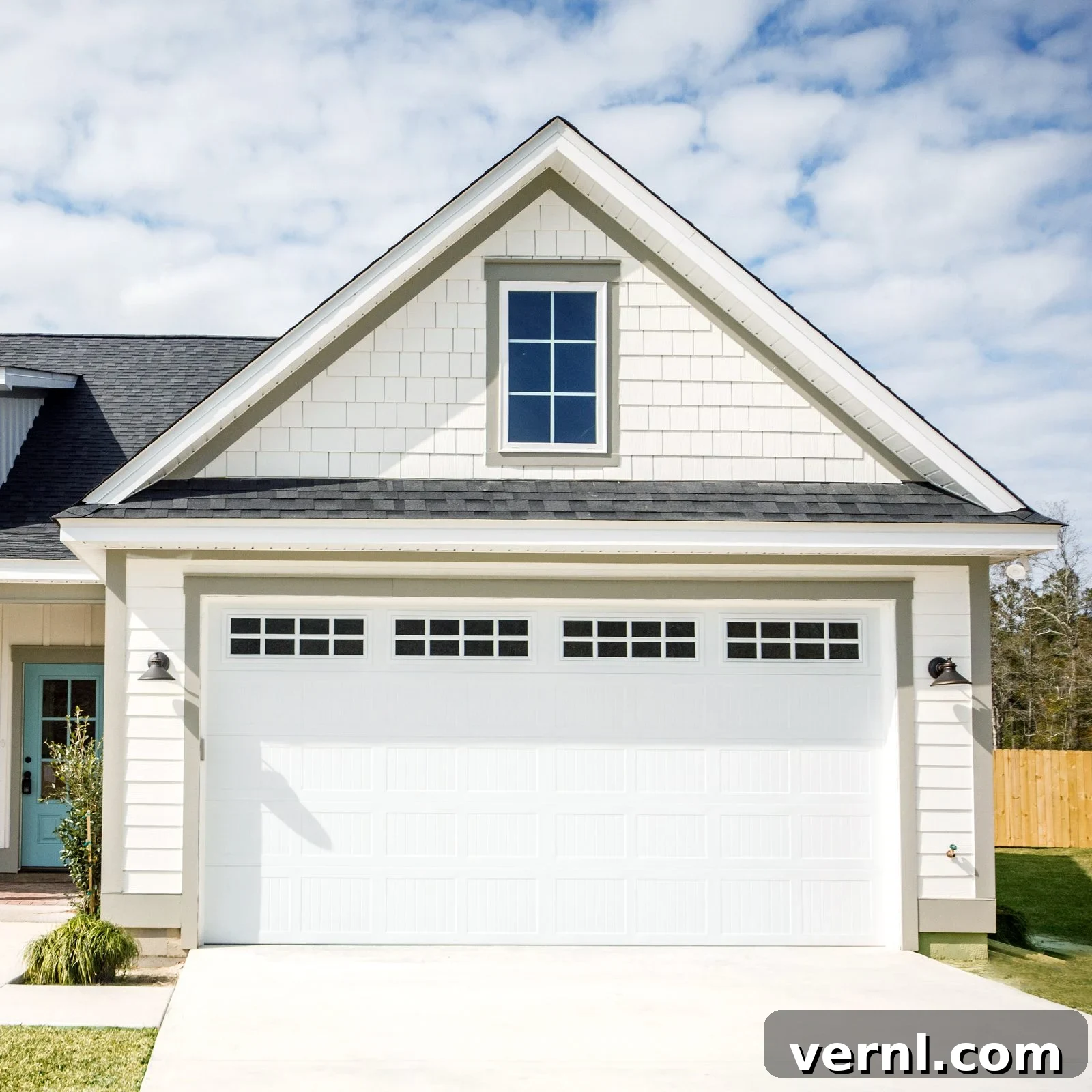
Quick: What’s the largest moving object in the typical home? If you guessed a garage door, you’re absolutely right. This often-overlooked component is not just a gateway for your vehicles; it’s a critical element of your home’s security, energy efficiency, and curb appeal. Given its size, complexity, and frequent use, the garage door experiences significant wear and tear, making proper maintenance not just a recommendation but a necessity.
As Randy Swigert of Tri City Garage Doors in Greeley, Colorado, emphasizes, “It gets heavy use, has a lot of moving parts and can be expensive to replace.” He further notes the substantial cost involved, with a basic 16- x 7-ft. non-insulated door costing around $2,000 with installation, and an insulated door of the same dimensions reaching approximately $2,400, depending on your market. These figures underscore the significant investment a garage door represents.
Considering these costs, it becomes imperative for homeowners to prioritize the care and upkeep of their garage doors. Proactive maintenance can extend its lifespan, prevent costly repairs, enhance safety, and maintain its aesthetic appeal. Ignoring regular maintenance can lead to premature failure, unexpected expenses, and even safety hazards. From simple adjustments to more complex inspections, there are several straightforward steps you can take to properly maintain your garage door, ensuring it operates smoothly, safely, and efficiently for years to come. Here are eight essential tips to keep your garage door in top condition.
Limit Excessive Use
Many homeowners with an attached garage develop a habit of entering and exiting their home almost exclusively through the garage door. While convenient, this practice can put undue strain on your garage door system, significantly shortening its lifespan. Think of your garage door as a workhorse with a finite number of cycles.
Dave Krzyzak of Palm Valley Garage Doors in Goodyear, Arizona, strongly advises, “Go through your house doors more often.” He recounts amusing conversations with customers who, when prompted to use their house key, respond with a smile and a question: “What’s a house key?” This anecdote highlights how deeply ingrained the habit of garage door entry has become for many.
The impact of frequent use is substantial. Krzyzak explains, “The garage door typically has five to 10 up-down cycles a day. At 10 cycles daily, you may have to replace the springs every 2-1/2 years. But if it’s two cycles a day, spring replacement may be every seven or eight years.” Garage door springs are under immense tension and are rated for a certain number of cycles. Exceeding this limit prematurely wears them out, leading to costly and often inconvenient replacements. By consciously choosing to use your home’s main entry points more often, you can dramatically reduce the workload on your garage door, preserving its critical components and saving money in the long run.
Schedule Regular Inspections
One of the biggest oversights homeowners make is neglecting their garage door until a significant, and often costly, problem arises. As Dave Krzyzak wisely points out, “People tend to overlook their garage door until there is a major problem that’s costly to fix.” He draws a parallel to car maintenance, noting, “They don’t think twice about scheduling an oil change for their car, and they should do the same for their garage door.” (For troubleshooting, explore reasons for your garage door not opening.)
Regular inspections are key to identifying minor issues before they escalate into major failures. Homeowners should aim to perform a thorough visual inspection at least twice a year. During this DIY check, examine the door panels for damage, hinges for signs of bending or rust, pulleys for wear, rollers for smooth movement, and cables and springs for fraying or corrosion. Look for any loose hardware or unusual noises during operation. Beyond your personal checks, it’s highly beneficial to periodically book a professional inspection with a certified garage door specialist. These experts possess the tools and knowledge to spot subtle issues, assess spring tension, lubricate hard-to-reach parts, and adjust components that might be misaligned. A professional inspection typically costs around $70 per door, a small investment considering the potential savings from preventing major repairs down the line.
Clear Tracks and Tighten Hardware
The smooth operation of your garage door heavily relies on clean, unobstructed tracks and secure hardware. Over time, debris such as dirt, leaves, small stones, and even cobwebs can accumulate in the tracks on both sides of the garage door, impeding the rollers’ movement. Begin by thoroughly cleaning these tracks, ensuring they are free from any obstructions. You can use a damp cloth or a vacuum cleaner for this task. Additionally, inspect the brackets that hold the tracks to the wall and ceiling, as well as the fasteners securing the garage door opener unit.
The constant vibration from the door’s movement can gradually loosen bolts and fasteners, compromising the system’s stability. Use a socket wrench to meticulously tighten any loose hardware you find. This simple step can prevent serious issues like track misalignment or even the door coming off its tracks. However, a crucial safety warning from Dave Krzyzak is paramount: “With garage doors, you shouldn’t touch anything that requires special tools.” He specifically cautions against tinkering with “red nuts and bolts on garage doors,” explaining, “Some of them end up in a hospital because the red is a danger warning.” These red-marked components often relate to the highly tensioned springs, which can cause severe injury if improperly handled. Always defer to a professional for any work involving these critical, high-tension parts.
Lubricate Moving Parts Regularly
Proper lubrication is essential for the smooth, quiet, and efficient operation of your garage door. Moving parts such as rollers, hinges, and springs generate friction, which can lead to wear, corrosion, and increased strain on the garage door opener. Regular lubrication significantly reduces this friction, extending the lifespan of these components and ensuring your door glides effortlessly.
At least twice a year, apply a high-quality spray lubricant specifically designed for garage doors to the rollers, hinges, and the bearing plates at the ends of the torsion spring shaft. After application, wipe off any excess lubricant to prevent it from attracting dust and grime. Dave Krzyzak notes the common problem of noise due to accumulated dust: “Dust collects and builds up on parts, creating noise.” He suggests using the original version of WD-40 for breaking down existing gunk, which helps in cleaning and prevents rust and corrosion. He asserts, “In my 20 years in the industry, I have found WD-40 works best” for this initial cleaning and rust prevention. However, for long-term lubrication, many professionals recommend silicone-based sprays or white lithium grease, which provide a more lasting film without attracting as much dirt. Remember not to lubricate the tracks themselves, as this can cause dirt and debris to stick and impede roller movement.
Test the Door Balance
The springs of your garage door play a critical role in balancing its weight, allowing it to open and close smoothly with minimal effort from the opener. An unbalanced garage door forces the opener to work much harder, leading to premature wear and significantly shortening its lifespan. Moreover, an unbalanced door can pose a safety risk, as it may unexpectedly fall or operate erratically.
Testing your garage door’s balance is a simple yet crucial maintenance step. Here’s how to do it: First, close the garage door completely. Then, pull the emergency release handle (usually a red cord), which disengages the automatic opener from the door. Now, manually lift the door until it’s about halfway open. Randy Swigert explains the expected behavior: “The door should not go up or down more than a foot, and then remain in place without help.” If the door slowly creeps up or down, it indicates that the door is not properly balanced, or its springs are worn and have lost their tension. An unbalanced door requires immediate attention. Due to the extreme tension under which garage door springs operate, adjusting or replacing them is extremely dangerous for untrained individuals. If your balance test reveals an issue, it’s imperative to call a professional garage door technician to assess and repair the springs safely and correctly.
Test the Auto Reverse Safety Feature
The auto-reverse safety feature is perhaps the most critical component of a modern garage door system, designed to prevent serious injury or damage. This vital mechanism forces the garage door to quickly reverse direction if it detects an obstacle in its path, such as a child, pet, or vehicle. This feature is typically activated by one of two systems: a pressure sensor built into the bottom edge of the door or photoelectric sensors mounted on each side of the door frame.
It is crucial to test your auto-reverse system monthly to ensure it’s functioning correctly. To test the pressure sensor, place a 1-1/2-inch thick block of wood (or a roll of paper towels) flat on the floor directly under the center of the garage door. Activate the door to close. The door should strike the object and reverse its direction within two seconds. To test the photoelectric system, which typically consists of two sensors mounted four to six inches above the floor on each side of the garage door frame, start the door downward. As it descends, briefly move your leg or a cardboard box into the door’s path, breaking the light beam between the sensors. The door should immediately reverse and move upwards. If either of these tests fails, disconnect the garage door opener immediately and call a professional technician for repair. Older garage door openers that lack this essential safety feature — now mandated by building codes in many areas — should be replaced without delay to ensure the safety of your household.
Replace Worn Weatherstripping
The weatherstripping along the bottom and sides of your garage door serves multiple critical functions: it acts as a barrier against cold drafts, prevents water infiltration, keeps out debris, and deters pests from entering your garage. This seemingly minor component plays a significant role in your home’s energy efficiency and overall cleanliness. Weatherstripping, typically made of rubber or vinyl, is readily available at hardware and big-box home improvement stores.
For most modern metal garage doors, the bottom weatherstripping has a flange that slides into a groove on the bottom edge of the door, making it relatively easy to replace. Weatherstripping for wood garage doors, however, is often nailed in place. Inspect your bottom weatherstripping regularly for signs of tearing, cracking, or flattening. If it’s badly worn or damaged, it won’t seal properly, allowing drafts and moisture to penetrate. Similarly, check the weatherstripping along the sides and top of the door frame (often called “garage door stop molding”) for looseness or damage. Reattach any loose sections or replace them entirely if they are badly worn. Replacing deteriorated weatherstripping is a straightforward and inexpensive repair that yields substantial benefits in terms of comfort, energy savings, and protection for your garage contents.
Clean and Protect with Paint
Your garage door is one of the largest and most visible components of your home’s exterior, constantly exposed to the elements, including harsh sun, rain, wind, and temperature fluctuations. Protecting and preserving its surface is vital for both its appearance and longevity. Different garage door materials require specific care routines.
For steel garage doors, regularly inspect for rust spots. When found, sand them down thoroughly, apply a rust-inhibiting primer, and then paint over with exterior-grade paint matching your door’s color. Fiberglass doors are relatively low maintenance; a simple wash with an all-purpose cleaner is usually sufficient to keep them looking good. Wood garage doors, while offering a classic aesthetic, are particularly susceptible to warping and water damage. For wood doors, it’s crucial to regularly inspect for chipped, peeling, or faded paint or stain. Before sanding and painting, remove all loose paint, clean the surface, and ensure it’s completely dry. Applying a fresh coat of high-quality exterior paint or stain not only enhances curb appeal but also seals and protects the wood from moisture and UV degradation. Dave Krzyzak emphasizes the importance of this in challenging climates: “Here in Arizona’s sun and heat, you have to regularly treat garage doors.” He warns that even a “new high-end, $10,000 cedar overlay door, within six months without treatment it can look like it’s 15 years old.” Regular cleaning and painting are therefore essential investments in maintaining your home’s appearance and the structural integrity of your garage door.