
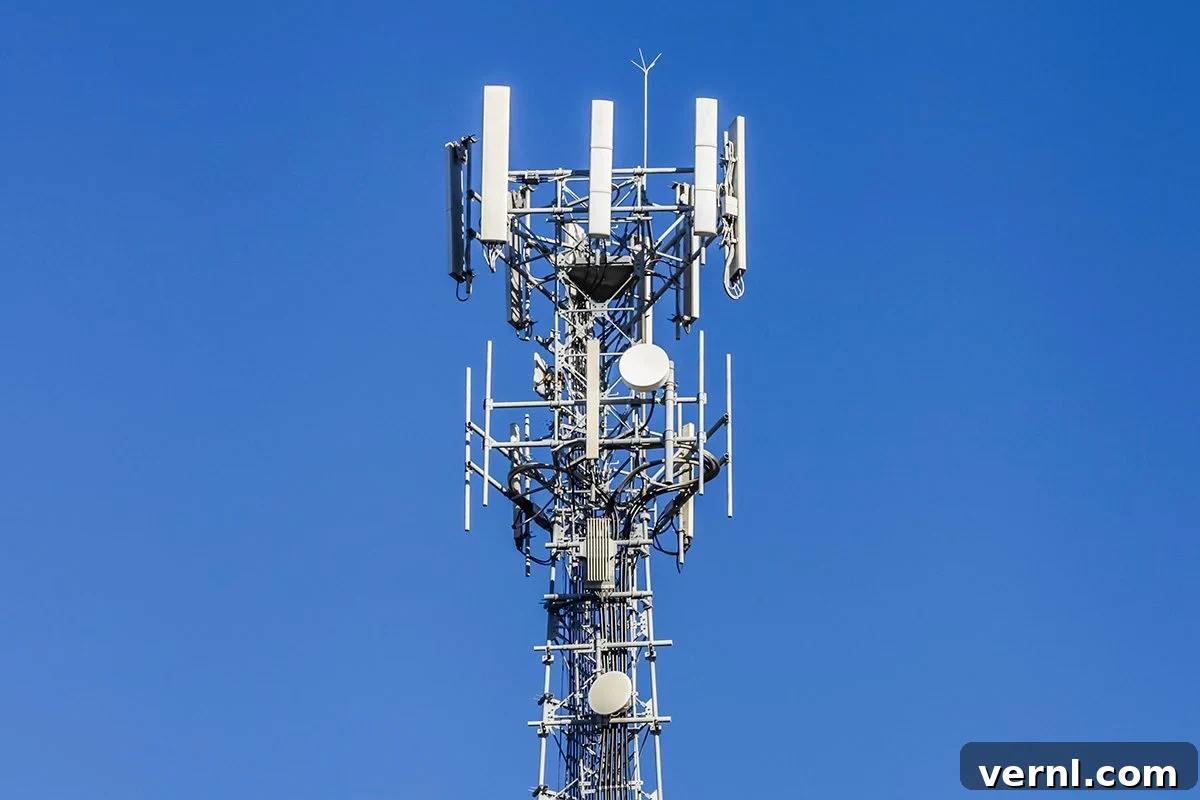
As American households grapple with the relentless pressure of inflation and escalating living costs, the search for smarter, more economical solutions for essential services has intensified. Among the various strategies for cost-cutting, cellular home internet has emerged as a compelling and increasingly popular alternative. This innovative internet solution promises adequate speed and reliability, often at a significantly lower monthly rate compared to traditional cable or fiber optic services.
The growing satisfaction with this alternative is not just anecdotal. The 2024 J.D. Power ISP Satisfaction Study offers compelling evidence, revealing that customers utilizing cellular internet report higher levels of satisfaction concerning both service quality and plan affordability. This positive sentiment stands in stark contrast to the experiences of those subscribed to conventional cable or fiber connections.
But what exactly is cellular home internet, and is it the right choice for your household? To help demystify this evolving technology, we’ll delve into its mechanics, benefits, drawbacks, and the landscape of available providers, with expert insights from engineer and tech enthusiast Nate Sumner.
Understanding Cellular Home Internet: The Wireless Revolution

Cellular home internet, often referred to as fixed wireless internet, represents a significant departure from traditional wired broadband. Instead of relying on underground cables or overhead wires, it harnesses the same robust cellular networks that power our smartphones. “The carriers provide a 5G Gateway to pick up the cellular signals and provide ethernet and Wi-Fi to your home, similar to what you would get from a cable or fiber provider,” explains Nate Sumner. This gateway acts as the central hub, translating cellular signals into a usable internet connection for all your devices.
Unlike standard wired connections that require extensive infrastructure leading directly to your home, most cellular internet companies equip customers with a dedicated device that seamlessly functions as both a modem and a router. This all-in-one solution typically comes at no extra cost, simplifying setup and reducing the need for multiple pieces of equipment. The technology primarily leverages advanced 4G LTE and, increasingly, 5G networks, enabling high-speed data transmission over the airwaves.
The core concept is to provide a fixed internet connection to a stationary location (your home) using wireless cellular technology, effectively bringing the power of mobile networks to your living room. This is different from a mobile hotspot, which is designed for on-the-go connectivity and often has data caps or slower speeds when used extensively for home internet.
Cellular Internet vs. Cable and Fiber: A Comparative Analysis
While all three technologies aim to deliver internet service, their underlying mechanisms and delivery methods create distinct differences. Cable internet transmits data through coaxial cables, while fiber optic internet utilizes light pulses through glass strands, offering incredibly fast and stable connections. Cellular internet, conversely, operates purely wirelessly, beaming signals from nearby cell towers.
One of the most significant differentiators lies in availability, especially in underserved regions. Cable and fiber internet expansion is a labor-intensive and costly endeavor, requiring physical infrastructure installation. This often makes it economically unfeasible for providers to extend these services to sparsely populated or geographically challenging rural areas. Cellular internet, leveraging existing mobile tower infrastructure, bypasses these connectivity challenges, making it much more widely accessible in such locations.
Another key distinction is the setup process. Installing cable or fiber internet typically involves scheduling a technician visit to run a service line to your home, which can take time and often incurs installation fees. Cellular internet, on the other hand, boasts a significantly quicker and simpler setup. Often, it’s a “plug-and-play” experience: you receive your gateway device, plug it in, and connect to the internet within minutes, without the need for professional installation.
However, it’s important to acknowledge that cable and fiber services generally hold an edge in terms of raw speed and consistent reliability once their wired connections are established. They are less susceptible to environmental factors or network congestion that can sometimes affect wireless signals.
The Pros and Cons of Embracing Cellular Home Internet
Like any technology, cellular home internet comes with its own set of advantages and disadvantages. Understanding these can help you determine if it aligns with your specific internet needs and budget.
Advantages (Pros)
- Budget-Friendly Pricing: One of the most compelling reasons to consider cellular internet is its affordability. Monthly costs typically range from $50 to $70, and many providers offer little to no startup or equipment fees. In contrast, cable and fiber plans can range from $50 to $110 per month, often with additional charges for equipment rental and professional installation. “Fixed wireless is rapidly growing and competitive, so carriers often have deals, price locks, and other benefits for new customers, so it can often be one of the cheaper internet options for users,” notes Sumner, highlighting the attractive promotional offers frequently available. This transparency in pricing can lead to significant long-term savings.
- Bridging the Rural Digital Divide: For millions of Americans living outside urban and suburban centers, broadband options have historically been limited or non-existent. Cellular internet is a game-changer for these rural homes, providing reliable internet access in many areas where cable or fiber infrastructure simply isn’t present or economically viable for traditional providers. This accessibility empowers rural communities with essential connectivity for education, remote work, telemedicine, and entertainment.
- Effortless and Rapid Setup: The installation process for cellular internet is remarkably straightforward. “Cable and fiber require a physical wired connection from the carrier to your house, so, generally, fixed wireless is quicker to deploy, especially in rural areas,” Sumner explains. There’s no need to wait for technicians, dig trenches, or drill holes. Users typically receive a self-install kit with a simple gateway device that they plug into an outlet. The device then automatically connects to the nearest cell tower, often providing service within minutes of unboxing.
- Flexibility and Portability: While designed for fixed home use, the wireless nature of cellular internet gateways often offers a degree of flexibility. You can usually move the gateway to different rooms within your home to optimize signal strength without calling a technician. In some cases, if allowed by the provider’s terms, you might even be able to take your internet service with you if you move within the same coverage area, though this varies by provider and plan.
Disadvantages (Cons)
- Comparatively Slower Peak Speeds: While perfectly adequate for most typical household activities, cellular internet generally cannot match the blistering peak speeds offered by high-tier cable or fiber plans. While some cellular 5G home internet plans advertise theoretical top speeds of up to 1 Gbps (1,000 Mbps), most users will experience speeds ranging from 50 to 400 Mbps. Fiber, on the other hand, can consistently deliver multi-gigabit speeds. For households with extreme demands, such as professional gamers, large families with simultaneous 4K streaming, or those regularly uploading large files, this speed difference might be noticeable.
- Network Deprioritization: A crucial factor to understand is deprioritization. “The carriers put the [fixed wireless plans] as lower priority data on their network so that means there is a chance your home internet slows down when the cell network is busy (typically weekday evenings),” Sumner highlights. This means that during peak usage times, such as evenings or weekends when many people are using their mobile phones and fixed wireless connections, your home internet speeds might temporarily decrease as the network prioritizes mobile traffic. While often manageable, this can be frustrating during critical activities like video conferencing or online gaming.
- Signal Reliability and Interference: Since cellular internet relies on wireless signals, its performance can be influenced by factors like your home’s distance from the nearest cell tower, the presence of physical obstructions (buildings, dense foliage), and even severe weather conditions. Signal strength can vary within your home, requiring optimal placement of the gateway device. Unlike a wired connection, wireless signals are also more susceptible to interference from other wireless devices or electromagnetic sources.
- Latency Fluctuations: While speeds refer to how much data can be transferred, latency (or ping) refers to the delay before a transfer of data begins. Cellular internet can exhibit higher and more variable latency compared to wired connections. This isn’t usually an issue for browsing or streaming, but it can impact real-time applications like competitive online gaming or very sensitive video conferencing, where even milliseconds of delay can be noticeable.
Leading Cellular Internet Service Providers
The market for wireless home internet is dynamic, with major carriers actively competing for subscribers. While specific prices and speeds can vary based on location and promotional offers, here’s an overview of some key providers. Note that the prices listed below are typical base rates and may not reflect discounts available for bundled services, which can often lead to further savings.
T-Mobile 5G Home Internet
As a pioneer in 5G home internet, T-Mobile offers a compelling package for many households. Customers can expect speeds up to 415 Mbps for a monthly cost typically ranging from $50 to $70. T-Mobile emphasizes simple, transparent pricing with no annual contracts, hidden fees, or equipment rental charges. Its extensive 5G network coverage makes it a viable option for many urban, suburban, and even some rural areas.
Verizon 5G Home Internet
Verizon leverages its robust 5G Ultra Wideband network to deliver high-speed home internet. For $50 to $70 per month, Verizon 5G Home Internet can offer impressive speeds, sometimes reaching up to 1 Gbps (1,000 Mbps) in areas with strong Ultra Wideband coverage. Verizon often provides competitive bundles with its mobile phone plans, offering additional discounts. Availability for their top-tier 5G Home Internet is concentrated in areas where their high-capacity 5G network is fully deployed.
Verizon LTE Home Internet
For rural customers or those in areas where Verizon’s 5G Home Internet isn’t yet available, Verizon’s 4G LTE Home Internet serves as a crucial alternative. Priced typically between $60 and $80 per month, this service offers speeds up to 50 Mbps. While not as fast as 5G, 50 Mbps is perfectly sufficient for many common internet activities, including streaming HD video, browsing, and video calls, making it a lifeline for areas with limited broadband options.
AT&T Internet Air
AT&T has entered the fixed wireless market with AT&T Internet Air, utilizing its strong 5G and 4G LTE networks. Customers can generally expect speeds up to 300 Mbps for a monthly fee around $60. AT&T often provides a straightforward pricing model with included equipment and competitive offers for existing AT&T mobile customers. Their service aims to provide reliable internet where traditional AT&T fiber or DSL might not be the best fit.
Is Cellular Internet the Right Choice for Your Home? Key Considerations
Deciding if cellular home internet is suitable for your household involves weighing your specific needs against the service’s capabilities. It stands out as an excellent solution for two primary scenarios:
- For Cost-Conscious Households: If your primary goal is to significantly lower your monthly internet costs without sacrificing essential connectivity, cellular internet is a strong contender. Its competitive pricing and often minimal upfront costs make it an attractive alternative to more expensive cable or fiber plans, especially if you find yourself overpaying for speeds you don’t fully utilize.
- For Those in Underserved Areas: For individuals and families residing in regions without access to reliable cable or fiber service, cellular internet can be a transformative solution. It effectively bridges the digital divide, offering high-speed connectivity where none existed before. “For some users (like me) with no other broadband options and semi-poor cell signal inside my house, I went from DSL service as my only real option to now having fast AT&T, Verizon and T-Mobile fixed wireless at speeds up to 1 Gbps download and 150Mbps upload,” shares Nate Sumner, illustrating its potential to drastically improve internet experiences in challenging locations.
Consider your internet usage habits. If your household primarily engages in web browsing, email, social media, streaming HD video, and occasional video calls, the speeds offered by cellular internet are likely more than sufficient. However, if you are a heavy online gamer, regularly download very large files, or have multiple users simultaneously streaming 4K content, you might need to assess if the available speeds and potential for deprioritization meet your demands.
Frequently Asked Questions (FAQ) About Cellular Internet
Why aren’t cellular internet providers available in my area?
Cellular internet relies on proximity to cellular towers and available network capacity. If you live in an area with very low population density, extreme or challenging terrain (like mountains or dense forests) that obstructs signals, or if the local cell towers are already at maximum capacity serving mobile users, providers may not offer fixed wireless service. Coverage maps are constantly expanding, so it’s always worth checking periodically.
Why is my cellular internet so slow?
Several factors can contribute to slow cellular internet speeds. The most common include:
- Network Congestion: During peak hours (evenings, weekends), high usage by both mobile and fixed wireless customers can lead to deprioritization and slower speeds.
- Router Placement: The gateway device’s position within your home is crucial. Placing it near a window, away from obstructions, and on a higher shelf can significantly improve signal reception.
- Distance and Terrain: Being far from the nearest cell tower or having hills, buildings, or dense foliage between your home and the tower can weaken the signal.
- Internal Interference: Other wireless devices, thick walls, or large appliances can interfere with the Wi-Fi signal broadcast by your gateway.
Is cellular internet good for gaming?
While cellular internet can be sufficient for some gaming activity, especially casual gaming, it generally has higher and more variable latency (ping) compared to wired connections. This can be problematic for competitive online multiplayer games where split-second reactions are crucial. “Just like the speed, latency can be hit or miss with fixed wireless,” Sumner explains. “That being said, there are many folks using fixed wireless and do online gaming regularly.” For serious gamers, a dedicated wired connection (fiber or cable) is usually preferred, but for many, cellular internet provides an acceptable gaming experience.
What equipment do I need for cellular home internet?
Typically, you only need one device: a 5G or 4G LTE gateway (often called a ‘home internet gateway’ or ‘router’) provided by your chosen carrier. This all-in-one device combines the functions of a modem and a Wi-Fi router, connecting directly to the cellular network and broadcasting a Wi-Fi signal throughout your home. In most cases, this equipment is included with your plan and doesn’t require a separate purchase or rental fee.
Is cellular internet truly unlimited, or are there data caps?
Most major cellular home internet providers, such as T-Mobile and Verizon, advertise “unlimited data” plans for their fixed wireless services. However, it’s crucial to read the fine print. While data caps are rare for these specific home internet plans, the concept of “deprioritization” (discussed above) means that your speeds might be throttled during network congestion, even if you have unlimited data. This isn’t a data cap in the traditional sense, but it can feel similar during peak times. Always confirm the specifics with your chosen provider.
About the Expert
Nate Sumner is an accomplished engineer and the engaging host of the Nater Tater channel on YouTube. On his popular channel, Nate shares a wealth of insightful content encompassing smart home technology, the latest in 5G home internet solutions, and various lifestyle projects from his expansive 47-acre property. His practical experience and technical expertise make him a trusted voice in the tech community.
Related Internet and Tech Resources
- See a Green Dot on Your Android Phone? Here’s What It Means
- If You Get a USPS Scam Text, You Need To Do This Immediately
- This Is How Often You Should Restart Your Phone