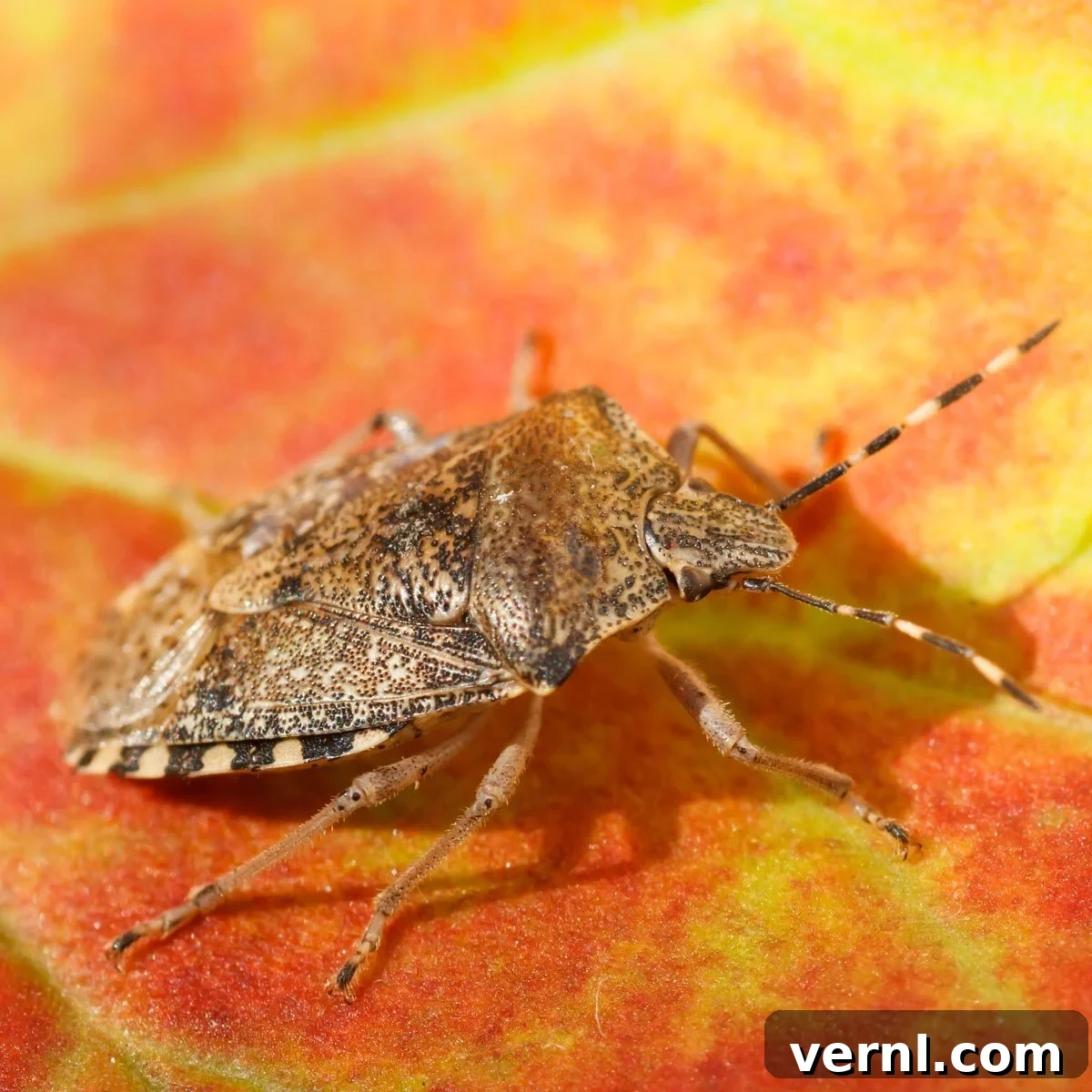
If you’ve spent any significant time tending to your garden, whether it features vibrant flowers, fresh vegetables, or a budding fruit tree orchard, you’ve likely encountered a familiar, shield-shaped insect: the brown marmorated stink bug. Known by some simply as shield bugs, these two names refer to the same tenacious pest. Scientifically identified as Halyomorpha halys, their presence signals potential trouble for nearly any cultivated plant.
Far more concerning than their unusual name is their relentless determination. These seemingly innocuous insects harbor a singular, destructive ambition: to infiltrate and decimate almost any crop they can access. Their targets range from vast commercial tomato fields to the carefully nurtured peppers and green beans thriving in your backyard patch. Their feeding habits can lead to significant crop damage, reduced yields, and compromised produce quality, turning a gardener’s hard work into a frustrating battle.
So, what can be done to effectively manage and ultimately get rid of stink bugs in your garden? Understanding their biology, behavior, and proven control strategies is crucial for protecting your precious plants. Here’s an in-depth guide to help you safeguard your garden from these pervasive invaders.
What Are Stink Bugs and Where Do They Come From?
The brown marmorated stink bug is an invasive species that first arrived in the United States in the mid-1990s. Tracing its origins back to Asia, this pest made its initial documented appearance in Allentown, Pennsylvania. According to David Price, a certified entomologist and Vice President of Strategic Growth for Mosquito Joe, a nationwide pest control company, it’s widely believed that these bugs inadvertently “hitched a ride” across the Pacific within international shipping containers. The Environmental Protection Agency (EPA) corroborates this theory, noting their rapid and widespread dispersion across the nation from this initial point of entry.
Since their introduction, these shield bugs have become remarkably prevalent, establishing populations in an astonishing 47 states across the U.S. While they can be found almost anywhere, certain regions experience more severe infestations. Oregon, Michigan, Tennessee, and particularly the mid-Atlantic states, are often identified as hotspots where these insects are a major agricultural nuisance. Here, they are frequently observed voraciously feeding on a wide array of crops. Their preferred menu includes economically significant produce such as apples, pears, grapes, peppers, tomatoes, hazelnuts, and corn, making them a formidable threat to both commercial agriculture and home gardens alike.
“They attack crops pretty aggressively,” Price emphasizes, highlighting the severity of their feeding habits. Just how aggressively? The economic impact is stark. A report from the University of Florida revealed that in a single year, 2010, tree fruit producers alone suffered losses exceeding $37 million due to stink bug damage. This figure underscores the devastating financial consequences this invasive pest can inflict on agricultural industries and serves as a powerful reminder of the importance of effective management strategies for gardeners and farmers alike.
How do I identify a brown marmorated stink bug?
Accurate identification is the first step in effective pest management. The brown marmorated stink bug is distinctly characterized by its mottled brown coloration, which helps it blend in with bark and soil. Key identifying features include prominent white bands encircling their antennae and legs, providing a clear contrast against their darker bodies. Their abdomen also displays an alternating pattern of light and dark bands, visible along the edges. As their common name suggests, their hard outer shell, or exoskeleton, strikingly resembles a heraldic shield, a feature that also gives rise to the alternative moniker “shield bug.”
It’s important to distinguish the brown marmorated variety from other, less harmful species. If you encounter a bug with a similar shield-like shape but predominantly green coloration, you’ve likely spotted a native North American shield bug. Heather Stoven, an entomologist with Oregon State University, explains that while these green versions are indeed shield bugs and can emit an unpleasant odor when disturbed, they are not considered as significant a nuisance to crops as their invasive brown cousins. While both types possess the characteristic “stink” defense mechanism, only the brown marmorated stink bug poses a widespread and serious threat to agricultural and garden plants due to its invasive nature and aggressive feeding habits.
Why Are Shield Bugs Also Called Stink Bugs?
The origin of their pungent nickname is often a source of curiosity for those who encounter these insects. The answer lies in their unique and highly effective defense mechanism. As David Price explains, “When you crush them, they have a foul odor.” This strong, disagreeable scent is not merely a coincidence but a deliberate evolutionary adaptation designed to deter potential threats.
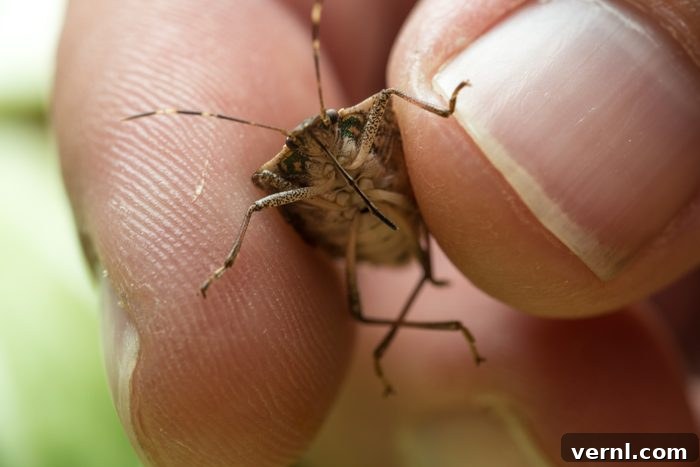
Price further elaborates, “The odor exists to fend off would-be predators.” This chemical deterrent is remarkably potent and effective, so much so that the brown marmorated stink bug has virtually no known natural predators within its introduced range in North America. This lack of natural enemies is a significant factor in their rapid proliferation and ability to cause widespread damage. While the odor is undeniably unpleasant to humans, it is important to note that it is not considered harmful. It’s a non-toxic, albeit offensive, smell that serves as a powerful warning sign to anything that might consider making the stink bug its next meal. For gardeners, this means exercising caution when handling them to avoid releasing the notorious aroma.
How Do I Know I Have a Stink Bug Problem?
Detecting a stink bug infestation in your garden requires keen observation, as these pests can be subtle in their early stages. Like many insect species, stink bugs commence their life cycle by laying tiny, barrel-shaped eggs, typically on the undersides of plant leaves. These eggs are often pale green or white and laid in clusters, making them difficult to spot at first glance. Once hatched, the nymphs, or baby insects, emerge and begin feeding voraciously on the leaves. As they grow through several instars, or developmental stages, they eventually join their adult relatives in attacking the most valuable parts of your plants: the fruits and vegetables.
The most tell-tale sign of a stink bug problem becomes evident on your crops themselves. Their piercing-sucking mouthparts are used to feed on plant sap, leaving behind unsightly brown spots, dimples, or corky lesions on the skins of fruits and vegetables. On apples and peaches, this damage can appear as cat-facing or irregular indentations. On tomatoes and peppers, you might see cloudy spots or discolored areas directly beneath the skin. Corn ears can suffer from stunted kernel development, while beans and peas may exhibit shriveled or discolored pods. This cosmetic damage often renders the produce unmarketable or unappetizing, even if the interior remains somewhat edible.
Unfortunately, the problem doesn’t simply vanish with the onset of colder weather. Instead, as Price notes, stink bugs exhibit overwintering behavior, actively seeking shelter and warmth in and around your home and garden structures as temperatures drop. Potential stink bug hibernation sites are diverse and often hidden. They include dense overgrowth and weeds in your yard, neatly stacked woodpiles, or any tiny crack, crevice, or opening they can squeeze into within structures like houses, sheds, or garages. They will remain dormant in these protected spots throughout the entire winter season. As soon as the warmth of spring returns, these resilient pests emerge from their hiding places, ready to migrate back to your garden and resume their destructive feeding on newly emerging plants and developing crops.
Natural Solutions for Managing Stink Bugs in Your Yard
The reality of managing the brown marmorated stink bug is challenging. They are notoriously prolific, reproducing quickly, and as previously mentioned, have virtually no known natural predators in their adopted North American environment, unlike their green stink bug cousins which face numerous threats. Entomologist David Price also points out that their “tough-as-nails exoskeleton” makes them remarkably resilient to many conventional pesticides, often rendering chemical treatments less effective than desired and raising environmental concerns. Therefore, the most pragmatic approach for gardeners is consistent control and management, aiming to keep populations at bay rather than complete eradication. Consider yourself fortunate if sightings in your garden are infrequent and isolated.
Here are several practical and eco-friendly strategies to help keep stink bugs from overwhelming your garden, compiled with insights from entomologists David Price and Heather Stoven:
- Seal Entry Points: Before winter arrives, meticulously inspect your home and garden structures. Ensure all cracks around doors, windows, siding, utility pipes, and foundation are thoroughly sealed with caulk or weatherstripping. This is critical for preventing stink bugs from entering your home to overwinter, which is a major precursor to spring garden infestations.
- Maintain a Tidy Yard: Eliminate potential overwintering sites in your immediate outdoor environment. Don’t leave piles of yard debris, leaf litter, wood stacks, or discarded gardening materials sitting around. A clean and organized yard discourages them from finding cozy spots to shelter during the colder months.
- Vacuum Them Up: If you discover stink bugs crawling around inside your home after their long winter’s nap, or even within your garden structures, a simple and effective method is to vacuum them up. Use a dedicated shop vac or a handheld vacuum, preferably one with a disposable bag, to avoid the lingering odor in your regular household vacuum. Immediately seal and discard the bag once you’ve collected the pests.
- Deploy Pheromone Traps: When spring arrives and stink bugs become active, hang specialized pheromone traps around the perimeter of your garden. These traps utilize chemical attractants to lure male and female stink bugs, effectively catching them before they can lay eggs or cause extensive damage to your crops. Monitor and empty these traps regularly.
- Manual Egg and Nymph Removal: Regularly inspect the undersides of leaves on your plants, especially during the early growing season. If you spot clusters of stink bug eggs or young nymphs, either carefully wipe them off with a gloved hand, use duct tape to lift them away, or simply remove and destroy the affected leaves. Early intervention can significantly reduce future populations.
- Apply Kaolin Clay Solution: Spray your plants with a diluted kaolin clay solution. Kaolin is a naturally occurring mineral that forms a fine, white, powdery barrier on plant surfaces. This coating is known to repel insects by making the plant surface undesirable for feeding and egg-laying, and it can also irritate their bodies. While not a guaranteed solution, it’s an organic-friendly approach worth trying.
- Utilize Row Covers: For susceptible crops, consider placing lightweight, breathable row covers over your plants. These physical barriers create a protective shield, preventing adult stink bugs from accessing the plants to feed or lay eggs. Ensure the edges are securely anchored to the ground to prevent pests from crawling underneath.
- Employ Eco-Friendly Insect Repellents: Explore the use of natural, eco-friendly insect repellents. These often include solutions made from essential oils or other plant-based compounds that deter stink bugs without harming beneficial insects or the environment. Always follow product instructions carefully.
FAQs:
Are stink bugs dangerous?
From a human health perspective, brown marmorated stink bugs are generally not considered dangerous. They do not typically bite humans, and therefore do not pose a direct threat of transmitting diseases or causing serious injury. However, direct contact can cause minor issues for some individuals. If handled roughly or crushed, the defensive chemicals they release can cause temporary skin irritation, particularly for those with sensitive skin. It’s always advisable to wear gloves when handling them and to avoid squishing them. While their direct threat to humans is minimal, their impact on your garden and beloved plants is a different story. Stink bugs can be a literal death sentence for a wide array of crops, leading to significant yield loss and compromised produce quality, which can be devastating for gardeners.
What attracts stink bugs to gardens?
Stink bugs are drawn to gardens for a variety of reasons, primarily centered around food sources and suitable habitats. They have a broad diet, making many garden plants attractive. Specific attractants include a wide range of fruits, vegetables, and ornamental flowers. They are particularly fond of plants that are fruiting or setting seeds, as these provide a concentrated source of nutrients. Decaying plant matter can also attract them, as can excessive dirt or overgrown weeds which provide shelter. Additionally, certain musky smells associated with decaying organic material or specific plant odors can act as attractants. In the fall, they are also powerfully attracted to artificial lights and the warmth radiated by homes as they seek overwintering sites.
Are there natural ways to repel stink bugs?
Absolutely! Leveraging strong-smelling plants is an excellent natural way to deter stink bugs. Plants with pungent aromas, such as mint, peppermint, lavender, and catnip, are often effective repellents because their scent is generally unpleasant to stink bugs, contrasting with the sweet-smelling plants they typically prefer. You can strategically plant these around your garden borders or intersperse them among your vulnerable crops. Another effective natural repellent is a homemade garlic oil spray. To prepare this, finely chop several cloves of garlic and steep them in a small amount of vegetable oil for at least 24 hours. Strain the oil, then mix a tablespoon of this garlic oil with a few drops of liquid soap and a quart of water. Spray this solution directly onto affected plants; the strong garlic odor acts as a powerful deterrent without harming the plants or beneficial insects.
What plants are most affected by stink bug infestations?
Stink bugs are generalist feeders, meaning they will attack a wide range of plants, but certain species are particularly vulnerable to their infestations. Legumes, including varieties of beans, peas, and soybeans, are highly susceptible. Many common garden vegetables such as tomatoes, potatoes, broccoli, corn, and beets frequently suffer significant damage. Beyond vegetables, fruit crops like apples, peaches, pears, grapes, and berries are also major targets. Sweet-smelling ornamental plants, such as roses, can also attract stink bugs due to their appealing aromas. The damage varies depending on the plant and the stage of development, often resulting in malformed fruit, stunted growth, or discolored leaves, severely impacting harvest quality and quantity.
What is the life cycle of a brown marmorated stink bug?
The brown marmorated stink bug undergoes an incomplete metamorphosis, meaning it progresses through three main stages: egg, nymph, and adult. Females typically lay clusters of 20-30 pale green or white, barrel-shaped eggs on the undersides of leaves from late spring to early summer. These eggs hatch into tiny nymphs in about 4-5 days. The nymphs then pass through five distinct instar stages, growing larger with each molt. During this nymphal stage, which lasts approximately 30-45 days, they actively feed on plant sap. Once they reach their fifth instar, they molt into winged adult stink bugs, usually by mid-summer. Adults can live for several months, continuing to feed and reproduce until cooler temperatures trigger their overwintering behavior. In most regions, there is one generation per year, but in warmer climates, two or more generations can occur, leading to increased population pressure.
When are stink bugs most active?
Stink bugs exhibit distinct periods of activity throughout the year. They are most active during the warmer months, specifically from late spring through fall. Their feeding activity intensifies as plants develop fruits and seeds, making mid-summer to early fall the peak time for garden damage. During the late summer and early fall, as outdoor temperatures begin to drop and daylight hours shorten, adult stink bugs become particularly active in their search for overwintering sites. This is when they are most likely to be seen congregating on the sunny sides of homes and other structures before attempting to squeeze indoors to escape the approaching cold. Once they find a suitable sheltered spot, they enter a dormant state, emerging again only when spring temperatures consistently rise.
Are there any beneficial insects that look like stink bugs?
Yes, distinguishing between harmful and beneficial insects is crucial for integrated pest management. Several beneficial insects can be confused with stink bugs due to similar body shapes. The most notable example is the spined soldier bug (*Podisus maculiventris*), which is a predatory stink bug. While it shares the characteristic shield shape, it typically has more pronounced spines on its shoulders and a slightly different coloration. Unlike the herbivorous brown marmorated stink bug, the spined soldier bug is highly beneficial, preying on over 100 species of pest insects, including caterpillars and beetle larvae. Learning to identify these beneficial look-alikes is essential to avoid accidentally removing allies that help control pest populations in your garden.
About the Expert
- David Price is a certified entomologist and Vice President of Strategic Growth for Mosquito Joe, a nationwide pest control company. He serves as an authoritative source for comprehensive information on all aspects of pest management.
- Heather Stoven is an entomologist affiliated with Oregon State University. Her ongoing work focuses extensively on plant propagation techniques, advanced pest management strategies, media preparation, fertility analysis, and irrigation systems, contributing significantly to horticultural science.
Sources:
- Askifas: “Predatory Stink Bugs”
- United States Environmental Protection Agency: “Brown Marmorated Stink Bug”