
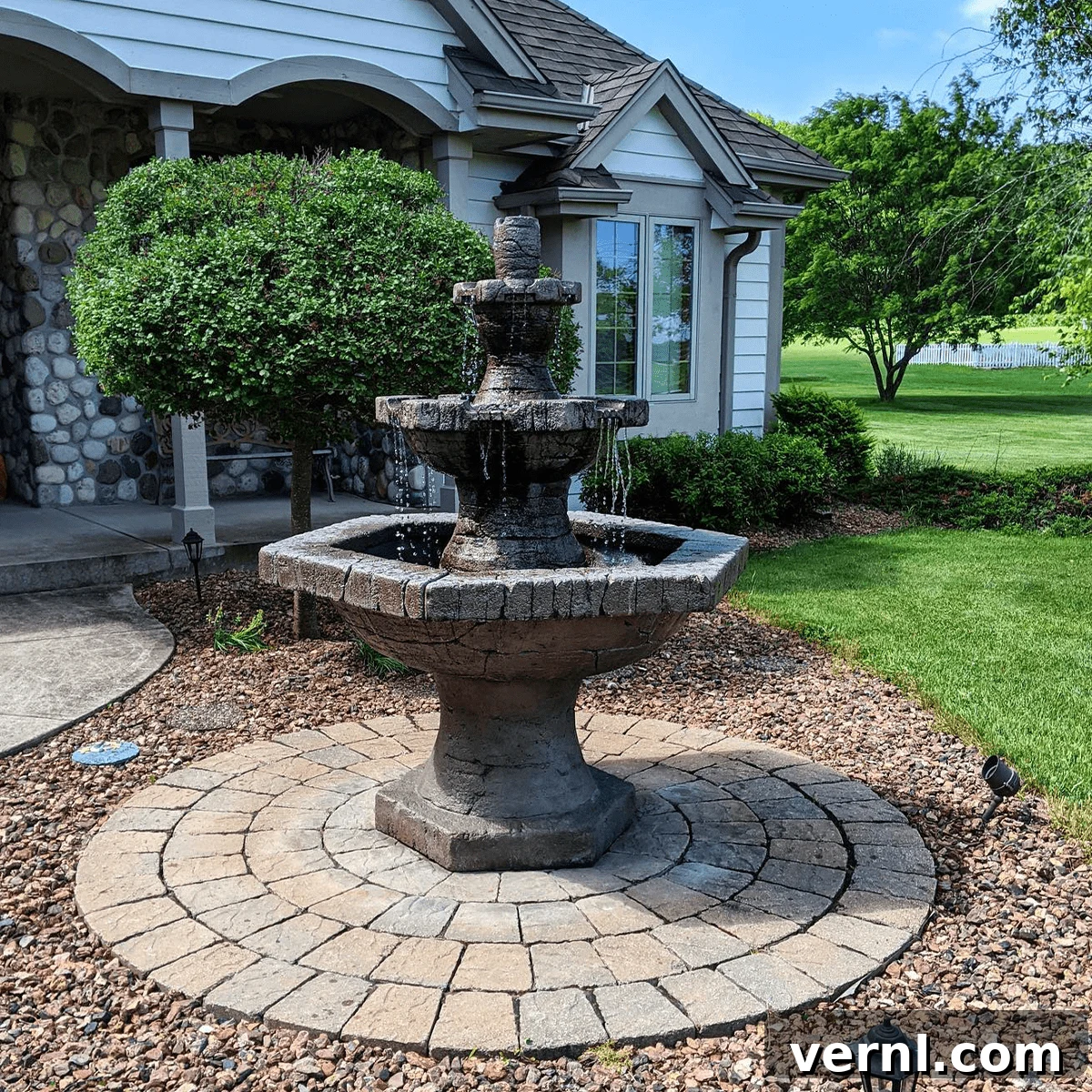
Transform Your Outdoor Space: A Comprehensive Guide to Garden Fountains
In recent years, our homes have become more central to our lives, prompting a renewed focus on home improvement, especially outdoor living areas. The pursuit of tranquility and beauty in our own backyards has led many homeowners to consider adding a captivating water feature. Among the most popular choices are outdoor fountains, offering both visual appeal and the soothing symphony of flowing water. If you’ve been contemplating this addition to your front or back yard, you’re certainly in good company.
The appeal of outdoor fountains has seen a significant surge, particularly since 2020. Karen Jurgensen, department manager for pottery at Gertens Garden Center in Inver Grove Heights, Minnesota, notes this trend, stating, “There’s definitely an uptick in fountain purchases. Our 2020 to 2021 sales have doubled over previous years, and public interest is growing.” This increased demand highlights a collective desire to create more serene and engaging outdoor environments.
Fountains hold particular appeal in arid regions stretching from the West Coast to the heart of the country, where the sight and sound of water offer a refreshing contrast to dry landscapes. Beyond their aesthetic charm, outdoor fountains provide a multitude of benefits:
- Aesthetic Enhancement: A fountain acts as a natural focal point, adding elegance, movement, and a touch of sophistication to any garden or patio. It can transform an ordinary space into an extraordinary oasis.
- Sensory Pleasure: The gentle gurgle or rhythmic cascade of water creates a calming auditory experience. This natural white noise can effectively mask unwanted sounds from traffic or neighbors, fostering a peaceful atmosphere conducive to relaxation and meditation.
- Wildlife Attraction: Fountains provide a vital fresh water source for local wildlife. “Customers like water as well as the sight and sound of fountains and how they attract wildlife,” Jurgensen observes. Expect to see more birds, butterflies, and even beneficial insects drawn to your yard, enriching your garden’s ecosystem.
- Water Conservation: Surprisingly, fountains can be more water-efficient than traditional lawns. “Fountains use less water than if the fountain area was all grass,” explains Jurgensen. This is because most outdoor fountains operate on a recirculating pump system, minimizing water waste compared to the continuous irrigation required for lush lawns.
- Stress Reduction & Well-being: In an increasingly busy world, having a tranquil outdoor retreat is invaluable. The soothing presence of a fountain can significantly reduce stress and promote a sense of well-being. “And with COVID, people have been stuck at home more. A comforting fountain can help reduce stress,” Jurgensen adds, underscoring their role as personal havens.
- Increased Property Value: A well-chosen and expertly installed water feature can be a significant enhancement to your home’s curb appeal and can even contribute to its overall market value.
Discovering the Diverse World of Outdoor Fountains
The market for outdoor fountains offers an impressive array of styles and functionalities. Large garden centers showcase a seemingly endless variety, ensuring there’s a perfect match for every taste and garden design. Here are eight of the most popular types, each with its unique charm and benefits:
- Bird Bath Fountains: These are designed to keep water circulating, which not only prevents stagnation but also creates enticing ripples that attract birds to your garden. The movement makes the water more appealing and visible to avian visitors, encouraging them to drink and bathe. They are typically compact and perfect for smaller spaces.
- Cistern Fountains: Often featuring a minimalist or rustic aesthetic, cistern fountains catch water in containers, creating calm, reflective pools. These can be beautiful focal points, sometimes even housing aquatic plants or small fish, adding another layer of natural beauty to your landscape. They are excellent for water harvesting in an elegant manner.
- DIY Fountains: For the creative and budget-conscious homeowner, DIY fountains offer endless possibilities. Starting with any waterproof container, “You can get creative with your favorite vase, some tubing and a pump to make your own,” says Jurgensen. The key is to use solid, non-disintegrating materials to prevent loose particles from damaging the water pump and ensure longevity. This approach allows for truly personalized water features.
- Floating Fountains: These versatile fountains are placed directly on the surface of existing pools or ponds. They are often used for special occasions, providing a dramatic visual effect and aerating the water, which can benefit aquatic life and water clarity. Many come with LED lights for stunning evening displays.
- Flowerbed Fountains: Designed to integrate seamlessly with your existing planting schemes, flowerbed fountains can be installed either above ground as a prominent feature or in-ground, with water bubbling up amidst your blooms. They add a whimsical or subtle touch of water to your floral displays.
- Outdoor Wall Fountains: Ideal for smaller patios or courtyards, these fountains are mounted against an external wall. They save ground space while adding elegant movement, soothing sound, and a classical or modern aesthetic to your outdoor living area, transforming a plain wall into a dynamic feature.
- Solar-Powered Fountains: An eco-friendly and energy-efficient choice, solar-powered fountains harness the sun’s energy, meaning they won’t contribute to your utility bills. However, they require direct sunlight to operate consistently. Advances in battery technology mean some models can store energy to run during cloudy periods or after dusk.
- Spitter Fountains: Often featuring playful or artistic sculptures, spitter fountains typically draw water from a pond or pool and project a concentrated stream of water from an opening, such as an animal’s mouth or a decorative spout. They add character, whimsy, and a distinct sound to water gardens.
Making the Right Choice: Buying Your Outdoor Fountain
Once you’ve narrowed down the type of outdoor fountain that best suits your vision, several other factors come into play. A careful consideration of these elements will ensure your chosen fountain brings lasting joy and complements your outdoor space perfectly.
Materials: Aesthetics, Durability, and Maintenance
The material of your fountain impacts its appearance, durability, weight, and maintenance requirements. You have a rich palette of choices:
- Aluminum: A lightweight and thin metal, aluminum is easy to dent if not handled with care. However, it’s rust-resistant (often coated for extra protection) and can be molded into intricate designs, offering a sleek, modern aesthetic.
- Bamboo: Ideal for creating a tranquil, zen garden atmosphere, bamboo fountains lend a natural and organic feel. They produce a unique, gentle clacking sound as water fills and empties from the stalks. While beautiful, bamboo may require more maintenance and replacement over time compared to more robust materials.
- Concrete: A very common and popular choice, concrete is exceptionally durable and heavy, providing excellent stability against wind. It can be cast into numerous shapes and designs, from classic tiered fountains to contemporary bowls. Its weight can make installation challenging, but its longevity and ability to develop a natural patina over time are significant advantages.
- Fiberglass: Highly versatile, fiberglass can be molded into virtually any shape, mimicking natural stone or intricate sculptures. It’s lighter than concrete but generally more expensive than some other materials. Fiberglass is durable and resistant to cracking, offering a good balance of form and function.
- Resin: A lightweight and durable material, resin is often used to create fountains that mimic the look of natural stone, wood, or metal at a more affordable price point. It’s easy to move and install, though some resin fountains may be susceptible to fading or minor damage from prolonged UV exposure if not properly treated.
- Slate: Known for its beautiful natural colors and layered texture, slate fountains offer a sophisticated and elegant appearance. While durable, slate can be quite heavy, similar to natural stone, impacting ease of installation. Each slate fountain is unique due to the stone’s natural variations.
- Stainless Steel: For a truly modern and minimalist look, stainless steel is an excellent choice. It’s highly durable, resistant to corrosion and rust, and easy to clean, maintaining its pristine appearance with minimal effort. However, it typically comes at a higher price point than many other materials.
- Stone (Natural): Representing the pinnacle of durability and timeless beauty, natural stone fountains are incredibly robust and heavy. Options include granite, marble, and river rock, each offering unique textures and colors. While often the most expensive and heaviest option, a natural stone fountain is a lasting investment and a true centerpiece.
The Symphony of Water: Considering Sound
Beyond visual appeal, the sound a fountain produces is paramount to its enjoyment. Outdoor fountain design significantly impacts the flowing water’s acoustics. What sounds like a soft, relaxing spray to one person might be an irritating buzz to another. Therefore, it’s crucial to spend time listening to various fountains before making your final decision.
Jurgensen recounts a memorable experience: “A customer needed a fountain he could put near his bedroom window and make a sound that would help his wife sleep. So we turned off all fountains in the store except the one he liked, just to make sure it made the right sound.” This anecdote perfectly illustrates the subjective nature of sound and the importance of personal preference when selecting your perfect water feature.
Artistry and Aesthetics: Fountains as Yard Art
Fountains are more than just water features; they are functional yard art. Much like selecting a sculpture or a painting for your home, choosing a fountain is a deeply personal expression of taste. The perfect fountain should complement your existing landscape and home architecture, acting as a harmonious extension of your personal style. “We have a fountain that looks like a Mexican hat, and the water falls across the tiny plates of the hat, which sounds cool and looks great as the sun plays on it,” says Jurgensen, highlighting the intricate design and artistic thought that goes into creating unique pieces. The interplay of water, light, and form can create a truly magical effect.
Many companies produce beautiful fountains, known for their craftsmanship and innovative designs. Jurgensen particularly recommends exploring collections from Massarelli’s, Campania International, and Henri Studios, all renowned for their quality and diverse offerings.
Size, Scale, and Budget Considerations
Before purchasing, carefully consider the size and scale of the fountain relative to your outdoor space. A fountain that is too large can overwhelm a small yard, while one too small may get lost in an expansive landscape. Measure your intended placement area and visualize how the fountain will fit within it. Finally, set a realistic budget, understanding that costs vary widely based on material, size, complexity, and brand. Don’t forget to factor in potential installation costs if professional help is needed.
Seamless Integration: Installing Your Outdoor Fountain
The installation process for outdoor fountains can range from simple “plug and play” setups to those requiring more significant effort. Regardless of complexity, one universal rule applies: always install your fountain on a level, stable surface such as concrete or packed gravel. This ensures the fountain’s stability, prevents leaning or settling over time, and minimizes the risk of damage.
For most residential fountains, a DIY installation is entirely feasible with basic tools and shims. “Not a lot of handyman knowledge is required for fountain installation,” assures Jurgensen. However, keeping the following critical factors in mind will ensure a smooth setup and long-term enjoyment:
- Size and Weight Management: Concrete fountains, for instance, can weigh anywhere from 25 to a staggering 750 pounds or more. If you plan on transporting, installing, and regularly maintaining the fountain—which ideally includes moving it to a dry, sheltered place for winter—it’s crucial not to underestimate its size and weight. Always prioritize safety during transportation and assembly. Jurgensen shares a cautionary tale: “We had a customer who bought a big fountain and had to lift off its heavy top to get to the pump. In doing so, he smashed a finger.” Consider recruiting help for heavy lifting or opting for a fountain that disassembles into lighter components.
- Strategic Sunlight Placement: While sunlight powers solar fountains, for most other types, finding a location that’s out of the intense afternoon sun is advisable, Jurgensen suggests. Too much direct sunlight significantly accelerates algae growth. Algae can not only be unsightly but also clog the fountain’s pump and tubing, reducing water flow and increasing maintenance needs. Partial shade helps keep the water cooler and cleaner.
- Protection from Debris (Shelter): Choose a sheltered spot for your fountain, away from overhanging trees or areas prone to high winds. “You don’t want a lot of sticks, grass, tree seeds, and whatnot blowing or falling into the fountain,” Jurgensen advises. Such debris can quickly plug the pump, block the water column, and necessitate frequent cleaning, making maintenance a chore rather than a simple routine.
- Power Source Accessibility: Most electric fountains require a nearby outdoor-rated electrical outlet. Ensure this outlet is a Ground Fault Circuit Interrupter (GFCI) protected outlet for safety. If no suitable outlet is close, consult with an electrician to have one installed, avoiding the use of long extension cords which can be a tripping hazard and less efficient.
- Water Source & Refilling: While fountains recirculate water, evaporation will require periodic refilling. Place your fountain where it’s easy to top off the water using a garden hose or watering can. Consider if splashing might affect nearby plants or pathways, and choose a design that minimizes excessive spray if this is a concern.
- Winterization: For climates with freezing temperatures, proper winterization is crucial to protect your fountain from damage. This typically involves draining all water, thoroughly cleaning the basin, disconnecting and storing the pump indoors, and covering the fountain to protect it from harsh weather. Some smaller fountains may need to be moved indoors entirely.
Nurturing Your Oasis: Fountain Maintenance
To ensure your outdoor fountain remains a source of beauty and tranquility for years to come, regular maintenance is key. This generally involves a few straightforward tasks:
- Regular Cleaning: Periodically remove any accumulated debris such as leaves, twigs, or insects from the basin and grates. A soft brush can help clean the basin and decorative elements.
- Algae Control: Even with good placement, some algae growth is inevitable. Regularly scrub away algae or use an algaecide specifically designed for fountains (always follow product instructions carefully and ensure it’s safe for any wildlife or plants that may interact with the water).
- Water Level Monitoring: Due to evaporation and occasional splashing, the water level will naturally drop. Top off the water as needed to ensure the pump remains fully submerged, preventing it from running dry and potentially burning out.
- Pump Maintenance: At least once a season (or more frequently if your fountain is prone to debris), disconnect and clean the pump. This typically involves removing the pump cover and clearing any debris from the impeller, which is crucial for efficient operation.
- Seasonal Care: As mentioned in installation, proper winterization is vital in colder climates. In warmer climates, an annual deep clean may suffice to remove mineral buildup and refresh the system.