
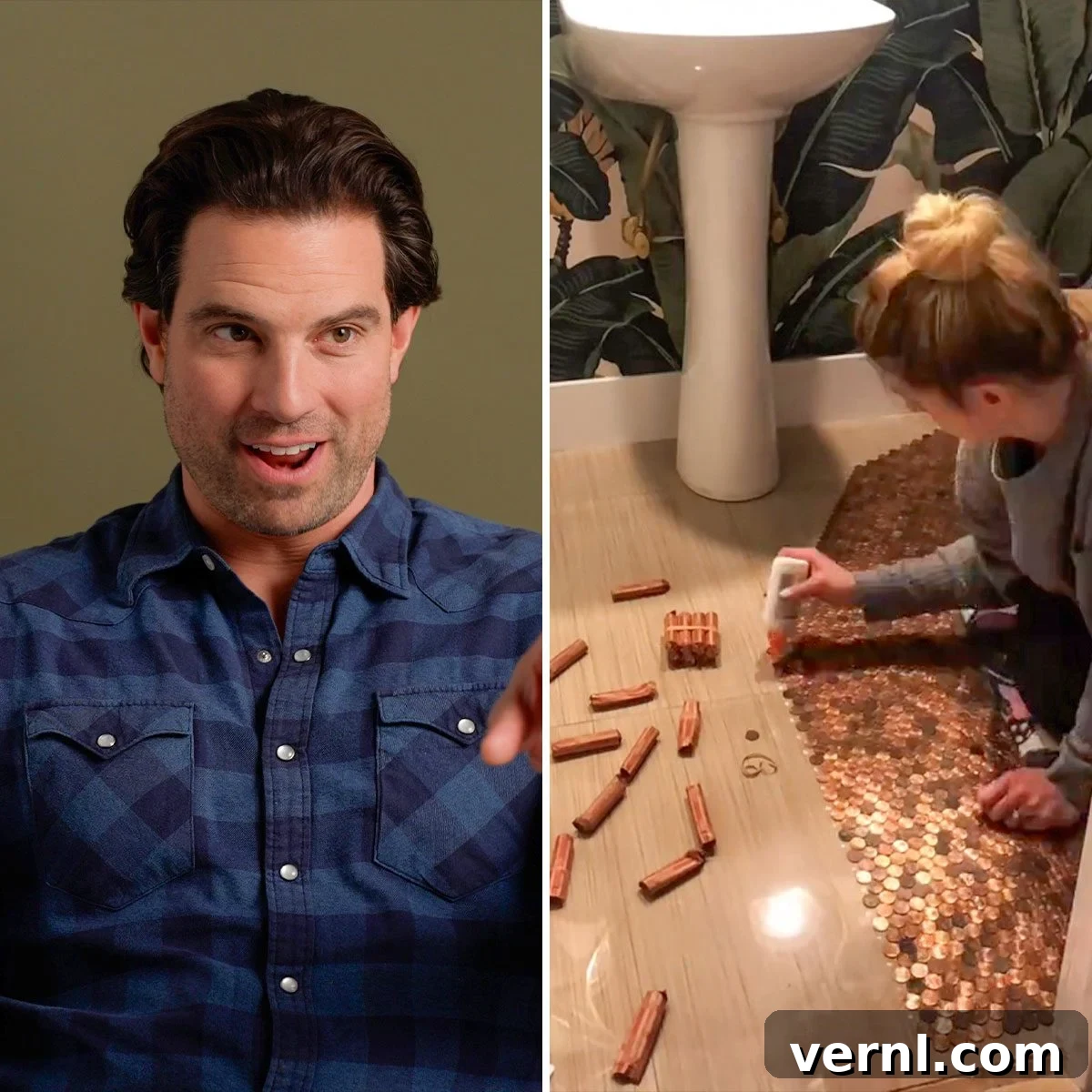
In the vast and inspiring world of home improvement and DIY projects, where platforms like Pinterest and popular renovation shows constantly spark new ideas, a truly unusual yet captivating flooring option has been making significant waves: floors crafted entirely from pennies. This inventive trend blends affordability with stunning aesthetics, transforming everyday coins into a mosaic masterpiece. Recently, on an insightful episode of At Home With Family Handyman’s Ask… Scott McGillivray, the renowned real estate and renovation expert, weighed in on this burgeoning trend. McGillivray, known for his practical advice and keen eye for value, offered not only his personal reaction but also invaluable insight into the practicality and appeal of tiling your floors with pennies, all delivered in his signature engaging style.
Uncovering the Penny Flooring Trend: What’s the Hype?
The segment on Ask… Scott McGillivray provided a fascinating glimpse into this creative home renovation idea. Scott, who regularly reviews viewer-submitted clips, was presented with a particularly striking one featuring a homeowner in the midst of installing a penny floor in her bathroom. The process, while seemingly intricate, unfolded with elegant simplicity. The viewer carefully adhered the pennies to the subfloor, working meticulously in small, manageable sections to ensure precise placement and a uniform aesthetic. This initial step sets the foundation for the unique visual texture of the floor.
Following the careful arrangement of thousands of copper coins, the crucial final stage involved pouring a clear, self-leveling resin or epoxy over the entire surface. This not only seals the pennies securely in place but also creates a durable, high-gloss finish that protects the coins and makes the floor easy to clean. The result, as showcased in the clip, was nothing short of jaw-dropping. The finished copper floor instantly draws the eye, radiating a warm, metallic glow that transforms the entire space. It’s immediately evident that such a project is a true labor of love, a testament to patience and creativity. The inherent variation in tones and patinas among the individual pennies adds incredible depth and dimension, preventing the floor from appearing flat and keeping it visually dynamic and interesting from every angle. This intricate detail ensures that no two penny floors are exactly alike, making each installation a unique work of art.
Scott McGillivray’s Expert Verdict: Is Penny Flooring a Smart Investment?
In a move that delighted DIY enthusiasts everywhere, Scott McGillivray enthusiastically endorsed the penny flooring option. The seasoned renovation expert revealed that his approval wasn’t just theoretical; he had actually tiled the floor of his own office with pennies several years prior, a testament to his belief in the trend’s potential. This personal experience adds significant weight to his endorsement, proving that penny flooring isn’t just a quirky novelty but a viable and attractive option for real-world applications.
Scott highlighted two primary advantages of this unique flooring choice: its undeniable aesthetic appeal and its surprising cost-effectiveness. He meticulously broke down the financial aspect, illustrating just how affordable this flooring can be. “At 144 pennies a square foot,” Scott explained, “that’s $1.44 a tile. It doesn’t get any more affordable than that.” When compared to traditional tiling options like ceramic, porcelain, or natural stone, the material cost of pennies is remarkably low. Furthermore, McGillivray emphasized that the installation, while labor-intensive, is well within the capabilities of a dedicated DIYer. By undertaking the project yourself, you can save substantially on labor costs, which often constitute a significant portion of a professional flooring installation. This dual saving on both materials and labor makes penny flooring an exceptionally budget-friendly choice for homeowners looking to make a big impact without breaking the bank.
The Allure of Copper Floors: Why Pennies Stand Out
Beyond the raw numbers, the aesthetic appeal of a penny floor is truly unparalleled. The natural luster and varied tones of copper provide a rich, warm foundation that can complement a wide range of interior design styles, from rustic and industrial to contemporary and eclectic. Each penny, with its individual age and patina, contributes to a collective tapestry of color and texture. New, shiny pennies offer a brilliant, uniform gleam, while older, tarnished coins introduce darker hues and subtle variations, creating a dynamic visual narrative across the floor.
The sheer number of pennies involved also allows for incredible creative freedom. Homeowners can arrange them in intricate patterns, such as herringbone, alternating heads and tails, or even complex mosaic designs. This bespoke element ensures that every penny floor is a unique work of art, reflecting the personality and vision of its creator. The reflective quality of the metallic surface, especially when sealed with a clear epoxy, beautifully catches and refracts light, adding brightness and an expansive feel to the room. It’s this combination of affordability, durability (once sealed), and stunning customizability that elevates penny flooring from a mere trend to a truly remarkable design statement.
DIY Penny Floor Installation: What to Expect
Embarking on a penny flooring project is a significant undertaking that requires patience and attention to detail, but the reward is a truly bespoke and show-stopping surface. While Scott McGillivray’s endorsement gives the green light, understanding the process helps in planning.
- Preparation is Key: Like any flooring project, the subfloor must be meticulously cleaned, dry, and perfectly level. Any imperfections will be magnified by the hundreds, if not thousands, of pennies laid upon it.
- Adhesion: Pennies are typically affixed using a strong adhesive, often a construction adhesive or a specific flooring grout/glue. Working in small sections is crucial to prevent the adhesive from drying prematurely and to allow for precise placement of each coin. Many DIYers sort pennies by color or sheen beforehand to achieve a desired gradient or pattern.
- Sealing with Epoxy: This is the most critical step for durability and aesthetic appeal. A two-part epoxy resin is poured over the entire surface, encapsulating the pennies. This creates a smooth, hard, waterproof, and glossy finish that protects the copper from tarnishing, wear, and tear, making the floor incredibly resilient and easy to clean.
- Curing Time: After the epoxy is applied, it requires a significant amount of time to cure completely, often several days, during which the area should remain undisturbed.
While undeniably labor-intensive, especially for larger areas, the process is straightforward and does not require highly specialized tools, making it accessible to enthusiastic DIYers. The satisfaction of creating such a unique and personal feature in your home is immeasurable.
Pros and Cons of Penny Flooring: Weighing Your Options
Before committing to such a distinct flooring choice, it’s wise to consider both the advantages and potential drawbacks.
Pros:
- Unrivaled Visual Impact: Penny floors are an immediate conversation starter and a true focal point in any room. Their metallic shimmer and intricate texture are unlike any other flooring material.
- Highly Cost-Effective Materials: As Scott McGillivray highlighted, the raw material cost per square foot is exceptionally low, making it an attractive option for budget-conscious renovations.
- Significant DIY Savings: The ability to install the floor yourself eliminates costly labor charges, which can greatly reduce the overall project expense.
- Exceptional Durability: Once properly sealed with a high-quality epoxy resin, a penny floor becomes incredibly robust, waterproof, stain-resistant, and able to withstand heavy foot traffic.
- Unique and Customizable: Each installation can be tailored to your specific design preferences, from coin arrangement to color variations, ensuring a truly personalized space.
- Adds Warmth and Character: The copper tones naturally bring a sense of warmth and richness to an interior.
Cons:
- Extremely Labor-Intensive: The process of cleaning, sorting, and individually gluing thousands of pennies is incredibly time-consuming and demands immense patience.
- Cost of Epoxy and Adhesives: While the pennies are cheap, the necessary high-quality epoxy resin and adhesives can be a significant investment, potentially balancing out some of the initial material savings.
- Requires Precision: Any imperfections in subfloor preparation or penny placement can lead to an uneven finish or visible flaws, which are then sealed permanently.
- Irreversible Commitment: Removing a properly installed epoxy penny floor is a challenging and destructive process, meaning it’s a long-term commitment.
- Potential for Tarnishing (if not sealed properly): If the epoxy coating is compromised or applied incorrectly, the copper pennies can tarnish over time, changing their appearance.
Beyond Floors: Creative Applications of Pennies in Home Decor
The versatility of pennies extends far beyond just flooring. Their unique aesthetic and affordability make them an excellent material for various other DIY home decor projects. Consider incorporating them into a stunning kitchen backsplash, where the copper can complement stainless steel appliances or warm wooden cabinetry. Penny countertops or bar tops can provide a durable and conversation-starting surface in a kitchen or home bar. Smaller projects, such as tabletops, decorative wall panels, or even framed art, can also benefit from the distinctive charm of copper coins, offering a way to introduce this fascinating texture into your home without committing to an entire floor. These smaller applications can serve as excellent entry points for those hesitant to tackle a full-scale floor, allowing them to experiment with the material and its visual impact.
Is Penny Flooring Right for Your Home?
Scott McGillivray’s expert endorsement provides a clear signal for those contemplating this fun and unique flooring option. If you’ve been searching for a way to infuse your home with personality, achieve a high-end look on a budget, and aren’t afraid of a rewarding DIY challenge, then penny flooring might just be your next great project. It’s a bold design choice that guarantees a stunning visual impact once completed, transforming an ordinary space into an extraordinary one. The blend of affordability, personal creativity, and Scott’s seal of approval makes it a trend worth exploring for anyone looking to make a distinctive mark on their home.
For more epic builds, inspiring DIY stories, and invaluable pro tips from an expert who has truly seen it all, be sure to tune in to Ask…Scott McGillivray on At Home with Family Handyman.
About the Expert
- Scott McGillivray is a highly respected expert in real estate, renovation, and finance, boasting decades of hands-on experience in these fields. He is widely recognized for his work on the award-winning series Income Property and currently hosts At Home With Family Handyman’s Ask… Scott McGillivray. His practical insights and accessible approach make him a trusted voice in home improvement and investment.