The year 1960 brought forth Alfred Hitchcock’s iconic horror masterpiece, Psycho, a film that continues to send shivers down spines decades later. While the chilling shower scene involving Janet Leigh’s character has become legendary, a keen observer with a nascent interest in physics might have noticed a curious detail: the shower curtain remained perfectly still. There was no dramatic inward movement, no eerie clinging to Ms. Leigh as the water cascaded from the showerhead. It simply hung there, defying the very laws of physics, until Anthony Perkins’s character pulled it aside to wield his knife.
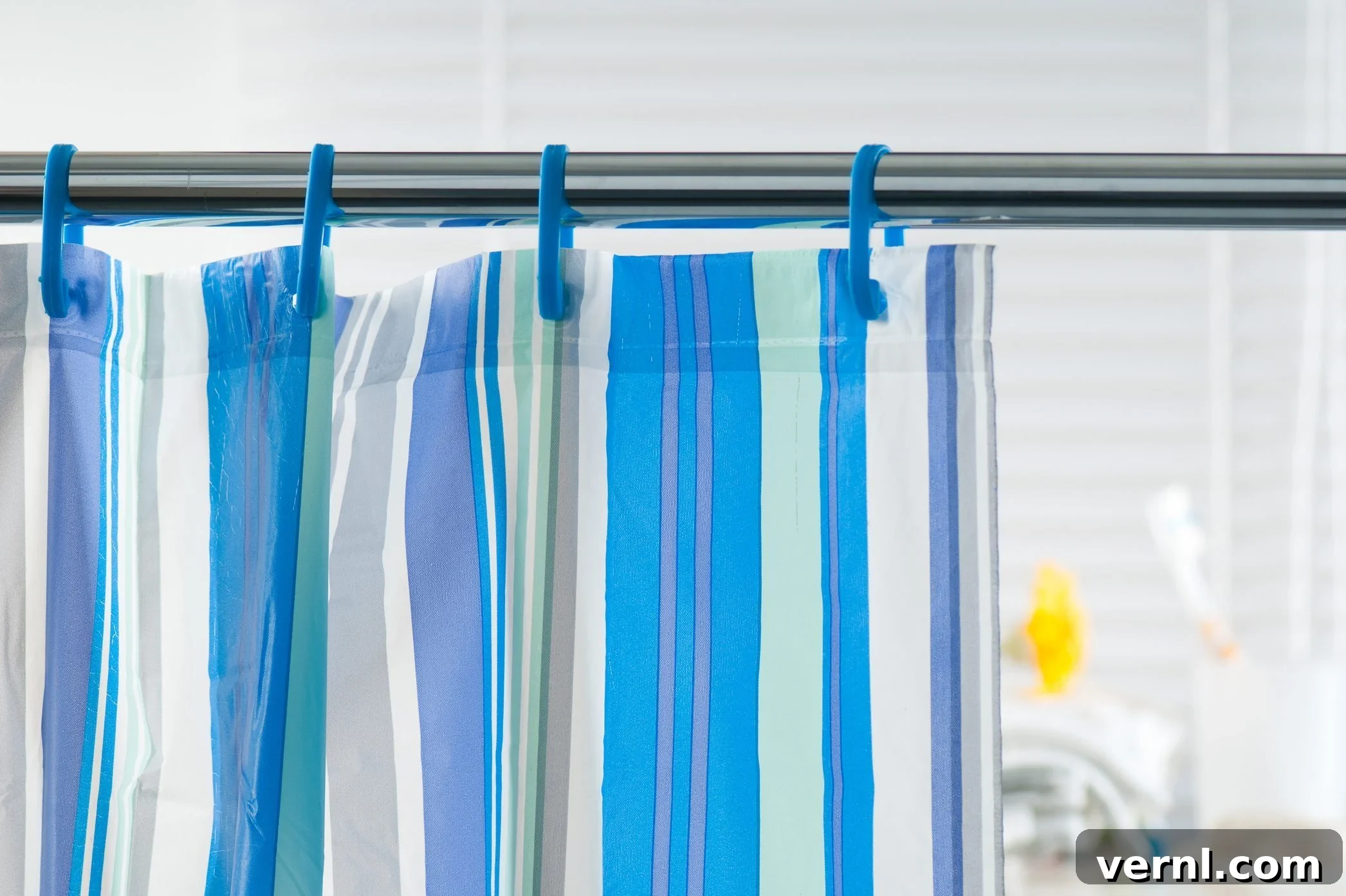
In real life, however, a shower curtain rarely behaves so stoically. Most of us have experienced the uncanny sensation of the shower curtain mysteriously drifting inward, sometimes adhering uncomfortably to our skin, transforming a relaxing shower into a mildly irritating encounter. This common yet perplexing phenomenon is universally known as the “shower curtain effect.” While it might lack the cinematic drama of a Hitchcock film, it’s a persistent annoyance that can detract from the simple pleasure of a warm shower. But why does it happen, and more importantly, how can we make it stop?
Understanding this everyday mystery doesn’t just satisfy our curiosity; it empowers us to reclaim our shower space. No one wants an unexpected curtain encounter disrupting their moment of peace and cleanliness. Let’s delve into the fascinating science behind the dreaded shower curtain effect and explore effective, practical strategies to banish it from your bathroom forever.
Unveiling the Mystery: What Exactly Is the Shower Curtain Effect?
The shower curtain effect is a widespread physical phenomenon characterized by the inward movement of a shower curtain towards the user when the shower is running. It’s that subtle, often irritating, drift that causes the curtain to cling to your body, reducing your showering space and sometimes even sticking uncomfortably to your skin. This isn’t just a quirky bathroom inconvenience; it’s a real-world demonstration of fundamental physics principles at play, constantly fascinating scientists and frustrating homeowners alike.
For those who appreciate scientific trivia, you’ll be intrigued to learn that this common bathroom occurrence is often attributed to or explained by what is known as Bernoulli’s Principle. First articulated by the brilliant Swiss mathematician Daniel Bernoulli in his seminal 1738 work, Hydrodynamica, this principle states that within a fluid (like air or water) flowing in a streamline, an increase in the speed of the fluid occurs simultaneously with a decrease in static pressure or a decrease in the fluid’s potential energy. In simpler terms, faster-moving air exerts less pressure.
How does this apply to your shower? When the shower is turned on, the spray of water dramatically increases the velocity of the air within the showering enclosure. This increased airflow, according to Bernoulli, leads to a significant reduction in air pressure inside the curtained area. Conversely, the air pressure outside the curtain remains relatively higher. This pressure differential creates a force that pushes the flexible shower curtain inward, towards the lower-pressure zone within the shower. It’s a classic example of nature seeking equilibrium, pushing objects from areas of high pressure to areas of low pressure, all thanks to the simple act of taking a shower.
The Science Behind the Drift: What Causes the Shower Curtain Effect?
While Bernoulli’s Principle offers a primary explanation, the shower curtain effect is a complex interplay of several atmospheric and fluid dynamics. There are three main scientific explanations that contribute to this phenomenon, all ultimately rooted in the crucial concept of differing air pressures between the enclosed showering area and the surrounding bathroom space.
1. Air Density Difference: Convection Currents at Play
One significant contributor to the inward movement of the shower curtain is the difference in air density caused by temperature variations. When you turn on your shower, especially with warm or hot water, the rising steam and heat quickly warm the air within the shower enclosure. This warm air, being less dense than the cooler air outside the shower, naturally rises. As this warm, buoyant air ascends, it spills over the top of the shower curtain rod and begins to cool and mix with the cooler air in the main bathroom. This constant upward flow of warm air creates a low-pressure zone at the bottom of the showering area. Simultaneously, the cooler, denser air from the rest of the bathroom, which is under higher pressure, moves towards this low-pressure region at the bottom of the curtain. This influx of higher-pressure outside air pushes the flexible shower curtain inward, seeking to equalize the pressure. While this explanation makes perfect sense for warm showers, it’s worth noting that the shower curtain effect can still occur even with cold water, suggesting that other factors are also critically important.
2. Bernoulli’s Principle: The Velocity-Pressure Relationship
As touched upon earlier, Bernoulli’s Principle provides a fundamental explanation for the shower curtain’s behavior. The forceful spray of water from the showerhead acts like a jet, pushing and accelerating the air directly inside the shower enclosure. This rapid movement of air along the inner surface of the curtain increases its velocity. According to Bernoulli’s Principle, an increase in air velocity directly corresponds to a decrease in air pressure within that specific area. Consequently, the air pressure inside the shower curtain drops significantly compared to the static, higher-pressure air outside the curtain. This pressure differential creates a powerful suction-like force, drawing the curtain inward. This principle is not only responsible for your clinging shower curtain but also plays a pivotal role in more grandiose phenomena, such as how an aircraft achieves lift. Airplane wings are designed with a specific curvature that causes air to flow faster over the top surface (lowering pressure) and slower underneath (raising pressure), creating the necessary upward force to defy gravity. The humble shower curtain, then, is a miniature wind tunnel demonstrating the same profound physics.
3. Horizontal Vortex: The Shower’s Mini-Tornado
Perhaps the most visually intriguing and often underestimated cause of the shower curtain effect is the formation of a horizontal vortex. A vortex is essentially a mass of fluid (liquid or gas) that revolves rapidly around a central axis line, much like a tornado or a whirlpool. When water sprays from your showerhead, it creates a turbulent flow that sets the air within the shower enclosure into a rotational motion. This motion generates a horizontal vortex, typically extending from the showerhead downwards. The “eye” or center of any vortex is a region of significantly lower pressure, a characteristic that famously explains why objects and even people can be “sucked” into the powerful core of a tornado.
In the shower, the axis of this spray-induced vortex runs roughly perpendicular to the shower curtain. The low-pressure region within the vortex’s eye effectively draws the flexible shower curtain inward. The constant stream of water fuels this miniature atmospheric phenomenon, maintaining the low-pressure zone that keeps the curtain firmly clinging. It’s a dynamic and continuous process where the energetic water spray transforms the air into a swirling entity, creating the very forces that lead to your curtain’s intrusive embrace.
Reclaiming Your Space: 8 Effective Ways to Overcome the Shower Curtain Effect
Understanding the science behind the shower curtain effect is the first step; the next is implementing practical solutions to mitigate or eliminate it. Fortunately, there are several straightforward strategies you can employ to enjoy a more spacious and serene showering experience, free from unwanted curtain contact.
1. Embrace the Bath: A Classic Alternative
The most straightforward (and somewhat humorous) solution to the shower curtain effect is to simply bypass the shower altogether. Opting for a relaxing bath in your bathtub completely negates the conditions required for the curtain to stick. A bath offers a tranquil, immersive experience, perfect for unwinding after a long day. It allows you to soak away stress, enjoy bath bombs or essential oils, and truly escape the world, all without any risk of a clingy curtain. If the shower curtain effect is a persistent nuisance, a bath isn’t just a workaround; it’s a luxurious alternative that provides a different kind of cleansing and calming ritual.
2. Invest in a Heavier Curtain or Liner
The suction pressure created by the shower’s vortex and pressure differentials, while effective, is often relatively weak. A lighter, flimsier shower curtain is far more susceptible to these forces. By switching to a significantly heavier fabric shower curtain or a weighted shower curtain liner, you can dramatically reduce its susceptibility to the inward pull. The increased mass and rigidity of a heavier curtain provide greater resistance to the pressure changes, making it much harder for the air currents to move it. Many modern shower curtain liners also come with weighted hems or magnets sewn into the bottom edge specifically to combat this issue. Alternatively, experimenting with leaving a small gap on one side of the curtain can sometimes disrupt the vortex and pressure equilibrium, reducing the effect.
3. Utilize Suction Cups or Magnets for a Secure Hold
Some innovative shower curtain designs incorporate practical features to prevent them from drifting. Many liners now come equipped with suction cups along the bottom edge. These can be firmly pressed against the smooth, non-porous sides of your shower or tub enclosure, creating a physical barrier that holds the curtain in place. Similarly, other curtains feature small magnets sewn into the bottom hem. These magnets are highly effective when used with cast iron or steel tubs, as the metal provides a magnetic surface for them to adhere to. However, it’s crucial to note that these magnetic solutions will not work on non-ferrous materials such as acrylic or fiberglass tubs, which are common in many bathrooms. Always check your tub material before investing in a magnetic curtain.
4. Upgrade Your Showerhead for a Gentler Flow
The intensity and atomization of your showerhead’s spray play a direct role in creating the air currents and vortices inside your shower. A showerhead that produces a very fine, forceful, and wide spray tends to accelerate the internal air more aggressively, thus increasing the Bernoulli effect. By installing a showerhead that offers a gentler, less atomized, or more directional stream, you can significantly decrease the air speed inside the shower enclosure. This reduction in air velocity leads to a lesser drop in internal air pressure, consequently reducing the inward pull on the curtain. Consider an eco-friendly or low-flow showerhead that focuses water delivery rather than wide dispersion, which can often mitigate the problem while also conserving water.
5. Install a Permanent Shower Door or Embrace a Wet Room
If the shower curtain effect is a persistent and intolerable source of frustration, the most definitive solution is to eliminate the curtain entirely. Installing a glass shower door provides a rigid, impermeable barrier that completely isolates the showering space from the rest of the bathroom. This not only prevents the curtain from clinging but also significantly enhances the aesthetic appeal of your bathroom, making it feel more modern and open. Alternatively, for the ultimate solution in spatial freedom and minimalist design, consider creating a wet room bathroom. A wet room is a fully waterproofed bathroom where the shower area is completely open, integrated into the room, and requires no curtains or doors whatsoever. While this option involves a more significant renovation, it offers a permanently elegant and curtain-effect-free showering experience.
6. Utilize a Lower Secondary Curtain Rod
A clever and often overlooked solution involves creating a physical barrier to stop the lower part of the curtain from moving inward. This can be achieved by installing a second, telescopic shower curtain rod lower down, typically around waist height or just above the rim of the tub. This secondary rod acts as a fixed stopper, physically blocking the lower section of the curtain from being sucked inward by the low-pressure zone. Ensure the rod is securely installed and extends the full width of the shower. This method is particularly effective as it directly counters the inward movement where the pressure differential is often strongest and where the curtain is most likely to make contact with your body. It’s an inexpensive and relatively easy DIY fix that can make a substantial difference.
7. Employ Weights and String for Custom Reinforcement
For a highly customizable and often inexpensive solution, you can create your own weighted system. Attach a suitable weight (such as a fishing weight, a small lead sinker, or even a decorative curtain weight) to a long, durable string. Then, tie this string to the main shower curtain rod at key points along the inside of the curtain, perhaps in the middle and near the ends. The goal is to have the weight hang low, just above the rim of the shower pan or tub, effectively weighing down the curtain. This added mass at the bottom provides increased resistance against the air currents, preventing the curtain from billowing inward without letting the weight hit and potentially damage the pan or tub. You can experiment with the number and placement of weights to find the optimal configuration for your specific shower and curtain.
8. Install a Curved Shower Curtain Rod
One of the most popular and aesthetically pleasing solutions is to replace your standard straight shower curtain rod with a curved one. A curved shower curtain rod bows outward, creating significantly more space within the showering enclosure. This increased volume directly addresses the shower curtain effect by expanding the area where the air currents circulate. With a larger internal volume, the pressure difference between the inside and outside of the curtain is naturally reduced because the air has more room to move and disperse, lessening the localized pressure drop. Furthermore, the outward curve helps hold the curtain further away from your body, preventing contact even if a slight inward drift still occurs. When combined with suction cups or magnets on the bottom edge, a curved rod provides an excellent, lasting solution that enhances both comfort and bathroom aesthetics.
Conclusion: Reclaiming Your Shower Sanctuary
The shower curtain effect, a seemingly minor annoyance, is a fascinating everyday demonstration of complex fluid dynamics and atmospheric pressure. From the subtle convection currents created by warm water to the powerful Bernoulli effect and the miniature horizontal vortex formed by the spray, multiple scientific principles conspire to pull that curtain inward. While it might have amused physicists to point out Hitchcock’s oversight, for most of us, a clinging shower curtain is simply an unwelcome intrusion.
Fortunately, you don’t need a degree in physics to defeat it. By understanding these underlying causes, you can choose from a range of practical and effective solutions. Whether you opt for a simpler showerhead, invest in a weighted curtain, or embrace a more permanent fix like a glass door or curved rod, you have the power to transform your daily shower. Reclaim your personal space, enjoy the full comfort of your shower enclosure, and banish the dreaded shower curtain effect for good. A peaceful, curtain-free shower is not just a dream—it’s an achievable reality.