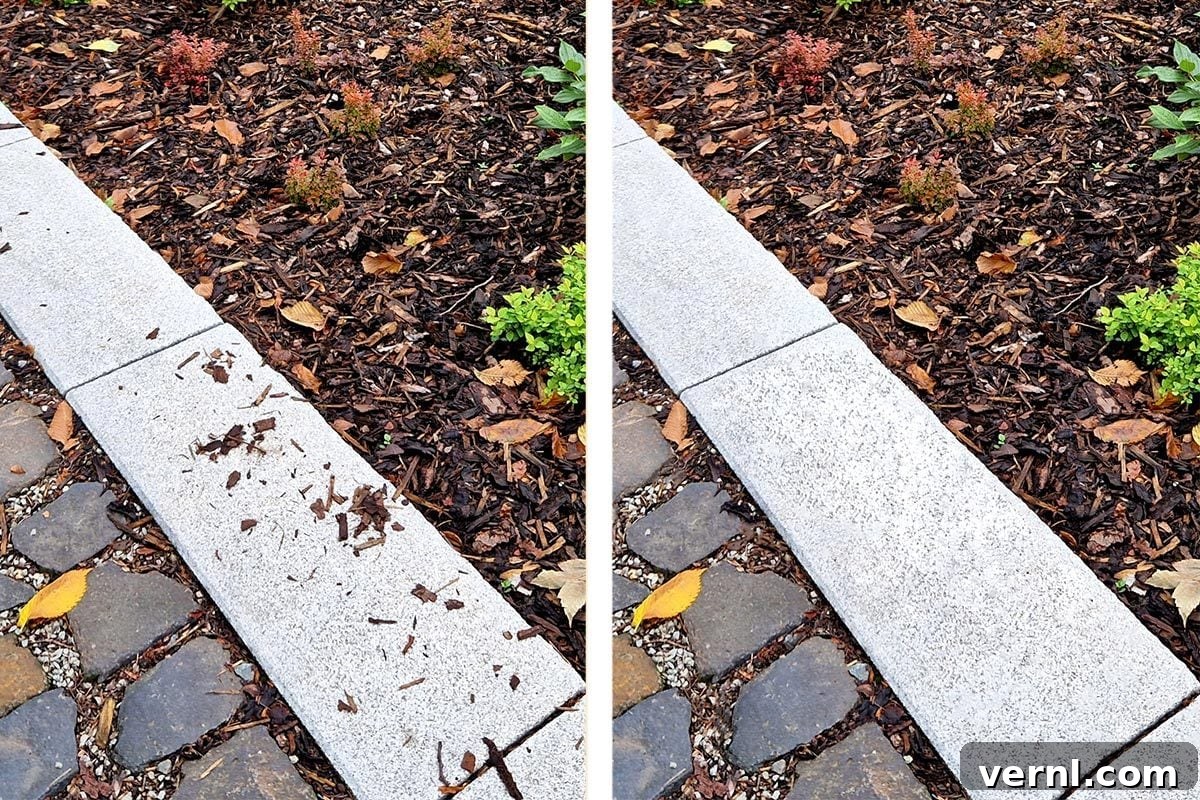
Mulch Glue: Your Secret Weapon for a Perfect Landscape
Tired of your mulch washing away with every rainfall? Mulch glue could be the solution you’ve been searching for. This innovative spray-on product bonds mulch particles together, ensuring your landscaping efforts stay put, even on slopes or in high-traffic areas. Say goodbye to scattered mulch and hello to a beautifully maintained yard!
I personally use mulch glue to keep mulch from migrating onto my pool deck, where it would inevitably end up after every rainstorm. It’s incredibly easy to apply and readily available at most home improvement stores. Plus, if you’re feeling ambitious, you can even make your own with a few simple ingredients.
This comprehensive guide will delve into everything you need to know about mulch glue, including its composition, how to apply it effectively, and expert insights from industry professionals. We’ll explore the benefits, address common questions, and even provide instructions for a DIY solution. Let’s get started!
What is Mulch Glue? A Comprehensive Definition
At its core, mulch glue is a landscaping adhesive designed to bind together loose organic materials. It’s used to hold mulch, wood chips, pine straw, and even sand or pea gravel in place. When applied, it dries clear, effectively bonding the top layer of your chosen substrate. This creates a cohesive surface that resists the forces of wind, rain, and foot traffic.
This clear, flexible bond is what sets mulch glue apart. It doesn’t drastically alter the appearance of your landscape while still providing significant benefits. It’s a practical and efficient method for maintaining the beauty and functionality of your outdoor spaces.
Why Use Mulch Glue? Exploring the Benefits
Mulch glue offers a multitude of benefits for both homeowners and professional landscapers. Its primary purpose is to keep loose landscape materials in their designated areas, preventing them from scattering and reducing maintenance.
Consider the common problem of mulch washing away during heavy rain. Mulch glue forms a bond that helps to mitigate this issue. For example, around my pool, mulch consistently ended up on the deck. Switching to stone or gravel wasn’t an ideal solution. Mulch glue provided the perfect answer, keeping the mulch contained within the garden bed, regardless of the weather.
Here’s a quick rundown of the key advantages:
- Prevents Mulch Displacement: Keeps mulch in place, even on slopes and in windy conditions.
- Reduces Maintenance: Minimizes the need for frequent mulch replacement and cleanup.
- Enhances Aesthetics: Maintains a neat and tidy appearance in your garden beds and landscaping.
- Versatile Application: Suitable for use with various mulch types, including wood chips, pine straw, and more.
- Easy to Use: Simple spray-on application process.
What is Mulch Glue Made Of? Unveiling the Ingredients
The composition of mulch glue can vary depending on the manufacturer and the specific product. However, the core ingredients typically revolve around the use of binders. These binders are the key components that provide the adhesive properties.
Most commercial mulch glue products utilize a base of either urethane or acrylic binders. Some advanced formulations incorporate both urethane and acrylic binders, creating “cross-linked” products known for their enhanced durability and performance. This combination often results in a stronger, longer-lasting bond.
Expert Insight: Brion Amstutz from Nationwide Protective Coatings explains, “There are different resins that are used to formulate mulch glue. Here at Nationwide, we have our economical grade Mulch Glue that is made with a Modified Acrylic Resin that has excellent performance. However, we do have a 100 percent Acrylic Resin formulation called Mulch Glue PRO that is crystal clear and has better durability and performance.”
Andy Slamans from Petramax describes his company’s mulch glue as “a proprietary blend biodegradable polymer, meaning it’s a product that is meant to break down over time.” This highlights the environmentally conscious approach of some manufacturers, ensuring the product eventually decomposes naturally.
How to Apply Mulch Glue: Step-by-Step Instructions
Applying mulch glue is a straightforward process. You’ll need a pump sprayer for best results. The following steps will guide you through the process for optimal outcomes:
- Prepare the Mulch: Ensure the mulch is completely dry before application. This is crucial for proper adhesion.
- Weather Conditions: Aim for dry weather both before and after application. Experts recommend a dry period of 24 hours to two days before spraying and at least two days afterward. This allows the glue to cure properly.
- Dilution: Most brands require dilution with water. Always meticulously follow the manufacturer’s instructions for the correct ratio.
- Application: Use the pump sprayer to apply an even coat of the diluted mulch glue over the surface of the mulch. Overlap slightly to ensure complete coverage.
- Multiple Coats: For optimal performance, plan on applying at least two coats. Applying multiple coats ensures thorough coverage and strengthens the bond. The number of coats needed can depend on the type of mulch, the application area and the product used.
- Drying Time: Allow adequate drying time between coats and before exposing the treated area to foot traffic or rainfall. This timeframe is specific to the product and environmental conditions, so refer to the product label.
Expert Tip: Amstutz advises, “Every application is different. High volumes of mulch will probably need more than one application” to allow each piece to receive a thorough coating.
DIY Mulch Glue: Can You Make Your Own?
Yes, you can create a cost-effective mulch glue at home! However, keep in mind that homemade solutions may not be as durable or effective as commercially available products. This DIY method is best suited for lighter applications where the longevity isn’t a primary concern.
Here’s what you’ll need:
- Latex-based school glue (white)
- Warm water
- Cornstarch (as a thickening agent)
- Pump sprayer
Follow these steps:
- Mix the Adhesive: In a clean pump sprayer, combine one part white school glue with three parts warm water.
- Thicken the Solution: Add one tablespoon of cornstarch. This helps improve the mixture’s adherence to the mulch.
- Stir Thoroughly: Use a mixing stick to ensure the ingredients are blended completely. The mixture should be smooth and free of lumps.
- Application: Apply the DIY solution in the same manner as you would commercial mulch glue, ensuring full coverage. Be aware that the durability may be less, and reapplications may be required more frequently.
FAQ: Addressing Common Questions about Mulch Glue
Does mulch glue prevent weeds?
No, mulch glue doesn’t directly prevent weeds. While it binds the mulch together, it doesn’t create a complete barrier to weed growth. Weeds can still germinate and penetrate the mulch glue film. For effective weed control, consider using landscape fabric, pre-emergent herbicides, or hand-pulling weeds in conjunction with mulch glue.
Amstutz explains, “The weeds will still grow under the mulch glue and can penetrate the mulch glue film.”
How long does mulch glue last?
The lifespan of mulch glue varies depending on the product, weather conditions, and environmental factors. A standard expectation is around twelve months. However, in rainy climates, you might need to reapply more frequently. In drier regions, the bond may last longer.
Slamans states, “Twelve months is standard, but it will vary based on the weather.”
Amstutz adds, “[Nationwide’s] Mulch Glue could last one to two years, but most consumers re-apply every year or when mulch starts to become loose.”
Does mulch glue really let water through?
Yes, mulch glue is designed to allow water and essential nutrients to pass through to the soil. It doesn’t create an impermeable seal. The glue is applied in a way that doesn’t form a continuous film. This allows for healthy soil aeration and the proper absorption of water and nutrients.
Amstutz clarifies, “Mulch glue is applied in a manner so that it does not form a continuous film. Water can penetrate through the areas where the mulch glue has not formed a solid film.”
About the Experts: Who Provided the Insights?
This guide has benefited from the knowledge and experience of industry experts, providing valuable perspectives on mulch glue.
- Brion Amstutz: Sales Director at Nationwide Protective Coatings in Sarasota, Florida.
- Andy Slamans: The owner and creator of the Petramax Lockscape Sticky Mulch Glue.
Their insights have helped to provide a comprehensive understanding of mulch glue, its uses, and its benefits.
By using mulch glue, you can significantly improve the look and function of your landscaping, and with this guide, you now have all the information you need to make the best choice for your yard!