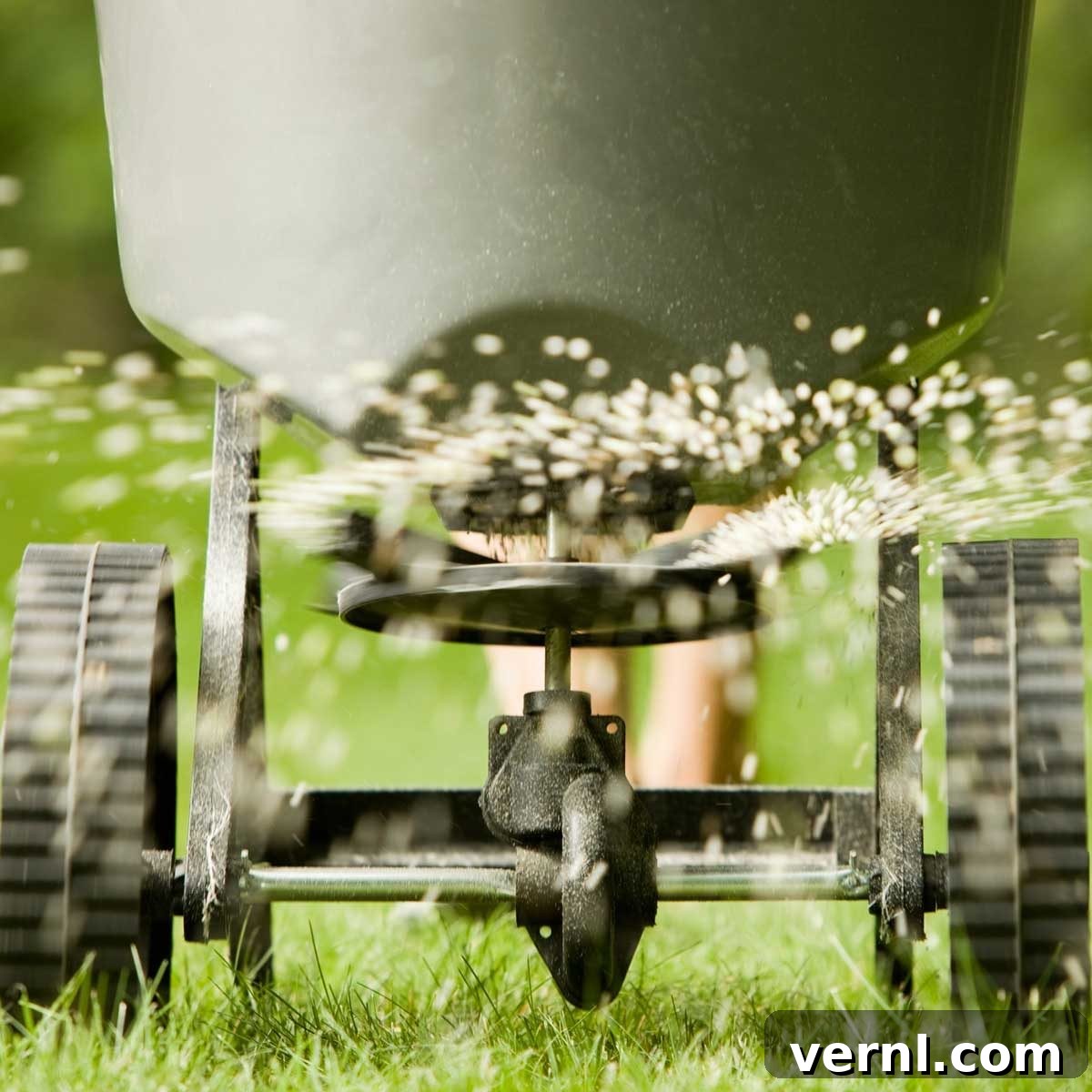
As the vibrant hues of summer fade and the crisp air of autumn settles in, many homeowners begin to transition their focus from active summer living to preparing their homes and landscapes for the colder months ahead. While tasks like raking leaves and winterizing irrigation systems often take center stage, one of the most impactful steps you can take to ensure a healthy, resilient lawn come spring is often overlooked: applying a strategic fall or winter fertilizer. Investing a little time behind your spreader now, perhaps a reliable model like the Scotts Elite Spreader, can dramatically fortify your lawn against the harsh realities of winter, setting the stage for a spectacular spring resurgence.
The Critical Role of Fall Fertilization
The summer months can be incredibly demanding on your lawn. Constant foot traffic, the relentless heat, varying levels of shade, and the potential onslaught of diseases, weeds, and insects all contribute to significant stress. By the time autumn arrives, your lawn is often exhausted and depleted, in desperate need of replenishment. This is precisely where fall fertilization becomes indispensable. Rather than simply “feeding” your lawn for immediate growth, a well-timed fall application focuses on strengthening the grass from the inside out, building reserves, and enhancing its natural defenses. It’s an essential component of a comprehensive fall lawn care routine, acting as a final, crucial meal before your lawn enters its dormant phase for the year.
Understanding Winter (Fall) Fertilizer
The terminology surrounding “winter fertilizer” can sometimes be a bit misleading, as the application actually occurs in the fall. The name simply reflects its purpose: to prepare your lawn for the challenges of winter weather. Whether you call it winter fertilizer or fall fertilizer, its objective remains the same – to provide your turf with the necessary nutrients for deep root development, enhanced cold tolerance, and disease resistance, ensuring it can withstand freezing temperatures, snow cover, and fluctuating conditions. It’s not about promoting lush top growth in late fall, but rather about strengthening the underground systems that will fuel vigorous growth next spring.
Why “Winter” Fertilizer is Applied in Fall
The key reason “winter” fertilizer is applied in autumn is to capitalize on the natural growth cycle of cool-season grasses, which are common in many regions. As summer heat subsides and temperatures become cooler, grass growth shifts from leaf production to root development and carbohydrate storage. Applying fertilizer during this period allows the grass to absorb vital nutrients, particularly potassium and a balanced amount of nitrogen, which are then stored in the roots and crown of the plant. These stored reserves act as an energy bank, providing the grass with the fuel it needs to survive winter dormancy and to kickstart vigorous growth as soon as spring arrives, often leading to an earlier green-up.
The Science Behind Fall Fertilization
At a cellular level, fall fertilization helps grass plants accumulate crucial carbohydrates, which are essential for energy storage. These carbohydrates act like antifreeze, improving the plant’s ability to resist freezing damage. Additionally, adequate potassium levels enhance the plant’s turgor pressure, making cell walls stronger and less susceptible to environmental stresses like drought, cold, and disease. By strengthening these physiological processes, fall fertilization doesn’t just help your lawn “survive” winter; it allows it to thrive through it, emerging healthier and more resilient when spring returns.
Deciphering Fertilizer Labels: N-P-K for Fall
Choosing the best winter fertilizer involves understanding the N-P-K ratio prominently displayed on every bag. These numbers represent the percentage by weight of Nitrogen (N), Phosphorus (P), and Potassium (K) – the three primary macronutrients essential for plant health. For fall fertilization, the emphasis shifts slightly compared to spring or summer applications. While nitrogen is still important, phosphorus and especially potassium take on heightened significance for winter preparation.
Nitrogen: Fueling Carbohydrate Reserves
Nitrogen, the first number in the N-P-K ratio, is crucial for lush, green growth. In fall, however, its role is subtly different. We’re not aiming for excessive top growth, which can make grass more susceptible to winter damage or snow mold. Instead, the nitrogen applied in fall encourages the grass to store carbohydrates in its root system. These stored carbohydrates are vital energy reserves that will sustain the plant through dormancy and provide an immediate boost for spring growth. Look for a moderate amount of nitrogen, often in a slow-release form, to ensure a steady supply without promoting unwanted growth late in the season.
Potassium: The Winter Warrior
Potassium (K), the third number, is arguably the most critical nutrient for fall application. Often referred to as the “stress reducer,” potassium plays a pivotal role in strengthening the grass plant’s cells, improving its overall hardiness and resilience. It enhances tolerance to cold temperatures, drought, and disease. A good fall fertilizer will typically have a relatively high potassium content, often matching or exceeding the nitrogen content, such as a 2:1 or 1:2 ratio of nitrogen to potassium. This robust dose of potassium ensures your lawn has the internal strength to fend off winter stressors and recover quickly in the spring.
Phosphorus: The Root Reinforcer (and Regulations)
Phosphorus (P), the middle number, is essential for strong root development and overall plant energy transfer. For fall fertilization, a healthy root system is paramount as it anchors the plant and facilitates efficient nutrient and water uptake. While beneficial, many states and municipalities have regulations restricting or prohibiting phosphorus application on established lawns due to environmental concerns, particularly its potential to contribute to water pollution. Always check your local regulations before purchasing or applying a phosphorus-containing fertilizer. If allowed and beneficial for your soil (as determined by a soil test), a fertilizer with at least 4 percent phosphorus, like The Andersons Complete 16-4-8 Fertilizer + Humic DG, can significantly fortify your grass’s root system for improved winter hardiness and spring vigor.
Choosing the Right Fall Fertilizer Product
With an understanding of N-P-K, you’re better equipped to select a suitable product. Beyond the numbers, consider the formulation and any specific preferences you might have, such as organic options.
Granular vs. Liquid Fertilizers
- Granular Fertilizers: These are the most common type for homeowners and are often preferred for fall applications. They come in solid pellets and are applied with a spreader. Granular fertilizers typically offer a slow, steady release of nutrients, which is ideal for fall, allowing the grass to absorb them gradually over several weeks.
- Liquid Fertilizers: Applied with a sprayer, liquid fertilizers provide a quick nutrient uptake. While effective for immediate boosts, they might not offer the sustained release often desired for long-term winter preparation. They can be useful for targeted applications or if you’re looking for a very fast response.
Slow-Release vs. Quick-Release Formulas
For fall fertilization, slow-release formulas are generally recommended. These fertilizers provide a consistent supply of nutrients over an extended period, preventing a sudden surge of top growth that could be vulnerable to early frosts. Quick-release fertilizers deliver nutrients rapidly, which can be beneficial in other seasons but might encourage too much tender new growth too late in the fall, making the grass more susceptible to winter damage. Always check the product label for information on nutrient release rates.
Organic Options for a Healthier Lawn
For environmentally conscious homeowners or those seeking to improve soil health, organic fall fertilizers are an excellent choice. Products like Espoma Organic Fall Winterizer derive their nutrients from natural sources such as bone meal, feather meal, and various plant extracts. While they might have lower N-P-K numbers than synthetic options, they work by enriching the soil microbiome, promoting long-term soil health, and gradually releasing nutrients as microorganisms break them down. This contributes to a healthier, more resilient lawn over time.
The Importance of a Soil Test
Before making any fertilizer application decisions, consider conducting a soil test. Available through local extension offices or garden centers, a soil test provides a detailed analysis of your soil’s pH and nutrient levels. This invaluable information will tell you exactly what your lawn needs, preventing over-application of unnecessary nutrients and saving you money while being environmentally responsible. It’s the most accurate way to tailor your fertilizer choice to your lawn’s specific requirements.
Some excellent fall fertilizer choices, depending on your needs and local regulations, include popular options like Greenview Fall Lawn Food and Jonathan Green Winter Survival, which are well-regarded for their balanced fall formulations.
Mastering the Application Process
Once you’ve selected the perfect fall fertilizer, proper application is key to maximizing its benefits and ensuring an evenly nourished lawn. Applying fall/winter fertilizer is similar to applying any other lawn food, but precision is important.
Essential Tools: Your Fertilizer Spreader
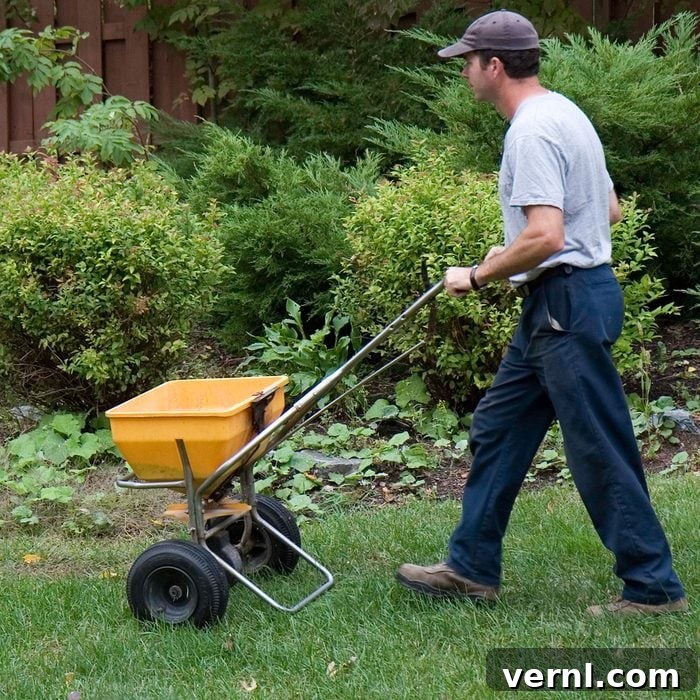
A good quality fertilizer spreader is indispensable for even application. There are two main types:
- Broadcast Spreader (Rotary Spreader): This type disperses granular fertilizer in a wide arc, making it ideal for larger lawns. They are generally faster to use but require careful attention to overlap to prevent uneven application.
- Drop Spreader: This spreader drops fertilizer directly beneath its width, providing more precise application. It’s excellent for smaller lawns, preventing fertilizer from landing on driveways or flowerbeds, but it requires more passes and meticulous alignment to avoid stripes.
Always calibrate your spreader according to the manufacturer’s instructions for your specific fertilizer product. The bag will provide a recommended spreader setting based on the coverage area per bag and the desired application rate.
Achieving Even Coverage: Techniques and Tips
Uneven application can lead to unsightly stripes of dark green and light green grass, or worse, burned spots from over-application. To ensure uniform coverage:
- Divide the Rate: A widely recommended technique is to set your spreader to half the recommended application rate.
- Two-Pass Method: Apply the fertilizer in two passes. For the first pass, walk back and forth in one direction across your lawn. For the second pass, walk at right angles to your first pass. This cross-hatch pattern significantly reduces the chance of missing spots and ensures thorough, even coverage.
- Edge Control: When using a broadcast spreader, be mindful of your lawn’s edges. Start with the spreader’s gate closed, begin walking, then open the gate. Close it again before you stop. This prevents dumping fertilizer in one concentrated spot. Many broadcast spreaders also have an edge guard feature to prevent spreading onto non-lawn areas.
The Golden Rule: Watering It In
After spreading the fertilizer, it is crucial to water it into the soil. This helps move the nutrients down to the root zone where they can be absorbed by the grass. Watering also prevents the granular fertilizer from sitting on the grass blades, which can cause burn, especially if the lawn is wet from dew. Aim to apply your fall fertilizer before a scheduled irrigation cycle or when rain is expected. If natural rain isn’t in the forecast, lightly water your lawn within 24-48 hours of application.
Optimal Timing for Fall Fertilizer Application
The “when” of fall fertilization is just as critical as the “what” and “how.” Timing depends largely on your geographical location and the specific climate zone you reside in. Generally, the sweet spot for application is six to eight weeks before your region’s average first hard frost.
Regional Timing Guide: North, Mid-Atlantic, South
- Northern Climates (Cool-Season Grasses): For regions with cold winters and cool-season grasses (like tall fescue, Kentucky bluegrass, perennial ryegrass), the ideal window is typically between early September and mid-October. The goal is to apply while the grass is still actively growing and the soil temperatures are conducive to nutrient uptake, but before the ground freezes solid.
- Mid-Atlantic Climates (Transition Zone): This zone has both cool and warm-season grasses. For cool-season lawns, follow the northern guidelines. If you have warm-season grasses (like Bermuda, zoysia, St. Augustine) that are still green, a light application in early fall can be beneficial, but avoid fertilizing after temperatures consistently drop below 60°F, as warm-season grasses will soon enter dormancy.
- Southern Climates (Warm-Season Grasses): For areas with mild winters and warm-season grasses, fall fertilization is less about “winterizing” and more about providing a final nutrient boost before dormancy. Apply in early fall (September) with a low-nitrogen, high-potassium formula. Avoid fertilizing too late, as it can stimulate new growth that is vulnerable to the very infrequent but damaging frosts in these regions.
The overarching goal is to ensure your grass has at least one month of active grass growing weather remaining after fertilization before winter fully takes its grip. This allows sufficient time for the nutrients to be absorbed and stored.
The Dangers of Applying Too Late
Applying fertilizer too late in the fall, when temperatures are consistently cold and growth has slowed considerably, can be detrimental. Excess nitrogen applied late can promote tender top growth that won’t have time to harden off before the first hard freeze. This succulent growth is highly susceptible to winter kill and can be an open invitation for diseases like snow mold in early spring, leading to patchy, damaged lawns. You want your grass to stop growing vertically and “harden off” by redirecting energy to its roots before the ground freezes solid.
The Risks of Applying Too Early
Conversely, applying fall fertilizer too early, especially if late-summer heat persists, can also be problematic. If temperatures are still high, the nitrogen can encourage excessive summer-like top growth, which drains energy reserves needed for winter preparation. This can also lead to nutrient runoff if heavy rains occur before the grass has a chance to absorb the fertilizer. Patience is key; wait until consistent cooler temperatures signal the grass’s shift towards root development.
Integrating Fall Fertilization into Your Overall Lawn Care Plan
Fall fertilization is a powerful tool, but it’s most effective when integrated into a comprehensive fall lawn care strategy. It works synergistically with other practices to ensure your lawn enters winter in the best possible condition.
Complementary Fall Tasks: Aeration, Overseeding, Leaf Removal
- Aeration: If your soil is compacted, fall is an excellent time for aeration. This process creates small holes in the lawn, allowing air, water, and nutrients (including your fall fertilizer) to penetrate more effectively to the root zone.
- Overseeding: For thinning lawns or to introduce new, resilient grass varieties, fall is the ideal time for overseeding. Fertilizing after overseeding provides essential nutrients for the new seedlings to establish strong roots before winter.
- Leaf Removal: While not directly related to fertilization, keeping your lawn free of fallen leaves is crucial. A thick layer of leaves can smother grass, block sunlight, and create an ideal environment for snow mold and other fungal diseases, negating the benefits of your fall fertilizer.
Preventing Common Mistakes
Beyond improper timing or application, common mistakes include:
- Not testing soil: Guessing your soil’s needs can lead to wasted effort and potentially harm your lawn.
- Using the wrong N-P-K ratio: Applying a high-nitrogen “grow” fertilizer in fall is counterproductive.
- Ignoring local regulations: Especially concerning phosphorus.
- Applying to wet grass (and not watering in): Can lead to fertilizer burn.
Following these guidelines and integrating fall fertilization with other best practices will help prevent the need to undertake extensive repair your lawn from winter-related issues next spring, saving you time, effort, and money.
Long-Term Benefits of a Well-Fertilized Fall Lawn
The effort you put into fall fertilization pays dividends for months to come. A properly fertilized lawn:
- Emerges Stronger in Spring: Stored carbohydrates lead to earlier green-up and more vigorous growth when spring arrives.
- Resists Disease and Pests: Enhanced cellular structure from potassium makes grass less susceptible to winter diseases like snow mold and more resilient against insect damage.
- Withstands Winter Stress: A fortified root system and improved cold tolerance allow the grass to endure freezing temperatures, ice, and snow cover more effectively.
- Reduces Spring Work: A healthy, robust lawn in spring means less patching, less disease treatment, and a head start on a beautiful landscape for the entire growing season.
- Improves Overall Turf Density: Stronger roots and healthier individual plants contribute to a thicker, denser lawn that naturally crowds out weeds.
In conclusion, fall fertilization is not just another chore; it’s a strategic investment in the health and beauty of your lawn. By understanding what winter fertilizer is, how to choose the right type, and when and how to apply it correctly, you can provide your grass with the ultimate protection and nourishment it needs to face winter head-on and emerge healthier and more vibrant than ever before.