
Mastering Your Window AC: Solutions for Ill-Fitting Side Panels and Gaps
Summer has officially arrived, bringing with it the relentless heat that makes a functioning air conditioner an absolute necessity. For many, this means dusting off the trusty window AC unit, cleaning its filters, and carefully installing it into the window frame. But what happens when your window AC unit, which fit perfectly in your old place, now seems mismatched with your new home’s windows? Or perhaps you’ve invested in a brand-new unit, only to discover its standard side panels fall short of spanning the expansive gap of a wider window?
This common conundrum can quickly turn the excitement of cool air into a frustrating puzzle. I faced this exact problem after moving into my new home, where the bedroom windows proved too wide for my existing AC unit. My initial thought was to simply buy a new one – an expensive and inconvenient solution. However, with a dash of creativity, a keen eye for measurement, and some readily available materials like plexiglass, I successfully adapted my unit to fit. This guide will walk you through various practical options to ensure your air conditioner fits snugly, even when its side panels don’t quite reach. We’ll cover everything from simple adjustments to custom solutions, featuring valuable insights from Micah Sherman, a Virtual HVAC Expert at Frontdoor.
Understanding AC Side Panels: Your First Line of Defense Against the Heat
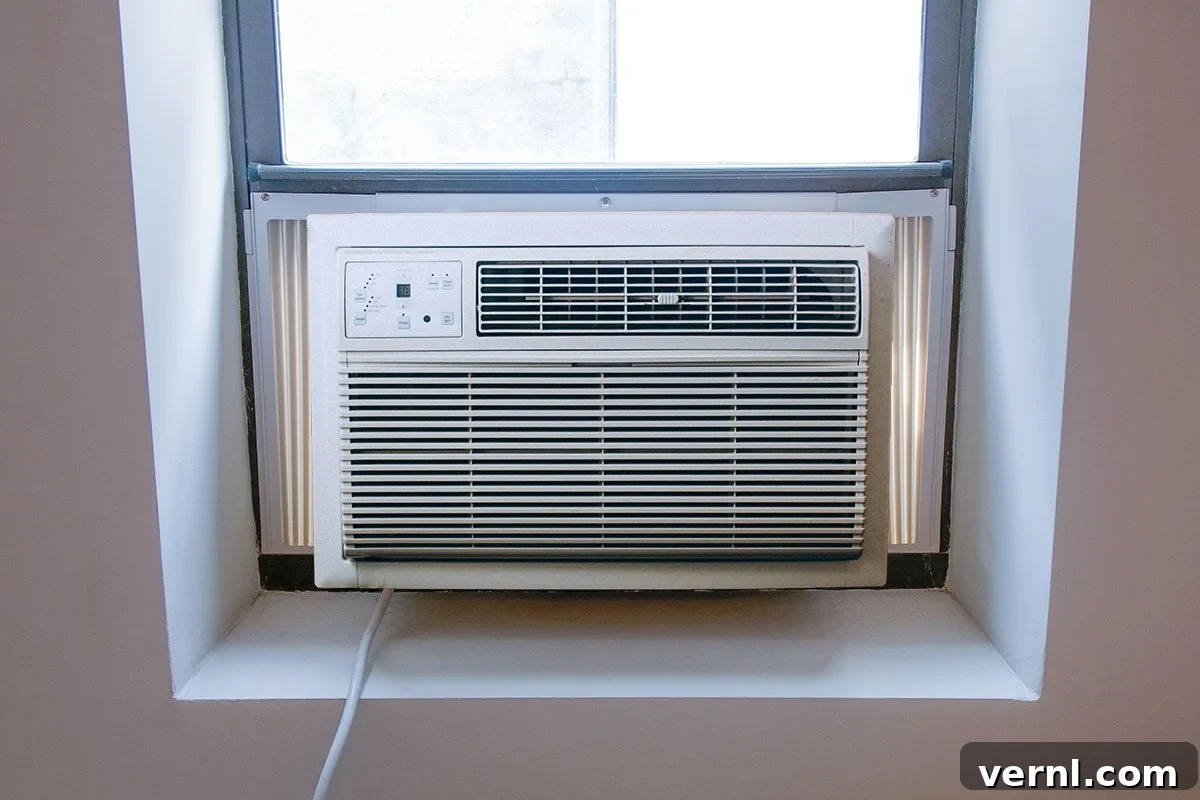
Before diving into solutions, let’s understand the role of those accordion-like flaps attached to the sides of your window AC unit. These are the side panels – typically made of plastic or vinyl, designed to extend and bridge the space between the air conditioner unit and the window frame. While seemingly simple, these panels serve several critical functions that are vital for both your comfort and your home’s energy efficiency.
Firstly, side panels act as a physical barrier. They prevent unwanted elements from entering your home, such as pesky insects, rain, dust, and outdoor debris. Without them, your cooled interior would be constantly battling intrusions from the outside world. Secondly, and perhaps most importantly, they are crucial for maintaining the cold air generated by your AC. Gaps around your unit act as open invitations for cold air to escape outdoors and for hot, humid air to seep indoors, forcing your AC to work harder and less efficiently. This leads to higher energy bills and a less comfortable living space. These panels come pre-installed with your window unit and are specifically engineered to complement that model’s dimensions, aiming for a seamless integration into standard window types. However, “standard” often varies widely, leading to the fitting challenges many homeowners encounter.
What To Do If Your AC Side Panels Won’t Fit Your Window
Encountering a window that’s either too narrow or too wide for your AC’s side panels is a common installation hurdle. Fortunately, there are several effective strategies, ranging from minor adjustments to custom fabrications, to ensure your unit is securely and efficiently installed. Let’s explore these options to achieve a perfect, airtight fit for your window air conditioner.
1. Strategic Panel Removal: Adapting to Narrow Windows
If your window opening proves to be too narrow to comfortably accommodate both of your AC unit’s side panels, a simple yet effective solution is to remove one of them. This often provides the necessary space for a better fit without compromising the unit’s core function or stability. Instead of attempting to center the AC unit, position it closer to one side of the window frame. Once the unit is anchored securely, extend the remaining panel to cover as much of the exposed gap as possible on the other side. This method is particularly useful for windows that are only slightly narrower than the unit with both panels extended.
In more extreme cases, where the window is significantly narrow, you might even find it necessary to remove both side panels entirely. When opting for this approach, it becomes absolutely critical to effectively seal any and all resulting gaps around the AC unit. Materials such as adhesive-backed weatherstripping, durable sealing tape, or even high-quality painter’s tape can be used to create an airtight barrier, preventing air leaks and maintaining your indoor climate. Remember, the goal is not just to fit the unit, but to seal it comprehensively for optimal performance.
2. Crafting Custom Panels: The DIY Solution for Wide Gaps
When standard panels simply aren’t long enough to bridge substantial window gaps, or when you’ve removed one or both panels, creating custom replacements is an excellent and often more permanent solution. This DIY approach allows you to tailor the fit precisely to your window’s dimensions, ensuring maximum efficiency and aesthetics. A variety of materials can be utilized for custom panels, each with its own advantages and considerations:
- Plywood: A sturdy and durable option, plywood offers excellent insulation and can be painted to match your window frame for a seamless look. It’s more resistant to wear and tear than lighter materials but requires proper cutting tools and sealing against moisture. Choose a thickness that is rigid enough to hold its shape but not overly heavy.
- Rigid Foam Board (e.g., XPS or EPS): Often recommended by experts, rigid foam board is lightweight, incredibly easy to cut, and provides superior insulation properties. Materials like extruded polystyrene (XPS) foam are moisture-resistant and ideal for blocking drafts and heat transfer. While it might not be as aesthetically pleasing as painted wood, it’s highly effective and cost-efficient.
- Plexiglass (Acrylic Sheet): If natural light and visibility are priorities, plexiglass is an excellent choice. It allows daylight to stream into the room, maintaining an open feel. However, plexiglass can be more challenging to cut without specialized tools to prevent cracking, and it offers less insulation compared to foam board or plywood. It’s also typically a more expensive option.
- Egg Crate Foam: While less rigid and durable than other options, egg crate foam is extremely lightweight and easy to manipulate. It offers some insulating properties and can be a good temporary or budget-friendly solution, especially when layered or used to fill irregular spaces. It’s generally not recommended for outdoor exposure due to its lack of weather resistance.
- Cardboard: For very temporary fixes or for measuring templates, cardboard can be useful. However, it offers minimal insulation, is highly susceptible to moisture, and lacks durability for long-term use. It should only be considered for emergency, short-term situations.
Regardless of the material you choose, the key to success lies in meticulous measurement and precise cutting. As Micah Sherman advises, “measure and cut to size and then tape it into the gaps of the window to ensure no outdoor air is leaking into the room.” Always remove any existing side panels first to ensure your custom replacements can be installed flush against the AC unit and window frame. Once cut, secure the custom panels firmly using strong adhesive tape (like duct tape or foil tape for a more durable seal) and seal all edges thoroughly with weatherstripping or caulk for an impenetrable barrier.
3. Considering an Upgrade: When a Larger AC is Justified
There are instances where the gap between your AC unit (even with fully extended side panels) and the window opening is simply too significant – say, a foot or wider. In such cases, attempting to bridge this substantial space with custom panels might become impractical, less stable, or compromise the aesthetic. This might be a clear signal that your current AC unit is undersized for the window opening, or possibly for the room itself.
While an immediate expense, upgrading to a larger AC model that more closely matches your window dimensions can be a worthwhile long-term investment. A better-fitting air conditioner will inherently reduce the size of the side gaps, drastically minimizing the need for extensive sealing and custom fabrication. Moreover, ensuring your AC unit is appropriately sized (in BTUs) for the room it’s cooling is crucial for efficient operation. An undersized unit will run constantly without effectively cooling, while an oversized unit will cycle on and off too frequently, leading to poor dehumidification. Upgrading can lead to greater energy efficiency, lower utility bills over time, and a more consistent, comfortable indoor climate. Consult a BTU sizing guide to match your room’s square footage with the appropriate AC capacity.
4. Sealing Minor Gaps: The Finishing Touch for an Airtight Seal
Even with carefully installed side panels (whether original or custom), you might find small, hairline gaps or tiny crevices remaining between the panels and the window frame, or where the panels meet the AC unit itself. These seemingly insignificant openings can still allow considerable amounts of air leakage, undermining your AC’s efficiency. For these minor adjustments, various sealing products are highly effective:
- Adhesive-Backed Foam Insulation Tape: This self-adhesive tape comes in various widths and thicknesses. It’s excellent for filling small, uneven gaps and creating a cushion that blocks airflow. It’s easy to apply and trim.
- Weatherstripping: Available in foam, rubber, or vinyl forms, weatherstripping can be pressed into tight spaces. It creates a flexible seal that conforms to irregularities, making it ideal for the edges where panels meet the window sash or sill.
- Sealing Tape (e.g., HVAC foil tape, strong packing tape): For a more robust and permanent seal, specialized sealing tapes can be applied over seams and gaps. HVAC foil tape, in particular, offers durability and excellent adhesion, especially in environments with temperature fluctuations.
Applying these materials carefully around all edges and seams will create a truly airtight barrier. This step, though often overlooked, is fundamental to maximizing your AC’s performance, preventing energy waste, and ensuring your cool air stays exactly where it belongs – inside your home.
Beyond the Panels: Plugging Up Every Space Around Your AC
Achieving optimal cooling efficiency extends beyond just fitting the side panels; it requires meticulously sealing every potential entry point for outside air. Once your side panels are in place, whether original or custom-made, it’s time to address any remaining gaps – no matter how small – between the panels and the window frame, as well as between the AC unit itself and the window sill or sash.
For these crucial final seals, a combination of materials can be highly effective. Adhesive-backed weatherstripping is excellent for filling thin, irregular spaces, creating a snug fit. High-quality painter’s tape can provide a temporary, clean-looking seal that’s easy to remove without leaving residue, making it ideal for renters or seasonal installations. For a more robust and weather-resistant seal, consider using specialized sealing tapes. For instance, products like Flex Seal Flood Protection Tape are designed to provide a strong, watertight barrier while also being easily removable when the season ends, without damaging surfaces or leaving sticky residue. This makes it an excellent choice for securing your window unit without long-term commitment.
Remember, even tiny gaps can lead to significant energy loss and allow in dust, pollen, and humidity. Taking the time to thoroughly seal every crevice will not only keep your home cooler and more comfortable but also contribute to noticeable savings on your energy bills throughout the summer months.
Expert Recommended Alternatives to Standard AC Side Panels
When the factory-issued side panels just don’t cut it, or if you prefer a more customized and insulated approach, several alternatives stand out. According to Micah Sherman, “the best alternative would be foam board and tape.” He elaborates that “This provides a little insulation against the outdoor temps, and if cut properly, can seal the gap in the window very effectively.” Foam board (especially rigid foam insulation like XPS) is indeed a stellar choice due to its lightweight nature, ease of cutting, and superior insulating properties, which directly contribute to energy savings by reducing heat transfer.
Beyond foam board, other viable options for crafting custom panels include:
- Plywood: As discussed, plywood offers strength and can be finished to blend seamlessly with your interior decor. It’s a robust choice for a semi-permanent installation.
- Cardboard: While not ideal for long-term use due to its susceptibility to moisture and lack of insulation, cardboard can serve as a quick, temporary fix or a useful template for cutting more durable materials.
- Egg Crate Foam: This material provides a degree of insulation and is very easy to cut and fit into irregular spaces. It’s best suited for areas not directly exposed to the elements due to its porous nature.
- Plexiglass: For those who prioritize natural light and an unobstructed view, plexiglass is an elegant solution. It allows daylight into the room, maintaining an airy feel. However, be aware that plexiglass can be tricky to cut without specialized tools or techniques to prevent cracking. Learning how to cut plexiglass properly is essential for a clean finish.
When choosing an alternative, consider the trade-offs between insulation, durability, cost, aesthetics, and ease of installation. Ultimately, the best alternative is one that provides a secure, airtight seal, effectively blocks heat, and meets your specific needs and budget.
Frequently Asked Questions About Window AC Panel Solutions
Can you mount a window unit AC with only one side panel?
Absolutely, it is perfectly safe and structurally sound to install a window AC unit using only one side panel. The primary function of the side panels is to bridge gaps and provide an airtight seal, not to offer structural support. The secure mounting of a window air conditioner is primarily achieved through the unit’s robust bracket system, which fits around the AC and anchors it firmly to the window frame or sill. As long as the unit itself is properly supported and secured according to the manufacturer’s instructions, removing one or even both side panels will not compromise its safety or stability. When using only one panel, simply ensure the exposed gap on the other side is meticulously sealed with appropriate materials like foam board, weatherstripping, or strong adhesive tape to prevent air leakage and pest entry.
How important is sealing AC gaps for energy efficiency?
Sealing all gaps around your window AC unit is critically important for energy efficiency. Unsealed gaps, even small ones, create pathways for cool, conditioned air to escape your home and for hot, humid outdoor air to infiltrate. This forces your air conditioner to work significantly harder and run longer cycles to maintain the desired temperature, leading directly to increased electricity consumption and higher utility bills. A poorly sealed AC unit can reduce its cooling effectiveness by 10-30% or more. By taking the time to properly seal all gaps with weatherstripping, foam, or tape, you maximize your AC’s efficiency, reduce energy waste, enhance your home’s comfort, and ultimately save money.
Can custom AC panels affect my AC unit’s warranty?
Generally, fabricating and installing custom side panels for your window AC unit will not void the manufacturer’s warranty, as long as the modification does not involve altering the internal components or the main structure of the AC unit itself. The warranty typically covers defects in materials and workmanship of the appliance. However, if an issue arises and the manufacturer believes that your custom installation directly caused damage to the unit (e.g., by obstructing airflow in a way that led to overheating, or by putting undue stress on the unit), they might dispute a warranty claim. To be safe, ensure your custom panels do not block any vents on the AC unit, allow for proper drainage, and are installed securely without causing stress to the unit’s casing. When in doubt, it’s always wise to review your specific AC unit’s warranty documentation or contact the manufacturer directly for clarification.
About the Expert
- Micah Sherman is a Virtual HVAC Expert at Frontdoor with over 12 years of industry experience, providing invaluable advice on home heating, ventilation, and air conditioning solutions.
Related Articles for Home Comfort & Efficiency
- The Real Reason Aluminum Foil Has a Shiny Side and a Dull Side
- Think Adirondack Chairs Are Uncomfortable? You’re Using Them Wrong
- Why You Shouldn’t Crush Aluminum Cans Before Recycling