Real vs. Artificial Christmas Trees: A Comprehensive Guide to Cost, Value, and Sustainability
The festive glow of a Christmas tree is a cornerstone of holiday traditions, yet the choice between a real and an artificial tree involves more than just aesthetics. For years, artificial trees dominated the market with their convenience, but a significant shift is underway. For the first time in a considerable period, real Christmas trees are experiencing a resurgence in popularity, captivating a new generation of consumers.
Tim O’Connor, executive director of the National Christmas Tree Association, observes that this trend is driven by younger families who align their purchasing decisions with deeper values. “These are the same people who are buying organic foods,” O’Connor notes, highlighting a consumer base deeply concerned with the origins and impact of their purchases. “They want to know that their purchases are contributing to sustainability. There is clearly a movement happening, and we are trying to help consumers understand the difference between a plastic tree versus a tree grown on a farm in the United States, maybe even locally.”
This growing emphasis on sustainability, authenticity, and local sourcing has brought the age-old debate of real versus fake trees to the forefront once more. Beyond the aesthetic appeal and sentimental value, understanding the financial and environmental implications of each choice is crucial. With these priorities in mind, let’s delve deeper into the cost differences, the myriad elements that influence budgeting for this essential Christmas decoration, and the broader ecological footprint of each option.
Do Real Christmas Trees Cost More Than Fake Christmas Trees?
The answer to whether real Christmas trees cost more than their artificial counterparts is not always straightforward; it largely depends on various factors, including initial outlay, longevity, and quality. On the surface, the price tags can appear competitive, but a deeper analysis reveals a more complex picture.
According to data compiled by the National and the American Christmas Tree Associations, the average price of an authentic Christmas tree typically falls between $80 and $100. This figure represents an approximate 10% increase over the past year, largely attributable to economic factors like inflation, elevated fuel costs for transportation, and adverse weather conditions such as drought impacting tree growth and supply. In contrast, artificial Christmas trees exhibit a far wider price spectrum, ranging from about $85 for basic models to upwards of $1,000 or more for premium, large, or highly specialized designs.
Jami Warner, executive director of the American Christmas Tree Association, provides further insight into the artificial tree market: “According to our 2023 survey, 52% of artificial Christmas tree owners purchased their tree for under $200, and 27% paid $200 to $400.” She adds that for artificial trees, costs are highly variable, influenced by the producer’s brand reputation, the retailer’s pricing strategies, the tree’s size and shape, and desirable features such as integrated LED lighting (pre-lit options), advanced realistic needle technologies, or unique color variations.
Therefore, it is entirely possible to find both a real and an artificial tree within a similar price bracket for a single holiday season. However, the crucial distinction lies in their intended lifespan and ongoing commitment. Real trees necessitate an annual purchase, making them a recurring expense. An artificial tree, conversely, is a one-time investment that, as O’Connor points out, tends to last for about six years on average, and often much longer with proper care and storage. From a purely financial perspective over several holiday seasons, this longevity makes a quality artificial tree a more cost-effective choice in the long run. Nevertheless, for those who prioritize the sensory experience and ecological benefits of a fresh tree, understanding how long a real Christmas tree lasts and how to extend its freshness becomes more relevant than the long-term cost of an artificial one.
Factors Impacting the Cost of a Real Christmas Tree
The price tag of a real Christmas tree is not arbitrary; it’s a dynamic figure shaped by a complex interplay of marketplace influences, agricultural realities, and consumer demand. Understanding these factors can help consumers make informed choices and better budget for their desired holiday centerpiece.
Species
The particular tree species you select plays a significant role in its final cost. Generally, pine trees, such as Scotch Pine or White Pine, are less expensive than fir varieties. Among the firs, the Fraser Fir stands out as one of the most popular, renowned for its strong branches, excellent needle retention, and pleasant aroma. Consequently, it is almost always the priciest option due to its desirability and, often, longer growth cycle. Other popular firs like Balsam Fir or Douglas Fir offer a good balance of quality and cost, typically falling somewhere between pines and Fraser Firs.
Vendor Type
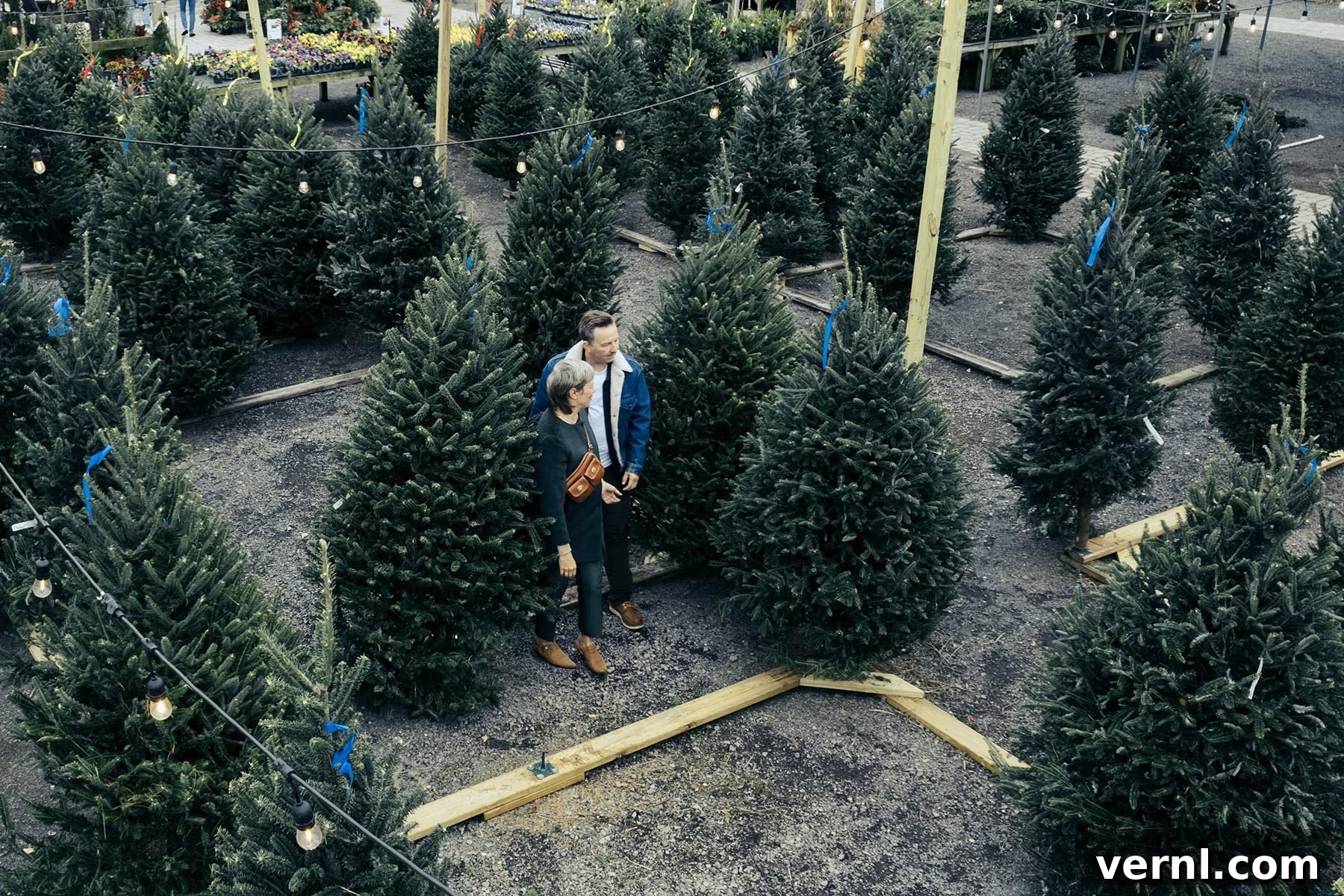
Where you purchase your tree can significantly impact its price. Opting to buy directly from the grower, such as at a “choose and cut” Christmas tree farm, is frequently the most cost-effective method. “Generally, if a consumer can go to a Christmas tree farm and select a tree, that tends to be more cost-effective,” O’Connor explains. This direct-to-consumer model eliminates several layers of markup. “Also, buying directly from the grower cuts down on shipping costs and the added cost of operating a retail business,” he adds. Conversely, purchasing from urban tree lots, garden centers, or large retail chains often incurs higher prices due to transportation costs, middlemen markups, and the overheads associated with running a retail operation in prime locations.
Location
Your geographical location within the country can exert a considerable influence on Christmas tree prices. The primary Christmas tree producing states, including Oregon, North Carolina, Michigan, Pennsylvania, Wisconsin, and Washington, often have more competitive prices due to proximity to supply. The transportation costs involved in moving trees from these growing regions to various communities across the nation can fluctuate based on distance, current gas prices, labor wages for drivers, and logistical complexities. As O’Connor highlights, “You would expect higher prices in large cities because it’s more challenging to bring a truckload of trees in and the labor is more expensive.” The limited space for tree lots and higher operational costs in densely populated urban areas naturally translate to elevated consumer prices. Predictably, rural areas, especially those closer to cultivation zones, tend to enjoy lower prices.
Weather and Climate
For live Christmas trees, environmental conditions are paramount. “For live Christmas trees, environmental and weather concerns will impact Christmas tree crops,” Warner states. Christmas tree farming is an agricultural endeavor, making it highly susceptible to the whims of nature. Adverse weather events, such as prolonged droughts, early-season freezes, excessive rainfall, or even pest infestations, can severely affect crop yields and quality. For example, a severe drought might stunt growth or lead to higher mortality rates among young trees, reducing future supply. Conversely, an unexpected freeze can damage established trees, making them unsuitable for harvest. These state-specific or regional climatic challenges can significantly impact the availability and, consequently, the final cost of trees available to consumers.
Timing
The precise moment you decide to purchase your tree also influences its cost. In many retail environments, particularly those with a fixed inventory, prices tend to drop as Christmas Day approaches. Retailers might offer discounts to clear remaining stock rather than incurring disposal costs. However, this strategy comes with a notable drawback: chances are the best trees have already been picked over. Waiting until the last minute often means less choice in terms of species, size, and overall quality, potentially leaving you with a tree that is less fresh or aesthetically pleasing. For the widest selection and freshest options, shopping earlier in the season, typically in late November or early December, is advisable, though it may come at a slightly higher initial cost.
Size and Quality Grade
Naturally, the size of the tree is a primary determinant of its price. Taller trees, which require more years of growth and more extensive care, command higher prices. Furthermore, trees are often graded based on their density, symmetry, and freedom from imperfections. A “premium” grade tree, boasting a perfect conical shape and dense foliage, will be more expensive than a “standard” or “economy” grade tree with minor aesthetic flaws or sparser branches. These grades reflect the farmer’s investment in nurturing the tree to perfection.
What About Environmental Costs?
While the financial cost of an artificial tree might seem less over several years, especially with proper storage solutions, it is essential to consider the profound environmental costs associated with choosing a fake tree over a real one. Both the National Christmas Tree Association and the American Christmas Tree Association are staunch advocates for real Christmas trees, emphasizing their sustainable nature compared to artificial alternatives.
Many consumers opt for artificial trees citing convenience, ease of setup, and less maintenance. However, O’Connor challenges this perspective, drawing a vivid analogy: he equates buying an artificial Christmas tree to purchasing fake, plastic roses for Valentine’s Day – a choice that sacrifices authenticity and environmental responsibility for perceived convenience. “Fake Christmas trees are horrible for the environment,” he asserts unequivocally. He details the manufacturing process: “The process involves the tree being made in and shipped from China. They are made of PVC plastic chemicals from pumping oil out of the ground and then combining it with metal.” This petroleum-intensive production, coupled with long-distance shipping across oceans, creates a significant carbon footprint. Moreover, these artificial trees are ultimately destined for landfills, where they persist for centuries as non-biodegradable waste, releasing microplastics and potentially harmful chemicals into the environment.
In stark contrast, a real Christmas tree embodies authenticity, renewability, and ecological stewardship. These trees are agricultural crops, typically grown on family farms that have often been operational for generations, contributing to local economies and communities. “While trees are growing, they provide wildlife habitat and turn carbon dioxide into oxygen,” O’Connor explains. This carbon sequestration helps mitigate climate change, and the farms themselves provide vital ecosystems for various species. Far from being a drain on natural resources, Christmas tree farms are managed sustainably, with new seedlings planted for every tree harvested, ensuring a continuous cycle of growth and renewal. This farming practice also helps to stabilize soil, preventing erosion and maintaining healthy landscapes.
Furthermore, the environmental benefits of real trees extend beyond their life on the farm and in your home. O’Connor highlights that more than 4,000 local Christmas tree recycling programs are in place across the country. These programs exemplify environmental stewardship by diverting millions of trees from landfills. Instead, they are chipped into mulch for community playgrounds, parks, hiking trails, and home landscaping projects. Some are even used for shoreline erosion prevention or as habitat for fish in ponds and lakes. This natural decomposition returns nutrients to the soil, completing a truly circular, eco-friendly lifecycle.
Choosing a real Christmas tree, therefore, is not merely a seasonal aesthetic preference; it is a conscious decision that supports sustainable agriculture, contributes to environmental health by reducing carbon emissions and providing habitat, and promotes local economies. While the initial cost may be annual, the ecological dividends and authentic holiday experience offer a value that artificial alternatives simply cannot match.
To learn more about local Christmas tree vendors, prices, and available species in your area, or to find nearby recycling initiatives, do not hesitate to contact the state and regional Christmas tree associations. They are an invaluable resource for connecting consumers with sustainable, authentic holiday traditions.