The Critical Role of Motorcycle Brakes: A Deep Dive into Safety and Performance
Motorcycles, by their very nature, are exhilarating machines that offer a unique sense of freedom and connection to the road. However, this experience comes with inherent risks, making the braking system arguably the most critical component for rider safety. Understanding how motorcycle brakes work, their various configurations, and the advanced technologies that enhance their performance is not just a matter of mechanical curiosity; it’s fundamental to safe riding. While most modern motorcycles predominantly rely on disc brake systems, similar to those found in cars, the nuances of their operation and activation on a two-wheeled vehicle are distinctly different and incredibly important for every rider to grasp.
The evolution of motorcycle braking has been a continuous journey towards greater efficiency, reliability, and rider control. From the rudimentary drum brakes of early models to today’s sophisticated anti-lock braking systems (ABS) and combined braking setups, each innovation has aimed to provide riders with the confidence to navigate diverse road conditions safely. This comprehensive guide will explore the intricate world of motorcycle brakes, shedding light on their mechanics, configurations, maintenance, and the pivotal role they play in preventing accidents and ensuring an enjoyable riding experience.
Understanding the Foundation: Disc Brakes vs. Drum Brakes
At the core of motorcycle braking systems are two primary types: disc brakes and drum brakes. While drum brakes were historically prevalent, front and rear disc brake systems now represent the vast majority of motorcycle brakes due to their superior performance, heat dissipation, and consistency.
Disc Brakes: The Modern Standard
Disc brakes operate on a simple yet highly effective principle of friction. They consist of several key components: the master cylinder, brake lines, calipers, brake pads, and the rotor (or disc) itself. When the rider activates the brake lever or pedal, a piston within the master cylinder compresses brake fluid. Because brake fluid is incompressible, this pressure is hydraulically transmitted through the brake lines to the calipers. The calipers, containing another set of pistons, then exert immense pressure on the brake pads. These pads, in turn, clamp down on the spinning rotor, which is rigidly attached to the motorcycle’s wheel. The resulting friction converts the bike’s kinetic energy into heat, effectively slowing and stopping the motorcycle.
The efficiency of disc brakes is largely attributed to their open design, which allows for excellent heat dissipation. Unlike enclosed drum brakes, disc brakes are exposed to the ambient air, facilitating rapid cooling and reducing the risk of “brake fade” – a reduction in braking power caused by overheating. This makes them ideal for high-performance motorcycles and demanding riding conditions where consistent braking power is paramount. The precise control and strong stopping power offered by disc brakes make them the preferred choice for virtually all contemporary motorcycles, from sportbikes to cruisers and touring machines.
Drum Brakes: A Historical Perspective
While largely superseded by disc brakes, drum brakes still exist on some older motorcycles, scooters, or specific entry-level models, often on the rear wheel. A drum brake system involves brake shoes pressing outwards against the inside surface of a rotating drum, which is attached to the wheel. When the brake is applied, cams or hydraulic cylinders force the shoes against the drum, creating friction and slowing the wheel.
The main advantages of drum brakes are their lower manufacturing cost and their ability to be completely enclosed, offering some protection from dirt and water. However, their limitations are significant. They are prone to overheating, leading to brake fade, and offer less stopping power and modulation compared to disc brakes. The enclosed nature also means heat dissipates less efficiently, and debris can sometimes become trapped, affecting performance. For these reasons, their application is now limited to scenarios where cost or specific aesthetic considerations outweigh the demand for high performance braking.
Brake Configuration: Tailored for Two Wheels
One of the most significant distinctions between motorcycle and car braking systems lies in how the brakes are triggered. On a car, a single brake pedal activates all brakes simultaneously. On a motorcycle, there are primarily two configurations, each offering a different approach to rider control and safety.
Independent Braking: The Rider’s Choice
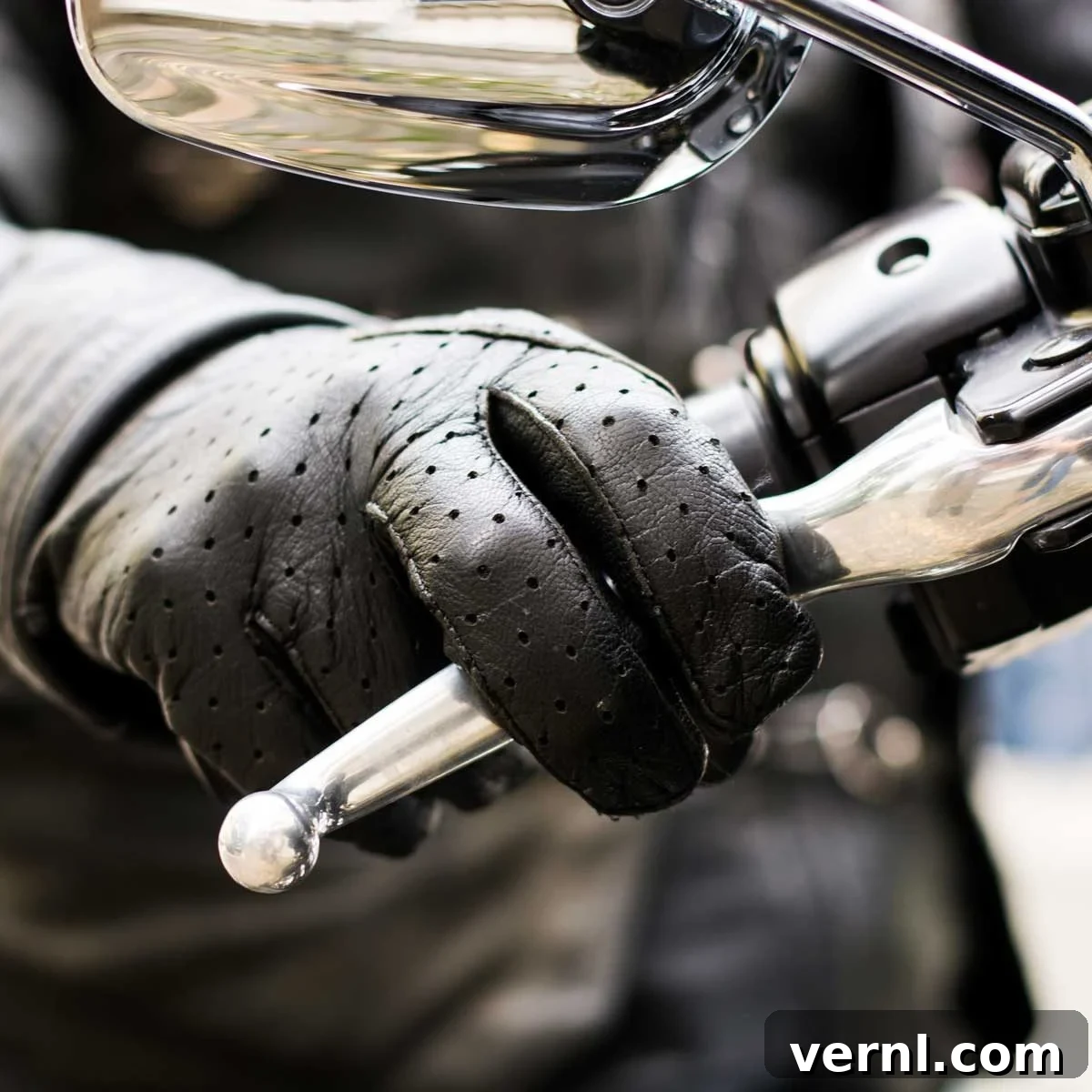
The most common configuration on motorcycles involves independent control of the front and rear brakes. A lever on the right side of the handlebar operates the front brake, while a foot pedal on the right side engages the rear brake. This separation grants the rider granular control over each wheel’s braking force, a crucial aspect of motorcycle dynamics.
In most braking scenarios, the front brake carries approximately 70-80% of the braking load due to weight transfer to the front wheel under deceleration. Engaging the front brake first and progressively is a fundamental skill for safe riding, maximizing stopping power and stability. Independent control allows experienced riders to modulate each brake precisely, adapting to varying road conditions, lean angles, and emergency situations. This direct control is often preferred by seasoned riders who value the ability to fine-tune their braking input, for instance, using only the rear brake for subtle speed adjustments in corners or on loose surfaces, or employing a powerful front brake for emergency stops.
Linked or Combined Braking Systems (CBS)
A second configuration, known as a Linked or Combined Braking System (CBS), aims to simplify braking by distributing braking force between both wheels even when only one control is activated. In some CBS setups, activating the front brake lever also applies a predetermined amount of rear brake force, or vice-versa. Some more advanced systems automatically delay the onset of the rear brake when the front lever is pulled, or intelligently distribute pressure based on various factors.
The primary goal of CBS is to enhance safety, particularly for less experienced riders, by helping to prevent situations like locking up a single wheel or underutilizing one brake. By automatically engaging both brakes, CBS can reduce stopping distances and improve stability. While riders debate whether this configuration offers a universally “safer” ride compared to skilled independent braking, it is largely a matter of personal preference and riding style. Some riders appreciate the added layer of safety and convenience, while others prefer the unadulterated control of independent systems. Modern CBS often works in conjunction with ABS for even greater safety.
Advanced Braking Technologies for Enhanced Safety
Beyond the fundamental configurations, modern motorcycles increasingly incorporate sophisticated electronic braking aids that significantly boost safety and performance.
Anti-lock Braking System (ABS)
Perhaps the most impactful advancement in motorcycle safety is the Anti-lock Braking System (ABS). ABS prevents wheels from locking up during hard braking, especially on slippery surfaces. When a wheel speed sensor detects that a wheel is about to lock, the ABS module rapidly modulates brake pressure to that wheel, allowing it to continue rotating just below the point of skidding. This maintains traction and allows the rider to steer, potentially avoiding obstacles during emergency braking. ABS has proven to drastically reduce accident rates and is now standard on many new motorcycles, with some regions mandating it. It provides a crucial safety net, especially for less experienced riders or in unexpected hazardous situations.
Traction Control System (TCS)
While primarily focused on acceleration, a Traction Control System (TCS) can indirectly enhance braking stability. By monitoring wheel speeds and engine RPM, TCS prevents the rear wheel from spinning excessively during acceleration, particularly when exiting corners or on low-grip surfaces. Some integrated systems may leverage similar sensors to assist in maintaining overall stability during dynamic maneuvers that involve both throttle and brake inputs, preventing unwanted skids or loss of control.
The Unsung Hero: Motorcycle Brake Rotors
A crucial component of the disc brake system, brake rotors are far more than just simple metal discs. You’ll notice motorcycle brake rotors are rarely solid, smooth discs. Their design is engineered to optimize performance and safety under various conditions.
Design and Functionality
The same open nature that helps air-cool the brakes also exposes them to environmental elements like water from rain or wet roadways. To combat this, rotors often feature slots, holes (cross-drilling), or a combination of both. These perforations serve several critical functions:
- Water and Debris Clearance: Slots and cross-drilling efficiently carry water, mud, and dust away from the rotor’s surface. This prevents a film of water from forming between the pad and rotor, which can severely diminish braking efficiency and increase stopping distances.
- Heat Dissipation: While the primary cooling is through exposure to air, the increased surface area and channels created by holes and slots can aid in shedding heat more effectively, further reducing the risk of brake fade during prolonged or intense braking.
- Gassing: During heavy braking, the brake pads can release gases as they heat up. These gases can create a thin layer between the pad and rotor, reducing friction. The holes and slots provide an escape route for these gases, ensuring consistent pad-to-rotor contact and optimal braking performance.
- Weight Reduction: Perforations also contribute to a slight reduction in unsprung weight, which can marginally improve handling characteristics.
Modern rotors are often made from high-carbon steel, sometimes with a floating design (where the disc itself can move slightly independently of the hub attachment) to allow for expansion and contraction under extreme heat without warping, ensuring consistent performance.
Mastering Motorcycle Braking Techniques
Even with the most advanced braking systems, rider skill remains paramount. Understanding and practicing proper braking techniques is essential for maximizing safety and control.
Progressive Braking
This involves gradually increasing pressure on the brake lever or pedal rather than grabbing them abruptly. Progressive braking allows the motorcycle’s suspension to compress and the tires to gain maximum traction before full braking force is applied, preventing skids and maintaining stability.
Front vs. Rear Brake Usage
For most stopping situations, especially emergency braking, the front brake should be the primary force. However, the rear brake is crucial for stability, especially when initiating a stop, making subtle speed adjustments, or on low-traction surfaces. A common mistake for new riders is over-relying on the rear brake, which can easily lock up and cause a skid without providing much stopping power. Conversely, solely using the front brake can cause excessive weight transfer and instability if not executed properly. The optimal technique involves a harmonious, progressive application of both brakes.
Emergency Braking
In an emergency, the instinct might be to grab the brakes as hard as possible. However, the correct technique involves applying both brakes firmly and progressively, aiming for maximum pressure just before lock-up (or letting ABS do its job). Looking where you want to go, rather than at the obstacle, also helps maintain balance and allows for steering input if necessary. Practice in a safe environment is crucial for developing these life-saving skills.
Essential Motorcycle Brake Maintenance for Safety and Performance
A high-performance braking system is only as good as its maintenance. Regular inspections and timely servicing are critical to ensure reliability and safety.
Brake Fluid Checks and Changes
Brake fluid is hygroscopic, meaning it absorbs moisture over time. Water contamination reduces the fluid’s boiling point, leading to “vapor lock” (where the fluid boils, creating compressible gas bubbles, and the brakes feel spongy or fail entirely) and can corrode internal components. Brake fluid should be checked regularly and changed according to the manufacturer’s recommendations, typically every one to two years.
Brake Pad Inspection and Replacement
Brake pads wear down with use. It’s essential to regularly inspect the pad material thickness. Worn pads not only reduce braking efficiency but can also damage the rotors. Replacement should occur before they wear down to their minimum specified thickness. Different pad compounds (organic, sintered, ceramic) offer varying performance characteristics, so choosing the right type for your riding style is important.
Rotor Wear and Condition
Rotors can warp, develop grooves, or wear below their minimum thickness over time. A warped rotor can cause pulsing in the brake lever/pedal and inconsistent braking. Grooves can reduce pad contact area. Rotors should be inspected for signs of wear, cracks, or excessive heat discoloration. While minor imperfections can sometimes be machined, severely worn or damaged rotors require replacement.
Brake Line and Caliper Inspection
Check brake lines for cracks, leaks, or swelling. Ensure calipers are clean, and pistons move freely. Sticking calipers can cause uneven pad wear or drag, affecting performance and potentially leading to overheating. Brake boosters are generally unnecessary in all but the heaviest motorcycle models, as most riders can supply ample force for braking on the lighter mass of a motorcycle, but their components should still be inspected if present.
For more hands-on advice on keeping your bike in top condition, these motorcycle detailing tips come straight from the pros, offering insights into maintaining not just your brakes but your entire machine.
Conclusion: The Synergy of Technology, Maintenance, and Skill
Motorcycle brakes are a marvel of engineering, constantly evolving to provide safer and more controlled stopping power. From the fundamental mechanics of disc and drum brakes to advanced systems like ABS and CBS, each component plays a vital role in the rider’s safety equation. However, technology alone is not enough. A rider’s understanding of their bike’s braking system, coupled with disciplined practice of proper braking techniques and diligent maintenance, creates the ultimate synergy for a safe and exhilarating riding experience. By respecting the power of your brakes and committing to their proper care and usage, every ride can be a testament to both technological innovation and rider proficiency.