
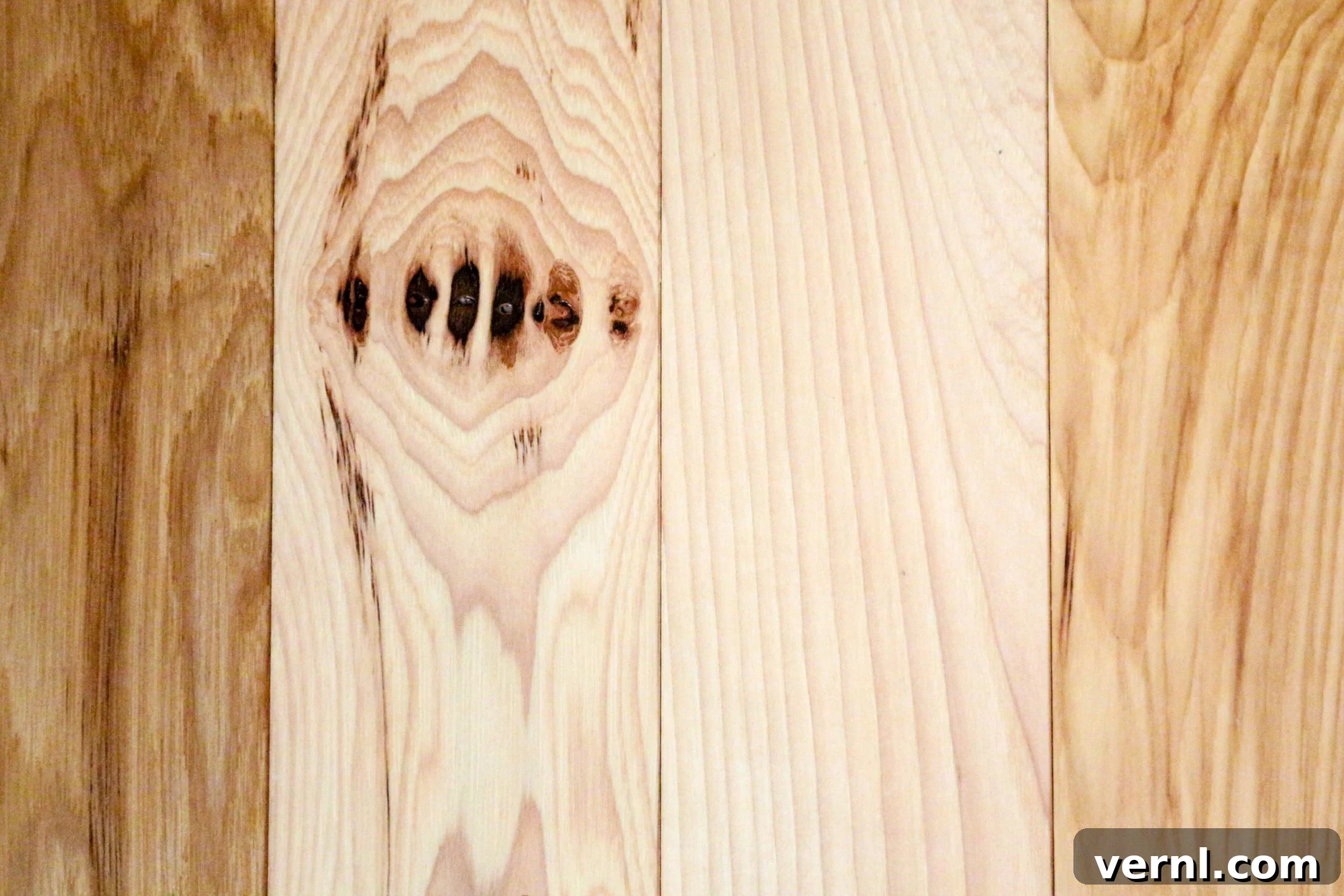
Hickory holds a unique and revered position in the world of woodworking. Known for its exceptional density and strength, it ranks among the toughest American domestic hardwoods, earning a reputation for being notoriously hard to work with. Despite its challenges, seasoned woodworkers appreciate its unparalleled durability and distinctive beauty, making it a valuable material for specific applications. This comprehensive guide will equip you with all the essential knowledge about hickory wood, from its botanical origins and unique properties to its practical uses and how to master working with it, ensuring you’re well-prepared for your next woodworking project.
What is Hickory Wood?
Hickory refers to a group of trees within the genus Carya, a part of the walnut family (Juglandaceae). These deciduous trees are native primarily to North America, with a few species also found in East Asia. In the U.S. alone, there are up to 12 distinct species, though commercially, they are often grouped and sold simply as “hickory” due to their similar characteristics and overlapping uses. The defining feature of hickory is its incredible hardness, which is where its reputation truly stems from.
The aesthetic appeal of hickory is quite distinctive. Its heartwood typically displays a light- to medium-brown color, often imbued with attractive reddish hues that deepen with age. In stark contrast, the sapwood is considerably paler, ranging from a creamy white to a light tan. This striking color variation between the heartwood and sapwood, when present in a single board, contributes to hickory’s rustic charm and makes each piece visually unique. This durable natural material is predominantly chosen for products demanding superior strength and wear resistance, such as robust tool handles, resilient flooring, and durable sporting goods.
Beyond its physical toughness, hickory is also celebrated for its excellent shock resistance. This characteristic, coupled with its density, makes it an ideal choice for items that endure repeated impacts or heavy use. Its growth in diverse climates across the Eastern and Southern United States means it’s a relatively accessible hardwood, contributing to its popularity in a variety of utilitarian and structural applications where other woods might simply fail.
Exploring the Types of Hickory Wood
While over a dozen species of hickory thrive across North America, woodworkers and lumberyards commonly categorize them into two primary groups based on their wood properties and nut characteristics:
-
“True” Hickory: This group includes species like Shagbark Hickory (Carya ovata), Shellbark Hickory (Carya laciniosa), Pignut Hickory (Carya glabra), and Mockernut Hickory (Carya tomentosa). True hickories are generally considered the densest and strongest of the genus, typically boasting higher Janka hardness ratings. They are widely distributed across the Eastern U.S., from the Great Lakes region down to the Gulf Coast. While there are subtle differences in their growth habits and nut production, their wood properties are so similar that they are often indistinguishable in lumber form.
-
Pecan Hickory: Comprising species such as Pecan (Carya illinoinensis), Water Hickory (Carya aquatica), and Bitternut Hickory (Carya cordiformis), this group is generally softer and slightly less dense than the true hickories. Despite being referred to as “softer,” pecan hickory is still an incredibly hard and strong wood compared to many other hardwoods. Pecan hickories are primarily found in the Southern and Eastern U.S., often thriving in bottomlands and floodplains. The difference in density and strength between “true” and “pecan” hickories is often negligible for most woodworking applications, yet it’s an important distinction for specific high-performance uses.
The hardness of any wood species is scientifically quantified by its Janka hardness rating. This test measures the force required to embed a steel ball halfway into a piece of wood, providing a reliable indicator of its resistance to indentation, wear, and shock. While most North American hardwoods like Red Oak or Hard Maple typically fall within the 1,200 to 1,450 pounds-force (lbf) range, hickory impressively boasts a Janka hardness range of 1,550 to 2,140 lbf. This wide range reflects the variability between individual hickory species and even within different cuts of the same tree. A higher Janka rating directly translates to superior durability and resistance to dents and scratches, making hickory an outstanding choice for applications where resilience is paramount.
Pros and Cons of Working with Hickory Wood
Understanding the advantages and disadvantages of hickory is crucial for any woodworker contemplating its use. Its distinct characteristics make it suitable for some projects while posing significant challenges for others.
Pros of Hickory Wood
- Unrivaled Strength and Durability: Hickory is indisputably one of the strongest and densest hardwoods native to North America. Its superior bending strength, stiffness, and hardness surpass even highly regarded woods like White Oak and Hard Maple. This makes hickory an exceptional choice for structural components, heavily trafficked surfaces, and items that must withstand constant abuse or heavy loads. If your primary concern is long-term durability and resistance to impact, hickory stands as a top contender.
- Exceptional Shock Resistance: Beyond mere strength, hickory possesses an incredible ability to absorb shock without fracturing. This property is why it has been historically and continues to be the preferred material for striking tool handles (like axes, hammers, and pickaxes), where repeated impact would quickly destroy lesser woods. This shock absorption also translates to superior performance in applications like ladder rungs and sporting goods.
- Cost-Effectiveness and Accessibility: Despite its remarkable properties, hickory is often more reasonably priced than many other premium hardwoods. This affordability stems from its widespread availability across North America and its relatively fast growth rate. While it might not always be found at every big-box store, it is readily available through local hardwood dealers, specialty lumberyards, and online suppliers, making it an accessible option for many woodworkers seeking high-performance material without breaking the bank.
- Distinctive Aesthetic Appeal: The dramatic contrast between hickory’s light sapwood and reddish-brown heartwood creates a bold, rustic, and often unpredictable grain pattern. This natural variation is highly prized in certain design styles, such as farmhouse, rustic, or cabin-style furniture and flooring, adding character and uniqueness to each piece. When embracing its natural variations, hickory can yield truly captivating visual results.
- Excellent for Smoking and Fuel: Beyond its use in woodworking, hickory is highly valued for its high thermal energy content. It burns hot and clean, making it an excellent firewood. More famously, hickory is a staple in barbecuing and smoking, imparting a distinct, strong, and sweet smoky flavor to meats, which is highly sought after by culinary enthusiasts.
Cons of Hickory Wood
- Challenging Workability: Due to its extreme density and interlocked grain structure, hickory is notoriously difficult to work with, even for experienced woodworkers.
- Cutting: It rapidly dulls saw blades, router bits, and planer knives. Using sharp, carbide-tipped blades is essential, and frequent resharpening or replacement should be anticipated. Tear-out, where wood fibers are pulled away from the surface instead of being cleanly cut, is a common issue, particularly when planing or routing against the grain.
- Fastening: Nailing and screwing into hickory without proper preparation is arduous. Nails can bend, and screws are difficult to drive. Pre-drilling pilot holes is absolutely critical for almost all fastening applications to prevent splitting and ensure secure connections.
- Sanding and Finishing: Its hardness means sanding requires more effort and aggressive grits initially, gradually working up to finer grits for a smooth finish. Its dense structure can also lead to uneven absorption of stains and finishes, potentially resulting in blotchiness if not properly prepped with a wood conditioner.
- Hand Tools: While it can be worked with hand tools, it demands exceptional patience, strength, and very frequent resharpening of chisels, planes, and knives. This makes hickory generally unsuitable for beginner to intermediate woodworkers who might become quickly frustrated by its stubborn nature.
- Inconsistent Grain and Color: Because multiple hickory species are often sold together under the generic “hickory” label, and due to the inherent contrast between heartwood and sapwood, it can be exceptionally difficult to find consistent grain patterns and color uniformity across large batches of lumber. This inconsistency can be a significant challenge for projects requiring a uniform appearance, such as fine furniture or large-scale cabinetry, where matching boards is crucial for aesthetic harmony. While this might not be a dealbreaker for rustic projects or individual components like a new tool handle, it can be frustrating for designers and makers striving for visual cohesion.
- Weight: Its high density means hickory is a significantly heavy wood. This characteristic can be a drawback for projects where weight is a concern, such as portable furniture or items that need to be moved frequently. Transporting and maneuvering large hickory boards in the shop also requires more effort.
- Potential for Checking and Movement: While generally stable once properly dried, hickory can be prone to checking (small cracks) if not dried slowly and carefully. It’s also important to account for its natural movement with changes in humidity, though its density helps mitigate extreme warping compared to some softer woods.
What Is Hickory Wood Used For?
The inherent characteristics of hickory — its immense strength, density, and shock resistance — make it an ideal material for a specific range of demanding applications. Here are some of the most common and effective uses for hickory wood:
-
Tool Handles: This is arguably hickory’s most iconic application. Its exceptional density and remarkable shock absorption make it the supreme choice for handles of striking tools such as axes, hammers, pickaxes, shovels, and mauls. Hickory handles can withstand repeated, forceful impacts without splintering or breaking, offering both durability and user comfort by dampening vibrations.
-
Flooring: Hickory’s toughness and outstanding wear-resistance render it an exceptionally durable and long-lasting flooring material. It stands up remarkably well to heavy foot traffic, impacts, and daily wear and tear, making it a popular choice for residential and commercial spaces alike. Both solid and engineered hickory flooring are available, and its distinctive grain and color variations contribute to a warm, inviting, and often rustic aesthetic.
-
Chair Seats and Furniture Components: In certain styles of chair making, particularly in traditional designs like Windsor chairs, the carved seat serves as a critical structural keystone. Hickory’s strength ensures a robust and long-lasting chair. Beyond seats, it’s an excellent choice for other furniture components requiring high strength and durability, such as legs, stretchers, and frames, especially in rustic or heavy-duty furniture pieces. Its resistance to dents also makes it suitable for kitchen cabinets and butcher blocks.
- Cooking and Smoking Fuel: Hickory is highly prized in the culinary world, particularly for outdoor cooking. Its high thermal energy content means it burns efficiently and provides excellent heat for wood fires, charcoal production, and especially as smoker fuel. Hickory wood imparts a strong, sweet, and bacon-like flavor to smoked meats, poultry, and fish, making it a favorite among barbecue enthusiasts.
- Sporting Goods: While less common than in the past, hickory has been used for various sporting goods due to its strength and flexibility. Historically, it was used for baseball bats (though ash is now more prevalent) and golf club shafts. Its shock-absorbing qualities still make it suitable for items like lacrosse stick handles and certain types of drumsticks.
- Agricultural Implements and Ladders: Its robust nature made hickory a historical staple for components of agricultural machinery, wagon wheels, and spokes. In modern applications, its strength is still valued for ladder rungs and other industrial components where high stress resistance is required.
Hickory Wood Cost and Purchasing Guide
Hickory wood remains a highly accessible and reasonably priced hardwood in North America, especially when compared to exotic or even some premium domestic species. Its widespread availability and rapid growth contribute to its economic viability for a wide range of projects. It can generally be categorized alongside other “utilitarian” hardwoods such as Red Oak or Soft Maple in terms of cost-effectiveness, offering exceptional value for its performance.
When purchasing hickory lumber, expect to pay anywhere from $4 to $10 per board foot. Several factors influence this price range: the board’s width and thickness (wider and thicker boards often command a higher price), the grade of the lumber (e.g., FAS – First and Seconds, Select & Better, Common grades), and whether it is sold “in the rough” (unsurfaced) or “pre-surfaced” (S4S – surfaced four sides). Rough lumber typically costs less but requires more processing in your shop. For comparison, most other furniture-grade domestic hardwoods like Cherry or Walnut typically range from $5 to $15 per board foot, positioning hickory as a more economical yet highly capable alternative.
To ensure you acquire the best hickory for your specific woodworking project, consider these purchasing tips:
-
Source from Hardwood Dealers: While some larger big-box stores might carry limited hickory stock, you’ll find a far greater selection, better quality, and more knowledgeable staff at local hardwood dealers or specialty lumberyards. These suppliers often have a wider range of sizes, grades, and cuts (e.g., quarter-sawn for stability, if available).
-
Inspect for Defects: Due to hickory’s natural growth patterns and tendency for checks during drying, carefully inspect boards for excessive knots, checks, splits, or bows. While minor defects are often acceptable in rustic projects, significant flaws can impact the usability and strength of the wood.
-
Consider Moisture Content: Ensure the lumber has been properly kiln-dried to an appropriate moisture content (typically 6-8% for indoor use). Using wood that is too wet can lead to significant movement, warping, and cracking as it dries in your shop.
-
Embrace or Manage Color Variation: Decide whether you want to embrace the natural contrast between heartwood and sapwood. If uniformity is critical, you might need to select boards more carefully, or specify heartwood-only or sapwood-only cuts, though this might increase the cost and reduce availability. Alternatively, design your project to highlight hickory’s unique rustic charm.
-
Calculate Your Needs: Always purchase a little extra lumber than your project requires to account for any defects, mistakes, or grain direction changes during milling. This is especially true with a challenging wood like hickory.
By understanding these purchasing considerations, woodworkers can confidently select high-quality hickory lumber that is well-suited for their projects, ensuring successful and durable outcomes from this remarkable North American hardwood.