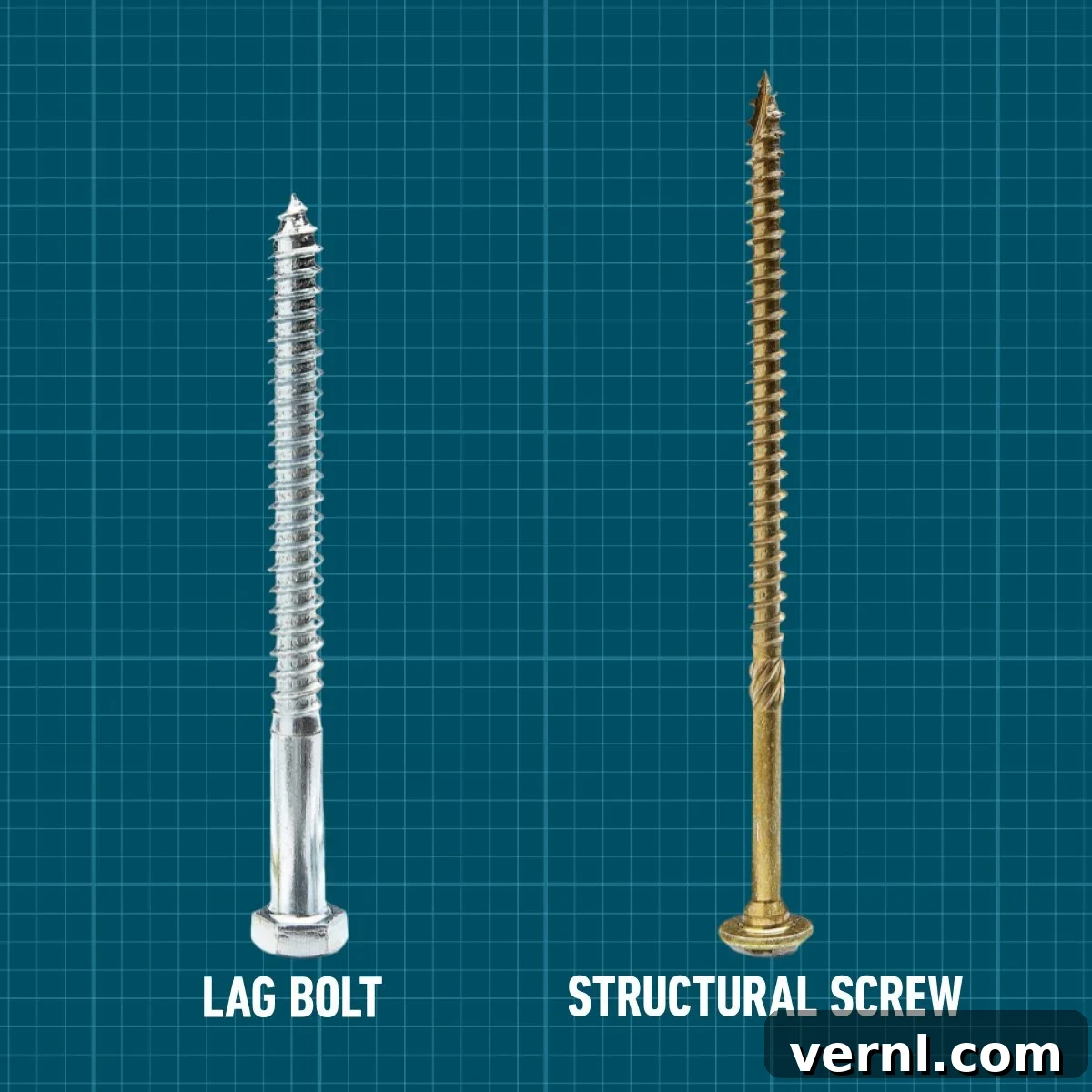
In the dynamic world of construction and DIY, the choice of fasteners plays a pivotal role in the strength, safety, and longevity of any project. For heavy-duty applications, especially those involving timber and structural connections, two primary contenders have long dominated the scene: traditional lag screws and their modern, high-strength counterparts, structural screws. While lag screws have served as reliable workhorses for generations, advancements in material science and engineering have led to structural screws largely displacing them as the fastener of choice for demanding tasks. This comprehensive guide will delve into the characteristics, applications, advantages, and disadvantages of both, offering a detailed comparison to help you make an informed decision for your next build.
What Are Lag Screws? Understanding the Traditional Fastener
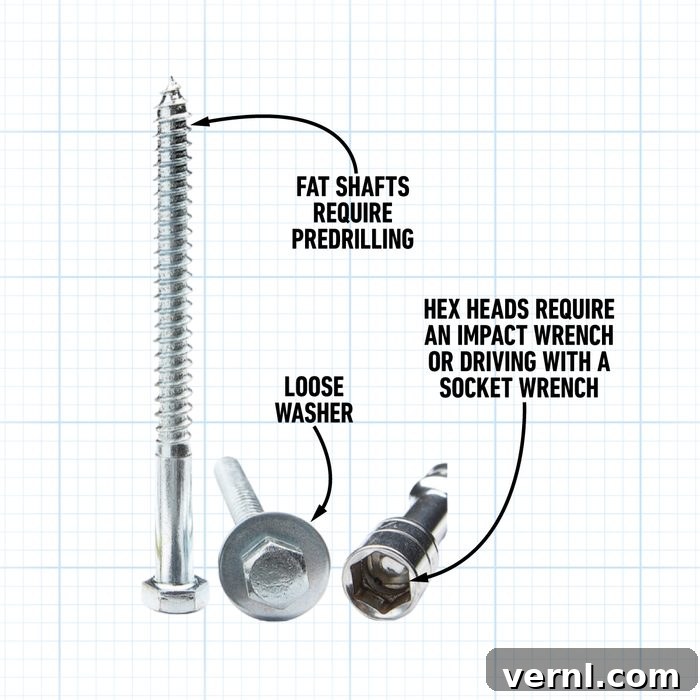
Also commonly referred to as lag bolts, these robust fasteners are easily recognizable by their distinctive large, hexagonal heads, designed for high torque application with a wrench or socket. Lag screws are essentially heavy-duty wood screws, typically larger and thicker than most standard wood screws or deck screws. Their substantial size and aggressive threads are engineered to provide exceptional holding power, making them ideal for connecting substantial pieces of lumber to other heavy materials, such as masonry, concrete with an appropriate anchor, or even steel.
Historically, lag screws were the go-to solution for structural connections in various applications, from securing fence posts to attaching deck ledger boards. Their sheer mass and deep threads were considered synonymous with strength and reliability. However, their installation process involves specific steps that can be time-consuming and labor-intensive, often requiring more effort than modern alternatives.
Key Characteristics and Considerations for Lag Screws:
- Predrilling Requirement: A critical aspect of lag screw installation is the necessity of predrilling. This typically involves two distinct holes: a pilot hole for the threaded portion of the screw and a larger clearance hole for the unthreaded shaft near the head. Failing to predrill correctly can lead to stripped threads, wood splitting, or significantly reduced holding power.
- Installation Process: Once predrilled, lag screws are driven in using a wrench or socket. This manual or power-tool driven process can be quite laborious, especially for a large number of fasteners or in tight spaces, requiring considerable physical effort or powerful tools.
- Structural Rating Variability: While structurally rated lag bolts are available, a significant portion of what you find in general home centers comprises generic versions with varying levels of quality and inconsistent load ratings. For critical structural applications, it is paramount to source reputable, structurally rated lag screws.
- Widespread Availability: Lag bolts are staples in virtually all hardware stores and home centers. They come in a vast assortment of sizes, lengths, and materials (e.g., galvanized, stainless steel) to suit different project needs and environmental conditions.
- Cost-Effectiveness: One of the most significant advantages of lag screws is their lower initial purchase price. They generally cost a third of the price of equivalent structural screws, making them an attractive option for budget-conscious projects, provided the labor cost is not a major factor.
Despite their traditional appeal, the labor-intensive installation and the advent of more advanced fasteners have prompted many professionals and DIY enthusiasts to re-evaluate their reliance on lag screws for certain applications.
What Are Structural Screws? The Modern Fastening Solution
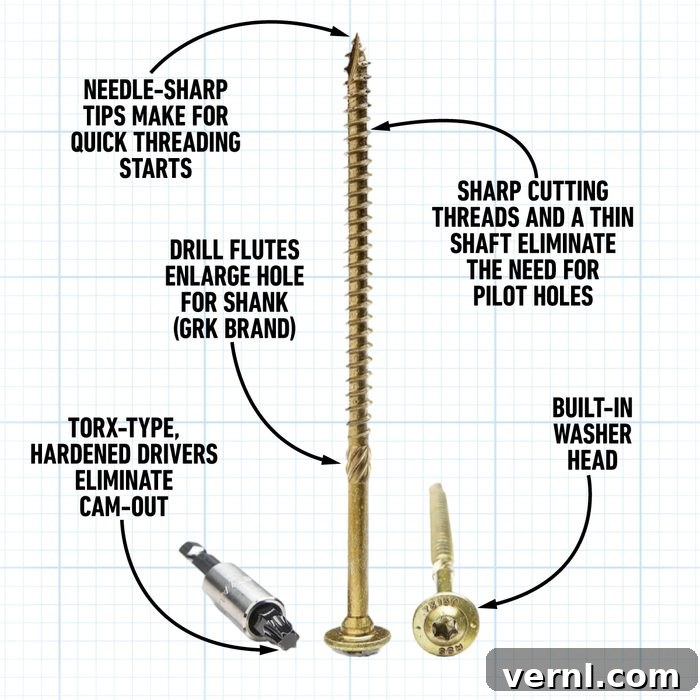
Structural screws, often referred to as construction screws or heavy-duty timber screws, represent a significant leap forward in fastening technology. These fasteners are meticulously engineered from hardened steel and undergo a rigorous heat-treatment process to achieve maximum strength and durability. Visually, they often appear longer and noticeably skinnier than traditional lag bolts, a characteristic that belies their superior performance. They are particularly popular among tradespeople and serious DIYers due to their remarkable efficiency and ease of installation, significantly reducing project time and labor.
Advanced Engineering and Design:
- Self-Drilling Capability: A defining feature of most structural screws is their innovative design that eliminates the need for predrilling. Their extremely thin, sharp points, often combined with a cutting tip or “drill bit” embedded into the screw point, allow them to literally bore through wood as they spin. Some brands further enhance this with rippled screw threads near the tip that saw a path for the remaining threads, ensuring smooth and effortless driving.
- Exceptional Strength and Reliability: Structural screws meet stringent engineering standards, such as those set by ICC-ES (International Code Council Evaluation Service). The use of hardened, high-quality, heat-treated steel provides unparalleled shear strength and pull-out resistance, virtually eliminating the risk of shear-offs or breaking during installation or under load. Despite their slimmer profile, these fasteners are often one-to-one replacements for their fatter lag bolt cousins, delivering equivalent or even superior structural integrity.
- Specialized Drive Systems: Unlike the traditional hexagonal head of lag screws, structural screws predominantly feature advanced drive heads like Torx (six contact points) or Spider (eight contact points). These multi-point drive systems are designed to spread the driving torque more effectively, preventing the dreaded “cam-out” that is common with Phillips or square-head drive screws. The straight-sided nature of Torx and Spider bits also offers a more secure engagement, allowing users to “aim” and drive screws with one hand, a significant advantage over hex-head lags that often require two hands to stabilize.
- Optimized Thread Design: Beyond the self-drilling tip, the threads of structural screws are often designed for optimal wood engagement and withdrawal resistance. Some designs incorporate aggressive threads that cut rather than simply displacing wood fibers, leading to a stronger and more secure connection with less splitting.
Key Considerations for Structural Screws:
- Streamlined Installation: The ability to skip predrilling is a massive time-saver. By the time you finish drilling pilot holes and ratcheting in just a few lag screws, you could have completed the entire job using structural screws, drastically reducing project timelines and labor costs.
- Availability and Branding: While home centers carry the most commonly used structural screw styles and sizes, they typically offer a limited selection, often only one or two brands. More specialized lengths or types might require a visit to a professional lumber yard or a specialized fastener supplier.
- Higher Initial Cost: Structural screws are not cheap. They generally cost several times more than an equivalent lag screw. However, when considering the total project cost, including the significant labor savings, their overall value proposition often outweighs the higher upfront expense.
- Specific Drive Bits: You will need the appropriate Torx or Spider drive bit for structural screws. These are usually included in packs or readily available for purchase, but it’s an important consideration for your tool kit.
The innovation embedded in structural screws fundamentally changes the approach to heavy-duty fastening, offering a compelling blend of strength, speed, and reliability.
Common Applications of Structural Screws
The versatility and superior performance of structural screws make them suitable for a wide array of demanding applications across residential, commercial, and DIY projects. Much like lag bolts, they are designed to handle substantial forces and secure heavy loads, but they do so with greater efficiency and often with higher engineering assurances.
Some of the most common and impactful applications include:
- Deck Construction: Structural screws are indispensable for building decks, particularly for attaching ledger boards to the house rim joist, connecting deck posts to beams, and securing joist hangers where allowed by code. Their robust holding power ensures the stability and safety of the entire deck structure.
- Framing and Timber Construction: In both conventional stick framing and heavier timber frame construction, structural screws are used for connecting large dimensional lumber, securing headers, attaching rafter ties, and creating robust wood-to-wood connections where high shear and withdrawal resistance are critical.
- Pergolas and Outdoor Structures: For building durable outdoor structures like pergolas, gazebos, and carports, structural screws provide the necessary strength to withstand environmental stressors and heavy loads.
- Ledger Board Attachment: This is a particularly critical application where structural screws shine. When attaching a ledger board (a horizontal framing member) to a house, often against concrete or masonry with appropriate anchors, their ease of installation and certified strength simplify what was traditionally a complex and labor-intensive task.
- Post-to-Beam Connections: Whether in a basement renovation or new construction, securely fastening posts to beams is vital. Structural screws provide a clean, strong, and often code-compliant method for these connections.
- Heavy-Duty Shelving and Cabinetry: For securing heavy-duty shelving units, wall-mounted cabinets, or other fixtures that will bear significant weight, structural screws offer peace of mind with their reliable holding power.
Their ability to bypass predrilling and provide exceptional strength makes them a preferred choice for professionals looking to optimize efficiency without compromising structural integrity.
Addressing the Downsides of Structural Screws
While structural screws offer numerous advantages, it’s essential to acknowledge their limitations. Primarily, there are two main factors that might give pause to some users: cost and availability.
- Higher Initial Cost: As previously mentioned, structural screws come with a higher price tag than traditional lag screws. This increased cost reflects the advanced metallurgy, precision engineering, and specialized manufacturing processes involved. For very large projects or those with extremely tight budgets, this upfront expense can be a significant consideration. However, it’s crucial to balance this against the potential savings in labor and the long-term benefits of superior performance and reliability.
- Limited Availability of Brands and Sizes: While major home centers do stock common structural screw styles, their inventory is often limited to one or two leading brands (e.g., Spax, FastenMaster, Simpson Strong-Tie). More specialized brands like GRK, known for their premium quality and specific features, might only be available from professional lumber yards or dedicated fastener distributors. This can sometimes make it challenging to find a specific type, length, or finish required for a unique project, potentially necessitating a special order or a trip to a less convenient supplier.
Despite these drawbacks, the professional consensus often leans towards the benefits outweighing the cons, especially when considering the total value proposition that includes reduced labor time and enhanced structural integrity.
Which Is Better: Structural Screws or Lag Bolts? A Comparative Analysis
The decision between structural screws and lag bolts ultimately hinges on a project’s specific requirements, budget, timeline, and the value placed on ease of use versus traditional methods. Here at Family Handyman, our editors and workshop professionals extensively utilize structural screws across a wide range of projects, largely due to their compelling advantages.
Key Comparative Points:
- Installation Efficiency: This is where structural screws undeniably excel. Their self-drilling capability eliminates the need for predrilling, saving an immense amount of time and effort. The difference in labor between driving a few lag screws (which requires marking, drilling pilot holes, drilling clearance holes, and then ratcheting them in) and simply driving in structural screws is monumental. For professionals, this translates directly to reduced labor costs and faster project completion.
- Holding Power and Shear Strength: Despite the visual bulk of lag bolts, modern structural screws, made from hardened and heat-treated steel, often meet or exceed the structural performance of lag screws of a comparable size. Their engineered threads and robust material ensure exceptional shear strength and pull-out resistance, providing confidence in critical structural connections.
- Ease of Use and User Experience: Structural screws, with their self-drilling tips and advanced Torx or Spider drive systems, offer a significantly more user-friendly experience. The reduced cam-out and ability to drive with one hand are distinct advantages, making them less frustrating and more efficient to work with, especially for extended periods or in challenging positions.
- Code Compliance and Engineering: Reputable structural screw brands come with extensive testing and engineering data, often carrying ICC-ES reports that verify their load capacities and compliance with building codes. This level of certification is crucial for structural applications and often simplifies the approval process with building inspectors. While structurally rated lag bolts exist, the generic versions often lack this detailed data.
- Cost: Lag screws are generally cheaper to purchase upfront. However, when factoring in the time and labor saved during installation, the overall project cost using structural screws can often be lower, especially for larger jobs or those involving professional labor rates.
- Risk of Wood Splitting: The self-drilling and cutting action of structural screws significantly reduces the risk of splitting wood, even near edges, compared to lag screws, which can exert considerable pressure on wood fibers if not predrilled perfectly.
Making the Right Choice:
- For Budget-Conscious Projects or Traditionalists: If you have a smaller project, a tight budget, or simply prefer traditional methods and don’t mind the extra effort of predrilling, lag screws can still be a viable option, particularly for non-critical applications where high-level engineering data isn’t strictly required.
- For Efficiency, Strength, and Professional Results: For any critical structural application, professional construction, or projects where time and labor efficiency are paramount, structural screws are the clear winner. Their superior design, ease of use, and certified strength make them an invaluable asset. This includes demanding tasks like attaching ledger boards to concrete or masonry (with appropriate masonry anchors), connecting heavy timbers, or building robust deck frames.
If you’re upgrading a deck or undertaking any project that requires inspection, and your local building inspector is unfamiliar with structural screws, don’t hesitate to leverage the manufacturer’s resources. A quick call to the “800” number of the screw manufacturer will typically connect you with their engineering support. They can provide all the necessary testing and approval data to satisfy the inspector’s concerns, confidently supporting the use of structural screws in place of traditional lags.
In conclusion, while lag screws have a storied past, the future of heavy-duty fastening firmly belongs to structural screws. Their blend of advanced engineering, ease of installation, and certified performance offers an unparalleled solution for modern construction challenges, ensuring stronger, safer, and more efficient builds.