Professional Painters vs. DIY: Making the Right Choice for Your Home Painting Project
Many homeowners often find themselves at a crossroads when considering a fresh coat of paint for their abode: should they embark on a DIY painting adventure or enlist the expertise of a professional painter? While painting might appear to be a straightforward task—far less complex than intricate plumbing repairs or structural foundation work—dismissing the value of professional painting services prematurely could lead to unforeseen challenges, additional expenses, and unsatisfactory results. This comprehensive guide will delve into various scenarios and critical factors, helping you make an informed decision that aligns with your budget, time, skill level, and desired outcome for your home.
Unpacking the Cost Equation: DIY vs. Professional Painting Services
One of the primary considerations for any home improvement project is undoubtedly the cost. It’s a common misconception that opting for a DIY approach will automatically be significantly cheaper than hiring a professional. While it’s true that professional labor can account for a substantial portion—sometimes up to 85 percent—of the total painting project cost, the perceived savings of DIY often overlook crucial hidden expenses and potential pitfalls.
When you undertake a painting project yourself, you’re not just buying cans of paint. You’ll need to purchase a myriad of supplies: quality brushes and rollers, paint trays, drop cloths, painter’s tape, sandpaper, caulk, spackle, primer, and potentially specialized tools for wall repairs. Don’t forget essential safety equipment like ladders, gloves, and eye protection, as well as cleaning supplies for preparation and post-painting cleanup. These individual costs can accumulate rapidly, and before you know it, your total expenditure on materials and tools might surprisingly approach what you would have spent on professional painting services. Moreover, professional painters often benefit from wholesale discounts on materials, a saving that isn’t typically available to individual homeowners, further narrowing the perceived cost gap.
Furthermore, consider the cost of potential mistakes. Uneven coats, drips, spills on floors or furniture, or improperly prepped surfaces can necessitate additional materials, more hours of your time for corrections, and even lead to hiring a professional to fix the DIY attempt, ultimately increasing the overall expense. While DIY painting offers the satisfaction of personal accomplishment, a thorough cost-benefit analysis reveals that the financial difference between DIY and professional services might be less substantial than initially perceived, especially when factoring in the value of your time, the assurance of a high-quality finish, and the avoidance of costly errors.
Time is a Valuable Commodity: Assessing Your Availability and Project Scale
Beyond monetary costs, the investment of your personal time is a critical factor in deciding between DIY and hiring a professional for your home painting project. Painting, particularly for larger areas, is a significantly time-consuming endeavor that involves meticulous preparation, the actual application of paint, and subsequent thorough cleanup.
Small Projects: A Few Rooms or Accent Walls
If your goal is to refresh a single room, paint an accent wall, or tackle a small, contained area, a DIY approach can be both manageable and genuinely rewarding. Such projects typically require less overall time and fewer highly specialized skills, making them ideal for a weekend warrior. You can comfortably spread the work over a weekend or a few evenings without significantly disrupting your daily routine or draining your energy. For these smaller tasks, mastering efficient painting techniques can help you achieve excellent results quickly, allowing you to enjoy your newly transformed space sooner and with a sense of personal accomplishment.
Large-Scale Projects: The Entire House, Interior or Exterior
Conversely, painting an entire house, whether interior or exterior, is an undertaking of a completely different magnitude. This isn’t just a weekend project; it can easily span weeks, consuming a significant portion of your free time, impacting your family life, and potentially leading to considerable stress and physical exhaustion. Professional painting crews, equipped with years of experience, streamlined efficiency, and proper tools, can complete large projects in a fraction of the time it would take an individual homeowner working alone. This means less disruption to your household, quicker project completion, and the preservation of your valuable personal time and sanity. For extensive painting needs that demand swift, high-quality execution without the personal strain, entrusting the job to expert painters often proves to be a wise investment in both time and peace of mind.
Safety First: Navigating Heights and Accessibility Challenges
Safety should always be paramount when undertaking home improvement projects, and painting is no exception, especially when dealing with elevated surfaces and hazardous environments. The height and architectural complexity of your home, particularly for exterior painting, play a significant role in determining whether DIY or professional help is the safer and more practical option.
Single-Story Homes: Manageable Heights for DIY
Painting a single-story house is generally more accessible and considerably less hazardous for a dedicated DIY enthusiast. Standard step ladders or moderately sized extension ladders are usually sufficient to reach all necessary areas, and the inherent risk of falls is considerably lower compared to multi-story structures. With careful adherence to proper ladder safety precautions, a steady hand, and awareness of your surroundings, painting a one-story home can be a rewarding DIY project, allowing you to control the pace and minute details of the job without excessive risk.
Multi-Story Homes: The Domain of Professionals
When it comes to two-story, three-story, or even higher homes, the risks associated with exterior painting escalate dramatically. Reaching high eaves, challenging gables, dormers, and upper-level windows requires specialized equipment such as tall, sturdy extension ladders, robust scaffolding, and sometimes even articulating boom lifts. Professional painters are not only rigorously trained in safe working practices at various heights but also possess and regularly maintain the necessary safety gear, including harnesses, fall protection systems, and stable access platforms. Crucially, they are also fully insured against accidents, providing you with vital protection from liability and crucial peace of mind should an incident occur on your property. Attempting to paint multi-story exteriors without the right equipment, proper training, or adequate insurance can lead to serious injuries, costly property damage, or even legal complications. For these challenging heights and complex structures, hiring a professional painter is an absolutely essential decision for both safety and the ultimate quality of the finish.
Even for interior painting, areas like vaulted ceilings, tall stairwells, or awkward nooks can present significant accessibility challenges that might require specialized equipment and precise techniques best handled by seasoned professionals, ensuring a uniform, streak-free finish without compromising anyone’s safety.
The Foundation of a Flawless Finish: Wall Preparation and Repair
The secret to a durable, aesthetically pleasing, and long-lasting paint job lies not just in the quality of the paint or the application itself, but crucially in the meticulous preparation of the surfaces. Neglecting proper wall preparation can severely undermine even the highest quality paint, leading to premature peeling, cracking, blistering, or an uneven, unsightly finish that degrades quickly. This critical stage is often where the distinction between a successful DIY project and the expertise of professional services becomes most apparent.
Smooth, Ready-to-Paint Walls: Ideal for DIY
If your walls are already in excellent condition – clean, dry, perfectly smooth, and entirely free from imperfections – then applying a fresh coat of paint can indeed be a relatively straightforward and satisfying DIY task. In such fortunate cases, the primary steps involve thorough cleaning to remove dust and grime, light sanding for optimal paint adhesion, and careful taping off of trim, windows, and doors. This minimal preparation makes it a breezy and enjoyable project for homeowners eager to quickly refresh their living space with their own hands.
Walls in Need of Repair: A Professional’s Expertise Shines
However, many homes, especially older ones or those that have experienced significant wear and tear, feature walls that require substantial preparatory work before they are truly paint-ready. This could include patching numerous drywall holes or cracks, repairing unsightly nail pops, sanding down uneven textures or old paint drips, removing old peeling or bubbling paint, or treating mildew, mold, and stubborn water stains. While tasks like patching drywall might seem manageable on the surface, they demand specific tools, a variety of materials, and a certain level of finesse and patience to achieve a truly seamless, invisible repair that won’t show through the new paint. Professionals are highly adept at quickly identifying and expertly rectifying these myriad issues, ensuring a perfectly smooth, clean, and stable canvas for the new paint application. They come fully equipped with all the necessary supplies – from various grades of sandpaper and spackle to specialized primers, caulks, and fillers – and possess the extensive experience to execute these repairs efficiently, effectively, and to an exacting standard. Entrusting comprehensive wall repair to experts ensures that your final paint job is not only beautiful and uniform but also long-lasting and entirely free from underlying imperfections that could otherwise mar its appearance and reduce its durability.
Detail-Oriented Work: Intricate Woodwork vs. Simple Walls
The complexity of the surfaces you intend to paint is another vital factor in deciding whether to pick up the brush yourself or delegate the task to a professional. Not all painting projects are created equal in terms of the precision, technique, and artistic skill they demand.
Painting Simple Walls: A DIY-Friendly Task
For straightforward wall painting, such as refreshing a child’s bedroom, giving a living room a new color, or updating a hallway, the process is generally quite manageable for a homeowner. Large, flat surfaces allow for quicker and more efficient application with rollers, and minor imperfections in technique are often less noticeable or easier to correct. This type of project is perfect for those looking to inject new life into their home with minimal fuss, a standard set of tools, and maximum personal satisfaction from a job well done.
Intricate Woodwork and Architectural Details: Precision for Professionals
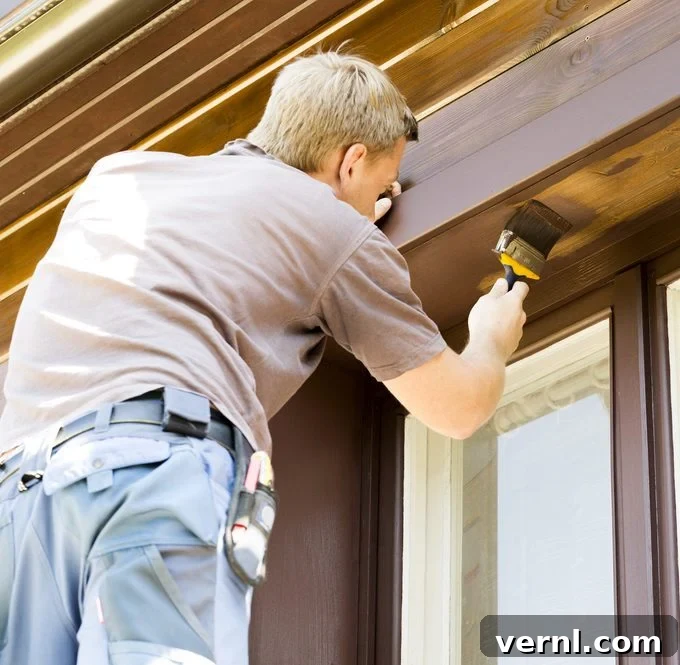
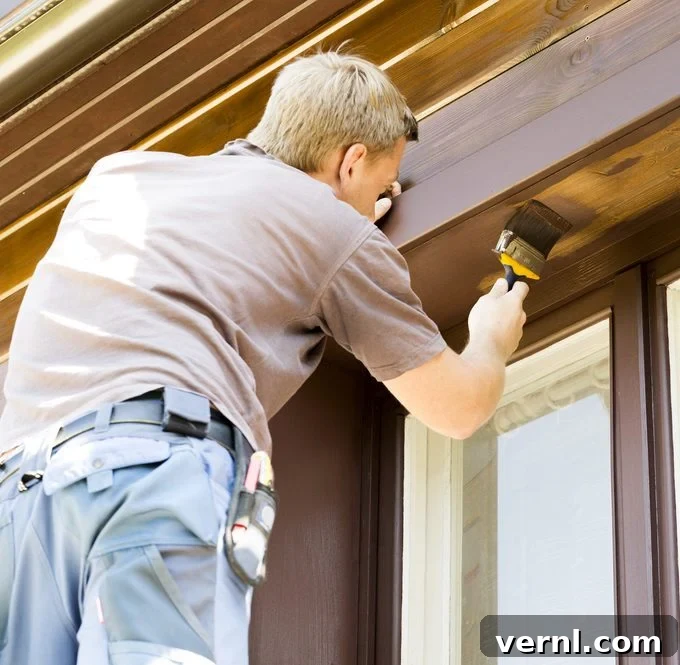
When your painting project involves intricate woodwork—such as detailed crown molding, wainscoting, ornate trim around windows and doors, built-in shelving, fireplace mantels, or complex banisters—the level of precision, steady hand, and specialized technique required significantly increases. Achieving crisp, clean lines, perfectly smooth finishes, and consistent, streak-free coverage on these detailed surfaces demands a very steady hand, exceptional patience, and often specialized brushes (understanding different types of paintbrushes and choosing the right paintbrush for specific tasks is crucial). Drips, uneven application, paint bleeding onto adjacent surfaces, or sloppy cut-in lines can detract significantly from the overall aesthetic of your home and be frustrating to correct. Professional painters possess the extensive experience, specialized tools, and refined techniques to meticulously handle intricate details, ensuring sharp, clean lines and a flawless finish that truly enhances the architectural beauty and character of your home. If your grip isn’t the steadiest, your patience wears thin quickly, or you simply lack extensive experience with detailed painting, letting a professional manage these intricate areas will almost certainly yield superior, long-lasting results and save you from potential frustration, costly mistakes, and time-consuming rework.
Color Transformation: Drastic Changes vs. Subtle Refreshes
The existing color of your walls and your desired new hue can significantly influence the complexity, time commitment, and ultimately the cost of a painting project, playing a key role in the DIY versus professional decision.
Drastic Color Changes: More Work, More Paint for DIY
Imagine transforming a deeply saturated dark blue room into a bright, airy light grey. Such a dramatic color shift typically necessitates multiple coats of paint, often three or even four, to ensure complete coverage and prevent the old color from showing through. This usually involves applying a high-quality primer first to block the old color effectively, followed by multiple coats of the new color. While tackling this yourself might seem like a way to save on professional labor costs, the increased paint consumption and the significant time investment required for multiple applications can quickly add up, diminishing the perceived cost savings. For drastic color changes, where extensive coverage is needed, the combined labor and material costs can make DIY less appealing, as you’ll be spending more on paint and dedicating considerably more of your own precious time to achieve the desired effect.
Similar Color Refreshes: Efficiency for Professionals
Conversely, if you’re simply refreshing rooms with a very similar shade or subtly shifting within the same color family (e.g., from a light beige to a slightly warmer cream, or from one off-white to another), the project usually requires fewer coats—often just one or two, especially with high-quality paint. In these scenarios, a professional’s efficiency and speed truly shine. They can swiftly and expertly apply the necessary coats with precision and consistency, completing the entire job in a fraction of the time it would take an individual DIYer. Since fewer coats mean less paint and significantly faster completion, the cost-effectiveness and convenience of hiring a professional become more evident, particularly if you’re painting multiple rooms with similar, less demanding color transitions. Regardless of who undertakes the painting project, it’s always advisable to conduct a thorough paint inspection after the work is completed to ensure the quality, consistency, and longevity of the finish.
The Assurance of Professionalism: Insurance, Warranty, and Expertise
Beyond the immediate considerations of cost, time, and apparent quality, hiring a professional painter brings several intangible yet highly valuable benefits that contribute to overall peace of mind and long-term satisfaction with your home improvement investment.
Reputable professional painting companies are typically licensed, bonded, and fully insured. This is a critical factor, as it fundamentally protects you from liability in case of accidents, injuries to workers, or unexpected damage that might occur on your property during the painting process. If a DIY mishap leads to an injury or accidental damage to your home or belongings, the entire financial burden and legal responsibility could fall squarely on your shoulders. With professionals, you have the invaluable assurance that any unforeseen incidents are appropriately covered by their insurance, safeguarding your finances and emotional well-being.
Furthermore, reliable professional painters often provide written warranties for their work. This commitment to quality and craftsmanship means that if any issues arise with the paint job—such as premature peeling, cracking, blistering, or an unsatisfactory finish—within a specified period, they will return to rectify it at no additional cost to you. This warranty offers a robust layer of security and confidence that a DIY project simply cannot match, ensuring your investment stands the test of time and consistently meets rigorous professional standards.
Ultimately, professional painters bring a wealth of specialized experience, refined techniques, and extensive expertise to every project. They are intimately knowledgeable about different paint types, various finishes (matte, eggshell, satin, semi-gloss), and optimal application techniques suitable for various surfaces and environments. They can offer invaluable, expert advice on color selection, proper surface preparation, and long-term maintenance, ensuring your home not only looks fantastic immediately after the job but also benefits from a durable, high-quality, and expertly executed paint job that enhances its value and appeal for years to come. While the personal satisfaction of a DIY project is undeniable, the comprehensive benefits of hiring a professional—from enhanced safety and superior efficiency to insured quality, expert advice, and a guaranteed finish—often far outweigh the initial perceived savings, making it a prudent and often superior choice for many homeowners.
Making Your Informed Decision: DIY or Professional Painter?
The decision to paint your home yourself or to hire a professional ultimately boils down to a careful and honest assessment of several crucial factors unique to your specific situation. Consider your available budget, the amount of time and effort you can realistically dedicate, your current skill level and comfort with various painting tasks, the overall scale and complexity of the project, and your comfort with potential risks and unforeseen challenges.
- Choose DIY if: You are tackling a relatively small project (like a few rooms or an accent wall), your walls are in excellent, smooth condition needing minimal preparation, you genuinely enjoy the hands-on process of painting, you already possess most of the necessary supplies and equipment, and you are comfortable with basic painting techniques and adhering to all relevant safety measures.
- Hire a Professional if: You are painting the entire house (whether interior or exterior), dealing with multiple stories or exceptionally high ceilings, your walls require significant repair or extensive preparation, the project involves intricate trim, detailed woodwork, or complex architectural features, you are making a drastic color change that demands multiple coats, or you simply value your precious time, peace of mind, and the assurance of a flawless, guaranteed finish above the potential initial DIY cost savings.
By thoughtfully evaluating these critical points, you can confidently choose the best path forward for your home painting project, ensuring beautiful, lasting results that significantly enhance your living space. Remember, whether you choose to wield the brush yourself or bring in the experts, the ultimate goal is a refreshed, vibrant, and well-protected home you’ll love and enjoy for many years to come.