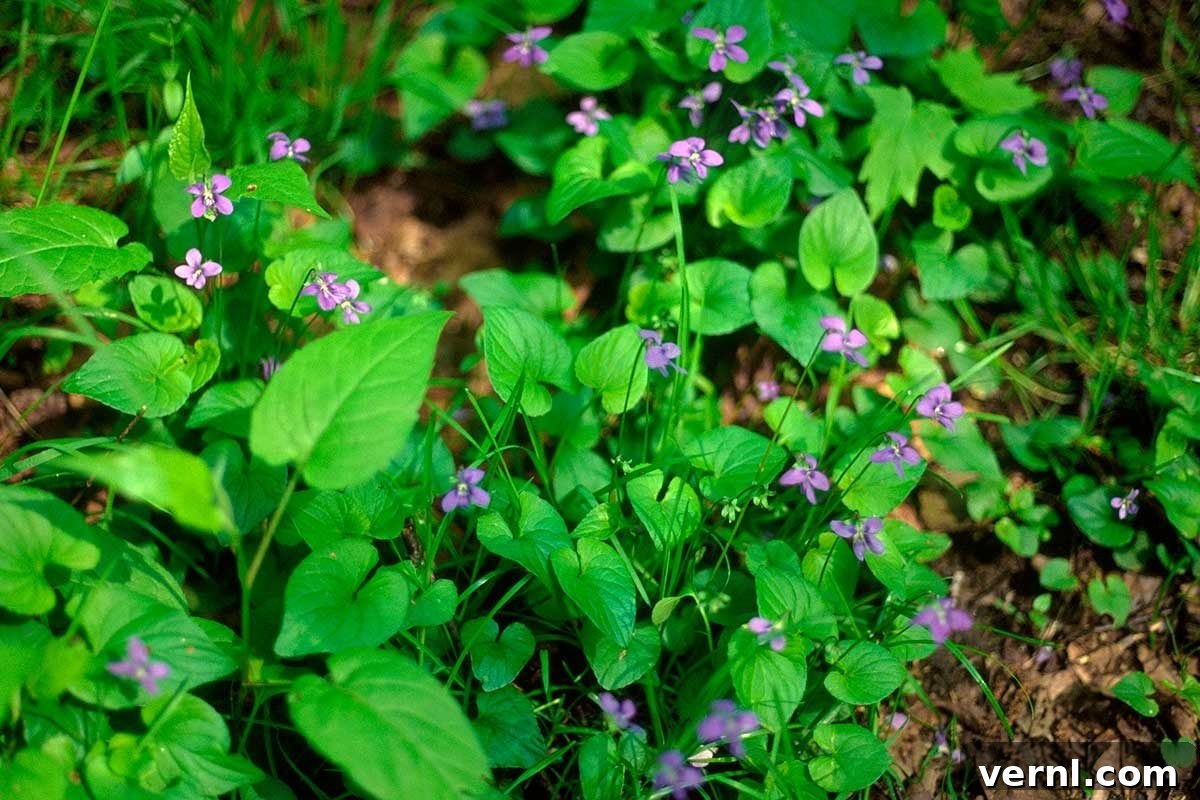
Wild violets, often recognized by their vibrant purple hues, are a common sight across North America, particularly in the northern United States. These charming yet persistent flowering perennials are known for their early spring blossoms and distinctive heart-shaped, waxy leaves. While the deep purple variety is the most prevalent, wild violets also present themselves in shades of white, speckled, and even yellow, adding splashes of color to spring landscapes. They typically thrive in moist, well-draining soil and prefer the dappled light of partially shaded areas, often making a home in lawns, gardens, and woodlands.
Despite their delicate appearance, these tenacious plants can be a double-edged sword for homeowners and gardeners. “This tenacious little plant might be considered a bothersome weed by some,” says expert gardener Em Shipman of KidsGardening.org. “But overall, it has many benefits to humans, animals and pollinators.” Indeed, while their aggressive spreading habits can lead to frustration for those striving for a pristine lawn, wild violets also offer significant ecological advantages, acting as vital early-season nectar sources and even serving as edible delights. This comprehensive guide will delve into everything you need to know about wild violets, from their botanical characteristics and ecological roles to effective strategies for managing their presence in your garden, with insights from Shipman and Sharon Yiesla from The Morton Arboretum.
Understanding Wild Violets: Botanical Insights and Ecological Role
Wild violets belong to the genus Viola, a diverse group with numerous species, some native to North America and others introduced from European and Asian regions. They are close relatives to the more ornamental annual violas and pansies that gardeners often cultivate, sharing many similar characteristics but possessing a rugged resilience unique to their wild nature. These plants are persistent, low-growing, broadleaf perennials that form dense clumps, typically reaching a height of four to six inches.
Their ability to thrive in shady spots with consistently moist soil makes them a formidable competitor against turfgrass, which often struggles in such conditions. Wild violets are prolific bloomers in early spring, producing five-petaled flowers that often feature a distinctive spur at the back. These early blooms are crucial for many pollinators, including various bee species and butterflies, providing essential nectar when few other plants are in flower. Beyond nectar, wild violets are also important host plants for Fritillary butterfly larvae, playing a critical role in their life cycle.
The aggressive spread of wild violets is primarily due to two highly effective reproductive strategies. First, they propagate through rhizomes—creeping horizontal underground stems that can produce new shoots and roots, allowing the plant to rapidly colonize an area. Second, they spread extensively via seeds. Shipman highlights a fascinating adaptation: “If you look closely, you can often see small, unopened flowers underneath the foliage. These can self-pollinate and produce seeds, a fascinating adaptation that ensures the next generation of plants, even if the opened flowers haven’t been pollinated by insects.” This botanical phenomenon, known as cleistogamy, allows the plant to produce seeds without relying on external pollinators, ensuring reproductive success even in unfavorable conditions. These self-pollinating flowers often go unnoticed, yet they are a primary driver of the violet’s ability to quickly take over a garden bed or lawn, making them both resilient and, for many, a persistent challenge.
Are Wild Violets Considered Weeds? The Gardener’s Dilemma
The term “weed” is highly subjective, often defined simply as any plant growing where it is not wanted. By this definition, wild violets certainly qualify as weeds in many meticulously maintained lawns and garden beds. While their delicate flowers and early spring arrival might be appreciated in a naturalized area or woodland garden, their invasive tendencies can be a significant headache for those aiming for a uniform turfgrass lawn or a specific planting scheme.
“Wild violets freely self-seed, quickly taking over a lawn or planted bed and are not too easy to get rid of,” Shipman explains. Their robust rhizomatous root systems and efficient seed dispersal, especially through cleistogamous flowers, enable them to establish dense colonies that outcompete desired plants. In a lawn setting, wild violets can form thick patches, creating an uneven texture and potentially suffocating turfgrass. This aggressive habit can be particularly frustrating for gardeners who dedicate time and effort to cultivating a manicured landscape.
However, it’s important to acknowledge their dual nature. While their aggressive habits challenge the aesthetics of some gardens, their ecological benefits are undeniable. As an early source of nectar, they are invaluable to pollinators emerging from winter dormancy. They can also serve as effective ground cover in less formal areas, helping with erosion control and adding beauty to naturalistic landscapes. Ultimately, whether a wild violet is a weed or a welcome native plant depends entirely on the gardener’s perspective and their specific landscape goals.
Are Wild Violets Safe and Edible? A Culinary and Medicinal Perspective
Beyond their role in the garden and ecosystem, wild violets offer surprising benefits to humans: they are entirely safe to consume, and both their flowers and leaves possess notable nutritional and even medicinal qualities. This makes them a delightful addition to the edible landscape, provided they are harvested responsibly.
“The leaves are high in vitamin A and C and are commonly used in European salads or as cooked greens,” Shipman notes. The tender young leaves can be added raw to salads, providing a mild, slightly peppery flavor and a nutritional boost. When cooked, they can be treated much like spinach or other leafy greens, suitable for stir-fries, quiches, or as a side dish. The vibrant, five-petaled flowers are perhaps even more versatile and visually appealing. “The flowers can be candied or tossed into a salad to add a pop of color and flavor,” Shipman suggests. Candied violets, made by coating the fresh flowers in egg white and sugar, are a classic confectionery treat often used to decorate desserts or cakes. Their delicate flavor and beautiful appearance make them a gourmet garnish.
Shipman also recommends several enjoyable and delicious family activities involving wild violets, such as making violet syrup, tea, infused honey, or sugared flowers. Violet syrup, with its lovely purple hue and subtly sweet floral taste, can be used in beverages, drizzled over pancakes, or incorporated into desserts. Violet tea, brewed from fresh or dried flowers, is not only pleasant but also traditionally used for its soothing properties. Infused honey combines the natural sweetness of honey with the delicate aroma of violets, perfect for toast or hot drinks. These culinary uses offer a unique way to connect with nature and appreciate the bounty of wild plants.
**Important Safety Note:** While wild violets are edible, it is paramount to exercise caution before ingesting any wild plant. Always be 100% certain of your identification. More importantly, **never consume flowers or leaves that have been treated with chemical fertilizers, pesticides, or herbicides.** These chemicals can be highly toxic and pose serious health risks. Only harvest wild violets from areas you know to be free of chemical contaminants, such as your own organic garden or untouched natural spaces away from roadsides or agricultural fields.
Strategies for Controlling Wild Violets: Taming the Tenacious Plant
For those who cherish their manicured lawns or pristine garden beds, the aggressive nature of wild violets can be a source of frustration. “If you love wild violets and their vibrant blooms are your favorite part of spring, then enjoy!” Shipman says. However, if you aim to prevent them from completely dominating your landscape, a targeted approach is necessary. Here are several effective methods for controlling and reducing wild violet populations, ranging from chemical treatments to organic and manual techniques:
- Chemical Weed Killers: A Targeted Approach: The most rapid way to eliminate wild violets is through the application of a broadleaf herbicide. These products are specifically formulated to target dicot (broadleaf) weeds while leaving monocot (grass) unharmed, making them effective in lawns. However, using chemical herbicides comes with significant drawbacks. They contain toxic chemicals that can be harmful to children, pets, and essential pollinators, including bees and butterflies. They also pose environmental risks, contaminating groundwater and freshwater sources and potentially damaging your lawn and other desired landscaping plants if not applied carefully. When using chemical options, always follow product instructions precisely, apply on a calm day to prevent drift, and consider spot-treating individual plants rather than broadcasting across a large area to minimize environmental impact. It’s crucial to understand the long-term implications before choosing this method.
- Hand Weeding: The Labor-Intensive, Eco-Friendly Method: Pulling wild violets by hand is arguably the least harmful method to rid your yard of these plants, though it can be labor-intensive. The key to successful hand weeding is to remove the entire root system, especially the tenacious rhizomes. If parts of the rhizome are left behind, the plant will simply re-sprout with renewed vigor. The best time to hand weed is in the spring and early summer when the plants are actively growing and the soil is moist. Damp soil makes it much easier to extract the entire root structure without breaking it. Utilize a weeding fork, dandelion weeder, or a specialized hoe to dig deeply and carefully around the plant. “When leaves and flowers are plucked from above, the rhizomes will continue to send out new growth,” Shipman explains. “Be sure to remove the entire plant so the rhizomes don’t re-sprout.” Consistency is vital; regularly check for new growth and promptly remove any emerging violets.
- Natural/Organic Herbicides: Gentler Alternatives: If persistent hand weeding doesn’t yield satisfactory results, or if you’re dealing with a larger infestation, natural or organic herbicides offer a less toxic alternative to synthetic chemicals. One effective preventative measure is spreading corn gluten meal in the early spring. This natural byproduct of corn processing acts as a pre-emergent herbicide, inhibiting the germination of wild violet seeds without harming existing plants. For existing plants, a DIY herbicide concoction can be surprisingly effective. Shipman suggests: “Mix and spray a solution of equal parts of vinegar and hot water to which a bit of dish soap (one tablespoon per gallon) has been added to help the spray adhere and penetrate the waxy leaves.” The acetic acid in vinegar acts as a desiccant, drying out and killing the plant tissue it contacts. The dish soap acts as a surfactant, breaking down the waxy cuticle of the leaves and allowing the vinegar to penetrate more effectively. While not as potent as synthetic herbicides, this mixture can be effective for spot treatments, particularly on younger plants. Stronger horticultural vinegar (20% acetic acid) is also available but requires careful handling as it can cause skin irritation.
- Covering (Smothering): The Long-Term Solution for Large Areas: For extensive wild violet infestations where other methods seem daunting, smothering is an effective, albeit slow, solution. This method involves depriving the plants of sunlight and oxygen. Lay down several layers of cardboard, newspapers, or even black plastic sheeting over the affected area, ensuring an overlap to prevent light penetration. On top of these layers, apply a thick layer of mulch (wood chips, straw, or compost) to hold everything in place and improve aesthetics. “It may take several months to a year to smother the plants and give them time to decompose,” Shipman cautions, “but the result will be a weed-free, ready-to-plant bed.” This method is particularly suitable for preparing new garden beds or reclaiming large areas overrun by weeds, allowing the underlying plant material to break down and enrich the soil naturally over time.
Preventing Wild Violets From Returning: Long-Term Management
After successfully curbing a wild violet invasion, the next crucial step is implementing preventative measures to keep these persistent plants from returning. Many homeowners choose to allow a limited number of wild violets to coexist with their turfgrass, appreciating their early blooms as an important nectar source when little else is available. However, for those committed to managing their presence, a proactive approach is key:
- Optimized Lawn Care Best Practices: A healthy, dense lawn is your best defense against wild violets and most other weeds. “Dense grass and foliage make it difficult for seeds to establish and roots to spread,” Shipman advises. This involves a multi-faceted approach:
- Proper Mowing Height: Mow your lawn at a higher setting (typically 2.5 to 3 inches or more). Taller grass shades the soil, reducing light availability for weed seeds to germinate and making it harder for established weeds to thrive.
- Regular Fertilization: Feed your lawn with a balanced fertilizer appropriate for your grass type. A well-nourished lawn grows thicker and is better equipped to outcompete weeds.
- Appropriate Watering: Water deeply and infrequently to encourage deep root growth in your turfgrass, making it more resilient. Shallow watering often benefits shallow-rooted weeds like violets.
- Overseeding: Annually overseeding your lawn with desirable grass species can increase its density and fill in bare spots where violets might otherwise establish.
- Consistent Mulching: Mulch is a powerful weed preventative, especially in garden beds. Within a day or two after hand weeding or clearing an area, apply a thick layer (2-4 inches) of organic mulch, such as wood chips, shredded bark, or straw. Mulch creates a physical barrier that blocks sunlight, suppressing the germination of wild violet seeds and suffocating any small bits of plant or root system that might have been left in the soil. It also helps retain soil moisture and moderates soil temperature, creating a more stable environment for desired plants.
- Strategic Pruning for Increased Light: Wild violets thrive in light to moderate shade, conditions where many turfgrass varieties struggle. If you notice violets proliferating in shaded areas of your lawn, consider pruning nearby trees and overgrown shrubs. Allowing more sunlight to reach these patches of lawn can shift the competitive advantage from the shade-loving violets to the sun-loving turfgrass. This simple adjustment can significantly reduce their presence over time.
- Improving Soil Drainage: Moist soil is the preferred habitat for wild violets. Improving the drainage of your garden or lawn can make the environment less hospitable for them. Poor drainage often leads to compacted, waterlogged soil, which violets can tolerate better than many other plants. To enhance drainage:
- Aerate Your Soil: Core aeration involves removing small plugs of soil from your lawn, which helps relieve compaction and allows water, air, and nutrients to penetrate more deeply. This promotes healthier grass roots and deters violets.
- Incorporate Organic Material: In garden beds, mix in generous amounts of coarse organic material like compost, well-rotted manure, or even some sand (if your soil is heavy clay) into the soil. These amendments improve soil structure, increasing porosity and facilitating better water drainage. Avoid using only sand in clay soil as it can create a concrete-like mixture; always combine with organic matter.
- Regular Monitoring and Early Intervention: The most effective long-term prevention strategy is consistent vigilance. Regularly inspect your lawn and garden beds for any new wild violet sprouts. Catching them early, before they establish a robust root system or go to seed, makes removal much easier and prevents a small problem from escalating into a full-blown invasion.
Frequently Asked Questions About Wild Violets
Do wild violets bloom more than once a year?
“There are several species of wild violets. They all flower primarily from spring into early summer. Some may flower sporadically at other times, but this is not reliable,” states Sharon Yiesla, Plant Knowledge Specialist with the Plant Clinic at The Morton Arboretum. While the showy, insect-pollinated flowers are most prominent in spring, the cleistogamous (self-pollinating) flowers that develop under the foliage can produce seeds throughout the growing season, even without obvious blooms.
Can I grow wild violets intentionally in my garden?
“You can intentionally plant violets in your garden, but they are not always easy to find for sale. Garden centers that specialize in native plants are most likely to have them,” Yiesla explains. Many gardeners choose to cultivate wild violets for their early spring beauty, their role in supporting pollinators and Fritillary butterflies, or as an edible groundcover. If you do plant them intentionally, be aware of their vigorous spreading habits and choose a location where they can naturalize without overwhelming other plants, such as a woodland garden or a dedicated native plant area.
About the Experts
- Sharon Yiesla is a Plant Knowledge Specialist with the Plant Clinic at The Morton Arboretum, providing expert advice on plant health and identification.
- Em Shipman is the Executive Director of KidsGardening.org, an organization dedicated to creating opportunities for kids to learn and grow through gardening.