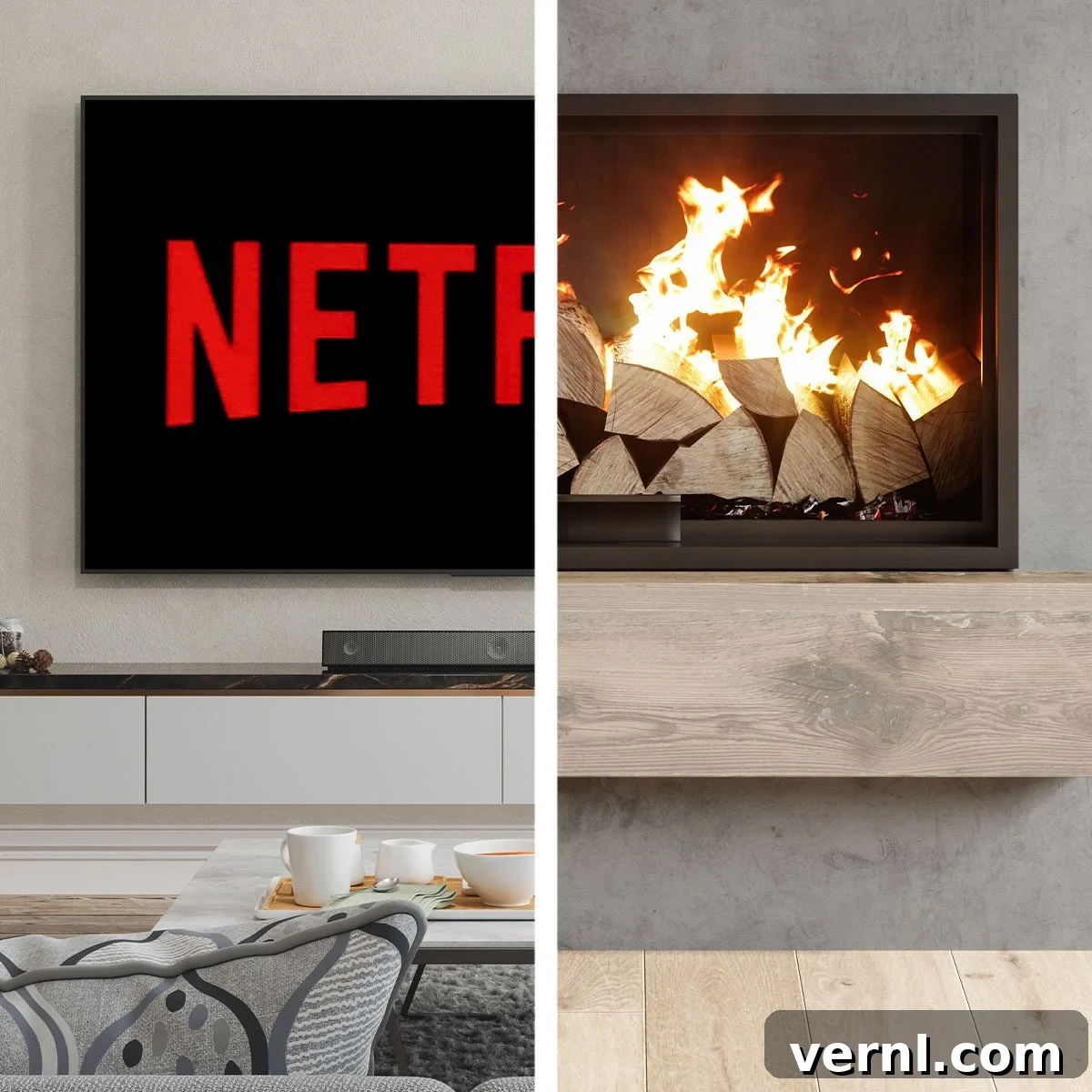
A roaring fire or the gentle glow of an electric fireplace can create an undeniably cozy and inviting atmosphere, establishing a natural focal point in any living room. However, introducing another major visual element like a flat-screen television into this equation often presents a significant design challenge. Essentially, you’re dealing with two prominent rectangular features, each vying for attention and dominance within the space. While many homeowners are drawn to the idea of mounting their TV directly above the fireplace for perceived convenience or a sleek look, this seemingly intuitive solution comes with its own set of potential drawbacks. Is it truly the optimal choice for comfort, aesthetics, and the longevity of your electronics? To navigate this common interior design dilemma, we consulted with renowned interior designer and architect Matthew Coates, who shares invaluable insights on how to create a beautifully balanced and functional space that seamlessly incorporates both a TV and a fireplace.
The Dilemma: Pros and Cons of Placing a TV Over a Fireplace
The decision to mount a television above a fireplace is often driven by a desire for efficiency and a streamlined aesthetic. There are indeed several compelling advantages to this arrangement:
- Maximizes Wall Space: In smaller living rooms or open-plan layouts where wall space is at a premium due to windows, doorways, or other architectural features, consolidating the TV and fireplace onto a single wall can free up valuable real estate, making the room feel more open and less cluttered.
- Creates a Tidy, Unified Look: For those who prefer a minimalist or contemporary design, placing the TV directly over the fireplace can create a single, consolidated visual anchor. This can contribute to a very clean and organized appearance, as it centralizes two primary entertainment and comfort elements.
- Ideal for Non-Functioning Fireplaces: If your fireplace is purely decorative or an electric unit that produces minimal heat, the concerns about heat damage to your television are largely mitigated. This makes the over-fireplace placement a much more viable and less risky option for purely aesthetic purposes.
“Putting a TV over the fireplace seems clever on paper, and it certainly appeals to the desire for a cohesive look, but in practice, it’s rarely the best setup for overall comfort and longevity,” cautions Coates. The potential drawbacks often outweigh the initial advantages:
- Places the TV Too High for Optimal Viewing: This is arguably the most significant disadvantage. An excessively high TV forces viewers to crane their necks upwards, leading to discomfort, neck strain, and an awkward viewing experience during extended periods. Ideal viewing height typically means the center of the screen is at eye level when seated.
- Creates an Awkward Viewing Angle: Beyond just height, the angle at which you view the screen can be detrimental. Looking up constantly not only causes physical strain but can also degrade the picture quality of some TV panels, especially older LCDs, leading to color distortion and reduced contrast.
- Potential for Heat Damage to the TV: Wood-burning fireplaces and even some gas fireplaces can generate substantial heat, especially towards the mantel and the area directly above. This heat can severely damage the delicate internal components of a television, shortening its lifespan, causing screen discoloration, or leading to complete failure.
- Challenging Cord Management: Concealing unsightly wires is crucial for a clean look, but routing cables through a chimney breast or down a tiled fireplace surround can be complicated, expensive, and sometimes impossible without significant renovation. Visible wires detract significantly from the desired sleek aesthetic.
- Competing Focal Points: Both a fireplace and a television are strong visual elements designed to draw the eye. When stacked, they often compete for dominance, creating visual tension rather than a harmonious focal point, which can disrupt the intended ambiance of the room.
Understanding the Appeal: Why People Still Choose Over-Fireplace TV Placement
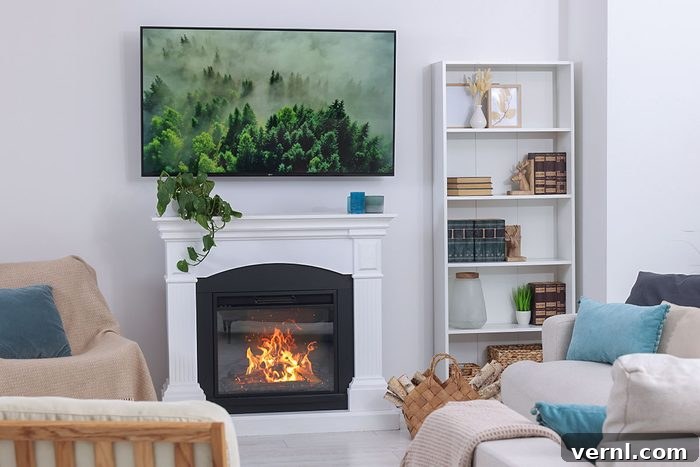
Despite the ergonomic and design challenges, many homeowners continue to opt for placing their television above the fireplace. One primary reason is the inherent magnetism of the fireplace itself. As a traditional gathering point and a source of warmth and ambiance, the fireplace naturally draws attention. Some people reason that by placing the TV here, they create a singular “entertainment and comfort zone,” simplifying their room layout.
It’s undeniably appealing to imagine enjoying the crackling sounds of a fire while simultaneously binging your favorite Netflix series. However, as Coates points out, this often leads to an unbalanced visual experience. “Both the fireplace and TV are both built-in features, and if you stack them, they compete with each other to be the focal point in the room,” Coates explains. “Instead of letting one or the other be the centerpiece, you end up with visual tension that can ruin the whole experience and make the room feel disjointed.”
Another compelling factor is often practical necessity: a shortage of available wall space. In homes with numerous windows, large doorways, or existing built-in shelving, options for TV placement can indeed be severely limited. In such scenarios, the area above the fireplace might genuinely appear to be the “only” viable option. If you find yourself in this situation, there are still strategies to mitigate the common issues, which we’ll explore in detail.
Harmonious Alternatives: Creative TV and Fireplace Placement Ideas
Before committing to the over-fireplace setup, it’s worth exploring more balanced and comfortable alternatives that can elevate your living room’s design and functionality without compromising on viewing pleasure or safety.
1. Alongside the Fireplace: Symmetry and Balance
Instead of stacking, consider placing the TV next to the fireplace. “Placing it next to the fireplace gives each piece its own room without taking away from either,” says Coates. This arrangement allows each element to exist independently while still being part of a cohesive design. You can achieve symmetry by placing the TV on one side and a tall shelving unit, artwork, or another decorative piece on the opposite side. Alternatively, an asymmetrical design can still be balanced by carefully considering scale and proportion.
If wall space is truly at a premium, you don’t necessarily need a wall mount. A small, elegant media cabinet or a specially designed corner cabinet can serve as a stylish stand for your TV, offering flexibility and often providing additional storage. This approach allows for optimal viewing height and easy cable management, as the TV can be positioned precisely for comfort.
2. Integrated Built-in Solutions: Seamless Integration
For a truly custom and sophisticated look, a built-in setup is an excellent choice. “Another consideration is a built-in setup with the fireplace centrally located and the TV concealed behind a sliding door, a cabinet, or a shelving unit on one side,” Coates suggests. This approach offers incredible versatility:
- Hidden TV: The TV can be artfully hidden behind sliding panels, bifold doors, or even a piece of art that slides away, revealing the screen only when in use. This keeps the room visually calm and allows the fireplace to be the undisputed focal point when the TV is off.
- Custom Shelving Units: Designing custom cabinetry or shelving around the fireplace allows for the seamless integration of the TV. The TV can be recessed into a specific niche, framed by books and decor, making it feel less like an intrusive element and more like a deliberate part of the architecture.
- Retractable Mounts: Advanced systems allow TVs to electronically drop down from the ceiling or lift out of custom cabinetry, providing a truly hidden solution that emerges only when desired.
“It has a deliberate look and keeps all things visually grounded,” Coates adds. A well-designed built-in TV wall can have a significant impact, transforming both the TV and the fireplace into one intentional, harmonious focal point that enhances the room’s overall aesthetic.
3. Distinct Entertainment Zones: Separating Functionality
Consider whether your living room needs to serve all functions simultaneously. For larger spaces, creating distinct zones for relaxation by the fire and for dedicated TV watching can be a highly effective solution. The TV could be on an entirely different wall, perhaps with a dedicated media console, while the fireplace remains a cozy nook for reading or conversation. This prevents the visual competition and allows each element to shine in its own right.
Essential Tips for Placing a TV Over a Fireplace (If It’s Your Only Option)
While often not the first recommendation, if mounting the TV over your fireplace is the absolute only viable option for your space, careful planning and execution are paramount. Follow these expert tips to achieve the best possible outcome, minimizing risks and maximizing comfort.
1. Prioritize a Low Fireplace Design
The height of your fireplace directly dictates the height of your TV. For an over-fireplace installation to be tolerable, the fireplace itself must be as low to the ground as possible. “The fireplace should be as low as possible to the floor,” advises Coates. “A linear or modern fireplace installed closer to the floor offers more options to install the TV at a decent height. If possible, recess the TV into the wall or get a frame-style TV to help it blend in better.” Contemporary linear gas fireplaces or electric models often sit much lower than traditional hearths, making them more suitable for this arrangement.
2. Focus on Viewing Comfort Above All Else
When it comes to TV placement, viewing height is non-negotiable for long-term comfort, and the fireplace complicates this significantly. “Ideally, the screen should be at center eye level from your seating position, typically at around 42 inches off the ground,” says Coates. “However, with a fireplace thrown into the equation, there usually tends to be some give and take.”
To strike the best possible balance, Coates recommends hanging the TV approximately 10 to 12 inches above the top of the mantelpiece. Any lower might risk overcrowding and potential heat exposure, especially from wood-burning fireplaces. Any higher, and you’ll almost certainly contend with an uncomfortable viewing angle and persistent neck strain. Consider using a full-motion or, ideally, a pull-down TV mount (like a MantelMount) that allows you to lower the TV to eye level when in use, then retract it back above the fireplace when not.
3. Heat Management is Crucial
This is perhaps the most critical consideration. Before mounting, you must assess the heat output of your fireplace.
- Ventilation and Insulation: Ensure there’s adequate space and ventilation above the fireplace to dissipate heat. For gas or wood-burning fireplaces, a heat deflector or a custom-built mantel extension can help redirect heat away from the TV.
- Recessed Installation: If possible, recessing the TV into the wall above the fireplace can create a pocket that offers some protection from direct heat. However, ensure proper ventilation for the recess itself.
- Monitor Temperature: If you proceed with this setup, consider using a thermometer to monitor the temperature directly behind and around the TV when the fireplace is in use. If temperatures exceed the TV manufacturer’s recommended operating limits (usually around 100°F or 38°C), you must re-evaluate or risk permanent damage. Electric fireplaces typically pose less of a heat risk, but still generate some heat.
4. Skip the Traditional Mantel (or Choose a Minimalist One)
“Bypass the clunky mantel,” urges Coates. “That will force everything upwards, which exacerbates the height issue.” A thick, decorative mantel not only pushes the TV even higher, making viewing more uncomfortable, but it can also contribute to visual clutter. For an over-fireplace TV, a very minimalist, thin shelf or no mantel at all will create a cleaner line and help keep the TV as low as possible. If a mantel is desired for heat deflection, opt for a simple, understated design that extends sufficiently to protect the TV, but doesn’t add excessive vertical bulk.
5. Implement Flawless Cable Management
Unsightly cables hanging down from a TV mounted above a fireplace can completely ruin the aesthetic. Professional cable management is essential. This often involves:
- In-Wall Cable Routing: The cleanest solution is to route all cables (power, HDMI, optical, etc.) behind the wall. This typically requires cutting into the drywall and potentially hiring an electrician or AV installer, especially if you need to add a power outlet behind the TV.
- Power Bridges: Kits are available that allow for safe, in-wall power routing without needing to run new electrical wiring from scratch, provided there’s an existing outlet below.
- Concealed Devices: Consider placing streaming devices, cable boxes, or soundbar components in a nearby media cabinet or an IR repeater system if the TV is recessed.
6. Choose the Right TV Size and Type
Select a TV that is proportionate to the fireplace and the wall space. A TV that is too large will overwhelm the fireplace and the room. Consider “frame” style TVs (like Samsung’s The Frame) that can display artwork when off, helping them blend into the decor rather than stand out as a black rectangle above your fireplace.
Creating Cohesion: Design Principles for Your Living Space
Ultimately, whether you choose to place your TV above or alongside your fireplace, the goal is to create a living room that feels balanced, inviting, and functional. Consider these broader design principles:
- Symmetry and Balance: Think about how elements are weighted on either side of a central axis (often the fireplace).
- Scale and Proportion: Ensure that your TV, fireplace, and surrounding furniture are appropriately sized for the room.
- Materiality and Finishes: Use consistent materials or complementary finishes to tie the different elements together.
- Overall Room Layout: Arrange seating to facilitate comfortable viewing and conversation, ensuring that the TV and fireplace enhance, rather than dictate, the room’s flow.
By carefully considering these factors and exploring all available options, you can design a living room that perfectly marries the warmth of a fireplace with the demands of modern entertainment, creating a truly harmonious and comfortable environment.
About the Expert
- Matthew Coates is a Seattle architect and president of Coates Design. Coates creates pleasing interior spaces and furniture layout designs that complement and seamlessly merge with the built environment. With more than 20 years of experience, he is recognized for his innovative and forward-thinking approach to high-performance architecture and sustainable design.