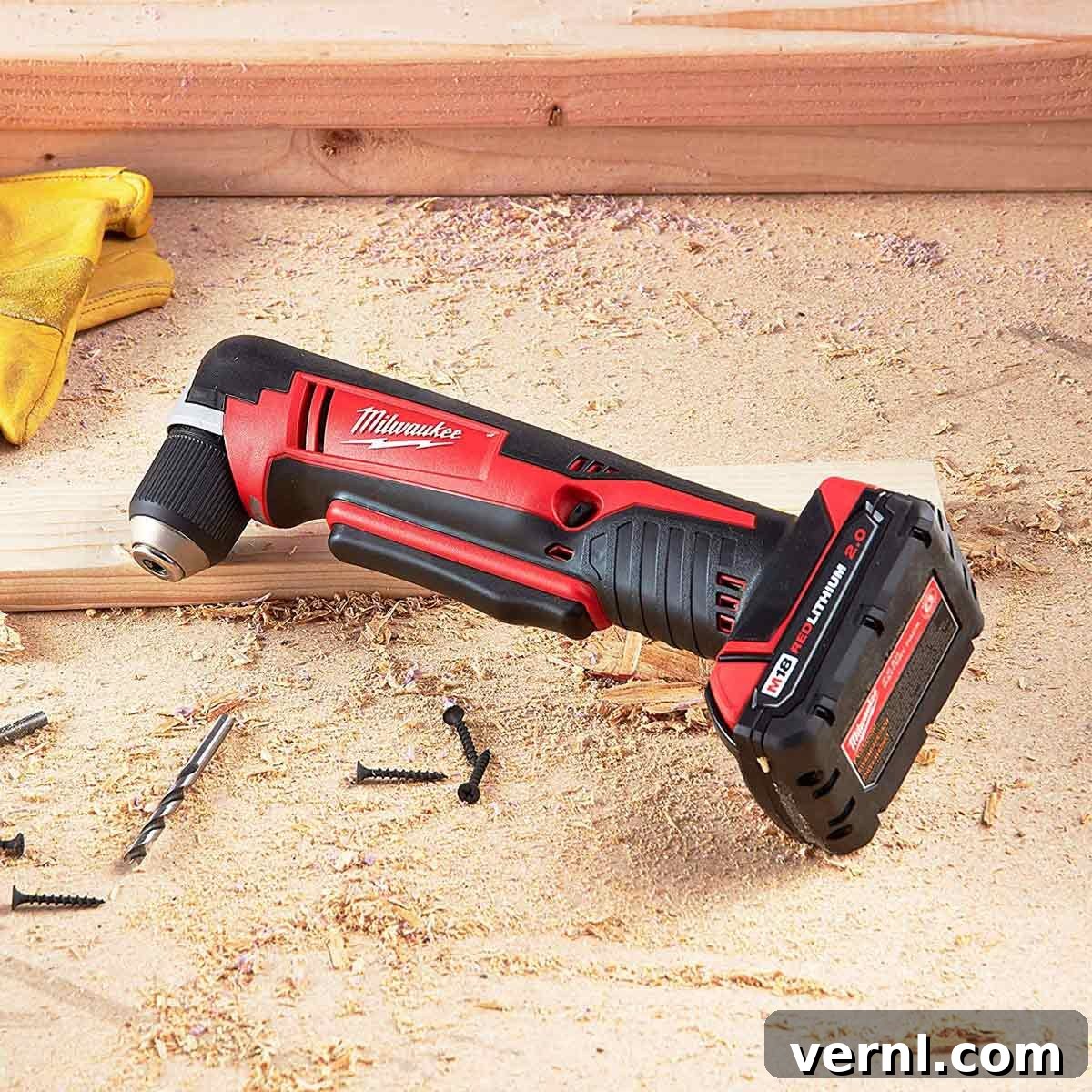
While not a staple in every toolbox, the right angle drill is a marvel of engineering designed to tackle the most challenging drilling and driving tasks. Often overlooked, this specialized power tool transforms daunting projects in tight, confined spaces into manageable feats. For dedicated DIY enthusiasts and seasoned professionals alike, understanding the capabilities and proper application of a right angle drill can be a true game-changer, saving time, effort, and frustration.
This comprehensive guide will delve into everything you need to know about right angle drills. We’ll explore their unique design, highlight the countless scenarios where they become indispensable, and provide a detailed breakdown of how to select the perfect model to meet your specific needs. Prepare to unlock a new level of efficiency and precision in your projects.
What Exactly is a Right Angle Drill?
At its core, a right angle drill is a variant of the traditional electric drill, but with a crucial design modification: its chuck is positioned at a 90-degree angle relative to the main body and grip. This distinct “L-shaped” configuration is what grants the tool its unique advantage, allowing it to fit into areas where a conventional straight-bodied drill simply cannot. Think of it as a standard drill that has been ingeniously folded to reach around corners and into narrow gaps.
Beyond the angular head, right angle drills often feature a more compact and ergonomic design. The head itself is typically much shorter than that of a standard drill, further enhancing its ability to squeeze into tight spots. The grip is almost always engineered for comfortable, one-handed operation, which is vital when you’re contorting yourself or reaching into awkward positions. This combination of a right-angled head, short profile, and ergonomic grip makes the right angle drill an indispensable tool for accessing previously unreachable work areas.
Understanding the Core Design Elements:
- The 90-Degree Head: This is the defining characteristic. It allows the drill bit or screwdriver bit to extend perpendicularly from the tool’s body, enabling it to reach into corners, between joists, or inside cabinetry.
- Compact Chuck and Head Assembly: The minimal size of the chuck and the housing around it means the tool can fit into very narrow gaps, often just a few inches wide.
- Ergonomic Grip: Designed for comfort and control during extended use, especially when operating in awkward positions. Most are shaped for easy one-handed manipulation.
- Motor and Power Source: Like traditional drills, they are available in both corded and cordless versions, offering varying levels of power and portability.
When is a Right Angle Drill Your Essential Companion?
The versatility of a right angle drill is truly remarkable, making it a critical asset for nearly any DIYer or professional who frequently encounters challenging work environments. Its primary purpose is to empower you to drill holes and drive fasteners in spaces too cramped for conventional drills, but its utility extends far beyond just extreme confinement. Let’s explore the myriad scenarios where this specialized tool shines:
Conquering the Toughest Tight Spaces:
- Plumbing Installations and Repairs: Working under sinks, behind toilets, near water heaters, or fitting pipes through confined wall studs are classic scenarios. A right angle drill allows you to accurately drill pilot holes for pipes, secure mounting brackets, or drive screws in incredibly cramped plumbing areas without dismantling half the room.
- Electrical Wiring and Conduit Work: When running new electrical wires, installing junction boxes, or securing conduit inside walls, ceilings, or floor voids, a standard drill can be too bulky. The right angle drill excels here, enabling precise drilling for cable routes and fastening components in restricted electrical enclosures.
- HVAC System Maintenance and Installation: Installing new ductwork, securing vents, or accessing internal components of furnaces and air conditioning units often requires working in tight crawl spaces or cramped utility closets. The right angle drill makes these tasks significantly easier and more efficient.
- Cabinetry and Furniture Assembly: Attaching cabinet backs, installing drawer slides, securing shelving, or assembling flat-pack furniture often involves driving screws in awkward interior corners or narrow gaps that are inaccessible to a standard drill. It’s perfect for concealed fixings and ensuring a professional finish.
- Deck Building and Framing: When working between closely spaced deck joists, attaching ledger boards to existing structures, or framing interior walls with tight stud spacing, a right angle drill provides the necessary clearance to drive fasteners without stripping screws or damaging surrounding materials.
- Automotive Repairs: Getting into engine bays, behind dashboard panels, or under chassis to drill or fasten components can be a nightmare with a regular drill. The compact nature of a right angle drill offers unparalleled access in automotive applications.
- General Home Renovation and Repair: From installing curtain rods in alcoves to repairing subflooring between joists, or securing fixtures in cramped closets, the right angle drill consistently proves its worth in a wide array of home improvement projects.
Beyond Just Tight Spaces: Other Key Benefits
- Avoiding Manual Labor: In situations where a traditional drill can’t reach, the alternative is often to use a screwdriver or other manual tool. This is not only slow and laborious but can also lead to fatigue and imprecise work. A right angle drill effectively replaces these manual efforts, offering power and speed.
- Improved Ergonomics and Reduced Fatigue: For tasks that involve prolonged work in awkward positions, the right angle drill’s design can significantly reduce strain on your wrists and arms compared to trying to force a straight drill into a tight spot. Its balanced design often allows for more comfortable operation.
- Enhanced Precision and Straight Drilling: Surprisingly, some users find that the compact nature and different handling angle of a right angle drill can make it easier to drill holes accurately and straight, especially when space constraints might otherwise lead to angled or off-center holes.
- Versatility with Attachments: While primarily designed for drilling and driving, with the right attachments (like small wire brushes or sanding pads), a right angle drill can perform light finishing tasks in hard-to-reach areas.
How to Select the Perfect Right Angle Drill for Your Needs
Choosing the right angle drill involves more than just picking a brand. While leading manufacturers like Milwaukee, DeWalt, and Bosch generally offer high-quality, reliable tools, understanding the key features will ensure you invest in a model that perfectly suits your projects and workflow.
Key Features to Evaluate:
- Corded vs. Cordless:
- Cordless: Offers unparalleled portability and freedom of movement, crucial when working in diverse locations or without immediate power access. Look for models with robust battery platforms (e.g., 12V, 18V, 20V) that are compatible with your existing tool batteries. Consider battery life and charge time.
- Corded: Provides consistent power without the need for recharging, making it ideal for continuous, heavy-duty tasks where power outlets are readily available. Corded models are often lighter without the battery pack.
- Ergonomics and Grip: A right angle drill will often be used in awkward positions, so comfort is paramount. Look for an ergonomic design with a comfortable, non-slip grip that allows for easy one-handed operation. Weight and balance also play a significant role in reducing user fatigue.
- Chuck Size:
- 3/8-inch Chuck: Common for most light to medium-duty tasks, accommodating a wide range of drill bits and screwdriver bits.
- 1/2-inch Chuck: Offers greater versatility and holding power for larger drill bits (e.g., spade bits, hole saws) and heavier-duty applications. Consider the types of bits you’ll primarily be using.
- Motor Type (Brushed vs. Brushless):
- Brushless Motors: More efficient, provide longer runtimes per charge (for cordless models), generate less heat, and typically have a longer lifespan. They are generally found in higher-end models.
- Brushed Motors: Still effective and often found in more affordable models. They are reliable but less efficient than their brushless counterparts.
- Speed Settings and Torque Control:
- Variable Speed Trigger: Essential for precise control over drilling and driving, allowing you to match the speed to the material and task.
- Multi-Speed Gearbox: Many quality right angle drills feature two or three-speed settings (e.g., low speed for high torque driving, high speed for drilling). This adjustability is crucial for versatility across different materials and fastener types.
- Adjustable Torque (Clutch Settings): A clutch allows you to set the maximum torque before the chuck slips, preventing overtightening screws or damaging delicate materials. This is a highly desirable feature, especially for driving fasteners.
- Head Profile and Overall Compactness: Evaluate the head length and overall depth of the drill. Some models boast “ultra-compact” heads specifically designed for the absolute tightest spaces. Measure the narrowest gaps you typically work in to ensure the chosen drill will fit.
- Integrated Features:
- LED Work Light: Illuminates the work area, which is invaluable in dim, confined spaces.
- Belt Clip: Convenient for carrying the tool when not in use, especially at height.
- Fuel Gauge (Cordless): Displays remaining battery life, preventing unexpected power loss.
- Reversible Action: Standard feature for both drilling and driving, allowing you to remove screws or back out bits.
- Brand Reputation and Warranty: Sticking with reputable brands often ensures better build quality, reliable performance, and access to customer support and warranty services. Research user reviews and check warranty periods before making a final decision.
Essential Accessories to Complement Your Right Angle Drill
To truly maximize the utility of your right angle drill, investing in the right accessories is key. These items will enhance its versatility and allow you to tackle a broader range of tasks with precision and efficiency.
- High-Quality Drill Bit Sets:
- Wood Bits: Spade bits, auger bits, and twist bits are essential for various woodworking tasks.
- Metal Bits: HSS (High-Speed Steel) or cobalt bits for drilling into different types of metal.
- Masonry Bits: For drilling into brick, concrete, or stone.
- Screwdriver Bit Sets:
- A comprehensive set including Phillips, flathead, Torx, and square drive bits in various sizes.
- Consider impact-rated bits for increased durability if your drill has high torque.
- Extension Bit Holders: While a right angle drill solves most reach problems, a magnetic extension bit holder can sometimes provide that extra inch or two for truly extreme situations.
- Socket Adapters: Convert your drill into a power nut driver for quickly tightening or loosening nuts and bolts.
- Extra Battery Packs and Charger (for Cordless Models): Having a spare battery charged and ready is crucial for uninterrupted workflow on larger projects.
- Carrying Case: Protects your investment and keeps all your accessories organized and easily transportable.
Tips for Maximizing Your Right Angle Drill’s Potential
Even with the best tool, proper technique ensures optimal performance and safety. Follow these tips to get the most out of your right angle drill:
- Select the Right Bit: Always match your drill bit or screwdriver bit to the material and fastener. Using the wrong bit can lead to stripped screws, damaged materials, or dull bits.
- Use Pilot Holes: For drilling into wood, metal, or whenever precision is critical, drilling a pilot hole prevents splitting, improves screw seating, and guides the bit accurately.
- Apply Consistent Pressure: Let the drill do the work. Apply steady, firm, but not excessive pressure directly in line with the bit. Too much pressure can cause the bit to bind or break, while too little can lead to slipping and stripping.
- Utilize Speed and Torque Settings: For driving screws, use a lower speed and appropriate clutch setting to prevent overtightening. For drilling, higher speeds are generally suitable for smaller holes, while lower speeds are better for larger holes or tougher materials.
- Keep it Clean: Regularly clean your drill to remove dust and debris, especially around the chuck and ventilation ports, to ensure smooth operation and prevent overheating.
- Battery Care (Cordless): Store batteries in a cool, dry place. Avoid deep discharges and overcharging, and follow manufacturer guidelines for optimal battery lifespan.
- Safety First: Always wear appropriate personal protective equipment (PPE), including safety glasses, and potentially gloves or hearing protection, especially in confined spaces where debris or noise might be amplified. Secure your workpiece to prevent movement during drilling.
Conclusion: An Indispensable Tool for Modern Projects
The right angle drill, while perhaps a niche item for some, is undeniably an indispensable power tool for anyone who routinely faces the challenges of working in confined or awkward spaces. Its clever design and inherent versatility make it a problem-solver, transforming frustrating, time-consuming tasks into straightforward accomplishments.
By understanding what a right angle drill is, recognizing the vast array of situations where it excels, and carefully considering the features that matter most, you can make an informed decision and add this powerful ally to your toolkit. Whether you’re a seasoned professional tackling complex installations or a dedicated DIYer upgrading your home, a quality right angle drill will undoubtedly save you time, reduce effort, and enable you to achieve cleaner, more professional results in even the most challenging environments. Embrace the right angle drill, and conquer those tight spaces with newfound confidence and ease.