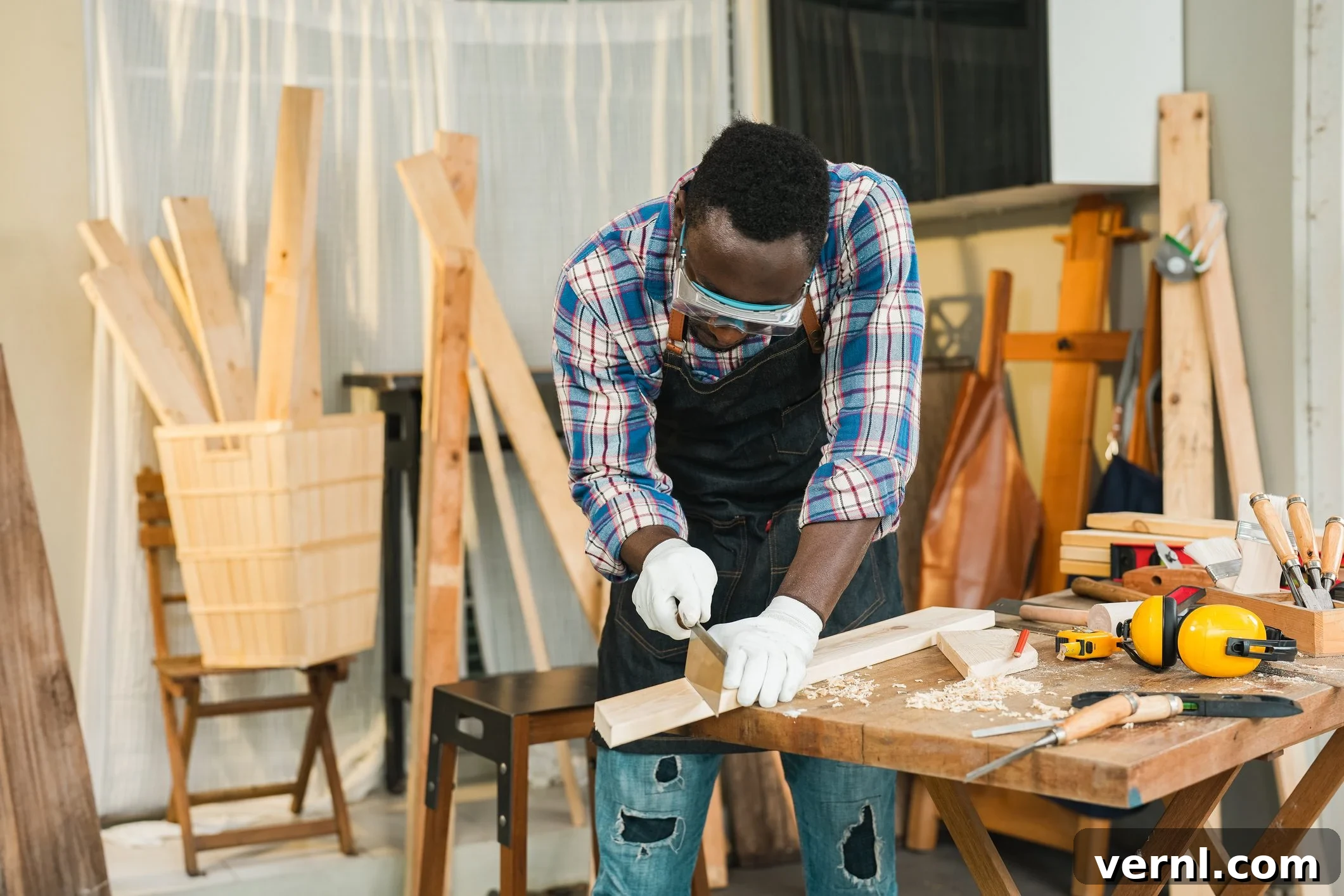
It’s hard to think of a raw material as universally useful, versatile, and aesthetically appealing as wood. From its foundational role in crafting essential structures like boats and buildings, wood transcends mere utility, offering boundless possibilities for creative expression. Imagine shaping elegant cabinets, sturdy chairs, and an array of exquisite home furnishings. Beyond the practical, wood lends itself to intricate carvings, custom picture frames, delicate inlays, and countless other artistic endeavors. Engaging with wood is not just a skill; it’s a deeply enjoyable and fulfilling activity, a tangible connection to nature and craftsmanship.
Over millennia, the techniques for cutting, shaping, and joining wood have evolved dramatically. The advent of power tools, in particular, revolutionized the craft, offering unprecedented speed, precision, and efficiency. Yet, the timeless wisdom of centuries-old methods endures, becoming more refined with each generation. Artisans continue to hand-chisel intricate details and cut lumber with traditional handsaws, albeit with access to superior quality tools than their predecessors. Modern power tools certainly accelerate the process, yielding cleaner cuts with less physical effort, but they complement, rather than replace, the fundamental techniques.
However, the journey into woodworking, while immensely rewarding, is not without its inherent hazards. For anyone embarking on this craft, particularly beginners, understanding and diligently practicing safety protocols is paramount. Mastery of tools and techniques goes hand-in-hand with a profound respect for safety, ensuring that the creative process remains a joyful and secure experience.
What Exactly is Woodworking?
Woodworking is both an art and a craft dedicated to transforming wood into objects that are both decorative and eminently useful. While many tradespeople in the construction industry frequently work with wood – framing houses, installing floors, or building decks – they typically wouldn’t identify themselves as woodworkers in the traditional sense. A true woodworker is often distinguished by three core elements that define their specialized approach:
- A Specialized Focus on Wood as the Medium: For a woodworker, wood isn’t just a material; it’s the primary medium of artistic expression and structural integrity. They possess a deep understanding of its properties, grain patterns, and inherent characteristics.
- A Diverse Collection of Cutting, Shaping, and Joining Tools: Woodworkers typically amass a comprehensive arsenal of hand tools and power tools, each chosen for specific tasks, allowing for intricate detail and robust construction.
- A Dedicated Shop Environment: Crucially, a woodworker often operates from a dedicated workshop or shop space. This controlled environment is as vital as the tools themselves, providing the necessary area for organizing projects, storing materials, and offering flat, stable surfaces essential for precise assembly and finishing.
Beyond tools and space, woodworking demands meticulous attention to detail, considerable patience, and often a profound devotion to the craft. It’s a journey that can take years of consistent practice to reach the skill level of a master woodworker. However, this shouldn’t deter aspiring enthusiasts. Even a novice, with dedication and the right guidance, can quickly begin to produce good-quality wood products and find immense satisfaction in the process.
The Multifaceted Benefits of Woodworking
Whether pursued as a cherished hobby or a professional career, woodworking offers a rich tapestry of psychological, social, and even economic advantages. Engaging with this craft can profoundly enhance various aspects of one’s life:
- Hone Your Creative Skills: Woodworking is a powerful outlet for imagination. It allows you to manifest abstract ideas into tangible, three-dimensional forms. This process of conceptualizing, designing, and bringing a piece to life directly boosts confidence, nurtures problem-solving abilities, and reinforces a sense of self-worth through tangible accomplishments.
- Exercise Your Mind: Far from being a purely manual activity, woodworking is a rigorous mental workout. It constantly engages mathematical principles – from precise measurements and angles to understanding joinery geometry – often more intensely than one might encounter in formal education. This continuous application of logic and spatial reasoning helps keep the mind sharp and agile.
- Relieve Stress: The focused, rhythmic nature of woodworking can be deeply therapeutic. The concentration required for accurate cuts, smooth sanding, and careful assembly can be profoundly relaxing, serving as a powerful antidote to daily anxieties and even alleviating symptoms of depression by promoting mindfulness and a sense of accomplishment.
- Promote New Friendships: Woodworking often fosters a strong sense of community. Many woodworkers share shop spaces, attend workshops, or join clubs, creating environments where shared passion leads to new friendships, collaborative projects, and the invaluable exchange of knowledge and techniques.
- Save Money and Add Value: Beyond the immediate cost savings of not purchasing expensive furniture and home accessories, the ability to craft your own items allows for custom solutions tailored to your exact needs and aesthetic preferences. Moreover, well-made wooden pieces can become cherished heirlooms, possessing enduring value that far surpasses their material cost.
- Foster Environmental Connection: Working with wood inherently connects you to natural resources. Many woodworkers develop an appreciation for sustainable sourcing, understanding the life cycle of materials, and often contributing to the longevity and beauty of wood that might otherwise be discarded.
Carpentry vs. Woodworking: A Subtle Distinction
While often used interchangeably by the uninitiated, the terms “carpentry” and “woodworking” denote distinct specializations, though the line between them can be nuanced. Generally, a woodworker typically toils in a controlled shop environment, focusing on crafting refined, often aesthetic, products. In contrast, a carpenter primarily works on construction sites, concentrating on the structural and utilitarian aspects of building. The shop environment grants a woodworker the luxury of precision, allowing for the creation of more sophisticated and intricate products like fine furniture, detailed cabinetry, or decorative items. A carpenter, by necessity, often constructs more utilitarian, structural elements such as framing, roofing, and general building components. Both professions demand skill and knowledge of wood, but their primary contexts and end products differ significantly. Delve deeper into some fundamental woodworking basics to better understand this fascinating craft.
Diverse Types of Woodworking
Woodworking is an expansive umbrella term encompassing a wide array of specialized skills and activities, some intrinsically linked to construction, while others are purely artistic expressions. Key disciplines include:
- Cabinetmaking: This highly precise discipline involves fabricating not only cabinets but also a broad range of interior furnishings such as tables, chairs, shelving units, and specialty items like custom boxes. Cabinetmakers are renowned for their mastery of complex joinery techniques and often work with both domestic and exotic hardwoods to achieve durable and aesthetically pleasing results.
- Woodcarving: Primarily an artistic pursuit, woodcarving is among the most traditional and low-tech forms of woodworking. Utilizing chisels, gouges, mallets, and occasionally specialized power tools, woodcarvers create everything from intricate statues and figurines to decorative moldings and sometimes functional objects like finely sculpted bowls or vessels. It’s an art that demands patience and a keen eye for form.
- Wood Turning: This technique utilizes a lathe – a specialized tool that spins a piece of wood rapidly on a horizontal axis. The woodturner then shapes the rotating wood with handheld tools, allowing for incredibly precise and intricate radial designs. Woodturners excel at producing symmetrical items like bowls, vases, cups, beautifully shaped legs for furniture, decorative balusters, and even functional items like baseball bats.
- Marquetry: Also known as wood inlay, marquetry is the sophisticated art of creating intricate pictorial or geometric designs from thin pieces of wood veneer and then inlaying them onto another surface. Marquetry artists typically employ a scroll saw or specialized knives to meticulously cut these delicate patterns, often using different wood species to achieve striking contrasts in color and grain.
- Wood Burning (Pyrography): This artistic technique, also known as pyrography, involves burning designs into the surface of wood using a heated object, such as a specialized pyrography pen, a torch, or even a soldering iron. It allows for a range of tones and textures, from subtle shading to bold, dark lines, creating unique and permanent decorative effects.
- Fine Furniture Making: This highly skilled craft focuses on designing and building high-quality, often bespoke, furniture pieces. It combines elements of cabinetmaking, joinery, and finishing to produce heirloom-quality items that are both functional and aesthetically magnificent.
- Restoration and Repair: A specialized branch of woodworking dedicated to preserving and restoring antique or damaged wooden objects. This often involves intricate repairs, matching original materials, and traditional finishing techniques to bring old pieces back to their former glory.
Essential Woodworking Terms to Know
Like any specialized craft, woodworking boasts its own unique terminology, understanding which is crucial for effective communication and successful project execution. Some of the most important terms a woodworker encounters include:
- Warp: This refers to the distortion or contortion that can occur in fresh (green) wood as it dries out and its moisture content changes. Warping significantly affects the usability and stability of the wood. Common types of warp include:
- Cupping: Where the edges of a board rise relative to its center, forming a concave shape.
- Crowning: The opposite of cupping, where the center of the board rises relative to its edges, forming a convex shape.
- Bowing: When a board curves along its length, with the ends rising or falling from the center.
- Twisting: When a board distorts along its length, causing all four corners to be out of plane.
- Wood Grain: This describes the distinctive pattern formed by the wood fibers. It varies significantly by wood species and, crucially, by how the board was cut from the tree. Ideally, wood grain is straight and consistent, but it can be curved or irregular around knots. When an entire board exhibits a circular, highly irregular, and aesthetically rich grain pattern, it’s known as burl, highly prized for its decorative qualities.
- Face, Edge, and End Grain: These terms define the orientation of the wood fibers on a given surface of a board.
- Face Grain: Refers to the grain visible along the widest surface of a board.
- Edge Grain: Runs along the narrower, side surface of a board.
- End Grain: Is the cross-section of the wood fibers, exposed when a board is cut perpendicular to its length. End grain is typically much harder to work, absorbs finishes differently, and is more prone to splitting.
- Hardwood and Softwood: This classification is often misunderstood as simply referring to density, though it relates more accurately to the tree type.
- Hardwood: Comes from deciduous trees, which shed their leaves seasonally (e.g., oak, maple, walnut, cherry). These woods are generally denser, more durable, and often have more intricate grain patterns, making them excellent for fine furniture. Maple wood is a popular example.
- Softwood: Originates from coniferous trees, typically evergreens with needles (e.g., pine, fir, cedar, redwood). Softwoods are generally lighter, easier to work with, and more abundant, making them suitable for construction and less demanding projects, though less durable and often less aesthetically complex than hardwoods.
- Joinery: The art and science of connecting two or more pieces of wood. Examples include dovetail joints, mortise and tenon joints, butt joints, and finger joints.
- Finishing: The process of applying protective or decorative coatings (like stains, oils, varnishes, lacquers) to the wood surface to enhance its appearance and durability.
Essential Woodworking Tools for Every Shop
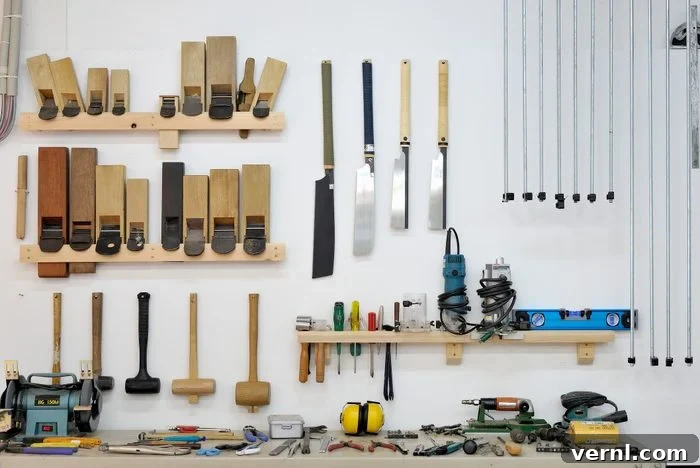
While a fully equipped professional woodworking shop might boast an extensive array of cutting, shaping, and joining tools, a beginner needs only a few essential items to start crafting quality pieces. Building a comprehensive tool collection is a gradual process. Here’s a look at foundational tools:
Measuring & Marking Tools: The Foundation of Accuracy
- Set Square (or Combination Square): Indispensable for making accurate crosscuts, marking lines perpendicular to an edge, and ensuring square corners during assembly. Precision here dictates the quality of your entire project.
- Tape Measure: The most basic yet crucial tool for determining lengths, widths, and depths of wood. Opt for a durable, easy-to-read model.
- Marking Gauge: Used to scribe a line parallel to an edge, vital for precise joinery and repeatable cuts.
Cutting Tools: Shaping Raw Materials
- Handsaw: A fundamental tool. Japanese saws are often favored by modern woodworkers for their finely ground teeth and cutting on the pull stroke, offering excellent control and clean cuts. Learning how to sharpen a handsaw will ensure its longevity and performance.
- Table Saw: While professionals often use high-powered cabinet saws, a portable benchtop table saw is an excellent starting point for beginners, ideal for ripping lumber and making accurate crosscuts. Safety practices are paramount with this tool.
- Jigsaw: Your go-to tool for cutting curves, intricate shapes, and internal cuts. As skills advance, you might graduate to a bandsaw or a scroll saw for even finer detailed curve work.
- Miter Saw: Excellent for making precise crosscuts and angle cuts, especially for trim work and framing.
Shaping & Joining Tools: Bringing Pieces Together
- Clamps: An often-underestimated necessity. Clamps are crucial for holding workpieces securely in place for accurate cutting, drilling, and especially during gluing, ensuring strong, tight joints. Various types (bar clamps, pipe clamps, F-clamps, C-clamps) serve different purposes.
- Drill: A versatile, battery-powered drill is essential for boring holes, driving screws, and performing many other tasks. For increased precision and repetitive hole drilling, a drill press can be a valuable addition later on.
- Chisels: A set of sharp chisels is vital for fine-tuning joints, paring wood, and carving details by hand.
- Palm Router: While not strictly an absolute necessity for beginners, a palm router is incredibly efficient for shaping decorative edges, cutting dados, and creating rabbets, quickly elevating the finish of your projects.
Sanding & Finishing Tools: The Final Touch
- Sander: Essential for smoothing surfaces and preparing wood for finishing. For beginners, a random orbital sander is highly recommended due to its versatility, ease of use, and ability to minimize swirl marks.
Safety Gear: Non-Negotiable Essentials
- Safety Glasses: Protect your eyes from flying debris and dust.
- Hearing Protection: Essential when using loud power tools.
- Dust Mask/Respirator: Safeguards your lungs from fine wood dust, which can be a health hazard.
Where To Buy Wood for Woodworking Projects
Sourcing quality lumber is a critical step in any woodworking project. Your options will vary depending on your location and the specific type of wood you need:
- Home Improvement Centers: These stores are excellent for readily available softwoods like pine, fir, redwood, and cedar, which are perfect for utility projects or for beginners. They also typically stock common domestic hardwoods such as oak, maple, and poplar, often already milled into standard dimensions.
- Local Lumber Yards or Specialty Wood Stores: For a broader and higher-quality selection, including superior grades of domestic hardwoods and more consistent milling, a local lumber yard is your best bet. These establishments often carry less common species and can provide valuable advice on wood selection. They may also stock a limited range of exotic hardwoods like padauk, mahogany, or tigerwood.
- Online Suppliers: For truly exotic hardwoods, highly specific species, or large quantities of specialty wood, online suppliers offer an extensive catalog and shipping services. Be prepared for potentially higher prices due to shipping costs and the rarity of some woods. Always research the supplier’s reputation and ensure their wood is ethically and sustainably sourced.
- Sawmills or Local Tree Services: For the adventurous woodworker, directly sourcing from local sawmills or even contacting tree removal services can yield unique or reclaimed wood, often at a lower cost, though it may require more processing on your part (drying, milling).
Safety First: A Woodworker’s Prime Directive
As previously mentioned, safety in the workshop is not merely a suggestion; it’s a fundamental principle that underpins all successful and enjoyable woodworking. The power and precision of woodworking tools, if mishandled, can lead to serious injury. Therefore, a proactive approach to safety is essential:
- Personal Protective Equipment (PPE): Always wear safety glasses or goggles to protect your eyes from flying chips and dust. Hearing protection (earplugs or earmuffs) is crucial when operating loud machinery like table saws or routers. A dust mask or respirator is vital to protect your lungs from fine sawdust, which can cause respiratory issues over time.
- Tool Safety: Understand each tool thoroughly before use. Read manuals, watch instructional videos, and if possible, seek guidance from experienced woodworkers. Always ensure blades, bits, and cutters are sharp and properly installed. Never force a tool; let the tool do the work. Use push sticks and featherboards on table saws to keep hands away from blades.
- Workshop Organization: A cluttered shop is a dangerous shop. Keep your workspace clean, organized, and free of tripping hazards. Ensure adequate lighting. Designate specific areas for different tasks (cutting, assembly, finishing) to prevent cross-contamination and ensure efficiency.
- Electrical Safety: Inspect power tool cords for damage regularly. Avoid overloading electrical circuits. Ensure your shop has proper grounding and circuit breakers.
- Fire Safety: Wood dust is highly flammable. Implement good dust collection practices. Keep a fire extinguisher readily accessible in your shop. Store flammable liquids (finishes, solvents) in approved containers and in well-ventilated areas.
- First Aid: Have a well-stocked first-aid kit in your workshop and know how to use its contents for minor cuts or abrasions. For more serious injuries, know when to seek professional medical attention.
Embarking on Your Woodworking Journey
Starting with woodworking can feel daunting given the vast array of tools and techniques. However, the most important step is simply to begin. Don’t feel pressured to acquire every tool or master every skill at once. Focus on foundational techniques and simple projects to build confidence and proficiency.
- Start Simple: Begin with projects that require basic cuts and straightforward joinery, such as a simple picture frame, a small shelf, or a cutting board. These projects allow you to practice fundamental skills without being overwhelmed.
- Learn Continuously: Woodworking is a lifelong learning endeavor. Read books, subscribe to woodworking magazines, watch online tutorials, and consider taking local classes or workshops. Learning from experienced woodworkers can accelerate your progress and introduce you to best practices.
- Patience and Practice: Skill in woodworking comes from consistent practice and a willingness to learn from mistakes. Don’t get discouraged by imperfect results; each project is an opportunity for growth and refinement.
- Build Your Tool Collection Gradually: Invest in quality tools as your needs and budget allow. Start with the essentials and expand your collection as your skills develop and projects become more complex.
Woodworking is more than just a craft; it’s a journey of creation, discovery, and personal growth. It offers a unique blend of practicality and artistry, connecting you to a rich history of craftsmanship while allowing you to express your individual creativity. Embrace the challenges, celebrate the successes, and enjoy the profound satisfaction of transforming raw wood into lasting beauty and utility.