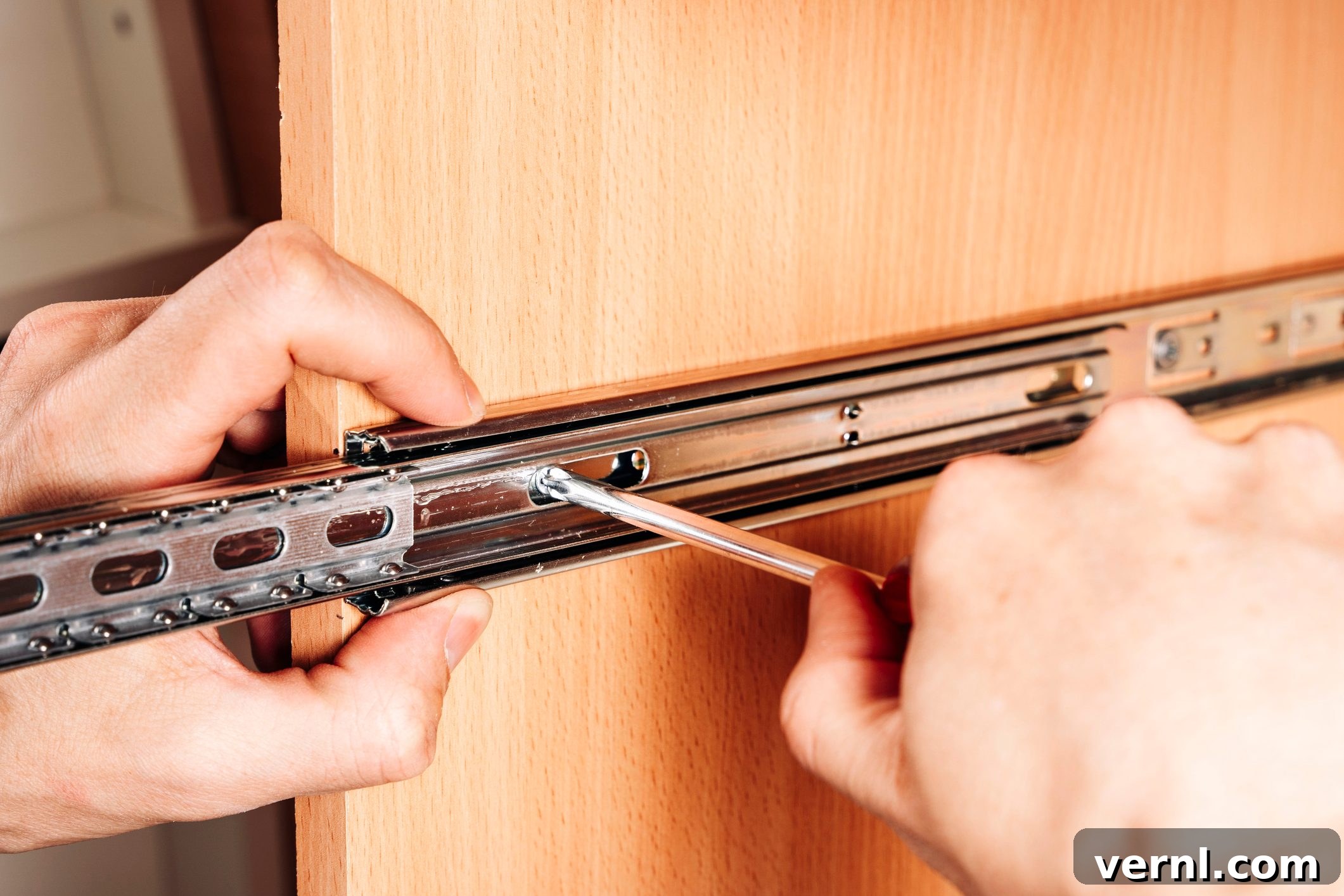
Ultimate Guide to Drawer Slides: Types, Installation, and Achieving Smooth Operation
The functionality of a piece of furniture often hinges on the smallest details. While an antique chest or a custom-built cabinet might exude charm and craftsmanship, a sticky or difficult-to-open drawer can quickly diminish its appeal and usability. This was a lesson I learned firsthand with a beautiful Japanese chest of drawers, a tansu, I acquired during my time in Kyoto.
During a period of economic prosperity in Japan, many homeowners were updating their furnishings, leading to a fascinating opportunity for me to find unique pieces. I salvaged my tansu from a refuse pile, recognizing its inherent beauty despite its obvious flaw. Once stateside, its aesthetic appeal remained, but its practical functionality suffered. The drawers, lacking any modern sliding mechanism, scraped along thin wooden bases. This made them notoriously difficult to open, especially when high humidity caused the wood to swell.
To access the contents of the long bottom drawers, I often resorted to a cumbersome “walking” method – pulling one side, then the other, inching the drawer open with considerable effort. This daily annoyance was a stark reminder of how much even rudimentary slides could improve the user experience. It highlighted a universal truth: drawer slides are not just a modern convenience; they are a fundamental component of ergonomic and durable furniture design.
Art Dann, a seasoned professional with Dann Construction in Santa Cruz, California, has spent over 40 years mastering the nuances of home improvement, including the intricate art of installing drawer slides. Reflecting on my tansu’s predicament, his advice was succinct and practical for older pieces with limited space: “Soap or wax the wood on the bottoms of the drawers, because there’s no room to install slides.” This simple remedy can significantly improve the performance of existing, slide-less drawers, proving that even without a complete overhaul, functional improvements are often possible.
However, when designing or upgrading furniture, choosing the right drawer slides is paramount. From high-end, precision-engineered options that promise flawless operation to robust, budget-friendly alternatives, the market offers a wide spectrum. Understanding these choices is key to enhancing the lifespan and usability of your cabinetry and furniture, transforming frustrating friction into seamless motion.
Why Drawer Slides Are Crucial for Modern Furniture Functionality
Modern furniture design prioritizes not only aesthetics but also functionality and user experience. Drawer slides play a pivotal role in achieving this balance. They transform a simple wooden box into an easily accessible storage solution, impacting everything from the effort required to open a drawer to its overall lifespan. Without proper slides, drawers can stick, wobble, wear unevenly, and even damage the furniture structure over time. Investing in quality slides ensures smooth, quiet operation, protects the integrity of your drawers and cabinets, and significantly improves daily convenience and satisfaction.
Categorizing Drawer Slides: Navigating Your Options
Drawer slides can be classified in various ways, making the selection process seem daunting at first glance. You might encounter them grouped by their material (plastic, metal, or wood), their load capacity (light-duty, medium-duty, heavy-duty), or their price point. Another common categorization is by their mounting location: whether they attach to the sides, bottom, or center of the drawer and cabinet. For Art Dann, the practical application and underlying mechanism are the key differentiators. “Ball-bearing slides make opening the drawer really easy and can handle a lot of weight, but they are expensive,” he notes. “If you’re building utilitarian cabinets, there are plenty of alternatives that offer excellent value and performance without the premium price tag.”
To help you navigate the myriad options, let’s explore the most common types of drawer slides available today, detailing their mechanisms, ideal applications, and critical installation considerations.
Roller Slides: The Economical and Easy Choice
Roller slides represent the most economical and straightforward option available, frequently found on less expensive, prefabricated kitchen and bathroom cabinets, as well as utility furniture. Their simple design makes them cost-effective to manufacture and relatively easy to install, making them a popular choice among DIY enthusiasts and manufacturers prioritizing affordability.
A typical roller slide system comprises two pairs of grooved tracks, each equipped with a durable plastic roller. One pair attaches to either the sides or the bottom corners of the drawer box itself, while the corresponding pair is mounted to the inside of the cabinet frame. As the drawer opens and closes, the rollers glide smoothly within these tracks. A common design feature allows the tracks to widen at the ends, enabling easy removal of the drawer by simply lifting its front end, which is convenient for cleaning or accessing the back of the cabinet.
When it comes to installation, Art Dann advises selecting the type that attaches to the bottom corners of the drawer. “They’re generally easier to align than the ones that go on the sides,” he explains, reducing the chances of misalignment that can lead to sticky or uneven drawer operation.
- Pros: Extremely inexpensive, making them ideal for budget-conscious projects or large-scale installations. They are also relatively simple and quick to install, even for beginners, requiring minimal specialized tools.
- Cons: Generally cannot handle significant weight, making them unsuitable for heavy-duty drawers like those in filing cabinets or heavily laden pantry units. Less expensive models can be prone to becoming “sticky” or noisy over time, especially if the plastic rollers wear down or if dust accumulates in the tracks. They often offer only 3/4 extension, limiting full access to drawer contents.
- Ideal Application: Light-duty kitchen drawers, bathroom vanity drawers, utility cabinets, workshop storage for lighter items, and children’s furniture where cost-effectiveness and ease of use are priorities.
Ball-Bearing Slides: The Workhorse for Smoothness and Strength
Often considered a significant upgrade from roller slides, ball-bearing slides are renowned for their exceptional smoothness, quiet operation, and impressive load-bearing capabilities. Like roller slides, they can be mounted to the sides or bottom corners of the drawer, but their internal mechanism is far more sophisticated. Instead of basic plastic rollers, these slides incorporate rows of small, precisely engineered ball bearings that glide along robust metal tracks. This design dramatically reduces friction, providing a fluid, consistent, and remarkably quiet drawer action.
Typically constructed from strong, durable metal (often steel), ball-bearing slides are designed to handle significantly heavier loads than their roller counterparts. Their robust construction makes them a popular and reliable choice for commercial applications and furniture that holds substantial weight, such as office file cabinets, workshop tool chests, heavy-duty kitchen pantry drawers, and industrial storage units. Many models also feature full-extension capabilities, allowing complete access to the entire contents of the drawer.
Art Dann favors this type for their superior performance and durability. His critical installation tip for side-mounted ball-bearing slides is to use a level with meticulous care and precision. “One of the most common rookie mistakes is to install them with a slight tilt,” he warns. “This seemingly minor error can cause the drawer to pop out when it’s supposed to be closed, leading to constant frustration and an imperfect fit.” Proper alignment is absolutely key to unlocking their full potential for a perfect, often self-closing, and stable drawer action.
- Pros: Offer a super-smooth, quiet, and consistent drawer action due to significantly reduced friction. They are heavy-duty, capable of supporting substantial weight, and highly durable for long-term use. Often available with full-extension features, providing complete access to drawer contents. Many include optional soft-close or push-to-open mechanisms.
- Cons: Generally more expensive than roller slides, reflecting their superior performance and construction. Their precise nature means they can be a bit more challenging and time-consuming to install correctly, requiring careful measurement and meticulous leveling for optimal performance.
- Ideal Application: Kitchen drawers, filing cabinets, workshop storage, office furniture, heavy-duty utility drawers, wardrobes, and any application where smooth, reliable, strong, and full-access drawer operation is paramount.
Undermount Slides: The Invisible Elegance for High-End Cabinetry
Undermount slides are the pinnacle of discreet drawer hardware, designed specifically for high-end cabinetry where aesthetic appeal and clean, uninterrupted lines are paramount. Their ingenious design places the entire sliding mechanism completely out of sight once the drawer is closed, allowing the natural beauty and craftsmanship of the drawer box itself to shine through without visible hardware. This “invisible” quality is what makes them a favorite for custom kitchen, bathroom, and bedroom furniture, creating a sophisticated and seamless look.
These slides consist of sleek tracks that attach to the bottom corners of the drawer cavity within the cabinet, while special clips are securely fastened to the underside of the drawer box itself. The drawer then rests and slides smoothly on these tracks, with the clips preventing it from inadvertently coming loose or derailing. “These are the best ones for high-end cabinetry,” confirms Dann, emphasizing their contribution to a seamless, premium finish and their ability to elevate furniture design.
While top-quality undermount slides, especially those featuring advanced mechanisms like integrated soft-close or push-to-open functions, can be quite pricey—sometimes reaching $200 for a single set—there are also more budget-friendly options available in the $25 to $50 range, comparable to other high-quality slide types. A crucial installation tip for undermount slides is to always account for sufficient clearance. Remember to leave adequate space (typically 1/2 to 5/8 inch) between the bottom of the drawer box and the cabinet opening to accommodate the tracks and clips, as failing to do so will prevent proper fit and flawless function.
- Pros: Completely invisible when the drawer is closed, offering an elegant, clean, and minimalist aesthetic. They provide exceptionally smooth, stable, and often quiet drawer operation, frequently with full-extension capabilities. Many models integrate luxurious features like soft-close for gentle closing or push-to-open for handle-less designs.
- Cons: Will not work on drawers with very tight tolerances or those that don’t allow for the necessary clearance beneath the drawer box. High-end versions can be significantly more expensive. Installation, while straightforward, requires precise measurements and careful alignment for optimal performance.
- Ideal Application: Custom kitchen cabinets, bathroom vanities, high-end bedroom furniture, office executive desks, and any project where the goal is a minimalist design with superior functionality and no visible hardware.
Center-Mount Slides: Simple, Hidden, and Economical
Center-mount slides offer another solution for hidden drawer hardware, typically for more economical furniture applications compared to premium undermount slides. While they also maintain an invisible profile once the drawer is closed, their design is simpler and often more geared towards lighter-duty use, providing a good balance between cost and aesthetics.
The system consists of rollers mounted on the cabinet face frame, just inside the opening, combined with a single central track that runs underneath the drawer. A U-shaped clip is securely fastened to the back of the drawer. This clip then fits over the central track, guiding the drawer and keeping it centered as it glides smoothly over the rollers. This straightforward design makes them a popular choice for dressers, nightstands, smaller desks, and other bedroom furniture where a hidden slide is desired without the expense or complexity of more advanced systems.
During installation, it’s paramount to securely fasten both the U-shaped clip to the back of the drawer and the end of the central track to the inside of the cabinet. Art Dann strongly advises using screws rather than nails for this purpose. “If the track comes loose,” he warns, “the drawer can tilt backward into the cabinet, leading to frustrating jams, potential damage to the drawer or cabinet, and an unreliable user experience.” Secure fastening ensures the long-term stability and consistent functionality of the drawer.
- Pros: Invisible hardware provides a clean and uncluttered look. They require the fewest modifications to the drawer box itself, simplifying the drawer construction process. Generally more affordable than ball-bearing or undermount slides, offering a budget-friendly hidden solution.
- Cons: Typically have a lower load capacity compared to side-mounted options, making them less suitable for heavy items. There’s a higher potential for malfunctions or sagging over time if not installed perfectly or if components loosen, particularly with heavier loads. Can sometimes feel less stable or prone to minor wobbling if the drawer is heavily loaded or pulled unevenly.
- Ideal Application: Dressers, nightstands, smaller desks, entertainment units, and other bedroom or living room furniture where a hidden, economical slide is preferred for lighter to medium loads.
Wood Slides: The Traditional and DIY Approach
For those who appreciate traditional craftsmanship, a rustic aesthetic, or simply prefer a fully DIY approach that eschews modern metal hardware, wood slides present an elegant and cost-effective solution. These slides are typically integral to the drawer and cabinet construction, making them a natural choice for custom-built furniture, period reproductions, or projects where a completely non-metal hardware look is desired.
The process involves cutting dado grooves directly into the sides of the drawer box (or sometimes the bottom). Corresponding wood runners, precisely cut to fit inside these grooves, are then securely attached to the inside of the cabinet frame. This creates a friction-based sliding mechanism where one piece of wood glides against another, often enhanced with natural lubricants.
Accuracy is absolutely key with wood slides. Art Dann stresses, “It’s crucial to leave at least 1/8-inch of clearance between the groove and the runner, and to use a level when installing the runners to make sure they are exactly horizontal.” Insufficient clearance will result in sticky, difficult-to-open drawers, while misalignment can cause binding and uneven wear. To ensure continued smooth operation, he also recommends periodically soaping or waxing both the grooves and the runners with a natural lubricant. This process reduces friction and helps prevent sticking due to changes in humidity, which wood is highly susceptible to.
- Pros: Offer a truly elegant, traditional, and authentic aesthetic that complements wooden furniture. They are inexpensive, especially if you possess the woodworking skills and tools to create them yourself. A rewarding DIY project, allowing for complete customization and integration into the furniture design. Environmentally friendly choice, relying on natural materials.
- Cons: Highly susceptible to changes in humidity and temperature, which can cause the wood to swell or shrink, hindering drawer operation significantly and causing sticking. Requires precise woodworking skills for proper installation and consistently smooth function. Can eventually wear down over time, necessitating occasional maintenance like waxing or even sanding. Not suitable for heavy loads.
- Ideal Application: Custom-built furniture, heirloom pieces, traditional cabinetry, reproduction antique furniture, projects where a rustic or all-wood look is desired, and situations where metal hardware is to be avoided for aesthetic or historical accuracy.
Choosing the Right Drawer Slide: Key Factors for Your Project
Selecting the best drawer slide isn’t a one-size-fits-all decision. Your choice should be informed by several key factors to ensure optimal performance, longevity, and satisfaction for your specific furniture piece or cabinet:
- Load Capacity: This is critical. How much weight will the drawer typically hold? Light-duty slides are fine for clothes or office supplies, but heavy-duty ball-bearing slides are absolutely essential for tools, filing cabinets filled with documents, or pantry items like canned goods. Overloading slides will lead to premature failure.
- Extension Type: Do you need full access to the entire contents of the drawer? Full-extension slides allow the drawer to pull out completely, revealing everything stored within. A 3/4 extension slide leaves a portion of the drawer box inside the cabinet, which might be acceptable for shallow drawers or items that don’t need complete visibility.
- Mounting Location: Where will the slides attach? Options include side-mount (most common), bottom-mount (for frameless cabinets or specific designs), center-mount (for a hidden, economical solution), or undermount (for a premium, invisible look). This dictates visibility and often load capacity.
- Special Features: Consider modern enhancements such as soft-close mechanisms for quiet, gentle closing; push-to-open functionality for handle-less designs; or even locking slides for security in tool chests or file cabinets.
- Durability and Material: For high-traffic areas or heavy items, robust metal slides (especially steel) are preferable for their strength and longevity. For light use or specific aesthetic reasons, plastic (in roller slides) or wood might suffice.
- Budget: Drawer slides vary significantly in price, from a few dollars for basic roller slides to hundreds for high-end undermount systems with advanced features. Balance your budget with the desired level of functionality, durability, and aesthetic.
- Ease of Installation: Some slides are more forgiving for DIYers than others. Consider your skill level, the tools you have available, and the time you’re willing to invest. Precision is key for all, but some have steeper learning curves.
- Aesthetics: Do you want the hardware to be visible (like many side-mount ball-bearing slides) or completely hidden for a clean, minimalist look (undermount or center-mount)?
Installation Best Practices for Lasting Performance
Regardless of the slide type you choose, meticulous installation is paramount to achieving smooth, reliable drawer operation and ensuring the longevity of both the slides and your furniture. Here are some general tips to guide your installation process:
- Measure Twice, Install Once: Precision in measuring is absolutely critical. Any slight deviation in parallelism or height can lead to sticky, misaligned, or even damaged drawers. Use a reliable measuring tape and square.
- Use the Right Tools: A good level, drill, appropriate driver bits, and the correct screws are indispensable. For repeated installations or complex projects, a jig specifically designed for drawer slide installation can be a lifesaver, ensuring perfect alignment every time.
- Ensure Parallelism and Leveling: Both the cabinet members (the part attached to the cabinet) and the drawer members (the part attached to the drawer) of the slides must be perfectly parallel to each other and exactly perpendicular to the cabinet front. This is where a high-quality level becomes your most valuable tool.
- Test Before Final Fastening: Before driving in all the screws and making permanent attachments, temporarily attach the slides and carefully test the drawer’s movement. Open and close it several times, checking for smoothness, full extension, and proper closing. Make any necessary adjustments before the final securement.
- Use Recommended Fasteners: Always use the screws and hardware recommended by the slide manufacturer. Their specifications are designed to ensure secure attachment and proper function. Art Dann’s advice about using screws over nails for center-mount slides applies broadly to ensure all components are securely attached and won’t loosen over time.
- Clearance is Key: Pay close attention to the manufacturer’s specified clearances (e.g., side-to-side, top-to-bottom). Insufficient clearance is a common cause of binding and difficult-to-open drawers.
Maintaining Your Drawer Slides for Years of Smooth Use
Even the best drawer slides benefit from occasional maintenance to ensure their longevity, smooth operation, and continued optimal performance. A little care can prevent common issues and extend the lifespan of your furniture:
- Keep Them Clean: Dust, sawdust, kitchen grease, and general grime can accumulate in tracks and hinder movement, especially in roller and ball-bearing slides. Periodically wipe down metal slides with a damp cloth and dry thoroughly. For wood slides, a dry brush or vacuum cleaner nozzle can effectively remove sawdust and debris.
- Lubricate When Necessary:
- Metal Slides (Ball-bearing and Roller): A light application of silicone spray lubricant or a dry lubricant (like graphite powder) can help maintain smooth action if they start to feel stiff or noisy. Avoid oil-based lubricants as they can attract and hold dust and dirt, creating more problems in the long run.
- Wood Slides: As Art Dann suggests, regular application of bar soap (like paraffin wax or Gulf wax) or furniture wax to the dado grooves and runners is essential to reduce friction and prevent sticking. This is particularly crucial in environments with changing humidity, which can cause wood to expand and contract.
- Check Fasteners: Over time, due to repeated use and minor vibrations, screws can loosen. Periodically check all fasteners on both the drawer and cabinet members of the slides and tighten them if necessary. Loose screws are a common cause of wobbly or poorly functioning drawers.
- Don’t Overload: Always respect the stated load capacity of your slides. Overloading can bend tracks, wear out bearings prematurely, or cause permanent damage to the slide mechanism and the furniture structure itself. Distribute weight evenly within the drawer.
- Address Issues Promptly: If a drawer starts to stick, wobble, or make unusual noises, investigate the problem promptly. Often, a simple cleaning, lubrication, or tightening of screws can resolve the issue before it escalates into a more significant repair.
Conclusion: Invest in Smooth Functionality
The humble drawer slide, often overlooked, is a critical component that dramatically impacts the functionality, durability, and daily enjoyment of your furniture. From the simple elegance of traditional wood slides to the robust efficiency of modern ball-bearing systems and the invisible luxury of undermount slides, there’s a perfect solution for every need, aesthetic preference, and budget.
By understanding the different types available, carefully considering the key factors for selection, and committing to proper installation and consistent maintenance, you can ensure your drawers operate smoothly, quietly, and reliably for years to come. Whether you’re renovating an entire kitchen, building a custom piece from scratch, or simply breathing new life into a cherished antique like my Kyoto tansu, choosing the right drawer slides is an investment in both convenience and durability, transforming everyday use into a seamless and satisfying experience.