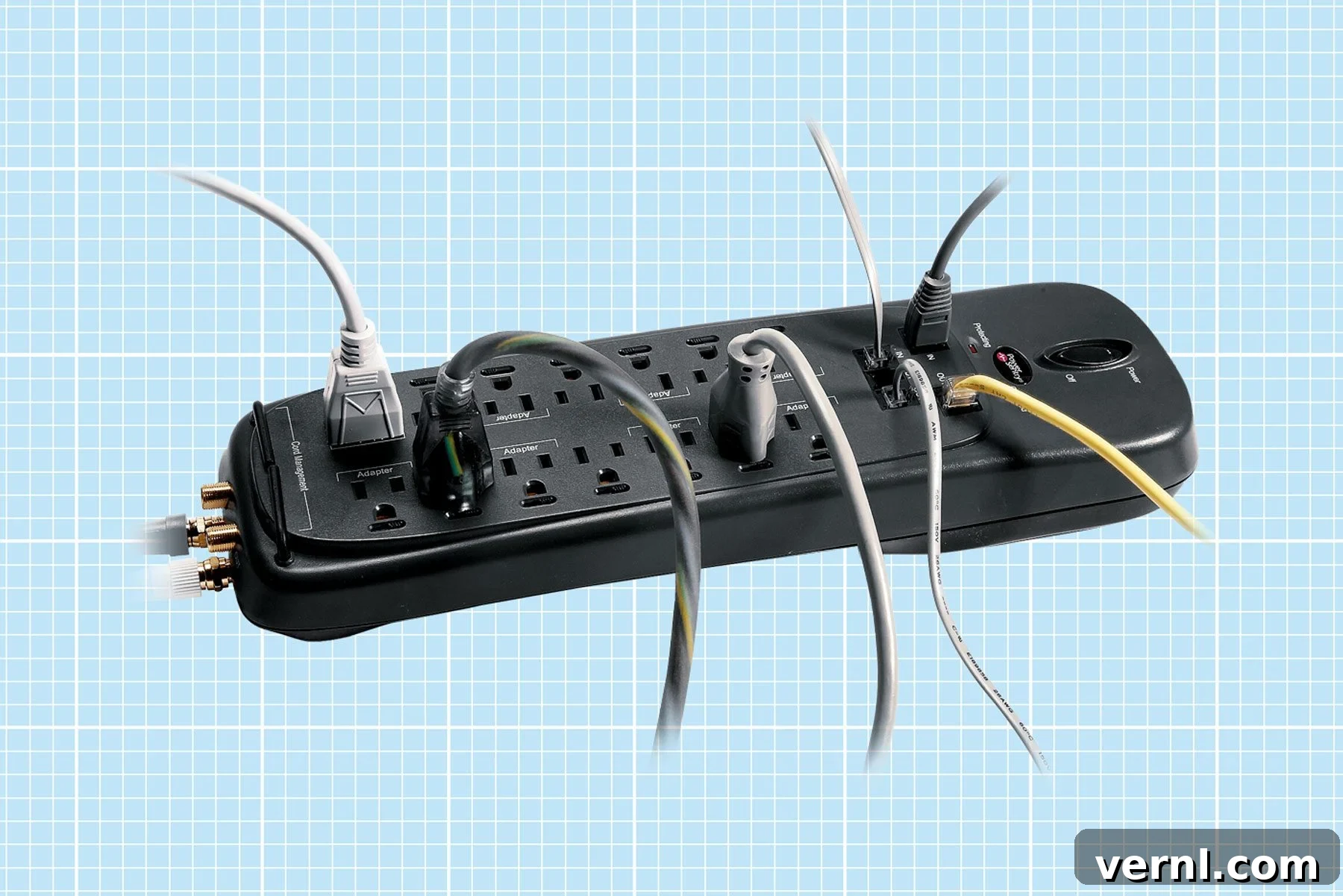
In our increasingly digitized world, where homes are filled with an array of sensitive electronic devices and smart appliances, protecting these investments from electrical damage has become more critical than ever. From sophisticated home theater systems and powerful computers to essential kitchen appliances and smart home hubs, nearly every modern convenience relies on stable, clean electrical power. However, the electrical grid is not immune to disturbances, which can manifest as sudden, dangerous voltage spikes—or “surges”—that can wreak havoc on unprotected equipment. This comprehensive guide will delve into the essential role of surge protectors, demystifying how they function, exploring their various types, and providing crucial insights into maintaining an effective defense against electrical anomalies.
Understanding the Mechanics: How Does a Surge Protector Work?
Surge protectors serve as a critical barrier, acting as your electrical system’s first line of defense against these disruptive voltage spikes. Their primary function is to safeguard your valuable electronics by continuously monitoring the incoming electrical current. In essence, they are like vigilant gatekeepers, ensuring only stable, consistent power reaches your devices.
The magic behind a surge protector lies in a key component known as a Metal Oxide Varistor (MOV). Under normal operating conditions, an MOV acts as an insulator, allowing electricity to pass through unimpeded to your connected devices. However, when there’s a sudden and significant increase in voltage—far exceeding the standard 120 volts found in most North American outlets—the MOV undergoes a rapid transformation. It quickly switches from an insulator to a conductor. This allows the excess voltage to be diverted away from your sensitive electronics and safely dissipated as heat, typically directed to the grounding wire of your electrical system.
These surges can originate from various sources. The most dramatic and widely recognized cause is lightning strikes, which can send thousands of volts cascading through power lines. However, more common and often insidious surges occur regularly within your home and from the utility grid. These can be generated when large appliances like refrigerators, air conditioners, or vacuum cleaners cycle on and off, creating small, localized spikes. Even utility grid switching, when power companies redirect electricity, can cause momentary voltage fluctuations. While individually small, these frequent minor surges can cumulatively degrade and shorten the lifespan of electronic components over time. A surge protector acts as a vital “traffic cop,” intelligently rerouting dangerous voltage away, thereby protecting the delicate microprocessors and circuitry within your gadgets from irreversible damage and ensuring they receive only the clean, stable power they need to function correctly.
The Lifespan of Surge Protectors: When to Replace Them
While surge protectors are indispensable guardians of your electronics, they are not immortal. On average, a good quality surge protector can offer reliable protection for approximately 3 to 5 years. High-end models, designed with more robust MOVs and higher energy dissipation ratings, might extend this lifespan to a decade or even longer. However, it’s crucial to understand that surge protectors gradually wear out over time, especially as they fulfill their duty of absorbing electrical surges.
Each time an MOV diverts a surge, it takes a small hit, leading to a minute amount of degradation. These repeated “hits,” whether from a major lightning strike or a multitude of smaller internal surges, slowly diminish the MOV’s capacity to protect. Eventually, the MOV can no longer function effectively, rendering the surge protector ineffective. Many surge protectors are equipped with indicator lights—often green for “protected” and red for “unprotected” or “grounded”—that provide a visual cue about their operational status. If the “protected” light goes out, it’s a clear signal that the device has sacrificed itself to protect your electronics and needs immediate replacement.
Beyond indicator lights, there are other signs that your surge protector may be nearing the end of its protective life: if it’s taken a significant hit (e.g., after a nearby lightning strike), if it shows any physical signs of damage like discoloration, burn marks, or a melted casing, or if it simply feels warm to the touch without any apparent cause. Relying on a compromised surge protector is akin to having no protection at all, leaving your expensive devices vulnerable. Regular inspection, adherence to replacement guidelines, and investing in durable, reputable models are essential practices to ensure continuous, effective protection for your valuable electronics.
Daisy-Chaining Surge Protectors: A Dangerous Practice?
The scenario of needing more outlets than your wall provides is common in many homes. It might seem like a convenient solution to plug one surge protector into another, a practice often referred to as “daisy-chaining.” While technically possible to make the physical connection, this practice is strongly and universally discouraged by safety experts and manufacturers alike. Doing so introduces several significant safety hazards and fundamentally undermines the very protection you seek to achieve.
Firstly, daisy-chaining can lead to a dangerous electrical overload. Surge protectors are designed to handle a specific amount of electrical current and to divert a predetermined amount of excess voltage. When you plug multiple surge protectors into one another, you multiply the potential load on the initial wall outlet and the first surge protector in the chain. This can easily exceed the circuit breaker’s capacity, leading to tripped breakers, overheating, and a serious risk of electrical fire. Each surge protector has its own internal circuitry and an MOV (or multiple MOVs); combining them can create complex and unpredictable interactions with incoming surges.
Secondly, it significantly diminishes the effectiveness of the surge protection itself. Instead of providing enhanced safety, daisy-chaining can compromise the protective capabilities of all units involved. The cumulative resistance and varying response times of multiple MOVs can hinder the rapid diversion of a surge, potentially allowing damaging voltage to reach your devices. Furthermore, using a surge protector to power another surge protector can often void the warranties provided by the manufacturers of both devices, leaving you without recourse in case of damage.
Instead of risking safety and compromising protection, better and safer alternatives exist. If you consistently find yourself needing more outlets, consider these options: invest in a single, high-quality surge protector with a sufficient number of outlets to accommodate all your devices; or, if you only need more outlets without surge protection, use a simple, non-surge-protected power strip. For a permanent and truly safe solution, especially in areas with high device density like entertainment centers or home offices, it is highly recommended to consult a licensed electrician. They can safely add electrical outlets directly into your home’s wiring system, providing a secure, efficient, and code-compliant solution that eliminates the need for dangerous daisy-chaining and ensures optimal electrical safety.
Comprehensive Guide to Surge Protector Types
Protecting your electronics isn’t a one-size-fits-all endeavor. Different devices and locations require varying levels and types of surge protection. Understanding the common categories of surge protectors will empower you to make informed decisions for safeguarding your valuable equipment.
Low-Profile Surge Protectors: Discreet Protection for Dedicated Setups
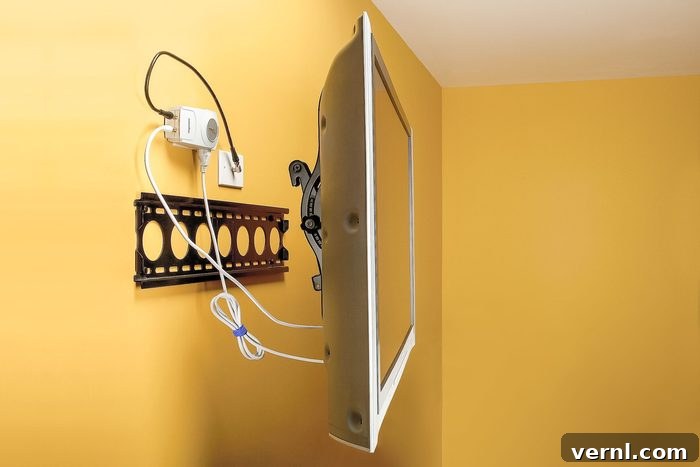
In the modern home, any device incorporating a computer chip—from a simple digital clock to an intricate home theater system—is inherently vulnerable to sudden voltage spikes that routinely traverse your electrical wiring. These spikes, if powerful enough, can bypass a chip’s defenses, leading to irreversible damage that necessitates expensive repairs or outright replacement.
Low-profile surge protectors are specifically designed for installations where space is at a premium and aesthetics are important. Their slim form factor makes them ideal for mounting directly behind wall-mounted televisions, media consoles, or furniture, allowing for a clean, wire-free appearance. These protectors often include not only standard AC outlets but also coaxial cable and sometimes even Ethernet protection, ensuring that all incoming lines to your entertainment system are safeguarded. For valuable electronics like a high-definition TV or a sensitive gaming console, a multi-layered approach, often referred to as “two-stage surge protection,” is highly recommended. This involves using a whole-house surge protector in conjunction with a point-of-use low-profile unit, offering comprehensive defense against both external and internal surges.
Note: The biggest challenge in installing a wall-mounted TV is often effectively concealing its associated cables. If achieving a truly wire-free aesthetic is your goal, consider the additional step of installing an electrical outlet and a coaxial cable outlet directly behind the TV’s intended location once you’ve finalized the TV mount placement. When selecting a wall bracket for your TV, ensure it provides sufficient clearance and space to comfortably accommodate the low-profile surge suppressor without interfering with the TV’s mounting or ventilation.
Plug-in Surge Suppressors: Essential Point-of-Use Defense
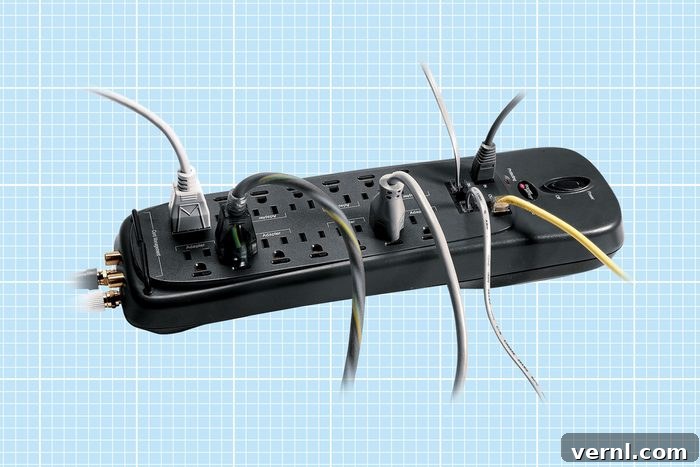
Even relatively smaller electronic devices, such as gaming consoles, sound systems, desktop computers, and home office equipment, are highly susceptible to voltage surges. These devices contain delicate integrated circuits that can be easily fried by even minor fluctuations. Plug-in surge suppressors, also known as point-of-use protectors, offer essential protection for these individual components.
These units provide excellent protection against surges generated within your home’s internal wiring system and offer decent protection against larger surges originating from outside. When shopping for a plug-in surge suppressor, you’ll find a vast array of options at electronics retailers and online. To ensure you’re getting effective protection, it’s crucial to examine the technical specifications:
- Clamping Voltage (or Let-Through Voltage): This is the voltage level at which the surge protector activates and diverts excess electricity. A lower clamping voltage indicates better protection, as the protector will kick in sooner. Look for a rating of 330 volts or less for optimal safeguarding of sensitive electronics.
- Response Time (or Clamping Speed): This specification measures how quickly the surge protector reacts to a surge. A faster response time means your devices are exposed to damaging voltage for a shorter duration. Aim for a response time of 5 nanoseconds or less.
- Joule Rating (or Energy Dissipation): Measured in joules, this indicates the amount of energy the surge protector can absorb before it fails. A higher joule rating signifies a more robust protector that can withstand more and larger surges over its lifetime. Seek a rating of 500 joules or more, with higher ratings being preferable for more expensive or critical equipment.
Generally, the lower the clamping voltage, the faster it responds to a power surge, and the higher the joule rating, the better and more durable the suppressor. Higher-rated units typically come with a higher price tag, but the investment is minor compared to the cost of replacing damaged electronics. Many plug-in models also offer additional features like EMI/RFI noise filtering to clean up electrical “noise,” multiple outlets, and USB charging ports, adding convenience alongside protection.
Whole-House Surge Suppressors: The Ultimate Front-Line Defense

For the most comprehensive protection against electrical surges, particularly those originating from outside your home, a whole-house surge suppressor is an unparalleled investment. This robust device is installed directly at your main electrical service panel, intercepting surges—primarily from lightning strikes and utility line fluctuations—before they can even enter your home’s internal wiring. Its strategic placement means it not only fortifies your most expensive electronics like TVs and computers but also extends its protective umbrella to virtually every appliance in your home that contains sensitive computer chips.
Consider the increasing number of smart appliances in modern households: refrigerators with touchscreens, dishwashers with complex programming, ranges with digital controls, microwaves, washing machines, dryers, garage door openers, and even HVAC systems. All these devices are vulnerable to surge damage. A whole-house suppressor provides a much stronger defense with its significantly higher energy-absorbing capacity compared to individual plug-in units. It’s an essential layer of defense, particularly if you live in an area prone to thunderstorms or have long electrical lines from the utility pole.
Due to its installation location within your home’s main electrical panel, working with a whole-house surge suppressor involves direct contact with live, high-voltage wires. For this reason, it is absolutely crucial to hire a licensed and qualified electrician for installation. Attempting a DIY installation is extremely hazardous and could lead to severe injury or death.
When selecting a whole-house suppressor, look for these minimum specifications:
- Clamping Voltage: Aim for 400 volts or less to ensure timely activation.
- Response Time: Similar to plug-in units, a response time of 5 nanoseconds or less is ideal.
- Joule Rating (Energy-Absorbing Capability): Whole-house units require a much higher capacity. Seek a rating of 1,000 joules or more, with higher ratings correlating to greater resilience against powerful surges.
Note: All effective surge suppressors, regardless of type, should incorporate indicator lights to confirm their operational status. As these devices absorb surges, their internal components—specifically the MOVs—gradually degrade. When the indicator light signals a fault or turns off, it means the unit has reached its protective limit and requires replacement. Some more advanced and expensive whole-house suppressors feature replaceable modules. This innovative design allows you to replace only the depleted modules as they burn out, rather than incurring the cost and labor of replacing the entire unit, offering a more sustainable and cost-effective long-term solution.
In conclusion, understanding and implementing effective surge protection is paramount for safeguarding your electronic and smart home investments. From the individual plug-in units shielding your computers to the comprehensive defense of a whole-house system, each type plays a vital role in creating a robust protective barrier. By recognizing how these devices work, understanding their lifespan, avoiding dangerous practices like daisy-chaining, and choosing the right protector for each application, you can significantly mitigate the risks posed by unpredictable voltage spikes and ensure the longevity and reliable performance of your valuable appliances and electronics.