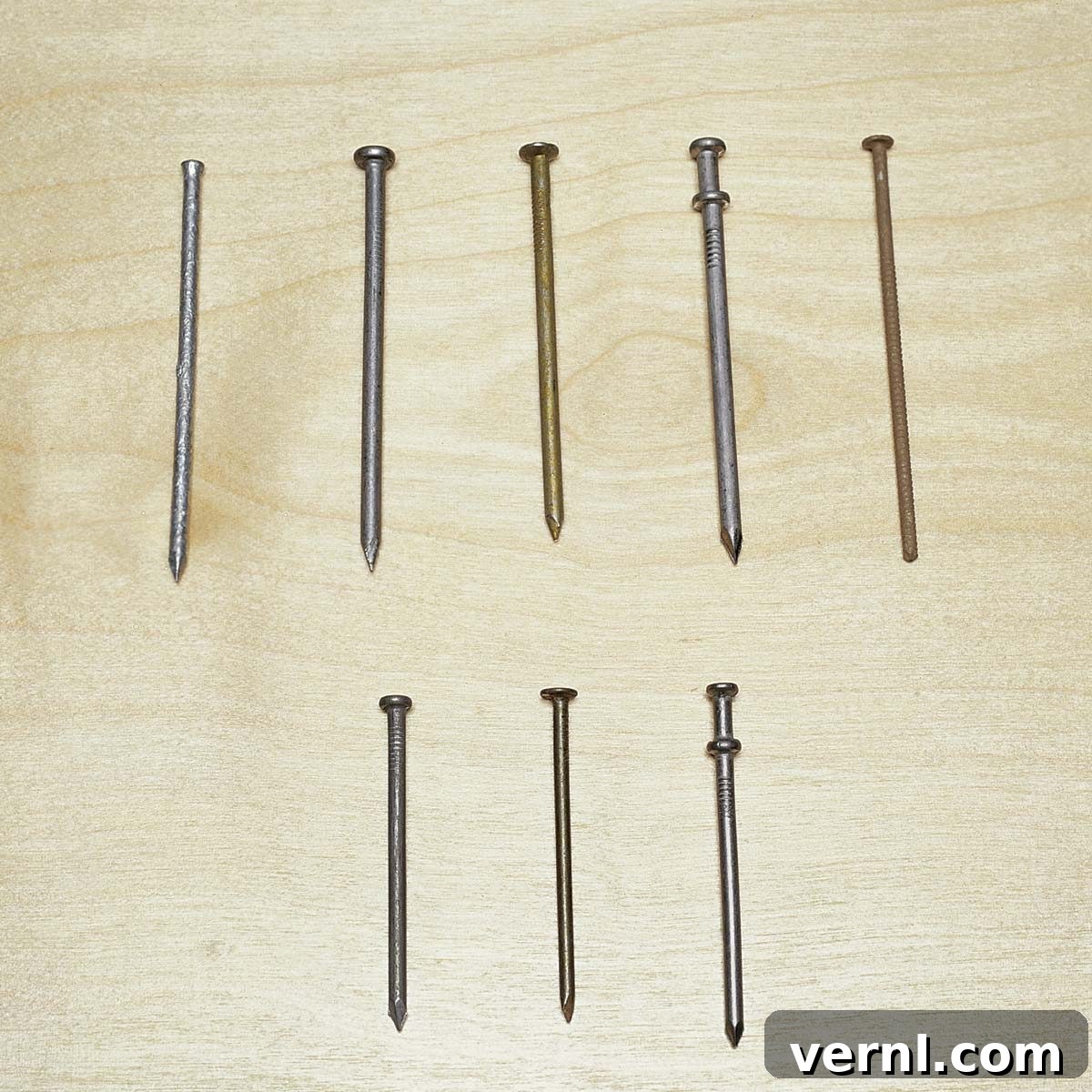
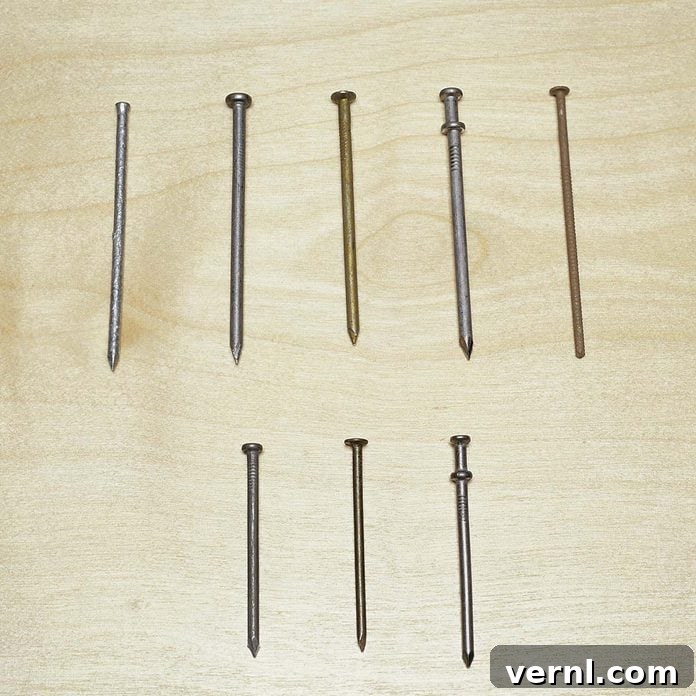
Understanding the 16d Nail: A Comprehensive Guide to Nail Sizing and Applications
In the vast world of construction and carpentry, few fasteners are as ubiquitous and essential as the nail. Among the myriad sizes and types, the 16d nail stands out as a true workhorse, deeply ingrained in the language and practice of building. Whether you’re a seasoned professional or a weekend DIY enthusiast, understanding the 16d nail—its dimensions, its nomenclature, and its optimal applications—is fundamental to ensuring the strength and longevity of your projects. This comprehensive guide will delve into everything you need to know about the 16d nail, unraveling the historical mystery behind its designation and exploring its critical role in modern construction.
What Exactly is a 16d Nail?
At its core, a 16d nail is defined by its length: it measures precisely 3-1/2 inches (or 8.89 cm). This specific length makes it incredibly versatile and highly favored for a wide range of tasks, particularly in framing and heavy-duty general construction. But what does the seemingly cryptic “d” signify? This peculiar designation, common across many nail sizes, carries a fascinating historical backstory that has persisted for centuries, influencing how builders communicate and select their fasteners even today.
The “d” isn’t a modern abbreviation for “diameter” or “depth,” as some might assume. Instead, it’s a relic from an ancient system that speaks volumes about the evolution of trade and measurement. Unpacking this historical nugget is key to truly appreciating the enduring legacy of nail sizing.
The Enduring Mystery of the “d”: Decoding Penny Sizes
The “d” in nail sizes, often referred to as “penny size,” is perhaps one of the most intriguing remnants of archaic measurement systems still actively used in a modern industry. It’s a term that sparks curiosity and confusion in equal measure, yet it’s undeniably here to stay.
Historical Roots: From Denarius to Penny Size
The most widely accepted explanation traces the “d” back to the Roman Empire. The monetary unit used in Roman-ruled England was the denarius, which held a value roughly equivalent to an English penny. Legend has it that the “d” became an informal way to describe nails based on their cost. Specifically, a 16d nail would refer to a batch where one hundred 3-1/2-inch nails cost 16 pennies. Following this logic, one hundred 6d (2-inch) nails would have cost 6 pennies, and so on.
This system, while seemingly odd by today’s standardized measurements, made practical sense in a historical context where cost and quantity were often intertwined with a product’s physical attributes. It provided a quick, albeit informal, way for tradespeople to understand a nail’s general size and therefore its intended application. Despite the advent of precise imperial and metric measurements, the penny-size designation has stubbornly held on, passed down through generations of builders and remaining a standard descriptor in hardware stores and on construction sites worldwide. It’s a testament to tradition and the deep-rooted customs within the building trades. For those interested in delving deeper into this historical etymology, resources like The Family Handyman offer further insights.
The “d” to Length Formula: A Practical Guide (with Limitations)
For those who love a good mental shortcut or a bit of trivia, there’s an intriguing, albeit imperfect, formula that can help translate the “d” (penny size) into actual nail length in inches. This formula works surprisingly well for smaller nails, though it has its limitations.
The formula is as follows: Divide the “d” number by four, then add 1/2 inch (0.5).
Let’s apply it to a few examples:
- For a 4d nail: (4 / 4) + 0.5 = 1 + 0.5 = 1.5 inches. So, a 4d nail is 1-1/2 inches long.
- For a 6d nail: (6 / 4) + 0.5 = 1.5 + 0.5 = 2 inches. A 6d nail is 2 inches long.
- For an 8d nail: (8 / 4) + 0.5 = 2 + 0.5 = 2.5 inches. An 8d nail is 2-1/2 inches long.
- For a 10d nail: (10 / 4) + 0.5 = 2.5 + 0.5 = 3 inches. A 10d nail is 3 inches long.
This formula proves remarkably accurate for nails up to the 10d size. However, it’s crucial to note its limitations: for nails larger than 10d, the formula begins to break down. For instance, applying it to a 16d nail would yield (16 / 4) + 0.5 = 4 + 0.5 = 4.5 inches, which is incorrect, as a 16d nail is 3-1/2 inches long. Therefore, while a fun and sometimes useful trick for smaller nails, always refer to a reliable nail chart or the product packaging for precise dimensions, especially for larger sizes like the 16d.
Beyond “d”: A Look at Other Nail Sizing Conventions
While the penny-size system defines the nail’s length, it’s not the only characteristic used to differentiate fasteners. Modern builders often look at a combination of factors to select the right nail for the job.
Length in Inches: The Straightforward Measure
For most practical purposes, the actual length in inches (or millimeters) is the most direct and universally understood measure. This is often clearly marked on packaging and is the primary factor when considering the thickness of the materials being joined. For instance, a 16d nail’s 3-1/2-inch length is ideal for fastening two standard 2x lumber pieces (which are actually 1.5 inches thick each, totaling 3 inches), allowing for sufficient penetration into the second piece.
Nail Gauge: Understanding Thickness
Nail gauge refers to the diameter or thickness of the nail’s shank. A lower gauge number indicates a thicker nail, while a higher gauge number means a thinner nail. For example, a common 16d nail might have a relatively thick shank, typically around 8-gauge (0.162 inches), providing substantial strength. In contrast, a 16d finish nail, designed for trim work, will have a much higher gauge (thinner shank) to minimize wood splitting and allow for easier concealment. Understanding gauge is crucial for balancing holding power with the risk of splitting the wood.
Head Type and Shank: Specialized Features
Beyond length and gauge, the design of a nail’s head and shank further refines its purpose:
- Head Type: Flat, round heads offer maximum bearing surface and holding power (common nails), while smaller, slightly conical heads are designed to be set below the surface (finish nails).
- Shank Type: Smooth shanks are common, but ring shanks (annular) and screw shanks (spiral) offer enhanced withdrawal resistance, making them ideal for decking or subflooring. Coated shanks (e.g., vinyl-coated sinkers) aid in driving and improve initial holding power.
Types of 16d Nails and Their Ideal Applications
While the 16d designation primarily refers to length, different types of nails are available in this size, each engineered for specific tasks. Understanding these variations is key to proper fastener selection.
16d Common Nails
The quintessential 16d nail, the common nail, is the backbone of rough carpentry. It features a thick, sturdy shank and a wide, flat head. This design maximizes holding power and resists bending, making it incredibly strong and durable.
- Primary Use: Heavy-duty framing, general construction, structural connections, and any application where maximum strength and security are paramount and the nail head’s appearance isn’t a concern. They are perfect for joining studs, plates, headers, and rafters.
- Why 3.5 inches is ideal: When fastening two pieces of 2x lumber (which are 1.5 inches thick each), a 3.5-inch nail penetrates fully through the first piece and into the second by 2 inches, providing excellent grip and meeting most building code requirements for structural connections.
16d Box Nails
Box nails share the same length as common nails but have a thinner shank. This reduced diameter is a deliberate design choice with specific advantages.
- Primary Use: Lighter framing, attaching siding, sheathing, and other applications where there’s a risk of splitting the wood, particularly with softer or thinner materials. The thinner shank reduces the displacement of wood fibers.
- Trade-offs: While reducing splitting, box nails offer slightly less sheer strength and withdrawal resistance compared to their thicker-shanked common counterparts.
16d Finish Nails
A finish nail in the 16d length category is designed for aesthetic perfection. It features a significantly smaller head (often slightly conical) and a thinner shank, making it easy to countersink below the wood surface and conceal with wood filler or putty.
- Primary Use: Trim work, molding, cabinetry, baseboards, door and window casings, and other fine woodworking where the appearance of the finished product is crucial. These nails are often used with pneumatic nail guns for speed and precision.
- Consideration: Due to their thinner shank and smaller head, 16d finish nails offer less holding power than common or box nails and are not suitable for structural applications.
16d Sinker Nails
Sinker nails are a popular choice for framing and subflooring, bridging the gap between common and box nails in some aspects. They typically feature a slightly smaller head than common nails and often have a vinyl or resin coating.
- Primary Use: Framing, subflooring, and sheathing, particularly where speed of driving and good holding power are desired. The coating acts as a lubricant, making them easier to drive, and also increases their initial withdrawal resistance.
- Benefits: Their small head can often be driven flush or slightly below the surface with fewer hammer blows, making them efficient for high-volume work. Some sinkers also feature a textured shank (ring or screw) for enhanced grip.
Other Specialized 16d Nails (Brief Mention)
While less common, you might encounter other specialized 16d nails:
- Decking Nails: Often coated for corrosion resistance (galvanized or stainless steel) and sometimes feature ring shanks for enhanced grip in treated lumber.
- Concrete Nails: Made of hardened steel, these are used for fastening wood to concrete, though their use is diminishing in favor of power-actuated fasteners.
Essential Applications of 16d Nails in Construction
The 16d nail’s 3-1/2-inch length and robust nature make it indispensable for many core construction tasks. It’s a staple in framing crews and virtually any job requiring strong, durable connections.
Framing: The Backbone of Structures
This is arguably where the 16d common nail shines brightest. It’s the standard for joining structural lumber components, forming the skeletal framework of buildings.
- Wall Framing: Used to secure wall studs to top and bottom plates, create headers above doors and windows, and connect corner studs.
- Floor and Ceiling Joists: While often reinforced with joist hangers, 16d nails are critical for fastening joists to rim joists and beams.
- Roof Rafters and Trusses: Essential for connecting rafters to ridge boards and wall plates, providing the necessary strength to resist uplift and gravity loads.
Building codes often specify the number and type of fasteners required for these connections, and 16d common nails frequently meet these stringent requirements due to their excellent shear and withdrawal resistance.
Deck Building
For deck construction, 16d nails are often used, particularly for ledger boards (attaching the deck to the house) and certain bracing elements. While specialized deck screws have gained popularity for joist-to-beam connections due to superior withdrawal resistance and corrosion protection, 16d nails remain a viable option for many non-critical structural connections and in areas where maximum shear strength is prioritized.
Rough Carpentry and Subflooring
Any task requiring a strong, permanent connection between robust pieces of wood will likely call for a 16d nail. This includes constructing sturdy workbenches, reinforcing timber structures, or building forms for concrete pours. For subflooring, 16d common or sinker nails are frequently used to secure plywood or OSB panels to floor joists, often in conjunction with construction adhesive, to create a solid, squeak-free base for the finish floor.
Choosing the Right 16d Nail: Factors to Consider
Selecting the correct nail isn’t just about grabbing any 16d size; it involves a thoughtful consideration of several factors to ensure optimal performance and safety.
- Holding Power: This is influenced by shank diameter, length, and surface texture (e.g., ring shank). Thicker, longer, and textured nails offer superior holding power.
- Wood Type: For dense hardwoods, a thinner-shanked box or finish nail, or even pre-drilling, might be necessary to prevent splitting. For softer woods, common nails generally pose less of a risk.
- Corrosion Resistance: For outdoor applications (decks, fences, exterior sheathing) or in contact with treated lumber (which contains corrosive chemicals), galvanized (hot-dipped for best protection) or stainless steel nails are essential to prevent rust and degradation. Bright finish nails are only suitable for interior, dry applications.
- Aesthetics: If the nail head will be visible in the final product (e.g., trim work), a 16d finish nail is the appropriate choice, designed for concealment. For structural work where appearance is secondary, common or sinker nails are fine.
- Structural Requirements: Always refer to local building codes and engineering specifications for structural connections. These often dictate specific nail types, sizes, and fastening patterns.
- Tools: Consider whether you’ll be hand-hammering or using a pneumatic nail gun. While most 16d nails can be hand-driven, nail guns offer speed and efficiency, especially for framing. Ensure the nails are compatible with your specific nail gun model.
Nail Materials and Finishes
The material and finish of a nail are critical for determining its durability, resistance to corrosion, and suitability for various environments.
- Bright Finish: These are untreated steel nails with no protective coating. They are the most economical option but are only suitable for interior, dry applications where there is no risk of moisture or humidity, as they will rust quickly.
- Galvanized: These nails have a zinc coating that provides resistance to rust and corrosion.
- Electro-galvanized: A thinner zinc coating, offering moderate protection. Suitable for some exterior applications where moisture exposure is intermittent, but generally not recommended for treated lumber or harsh environments.
- Hot-dipped Galvanized (HDG): A much thicker, more durable zinc coating achieved by dipping the nails in molten zinc. HDG nails provide superior corrosion resistance and are essential for outdoor projects, treated lumber, and coastal areas.
- Stainless Steel: The ultimate in corrosion resistance, stainless steel nails are ideal for extreme environments, marine applications, or when fastening specialty woods that react poorly with other metals. They are more expensive but offer unparalleled longevity.
- Vinyl Coated/Resin Coated: Often found on sinker nails, these coatings reduce friction during driving, making the nail easier to penetrate wood, and also enhance initial withdrawal resistance. The coating essentially “glues” the nail to the wood fibers as it dries.
Proper Nailing Techniques and Safety
Even with the right nail, improper technique can lead to weak connections, damaged materials, or injury. Adhering to best practices is crucial.
- Safety First: Always wear eye protection when hammering. Hand protection (gloves) can prevent blisters and splinters. Be mindful of your surroundings and any nearby people.
- Striking Correctly: Hold the hammer firmly and strike the nail head squarely. Use controlled, deliberate swings. Bent nails are a sign of improper technique or an unsuitable nail for the material. Start with a few light taps to set the nail, then follow with firm, confident strikes.
- Pre-drilling: For very dense hardwoods, when nailing close to the edge of a board, or when using thinner nails like finish nails in delicate trim, pre-drilling a pilot hole slightly smaller than the nail’s shank can prevent splitting the wood.
- Nail Patterns: Staggering nails in a connection (e.g., zig-zag pattern) can create a stronger joint than a straight line, as it distributes stress more evenly across the wood fibers and reduces the chance of a single line of splitting. Avoid over-nailing, as too many fasteners can also weaken a section of wood.
- Withdrawal Resistance: Nails primarily hold by friction. Driving a nail straight ensures maximum contact with wood fibers. Angling nails slightly (toenailing) can increase withdrawal resistance, but proper technique is essential to avoid splitting the wood.
The Future of Fasteners: Nails vs. Screws
While this guide focuses on nails, it’s worth briefly considering their modern counterpart: screws. Both are essential fasteners, but they excel in different scenarios.
- Nails: Generally preferred for their sheer strength (resistance to forces perpendicular to the fastener, like in shear walls), speed of installation (especially with nail guns), and lower cost. They are excellent for permanent structural connections that don’t need to be disassembled.
- Screws: Offer superior withdrawal resistance (resistance to being pulled straight out) and can be easily removed. They are ideal for applications requiring disassembly, cabinetry, or where high clamping force is needed, but they are typically slower to install and more expensive per fastener.
Often, a combination of nails and screws is used in construction to leverage the strengths of each, for instance, nails for framing and screws for subflooring where squeaks are a concern.
Frequently Asked Questions About 16d Nails
Q: How long is a 16d nail?
A: A 16d nail is 3-1/2 inches (approximately 8.89 cm) long.
Q: What is a 16d nail primarily used for?
A: 16d common nails are predominantly used for framing and other heavy-duty structural connections in general construction. Other types of 16d nails (like finish or box nails) are used for more specific tasks within that length category.
Q: What does the “d” stand for in nail sizing?
A: The “d” stands for “penny,” a historical term derived from the Roman denarius. It historically referred to the cost (in pennies) of one hundred nails of that particular size.
Q: Are 16d common and 16d sinker nails the same?
A: No. While both are 3-1/2 inches long and used for framing, 16d common nails have a thicker shank and wider head for maximum strength. 16d sinker nails typically have a slightly thinner shank, a smaller head, and are often coated (e.g., vinyl) to aid driving and improve initial holding power.
Q: Can I use a nail gun for 16d nails?
A: Yes, many framing nailers are designed to drive 16d nails (typically collated in strips or coils). Ensure your nail gun is rated for the correct nail size and type.
Q: When should I use galvanized 16d nails?
A: Hot-dipped galvanized (HDG) 16d nails should be used for all outdoor applications, especially for treated lumber, decking, fences, or any area where the nails will be exposed to moisture, to prevent rust and corrosion.
Conclusion: Mastering the Art of the 16d Nail
The 16d nail, with its consistent 3-1/2-inch length and versatile applications, remains an indispensable tool in the builder’s arsenal. From its fascinating historical origins tied to the Roman denarius to its crucial role in modern framing and construction, understanding this humble fastener goes beyond mere dimensions. It encompasses knowing its types, materials, and the precise situations where it excels.
By carefully considering factors such as wood type, environmental conditions, and structural requirements, builders can confidently select and apply the correct 16d nail, ensuring the integrity, safety, and longevity of their projects. As technology advances, nails continue to evolve, but the fundamental principles embodied by the 16d nail — strength, reliability, and precision — will always be at the heart of quality construction.