
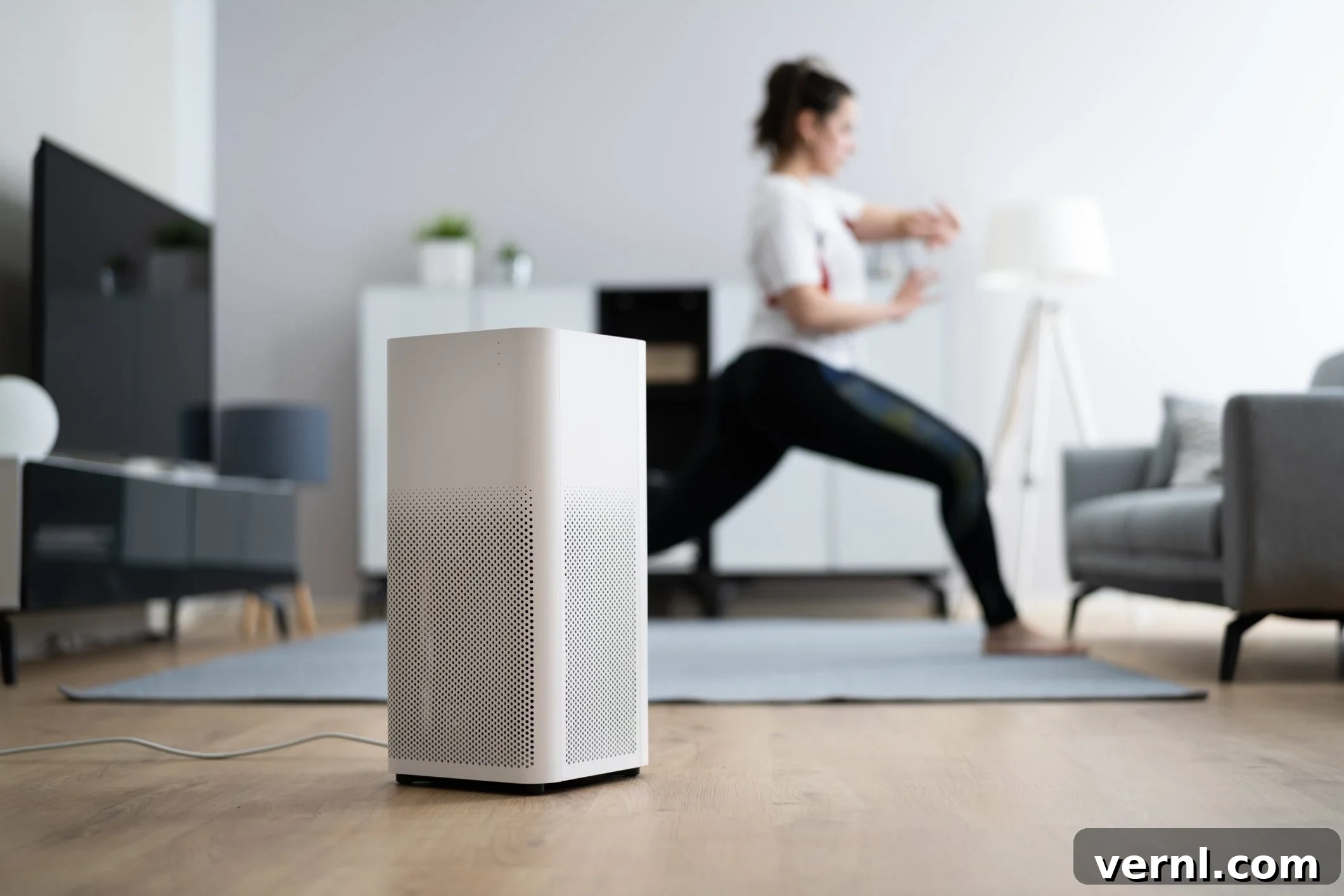
Understanding Air Ionizers: A Comprehensive Guide to Cleaner Indoor Air
In an era where we find ourselves spending more time indoors, the quality of the air within our homes has become a paramount concern for families worldwide. While external factors like urban smog or environmental haze often garner attention, the air we breathe inside our living spaces is equally, if not more, critical to our health and well-being. Modern advancements in air purification, filtration, and sterilization technologies are rapidly evolving, offering numerous solutions for improved indoor air quality (IAQ).
Among these innovations, air ionizers stand out with a surprisingly long history, dating back to the early 20th century. The concept emerged from the pioneering work of scientist Alexander Chizhevsky, who delved into the biological effects of aero-ionization. Decades later, British electrical engineer Cecil Alfred “Coppy” Laws brought this scientific principle closer to home, developing the first air ionizer designed for domestic use. Despite their significant legacy, ionizers often remain shrouded in a degree of mystery. This guide aims to demystify air ionizers, exploring their functionality, benefits, drawbacks, and the diverse options available, empowering you to make informed decisions about your home’s air quality without bias.
What Exactly is an Air Ionizer and How Does It Work?
An air ionizer is an innovative air purifying device designed to release negative “ions” into the surrounding environment. In scientific terms, an ion is simply an atom or a group of atoms that carries either a positive or negative electrical charge. These electrically charged particles play a crucial role in the ionizer’s air-cleaning mechanism, distinguishing it from more traditional air purification methods.
Unlike conventional air purifiers and sanitizers, which typically rely on internal fans to draw air through various filters—such as HEPA or activated carbon—to physically trap harmful contaminants, an ionizer operates on a different principle. Instead of collecting pollutants within the device, it actively “zaps” or neutralizes airborne impurities as they circulate throughout a room. This process involves the negative ions attaching themselves to pollutant molecules, effectively incapacitating or removing them from the breathable air.
The Electrostatic Charging Mechanism Explained
The core of an ionizer’s operation lies in its electrostatic charging plates. These plates are engineered to produce a continuous stream of negatively charged ions. When these negative ions are dispersed into the air, they naturally seek out and bond with tiny airborne particulates. These particulates can range from microscopic allergens and dust to more insidious contaminants like cigarette smoke, volatile organic compounds (VOCs), and other fine toxins that often go unnoticed in indoor environments.
“Once the bond is made between these ions and particles,” explains Michael Clark, founder of Pulled.com, “the particles become too heavy to stay in the air, which results in the contaminants falling onto the floor or sticking to surrounding surfaces.” This physical phenomenon is a direct consequence of the increased mass and altered electrical charge of the now-agglomerated particles. These heavier, charged particles are then attracted to positively charged surfaces within the home—such as carpets, floors, furniture, and drapes—a perfect demonstration of how opposites attract in the world of electromagnetism. Once settled, these contaminants remain on surfaces until they are effectively removed through regular cleaning, such as vacuuming or dusting.
Weighing the Pros and Cons: Benefits and Drawbacks of Air Ionizers
Deciding whether an air ionizer is the right choice for your home involves a careful consideration of its unique advantages and potential limitations. Understanding both sides of the coin will help you align the device’s capabilities with your specific indoor air quality needs.
Key Advantages of Air Ionizers
- Highly Effective Against Fine Particulates: Air ionizers excel at targeting extremely small airborne micro-organisms and particles, including smoke, soot, and other tiny particulate matter, down to an impressive 0.1 microns. This makes them particularly useful in environments where fine airborne contaminants are a concern.
- Quiet and Energy-Efficient Operation: Many ionizers operate without a fan, or with a very low-speed fan, making them remarkably quiet during operation. This fanless or low-fan design also contributes to their energy efficiency, consuming less power compared to traditional air purifiers that rely on powerful motors to move air through dense filters.
- Compact and Portable Design: Ionizers are typically designed to be compact and lightweight, offering excellent portability. This allows users to easily move the device between different rooms or take it with them when traveling, ensuring cleaner air wherever they go.
- Economical and Low Maintenance: Generally, air ionizers are more economical to purchase and maintain than filter-based systems. Without the need for frequent filter replacements, ongoing operational costs are significantly reduced, often requiring only occasional cleaning of collection plates or surrounding surfaces.
Air Ionizer Limitations and Potential Drawbacks
- Less Effective on Large Allergens: While excellent for fine particles, ionizers are generally less effective against larger particles that are common triggers for allergies and asthma, such as coarse dust, pollen, and pet dander. These larger contaminants may not readily attach to ions or may fall to surfaces before being effectively treated.
- Limited Against Odors, VOCs, and Viruses: Ionizers typically do not destroy or neutralize gaseous toxins like Volatile Organic Compounds (VOCs), nor are they effective at eliminating odors directly. Furthermore, their ability to remove viruses and germs is often debated and generally less robust than systems specifically designed for microbial inactivation.
- Particle Redistribution and Surface Buildup: A significant drawback is that ionizers don’t remove particles from the environment; instead, they cause them to fall onto surfaces. These particles can be easily reintroduced into the air through daily activities like walking or dusting if not regularly cleaned. This can lead to a noticeable “black wall” effect or grime buildup on nearby surfaces, necessitating frequent cleaning.
- Potential Ozone Emission: Perhaps the most significant concern associated with some air ionizers is the potential emission of ozone as a secondary byproduct of their operation. Ozone (O3) is a powerful oxidant that, while beneficial in the upper atmosphere, is a harmful lung irritant at ground level. Exposure to ozone can exacerbate respiratory conditions like asthma, reduce lung function, and irritate the throat and eyes.
Due to the health risks associated with ozone, many states and regulatory bodies have strict regulations regarding the amount of ozone an ionizer may emit. Daniel Tranter, supervisor of the indoor air unit at the Minnesota Department of Health, strongly advises consumers to choose ionizers that meet stringent safety standards. He recommends devices that comply with the UL 867 standard certification for electrostatic air cleaners, or, even better, the UL 2998 standard certification, which specifically certifies zero ozone emissions. The California Air Resources Board (CARB) provides a crucial public service by offering a comprehensive list of air purifier devices that have been found to emit dangerous amounts of ozone, allowing consumers to avoid potentially harmful products.
Note: For an in-depth understanding of various strategies to improve your indoor air quality, the Environmental Protection Agency (EPA) offers invaluable resources, including a free technical summary that provides a detailed overview of air cleaners for residential use.
Exploring the Different Types of Air Ionizers
Navigating the world of air purification technologies can be complex, with numerous terms and device types to understand. When it comes to air ionizers, several distinct variations exist, each with its own operational characteristics and ideal applications. Here’s a breakdown to help clarify your options:
Fanless Air Ionizers
As their name suggests, fanless air ionizers operate without the aid of an internal fan. This design choice makes them exceptionally quiet, often producing no discernible noise during operation, which is ideal for bedrooms, offices, or other quiet environments. They are also highly energy-efficient, consuming minimal electricity. However, the lack of a fan means that air circulation is slower, and the distribution of ions throughout a room can take longer. Consequently, fanless models may take more time to effectively purify a given space compared to their fan-assisted counterparts, making them better suited for smaller areas or continuous background purification.
Air Ionizers with Fans
Integrating a fan into an air ionizer significantly enhances its performance by actively circulating air throughout the room. This accelerated air movement allows for much faster and more comprehensive air cleaning, as more airborne particles are brought into contact with the emitted ions. The fan also promotes better overall ventilation within the space. While these models offer superior speed and coverage, the inclusion of a fan typically results in increased noise levels and higher energy consumption compared to fanless ionizers. They are ideal for larger rooms or areas requiring rapid air purification.
Electrostatic Precipitator Ionizers
The concept of electrostatic precipitators for home use dates back to the mid-20th century, with the first models marketed in 1954. These devices represent a distinct type of ionizer that not only charges particles but also collects them. They work by passing air through an ionizing section, where particles receive an electrical charge. These charged particles are then drawn towards a series of oppositely charged collection plates within the device, effectively “precipitating” them out of the air. This design prevents the scattering of particles onto surrounding surfaces, addressing one of the common drawbacks of simple ionizers. However, electrostatic precipitator ionizers can consume a substantial amount of energy, and their collection plates require frequent cleaning to maintain efficiency, as accumulated particles can reduce performance and even pose a fire hazard if neglected.
Bipolar Ionizers (Needlepoint Bipolar Ionization)
Bipolar ionization, often referred to as needlepoint bipolar ionization, represents an advanced air-cleaning technology that disperses both positively and negatively charged ions simultaneously into a space. Unlike traditional ionizers that primarily release negative ions, bipolar systems create a balance of both charges. This dual-ion approach causes airborne molecules and particles—including dust, pollen, smoke, and even some pathogens—to cluster together. As these clusters grow larger and heavier, they fall out of the air more rapidly or are more easily captured by existing filtration systems, such as an HVAC filter. Bipolar ionization systems are frequently integrated directly into a building’s in-duct HVAC system, allowing for whole-home air purification and distribution.
The Synergistic Approach: Combo Air Purifiers and Ionizers
Recognizing the individual strengths and weaknesses of different air cleaning technologies, many manufacturers now offer hybrid devices that combine the power of an air ionizer with the robust filtration capabilities of a traditional air purifier. These combo units aim to provide a more comprehensive solution for indoor air quality.
A common and highly effective combination pairs an ionizer with a HEPA (High-Efficiency Particulate Air) filter. HEPA filters are renowned for their ability to remove up to 99.97 percent of airborne particles that are 0.3 microns or larger, including a vast array of allergens, mold spores, pet dander, and dust. By integrating an ionizer, these combo units benefit from the ionizer’s ability to tackle ultra-fine particles and potentially clump smaller particles together, making them easier for the HEPA filter to capture. This synergistic approach ensures that both microscopic and macroscopic pollutants are effectively addressed, providing a higher overall rate of air filtration and purification. Some advanced combo units may also include activated carbon filters to absorb odors and volatile organic compounds (VOCs), offering a truly multi-faceted approach to indoor air quality improvement.
Cost Considerations for Air Ionizers
The price of an air ionizer can vary significantly based on its features, technology, and brand. For a decent home air ionizer, you can expect to pay anywhere from $40 to $200. Basic, fanless models with minimal features will typically fall on the lower end of this spectrum, offering an entry-level solution for small spaces or localized purification.
However, devices that incorporate additional features such as integrated HEPA filters, powerful fans, multiple operating modes, smart connectivity, or advanced bipolar ionization technology will naturally be on the pricier end, potentially exceeding $200. When budgeting for an air ionizer, it’s important to consider not just the initial purchase price but also any potential long-term costs, such as the infrequent replacement of collection plates (for electrostatic precipitators) or the filter replacement schedule for combo units.
Making an Informed Choice: Guidelines and Recommendations
Before investing in an air ionizer, meticulous research and adherence to reputable guidelines are essential. Daniel Tranter emphasizes the importance of following standards set by organizations like the Association of Home Appliance Manufacturers (AHAM). AHAM operates a rigorous portable air cleaner certification program, which lists all certified cleaners along with their Clean Air Delivery Rate (CADR) values on its official website. The CADR rating indicates how quickly an air cleaner removes smoke, dust, and pollen from a room, providing an objective measure of its performance.
Beyond certification, here are some key considerations:
- Room Size Matching: Always ensure that the air ionizer you choose is appropriate for the size of the space it intends to purify. Manufacturers typically provide coverage area specifications (e.g., square footage) for their devices. An undersized unit will be ineffective, while an oversized one might be an unnecessary expense.
- Ozone Emissions: Reiterate the importance of checking for UL 2998 (zero ozone emission) or UL 867 certification. Refer to the California Air Resources Board (CARB) list to avoid problematic devices.
- Maintenance Requirements: Understand the maintenance schedule. Will you need to clean collection plates regularly, or replace filters? Factor in the time and potential cost of these tasks.
- Noise Level: If you are sensitive to noise, particularly for bedroom or office use, look for models explicitly advertised as “quiet” or “fanless.”
- Specific Needs: If your primary concern is large allergens (dust, pollen), a combo unit with a HEPA filter might be more suitable. If you are targeting ultra-fine particles and smoke, a certified ionizer could be effective.
- Manufacturer’s Instructions: Once purchased, always diligently follow the manufacturer’s installation, operation, and maintenance instructions to ensure optimal performance, safety, and longevity of your air ionizer.
For those with a DIY spirit, exploring options to create a DIY portable air cleaner can also be an engaging and cost-effective project, offering a deeper understanding of air filtration principles.
In conclusion, while the allure of cleaner indoor air is universal, the path to achieving it is diverse. Air ionizers offer a unique and often efficient method of tackling airborne particulates, particularly the finest ones. By understanding their mechanism, benefits, and limitations, especially concerning ozone, and by adhering to established safety and performance standards, you can make an informed decision that genuinely contributes to a healthier living environment for you and your family.